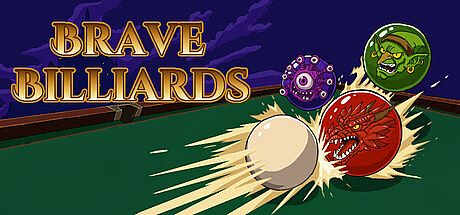


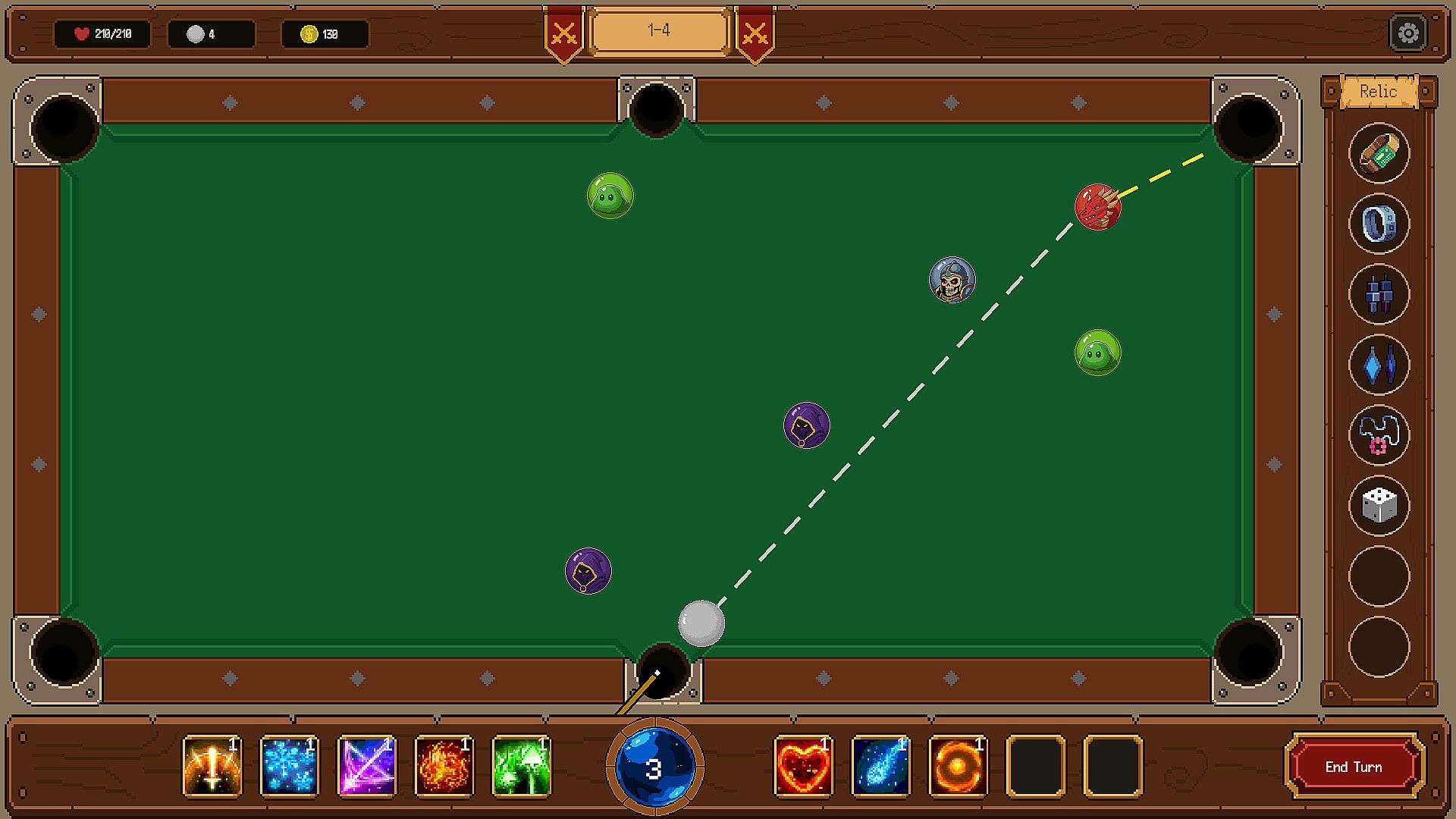
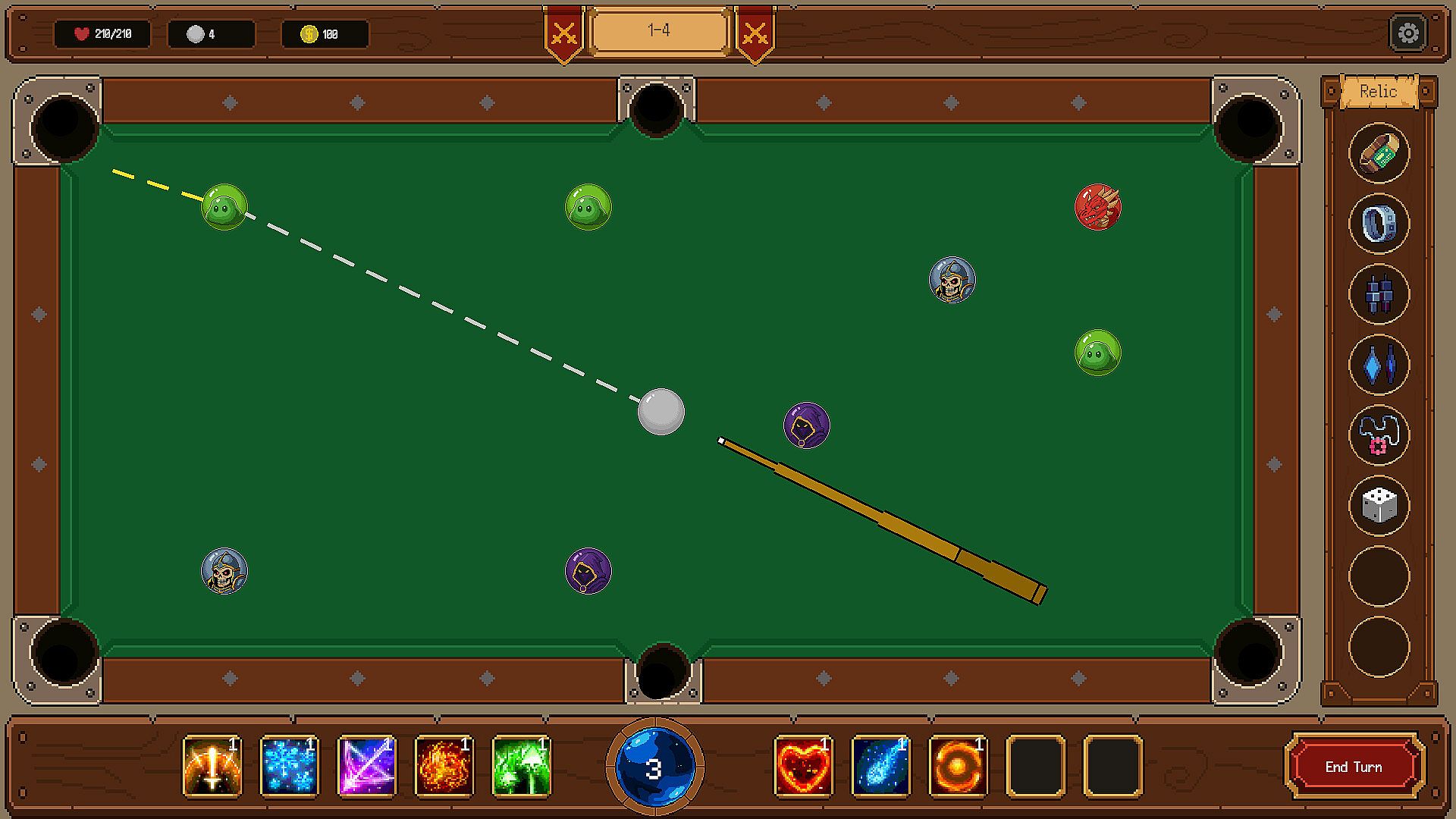
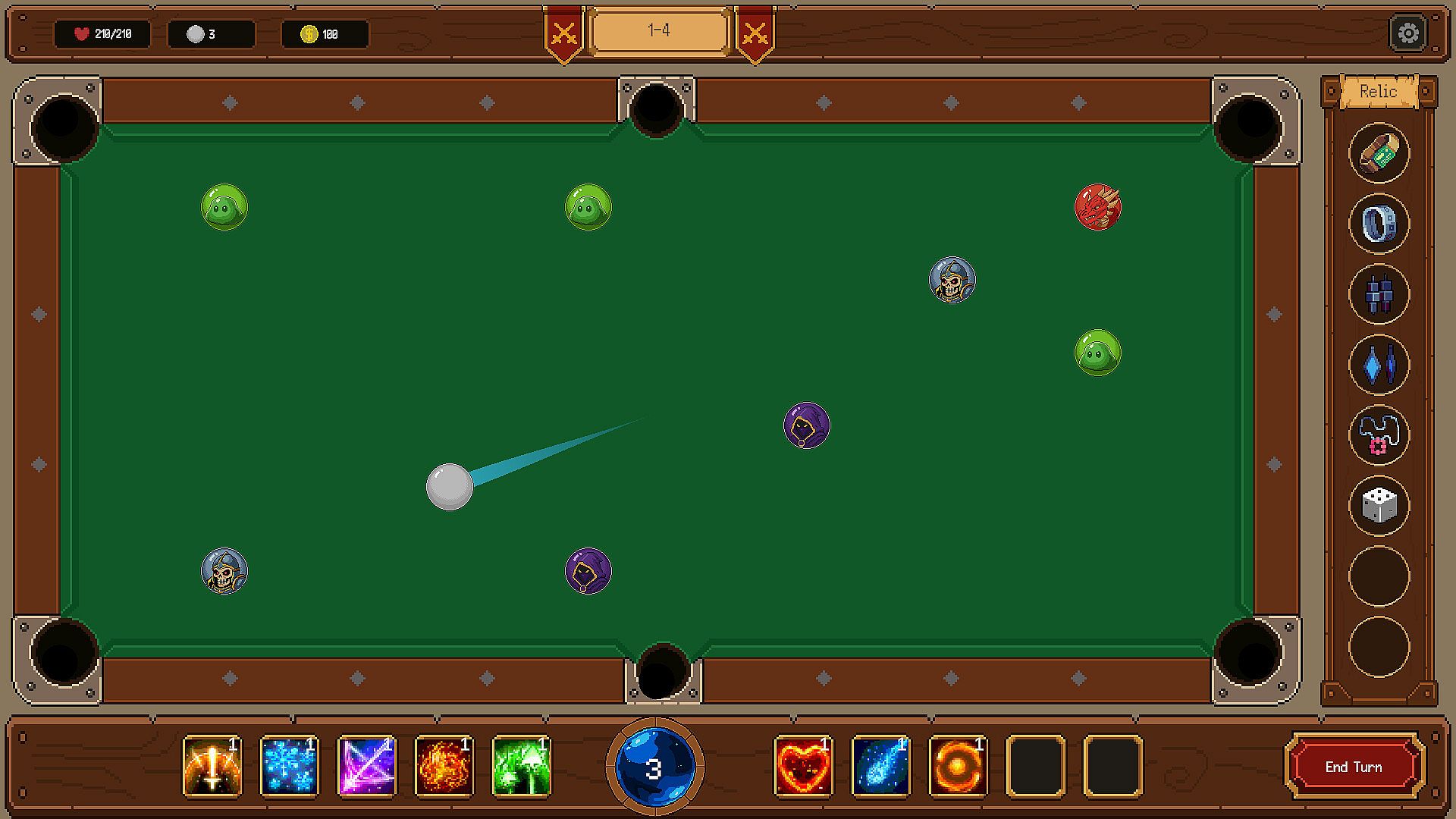
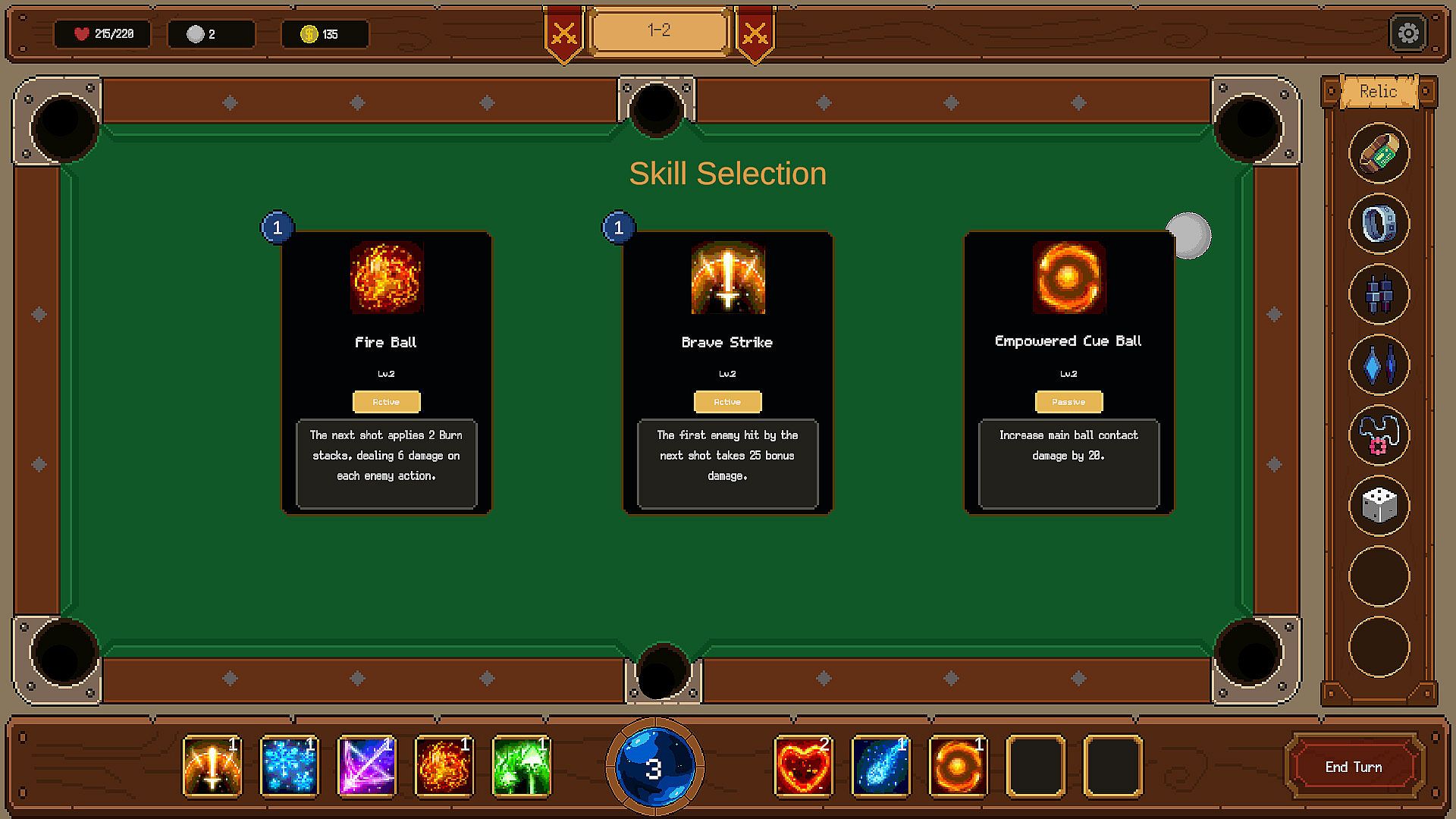
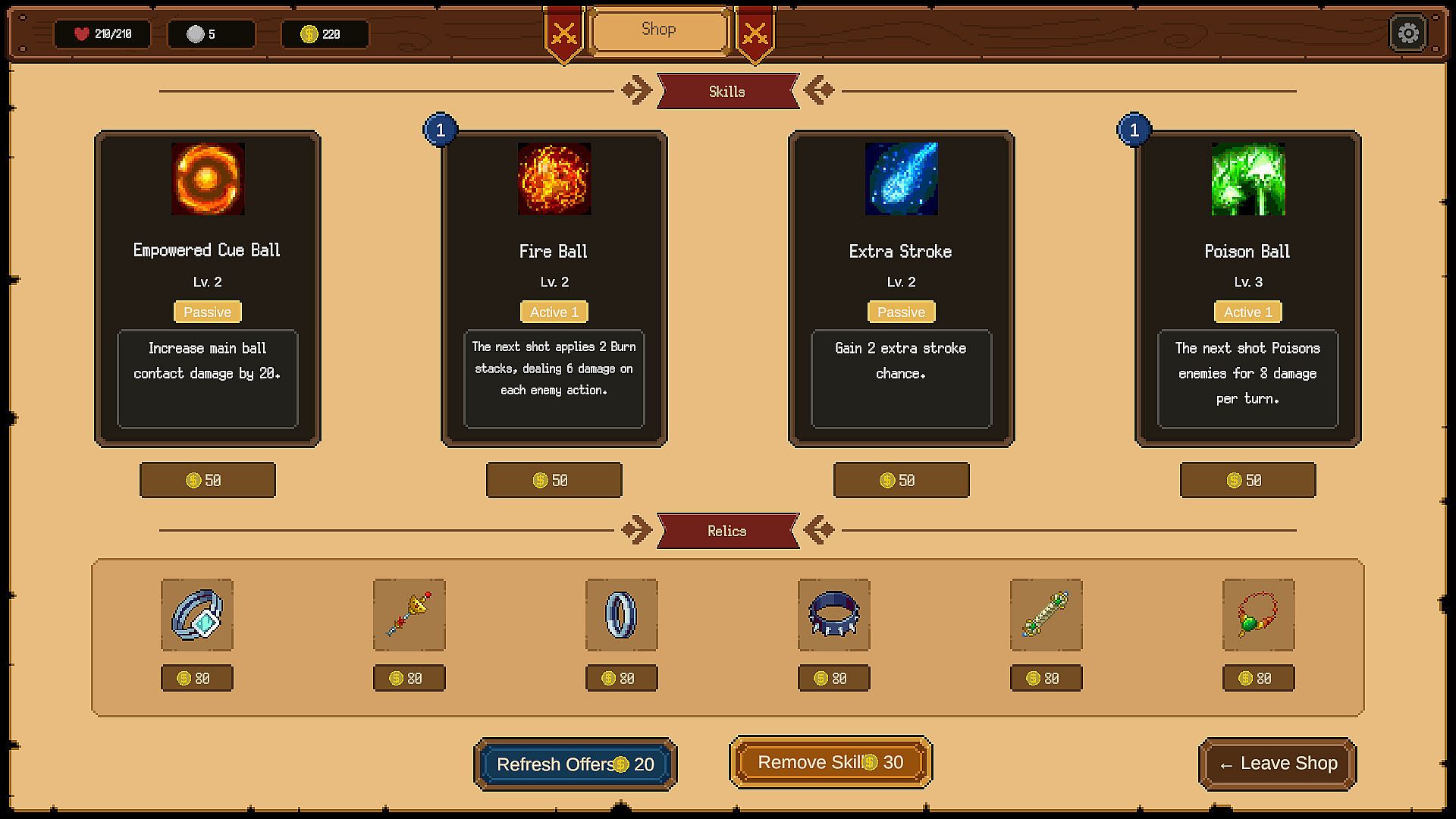
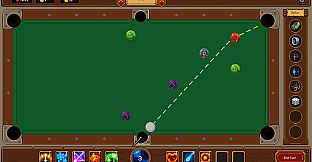
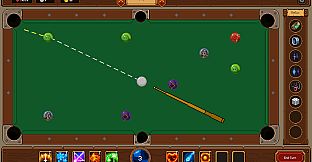
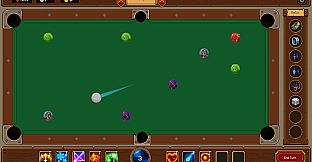
Brave Billiards est un jeu d'action stratégique en solo qui mêle la physique réaliste du billard à une progression roguelike et des combats tour par tour dans un univers fantastique, le tout sur un plateau de table. Le joueur contrôle une bille blanche pour lancer des attaques contre des groupes de monstres sphériques, en exploitant angles, puissance et rebonds pour éliminer les adversaires tout en constituant un arsenal personnalisé de reliques et de compétences au fil des runs.
Gameplay
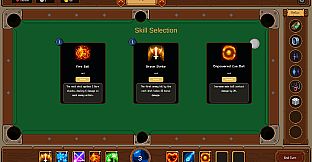
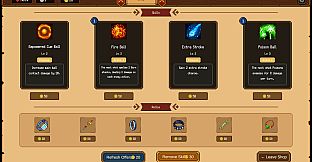
Le cœur du jeu repose sur la visée et la charge des coups pour propulser la bille blanche à travers le plateau. Les collisions infligent des dégâts aux billes ennemies, et les rebonds réussis sur les murs ou d'autres cibles peuvent s'enchaîner en combos plus importants. La gestion de la puissance détermine la distance et l'impact, tandis que le positionnement influence l'ordre des cibles touchées. Les reliques et compétences obtenues en cours de partie modifient ces interactions, transformant les frappes basiques en séquences multi-coups ou en ajoutant des effets comme des dégâts de zone ou des altérations d'état.
Chaque tir exige un calcul précis de la trajectoire et de la force, car la disposition du plateau évolue à chaque rencontre. Les billes ennemies occupent des positions fixes ou mobiles, et leurs mécaniques spécifiques obligent à s'adapter. Un tir bien préparé peut éliminer plusieurs menaces d'un coup, tandis qu'un angle mal jugé peut laisser la bille blanche vulnérable ou gaspiller son élan. Les systèmes de progression permettent d'expérimenter différentes combinaisons de reliques qui modifient le comportement des tirs, incitant à multiplier les tentatives pour affiner ses stratégies autour des combos et de la gestion des risques.
Game Modes
Brave Billiards propose une structure roguelike en solo centrée sur des runs successives. Chaque tentative comprend une série de rencontres incluant des combats classiques, des adversaires d'élite plus coriaces, des marchands pour des améliorations et des boss à des moments clés. Le choix des chemins influe sur l'ordre et la difficulté des événements, créant une variété d'une tentative à l'autre sans progression linéaire fixe.
Le joueur sélectionne ses cibles et planifie ses tirs au sein de ces rencontres, avec pour objectif de survivre le plus longtemps possible et d'obtenir des reliques plus puissantes. Le format encourage les multiples essais par session, chaque run repartant avec de nouvelles options de reliques et de compétences, permettant d'explorer différentes approches de combat sur les mêmes configurations de plateau.
Enemies and Combat Variety
Les adversaires se présentent sous forme de billes monstrueuses dotées de comportements distincts. Gobelins, squelettes, zombies, slimes, mimics et beholders interagissent différemment avec les collisions et le positionnement. Certains se divisent à l'impact, d'autres renvoient les tirs, et certains types exigent des angles ou des niveaux de puissance spécifiques pour être vaincus efficacement. Ces différences obligent le joueur à adapter sa planification de tir en fonction de la composition du groupe plutôt que de s'appuyer sur une seule tactique.
La stratégie va au-delà des dégâts bruts, car le placement des ennemis influence les opportunités de rebond et les réactions en chaîne. Un groupe de slimes peut récompenser les tirs à grand angle, tandis qu'un beholder peut punir un mauvais positionnement. La variété des types d'ennemis au fil des rencontres maintient l'intérêt des décisions, même lorsque le joueur se familiarise avec la physique.
Is It Worth Playing?
Brave Billiards s'adresse aux joueurs qui apprécient de combiner une mécanique de visée précise avec une prise de décision roguelike et une croissance progressive de puissance. Le combat basé sur la physique récompense la planification minutieuse plutôt que la rapidité d'exécution, tandis que le système de reliques apporte une variété significative d'une run à l'autre. Ceux qui recherchent une expérience solo mêlant des contrôles de billard familiers à une diversité d'ennemis fantastiques trouveront une boucle de jeu concentrée qui met l'accent sur l'exécution et l'adaptation.
Le jeu est encore en développement avec une sortie prévue en janvier 2027, donc sa disponibilité dépendra du calendrier final de lancement. Son accent sur la sélection stratégique des tirs et l'expérimentation de builds propose une alternative distincte aux jeux d'action traditionnels pour ceux qui cherchent de la profondeur dans un format compact.