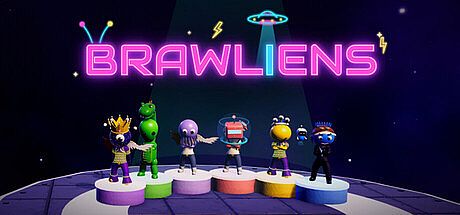


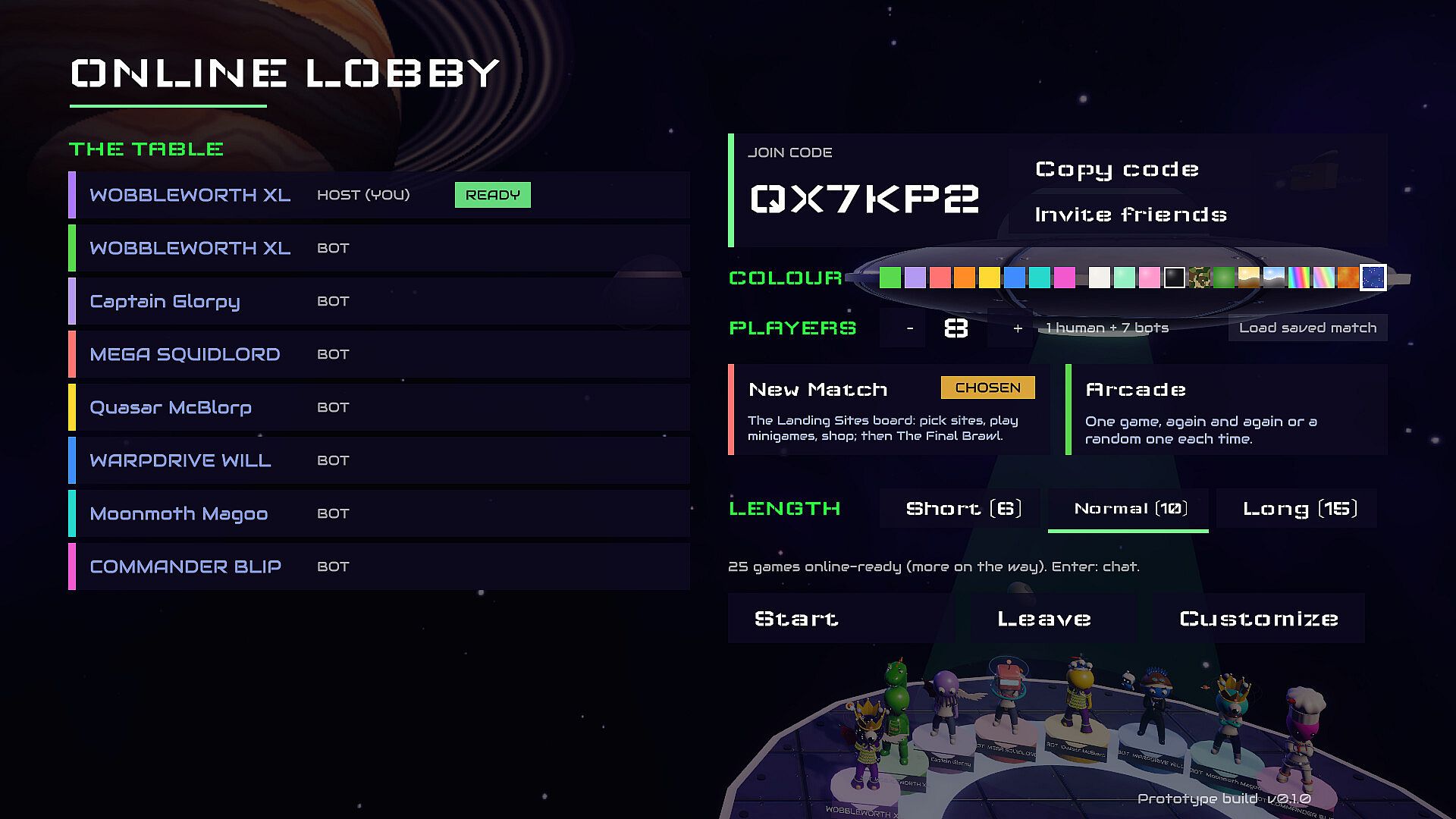
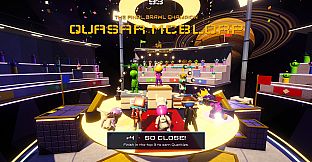
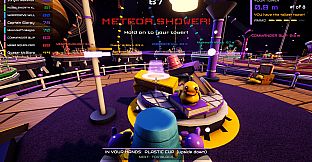
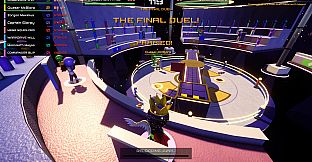
Brawliens is a first-person action and strategy party game developed for PC by the indie studio Bait and Darkys. Players control colorful aliens competing on a living toy planet in sessions designed for two to eight participants, with bots available to fill any open spots. The core loop combines secret choices on a board, competitive minigames, gadget purchases, and a decisive final confrontation that eliminates all but one winner.
Gameplay
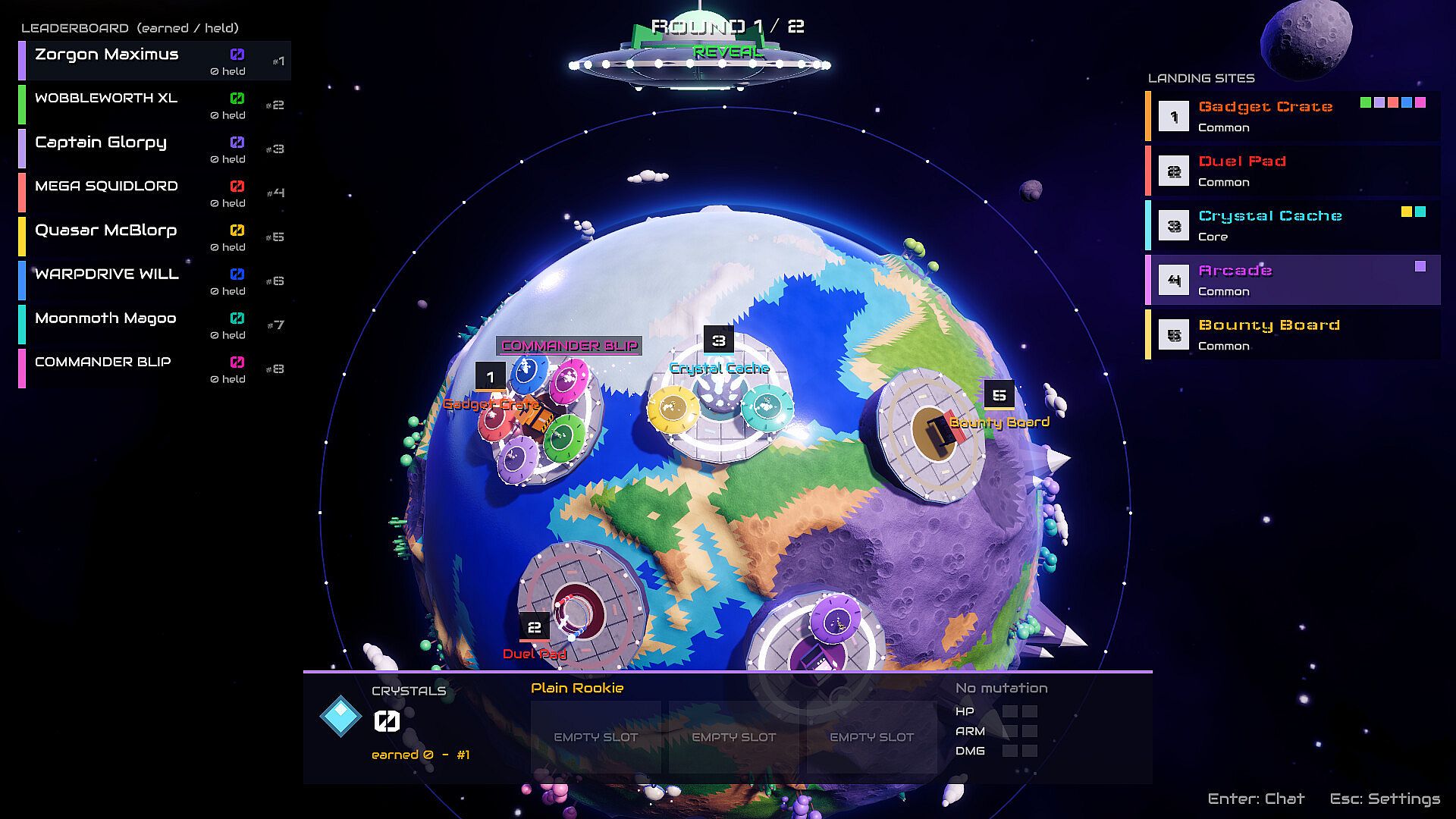
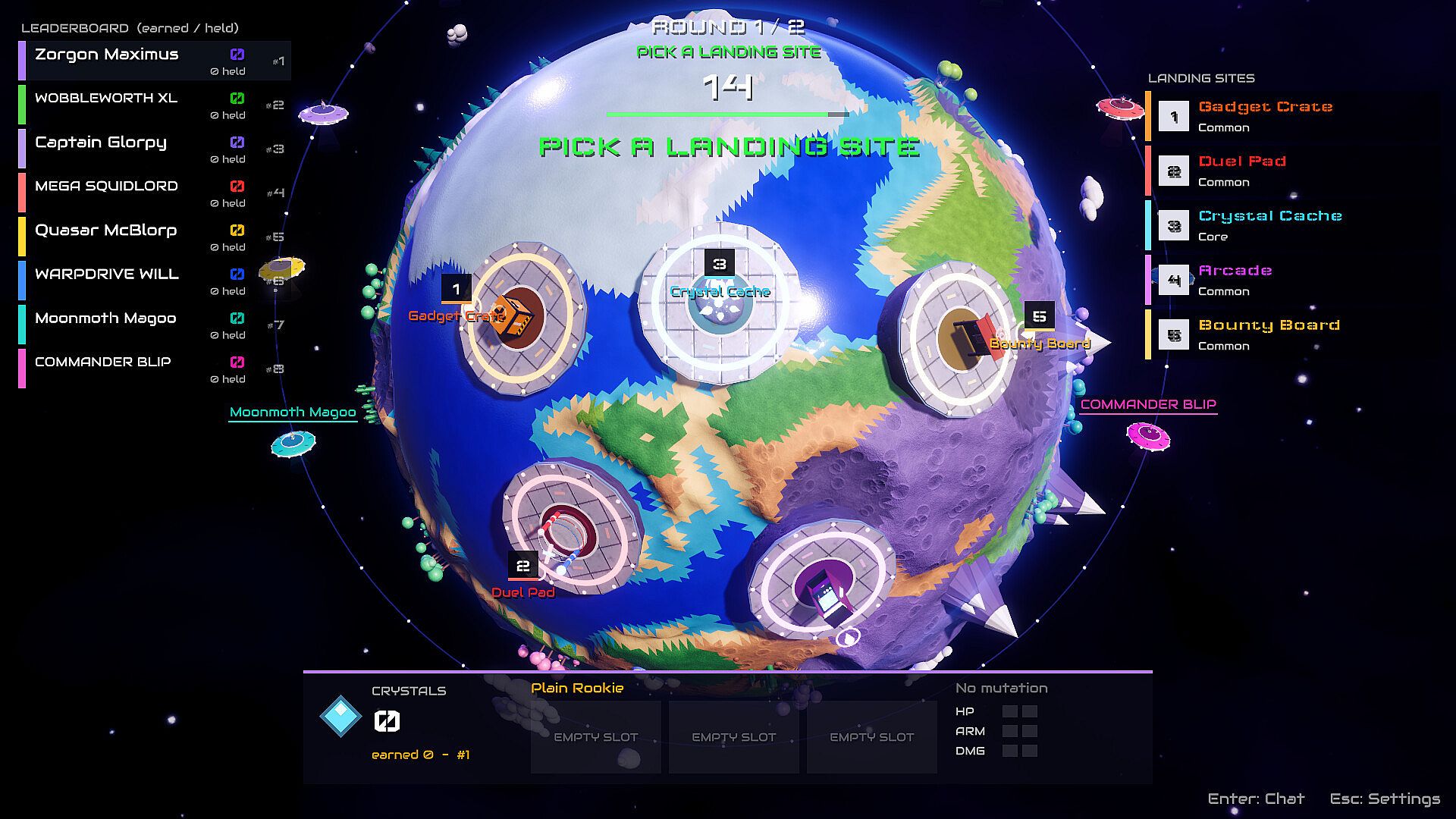
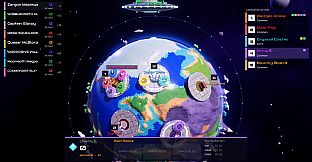
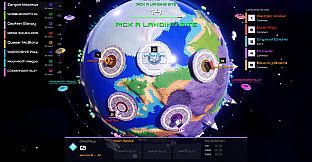
Matches begin with players secretly selecting landing sites on the toy planet. When multiple aliens target the same location, the next minigame determines ownership. Crystals earned through minigames fuel a secret bidding phase where participants acquire gadgets, perks, and mystery boxes, though the second-highest bidder still spends resources. Movement around a giant toy bedroom follows a tiles and dice system that lets players roll, choose paths, visit shops, and knock rivals from positions. The experience stays first-person throughout the minigames, emphasizing quick reflexes and direct competition over resource management or positioning.
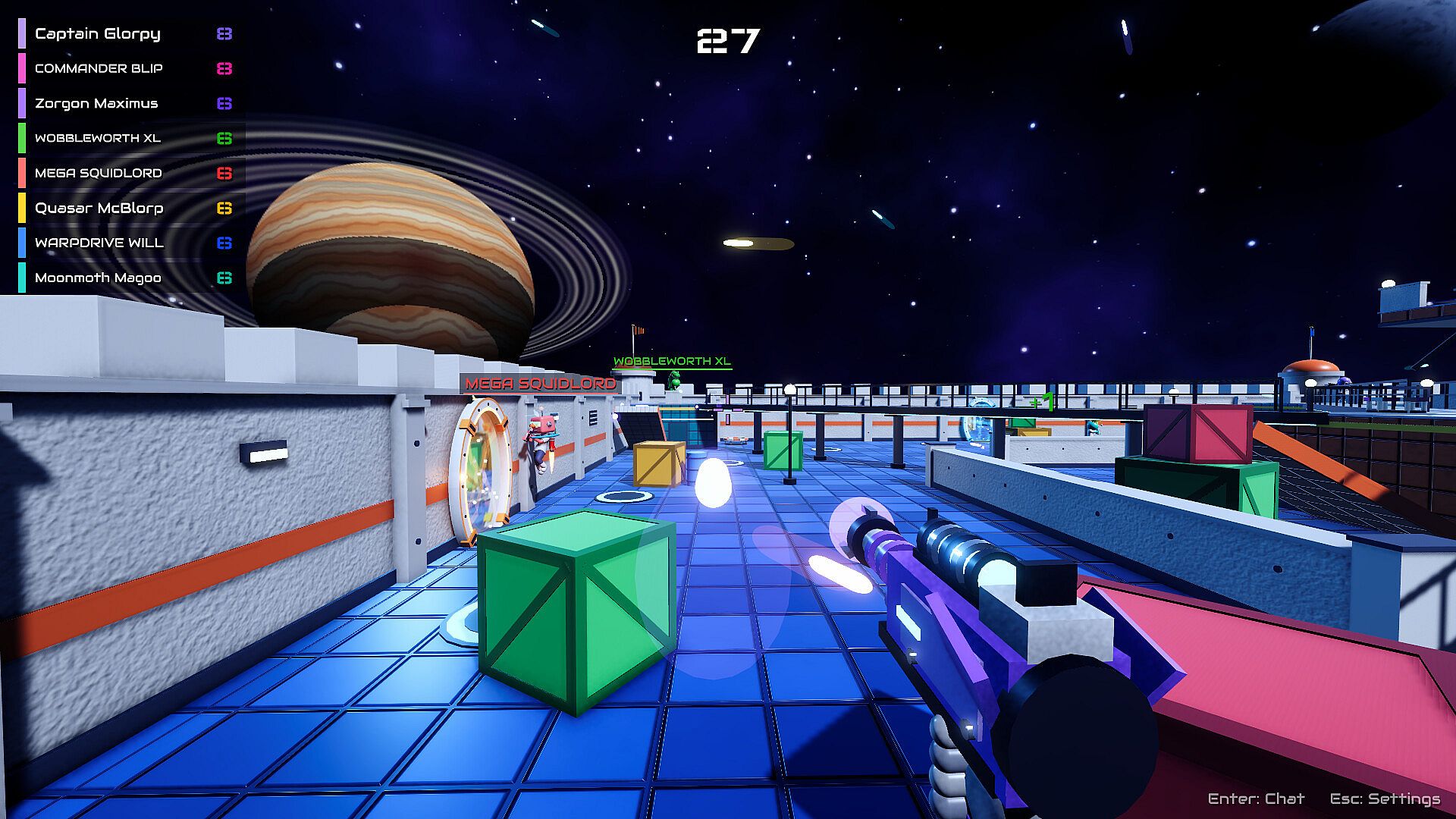
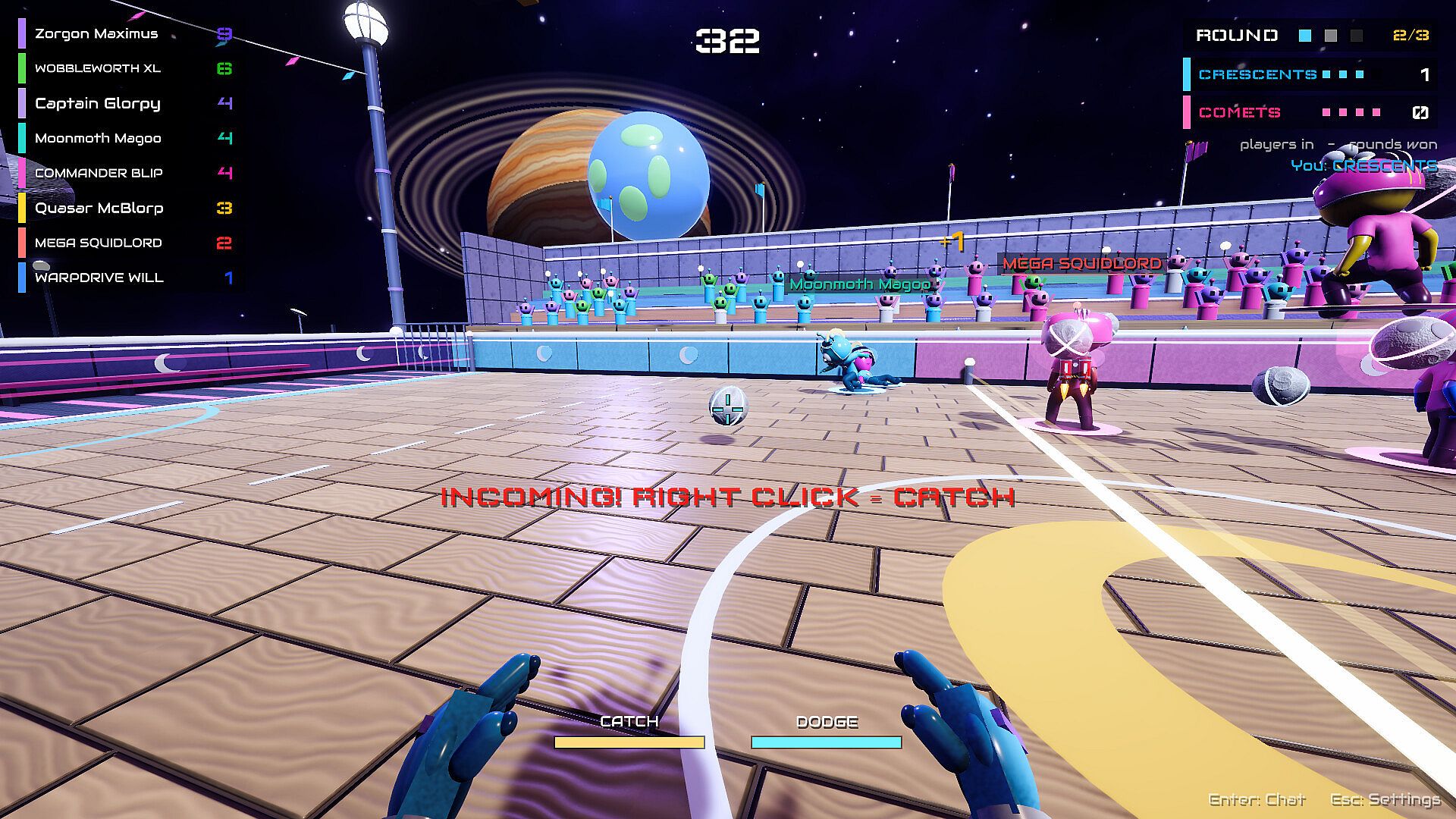
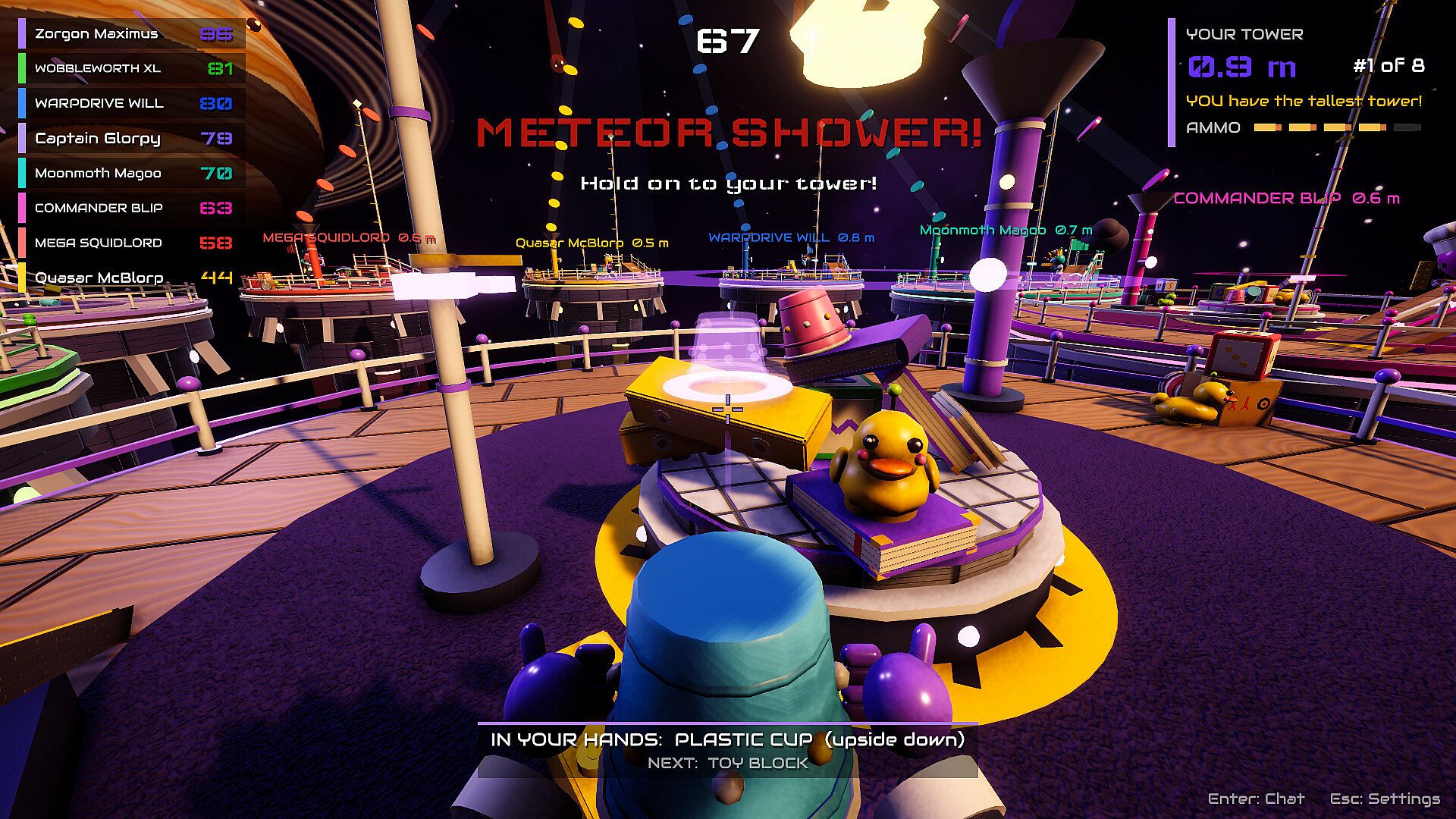
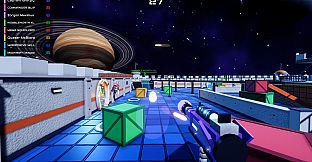
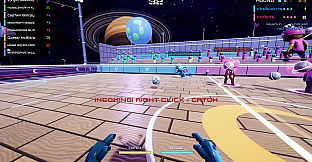
More than thirty minigames deliver varied chaos. Examples include kart racing through a kitchen in Sofa Circuit, snowboarding and punching opponents in Snow Globe Slalom, obeying commands only when prefixed correctly in Mothership Says, shooting portals and bouncing bolts in Blaster Blitz across three maps, sneaking past a sleeping cat in Snack Heist, stacking and sabotaging towers in Junk Tower, team dodgeball with revives in Moon Dodgeball, climbing a reactor before plasma rises in Plasma Rising, and racing to numbered platforms in Cosmic Roulette. Additional activities cover sumo on a saucer, laser limbo, crowd hunts, space bowling, and lunar mini-golf. Hosts can disable specific minigames to tailor sessions.
Game Modes
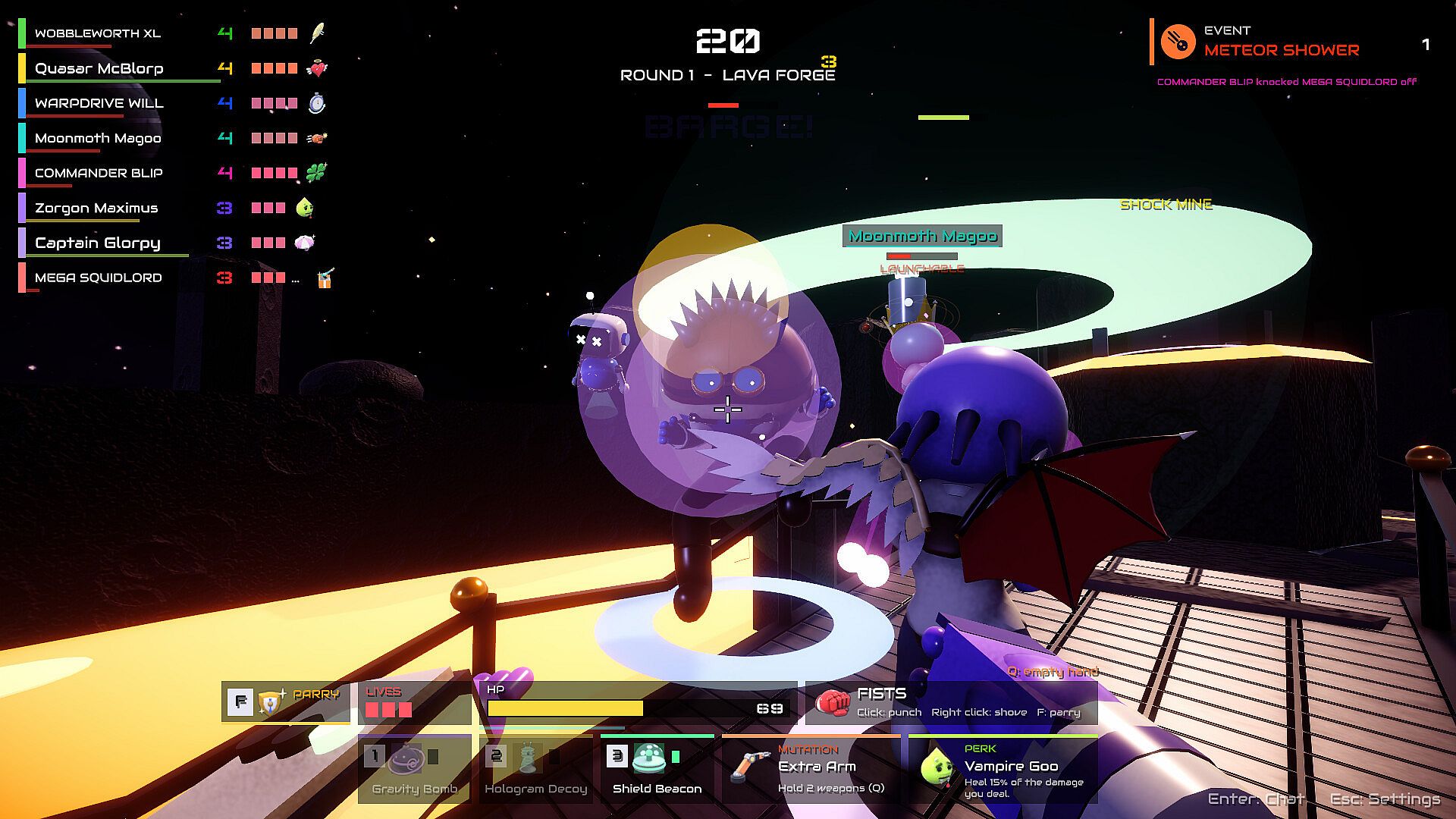
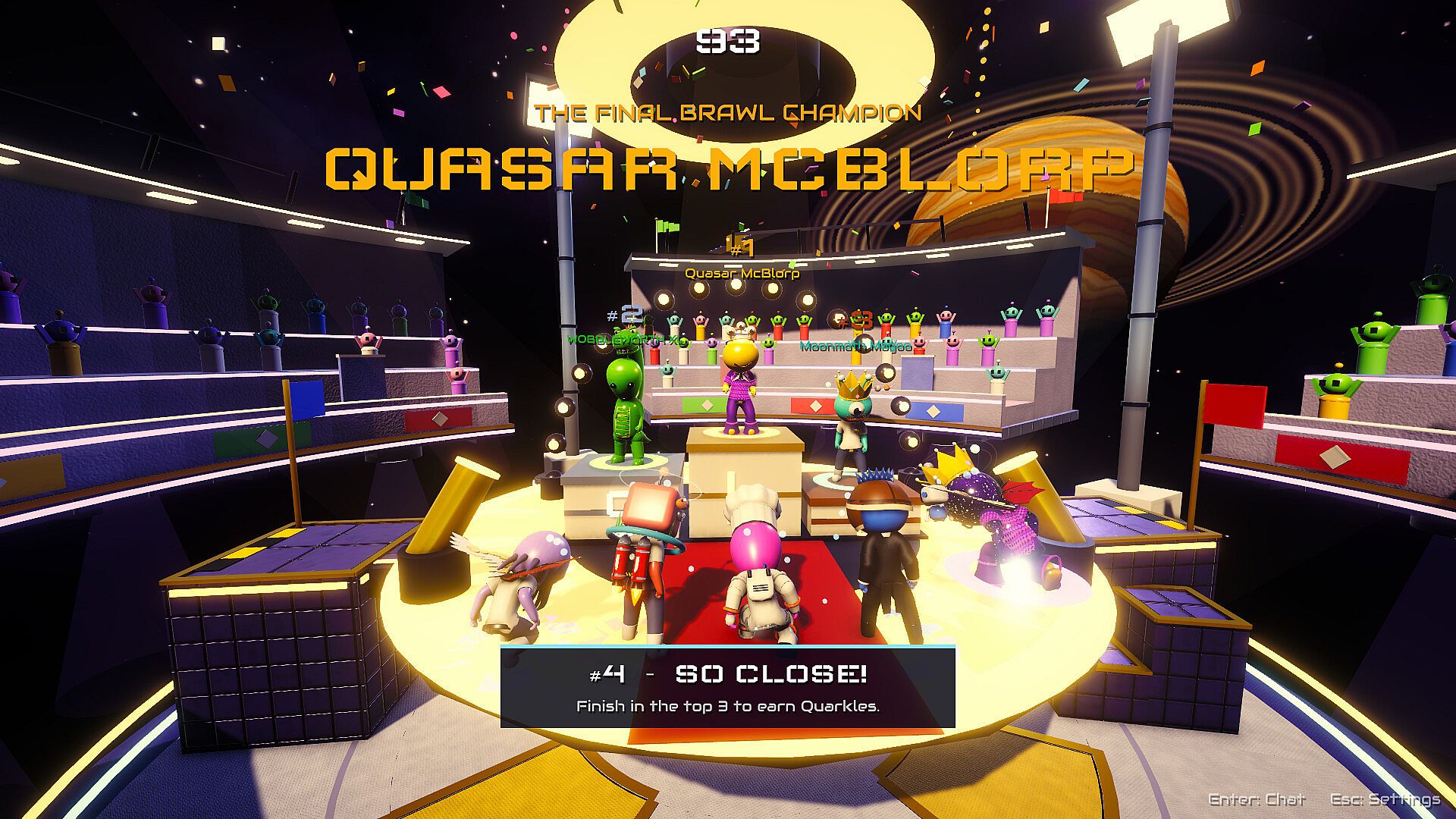
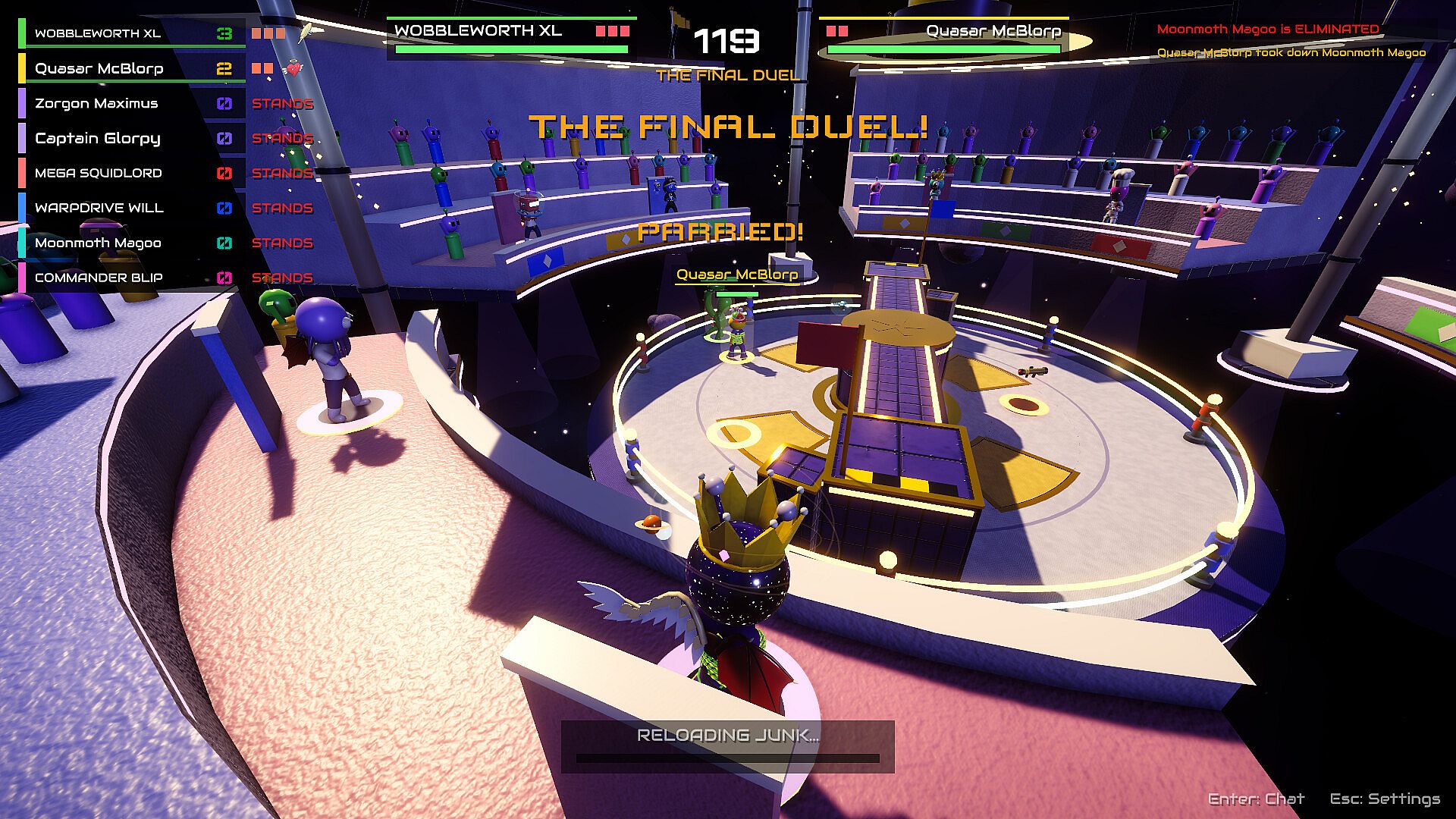
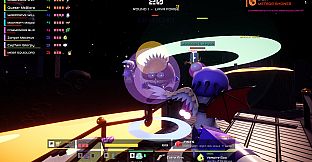
Four distinct board play styles structure each match. Landing Sites forces secret choices that lead into minigames on contested areas. Cosmic Auction rewards minigame performance with Crystals for bidding on upgrades. Tiles and Dice recreates classic board game progression with shops and direct confrontations. Party Marathon strips away the board entirely for a pure minigame sequence where the final round counts double toward the highest score. Every complete session concludes with the Final Brawl, an arena fight across alien planets. Participants draft perks according to leaderboard position, equip purchased gadgets, endure random events such as blackouts, black holes, zero gravity, and meteor showers, then fight with punches, parries, and blasts. Eliminated players vote on upcoming events and hurl objects at remaining competitors from spectator areas.
Additional options support flexible play. Hosts create private matches via a six-letter code or Steam invites. Public lobbies and quick join features allow drop-in sessions with optional passwords. Arcade mode lets players jump directly into any single minigame. Matches can be paused or saved for later completion. Steam achievements track progress across minigames, and color-vision modes improve accessibility.
Progression and Customization
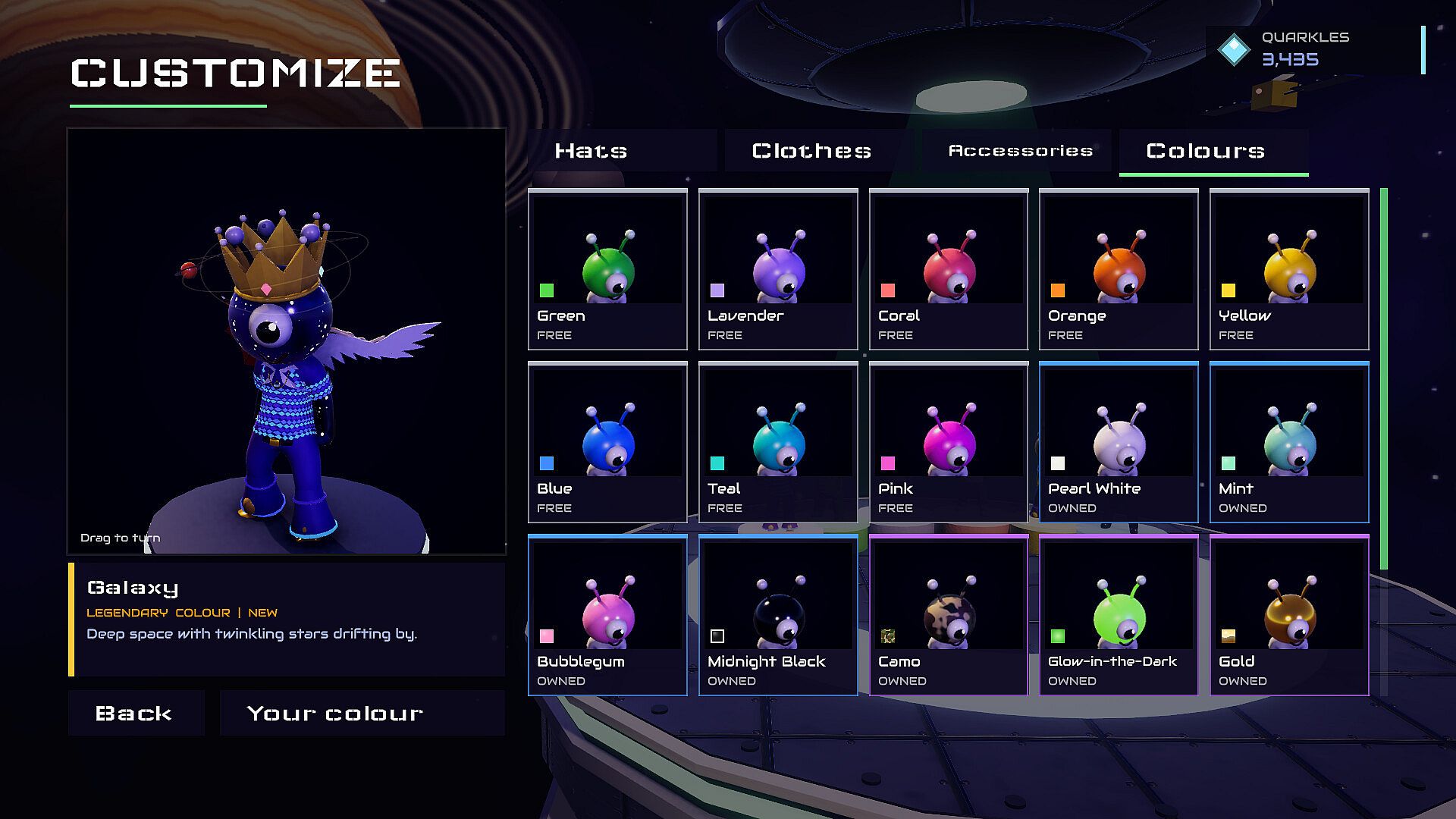
Players earn Quarkles through regular play to unlock cosmetic items including hats, outfits, accessories, and animated skins. Examples range from a propeller beanie and inflatable T-Rex costume to a jetpack, pet robot companion, and twinkling galaxy skin. These options remain purely visual with no impact on competitive balance. The two-person development team encourages community input through Discord for new minigame ideas and bug reports, noting that additional modes remain in development.
Is It Worth Playing?
Brawliens targets groups seeking short, repeatable sessions of competitive minigames mixed with light strategy and a climactic elimination round. The combination of board elements, first-person action, and persistent cosmetics suits casual multiplayer gatherings or online friend groups who enjoy party titles with betrayal mechanics. Because the game remains in a pre-release state with no user reviews available yet, prospective players should monitor the official page for launch timing and early feedback. Those who value host-controlled rulesets, bot support for smaller groups, and purely cosmetic progression will find the described systems align closely with that preference. The indie scale and two-developer origin suggest focused, iterative updates rather than large seasonal content drops once live.