



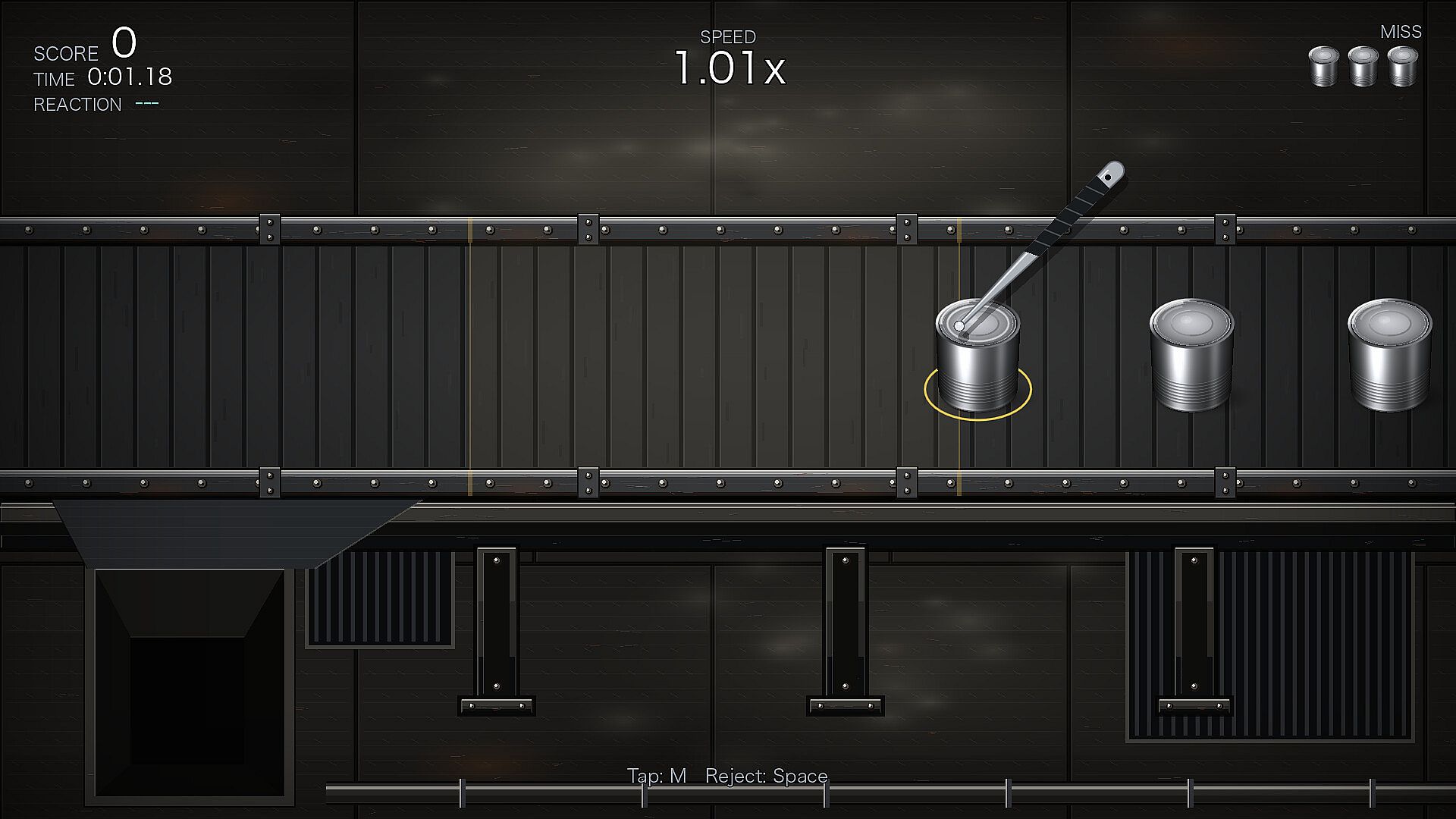
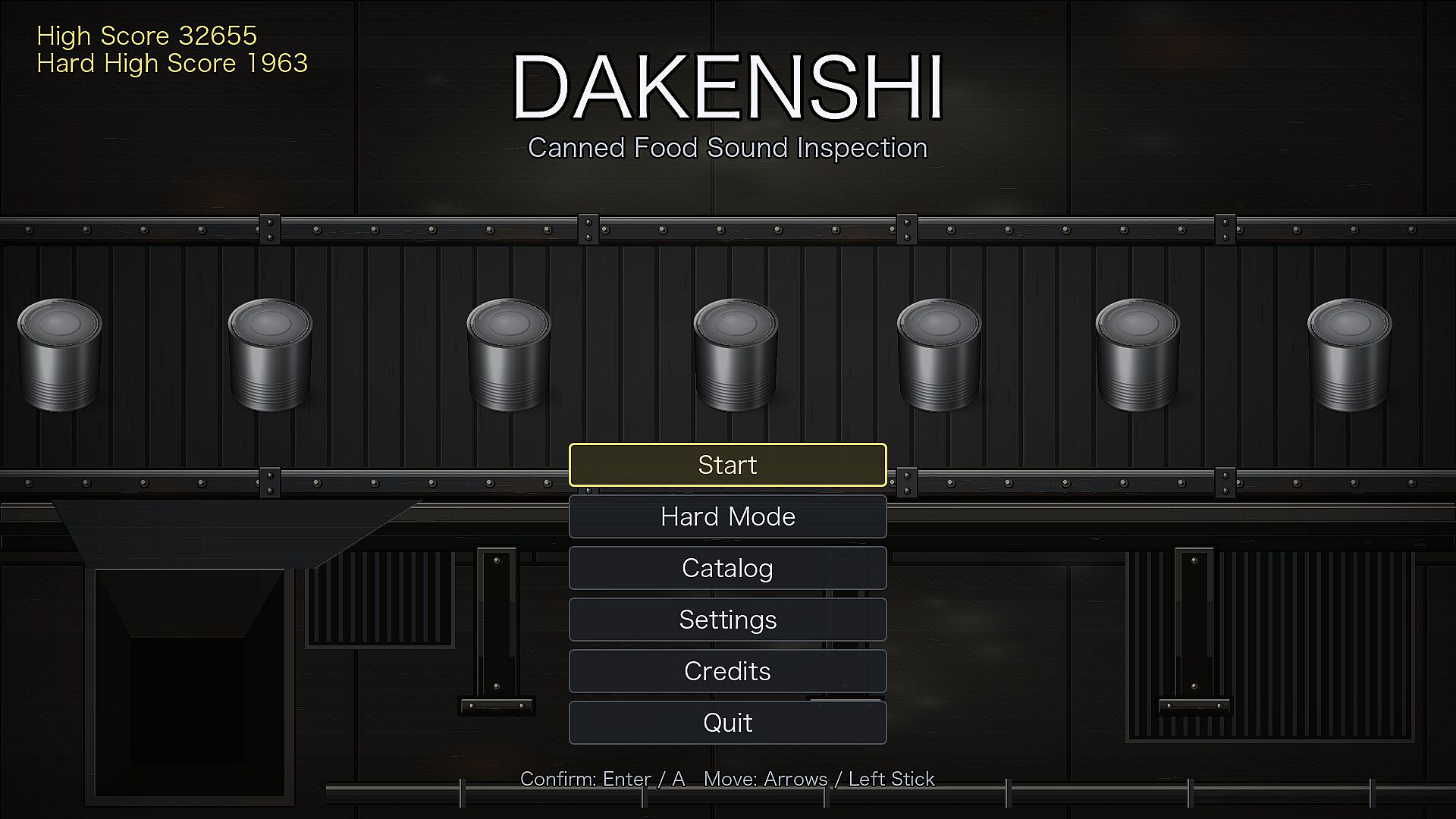
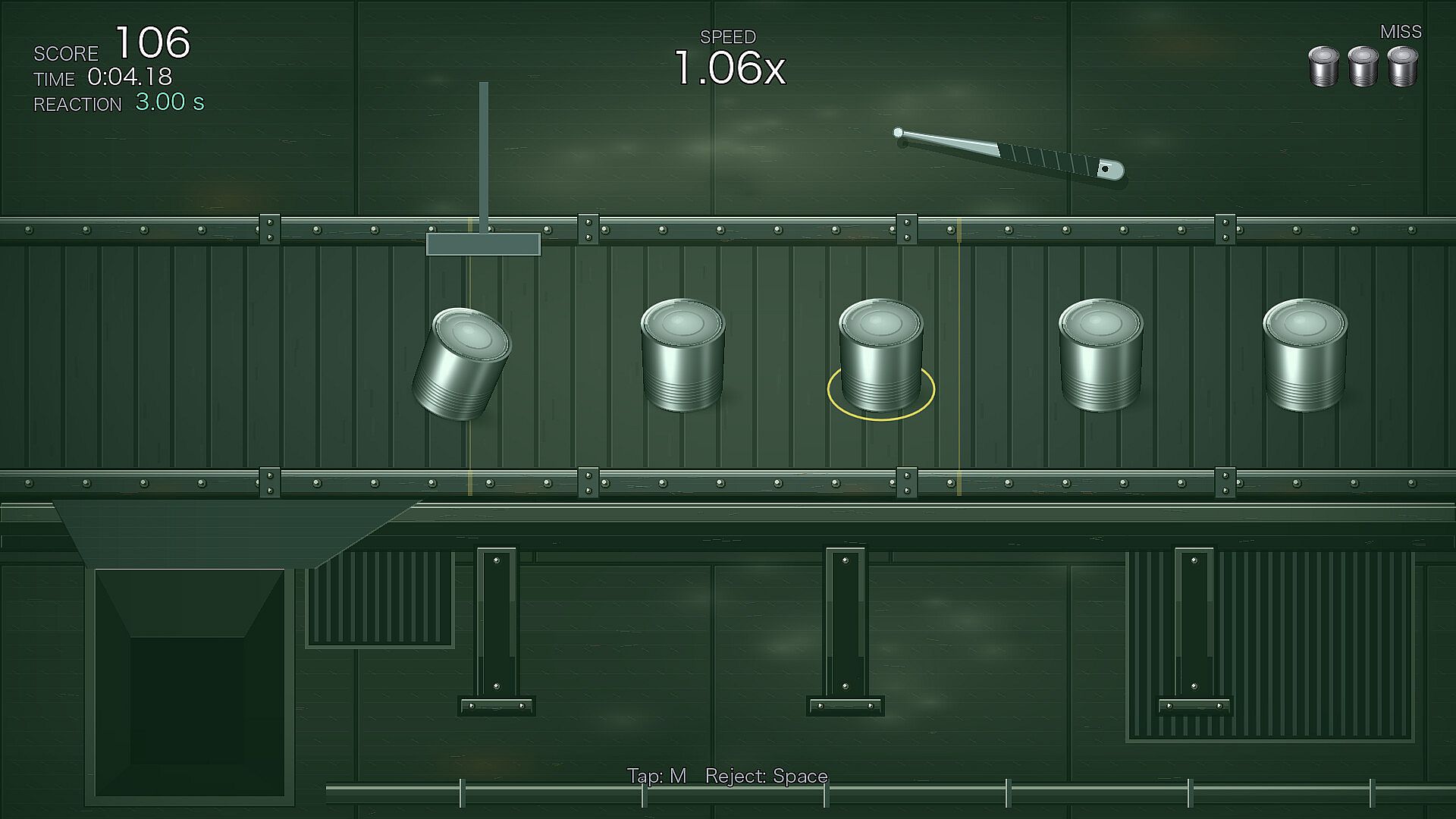
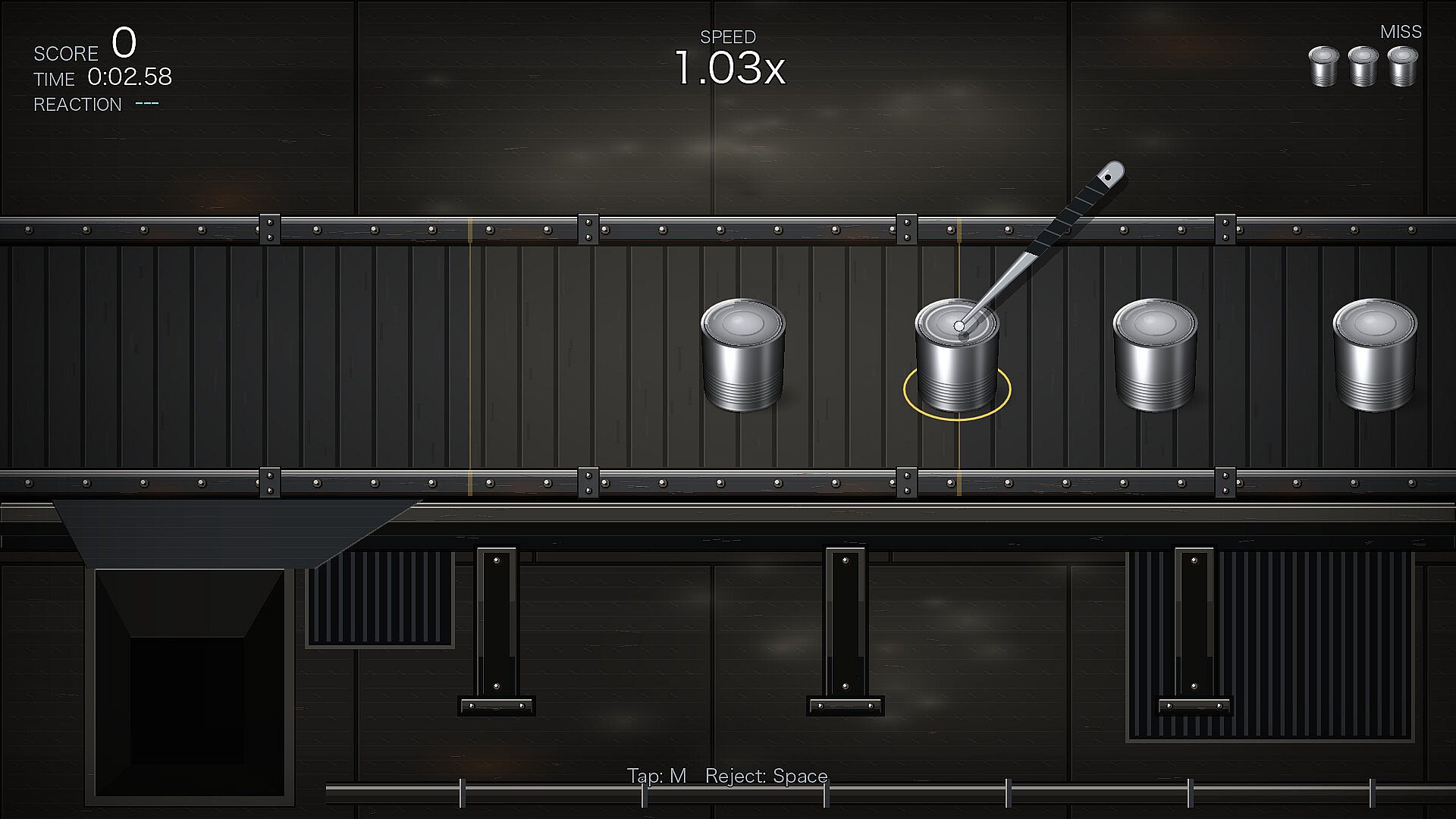




DAKENSHI is a single-player action indie casual game built around precise audio discrimination. Players take on the role of a cannery inspector who must identify defective cans solely by sound as they move along a conveyor belt. The experience relies entirely on listening for subtle pitch variations, with no visual indicators to assist.
Gameplay
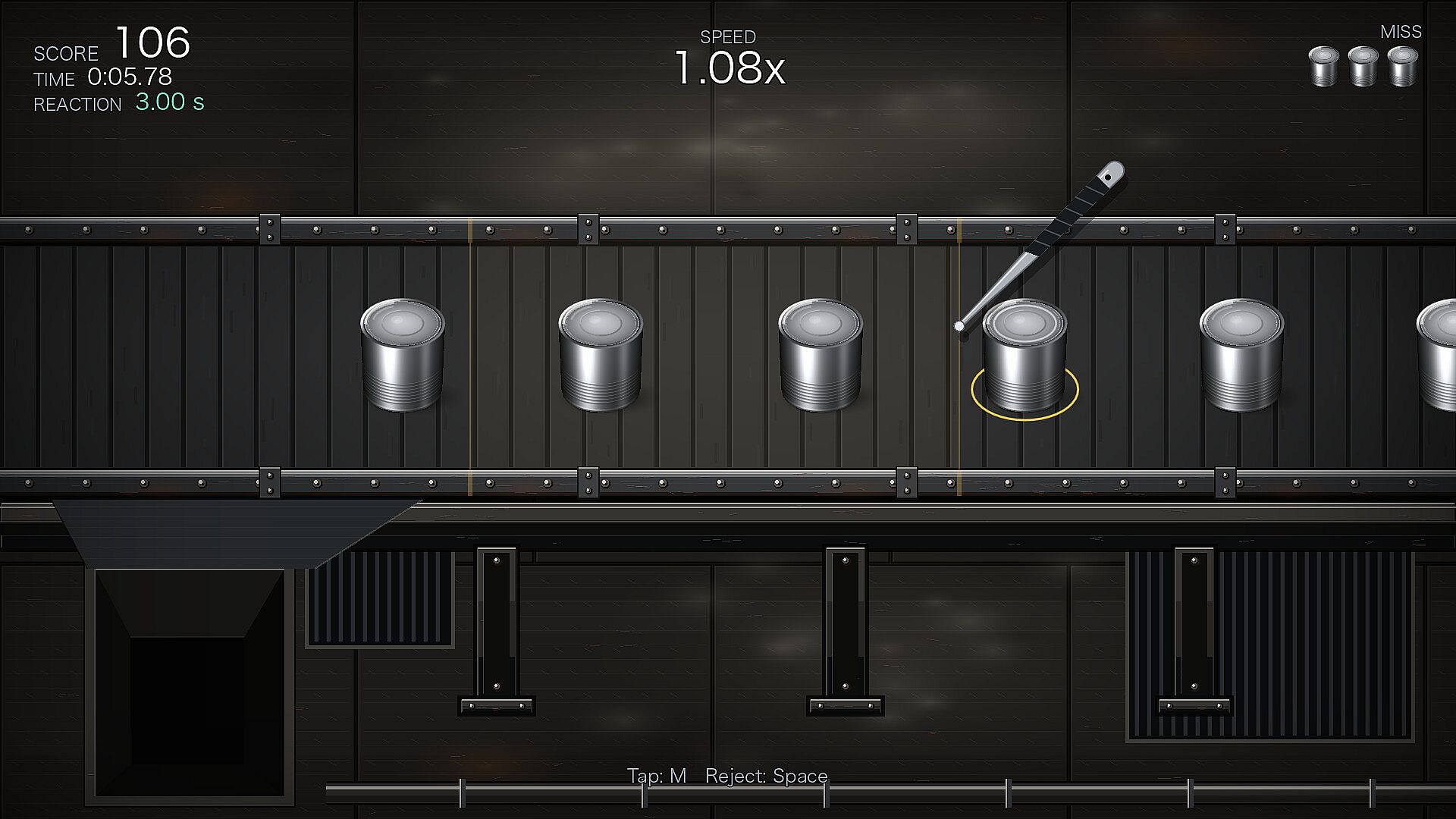
The core loop centers on tapping each can with an inspection rod and interpreting the returned tone. Every can appears identical on screen, forcing complete dependence on auditory cues. A clean ring signals a good can, while a slight pitch shift reveals a defect. The timing window for tapping and rejecting remains fixed in separate zones, creating a brief travel period for decision making before the can reaches the rejection point.
Speed increases progressively during a single continuous run, with cans arriving closer together as the shift advances. Missing three defects ends the attempt. Reaction speed directly influences achievement progress, rewarding quick identification and removal of faulty items. The design ensures that visual elements provide no assistance, keeping focus locked on the audio feedback from ten distinct tap sounds derived from actual canning defects.
Game Modes
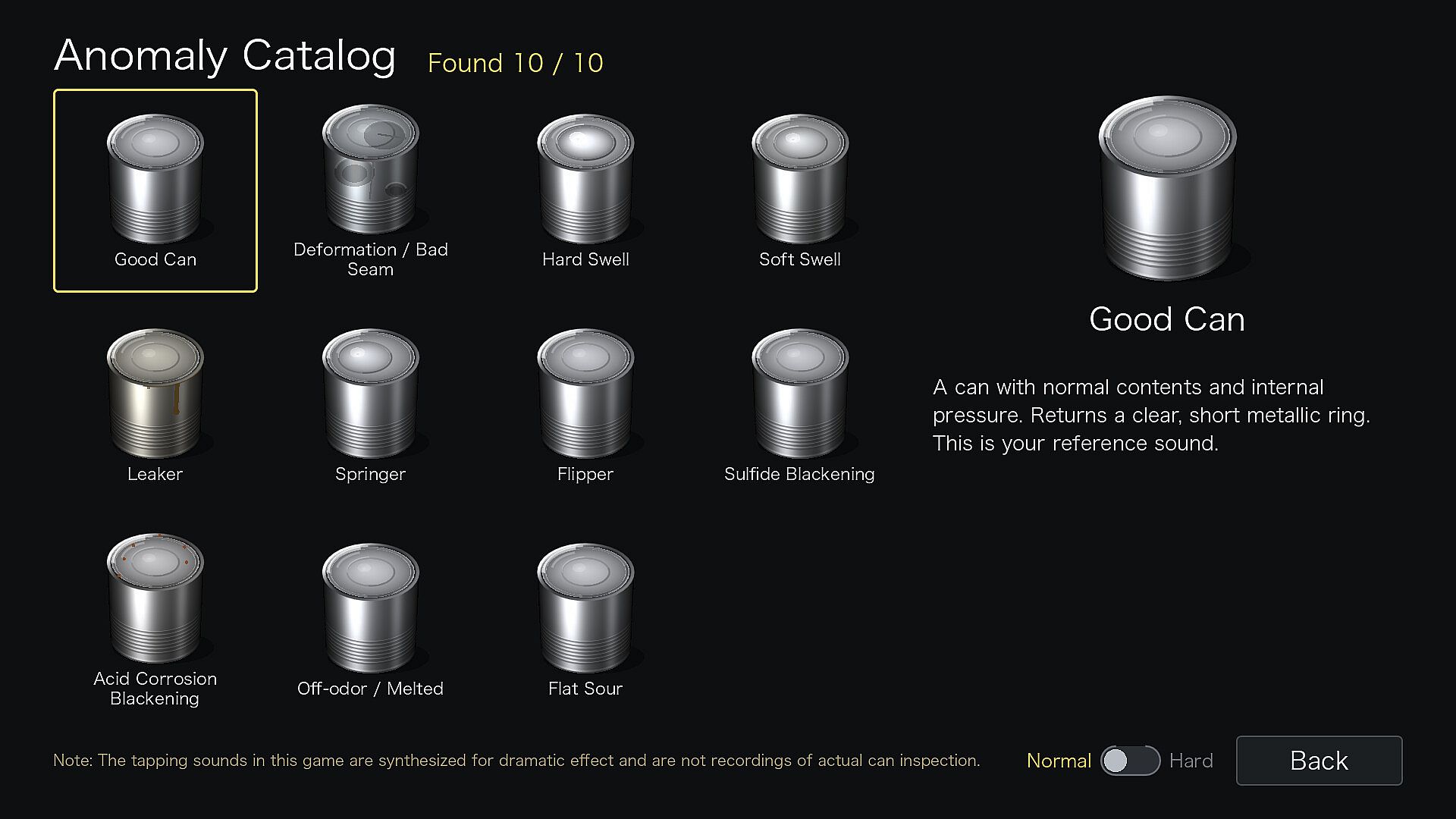
Standard play consists of one uninterrupted run where the belt accelerates and density rises over time. Success depends on sustained accuracy under mounting pressure. Completing the defect catalog unlocks Hard Mode, which narrows the pitch differences between good and bad cans for an increased challenge.
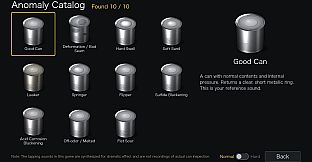
The catalog itself logs each successfully rejected anomaly, documenting ten real-world cannery issues such as hard swell, flipper, and flat sour. Each entry includes reference art and explanatory notes on the internal problem. Filling this record grants access to the harder variant without altering the fundamental single-run structure.
Controls and Presentation
Input supports keyboard, mouse, and gamepad with full rebinding options. The interface remains minimal to maintain the audio focus. Eleven languages are available for text elements. Headphones or earbuds receive strong emphasis because room speakers can mask the fine pitch distinctions required for accurate play.
All visuals are generated procedurally at runtime, and the tap sounds are synthesized directly in code. This approach reinforces the rule that appearance offers zero information about internal condition.
Is It Worth Playing?
DAKENSHI suits players who enjoy focused audio challenges and reaction-based gameplay in a single-player setting. The mechanics test auditory precision and quick decision making within an escalating endless format. Those drawn to indie titles that strip away visual crutches may find the concept engaging for short sessions or repeated attempts at higher performance.
Hard Mode provides a clear progression path once the catalog fills, extending replay value through tighter timing demands. The game remains in a pre-release state with no player reviews available yet, so expectations should align with its described emphasis on listening skill rather than broad action or narrative elements. Availability on PC makes it accessible for anyone with compatible audio hardware.