









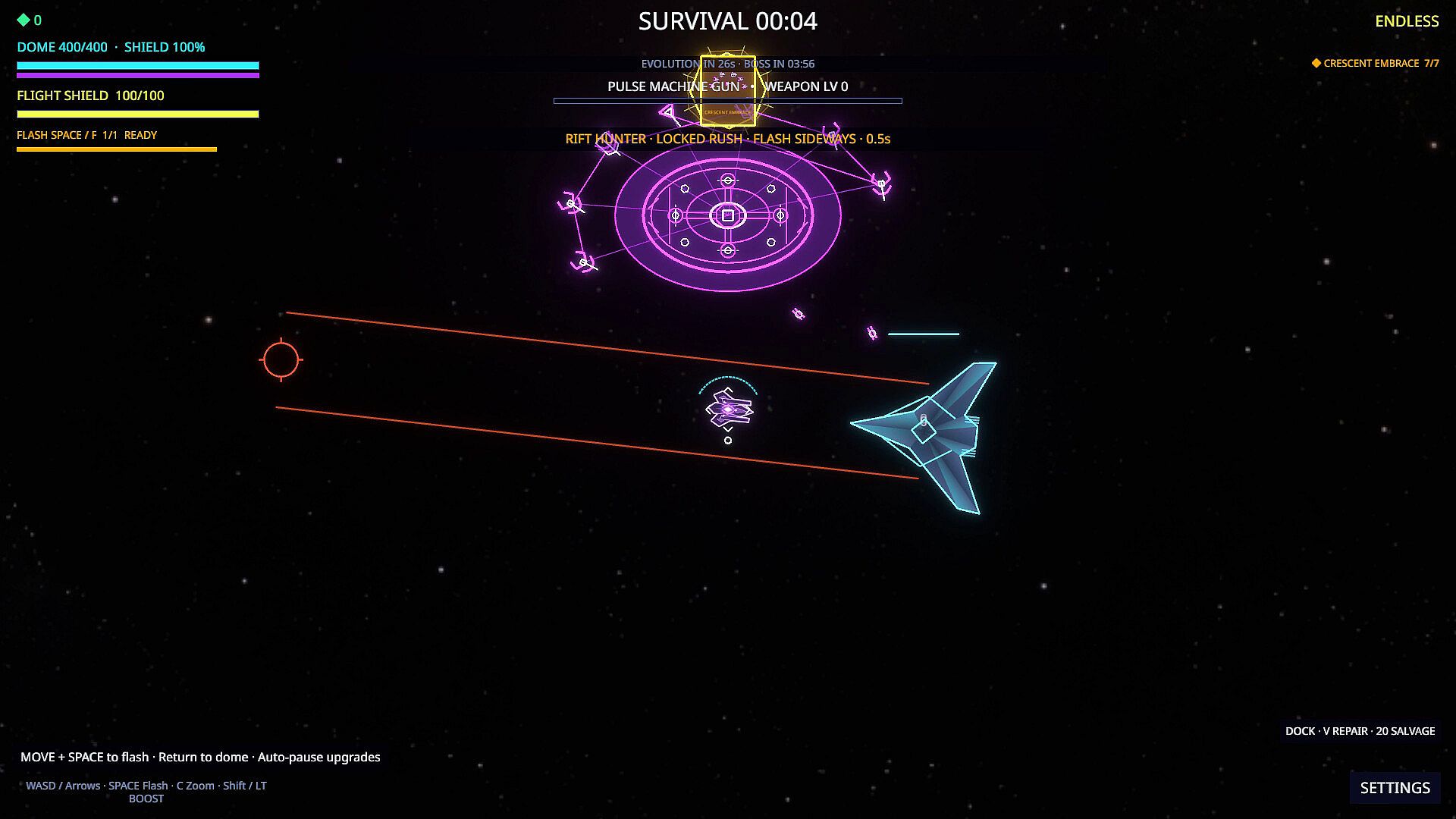
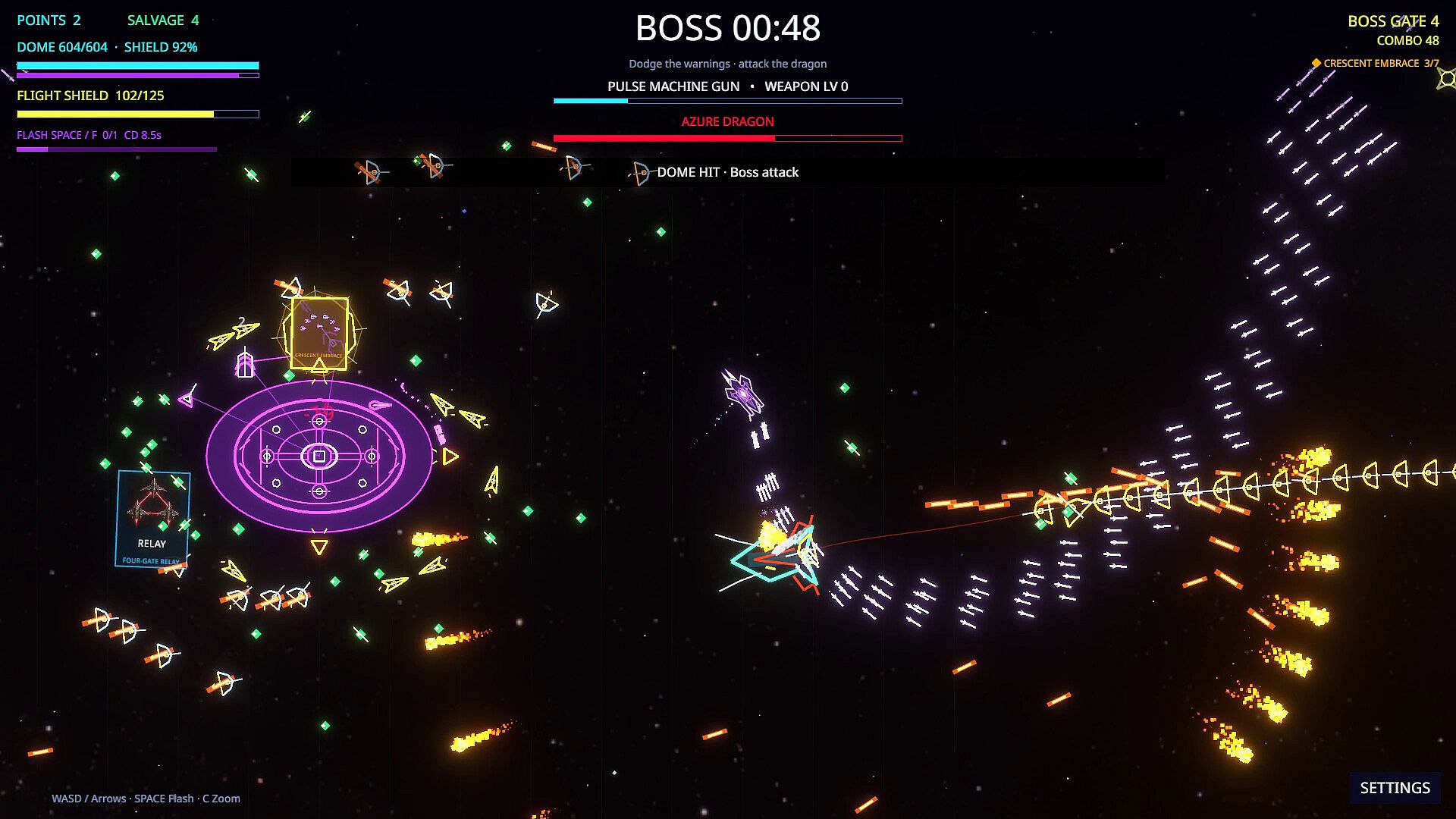
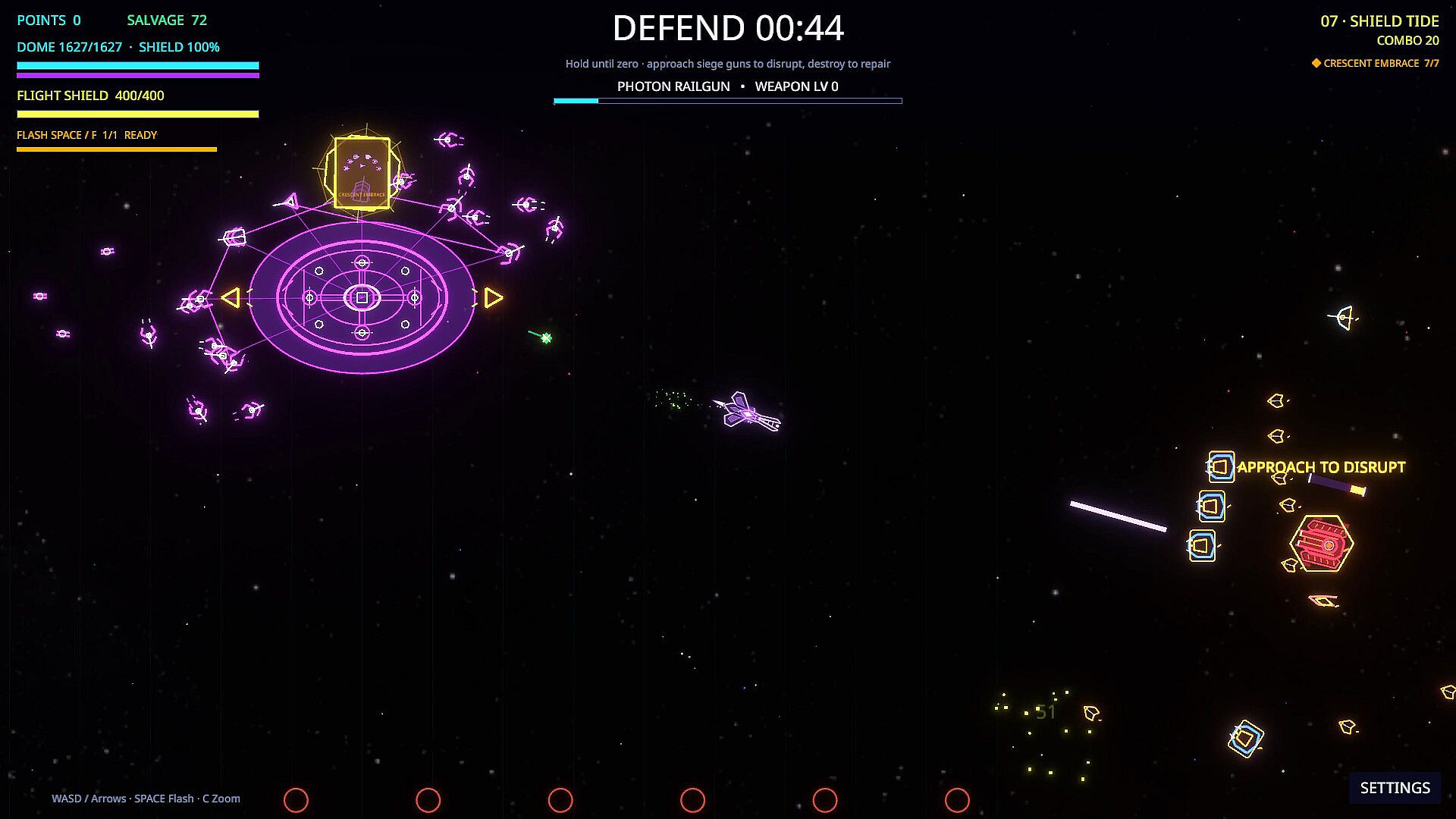
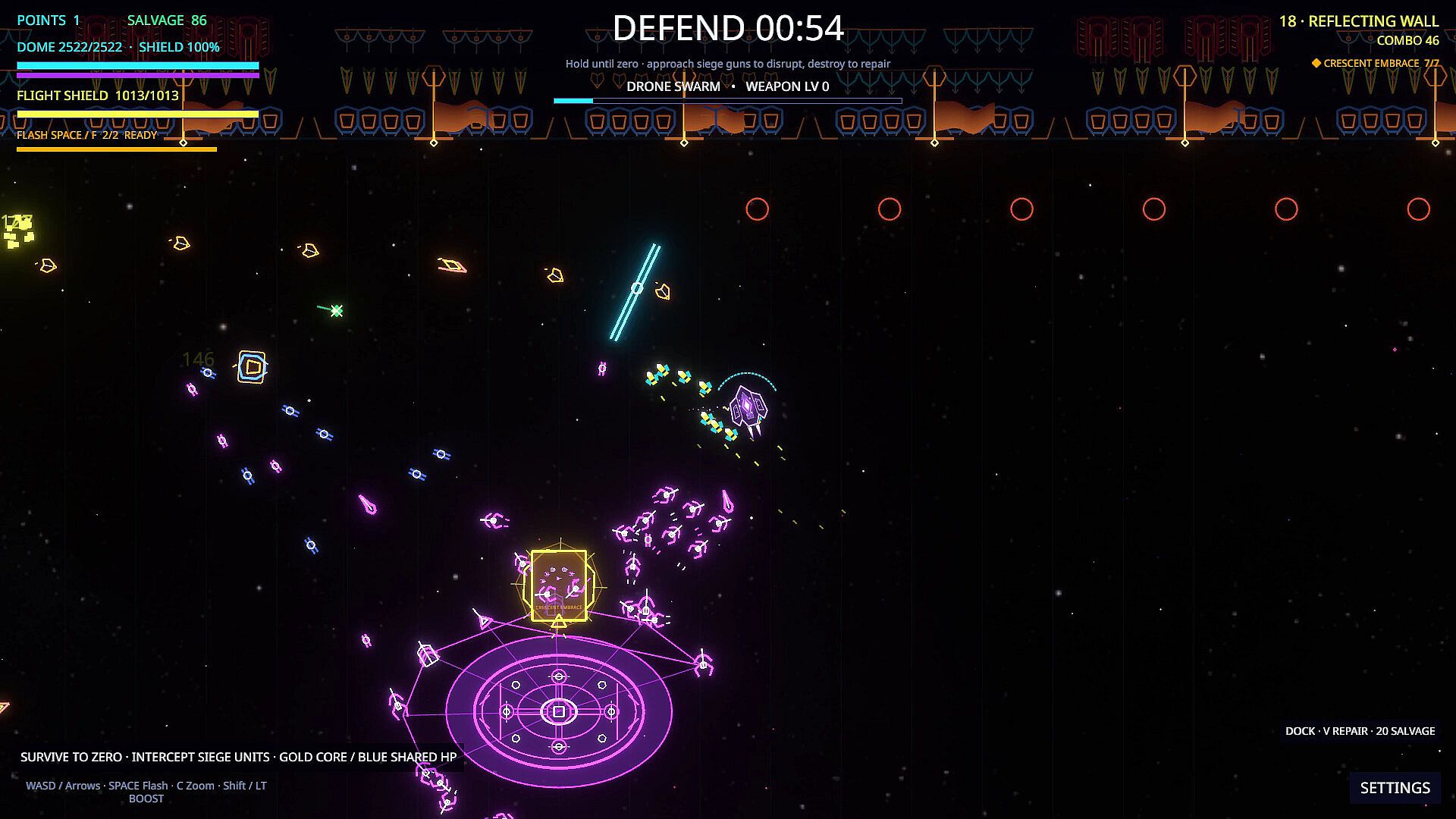
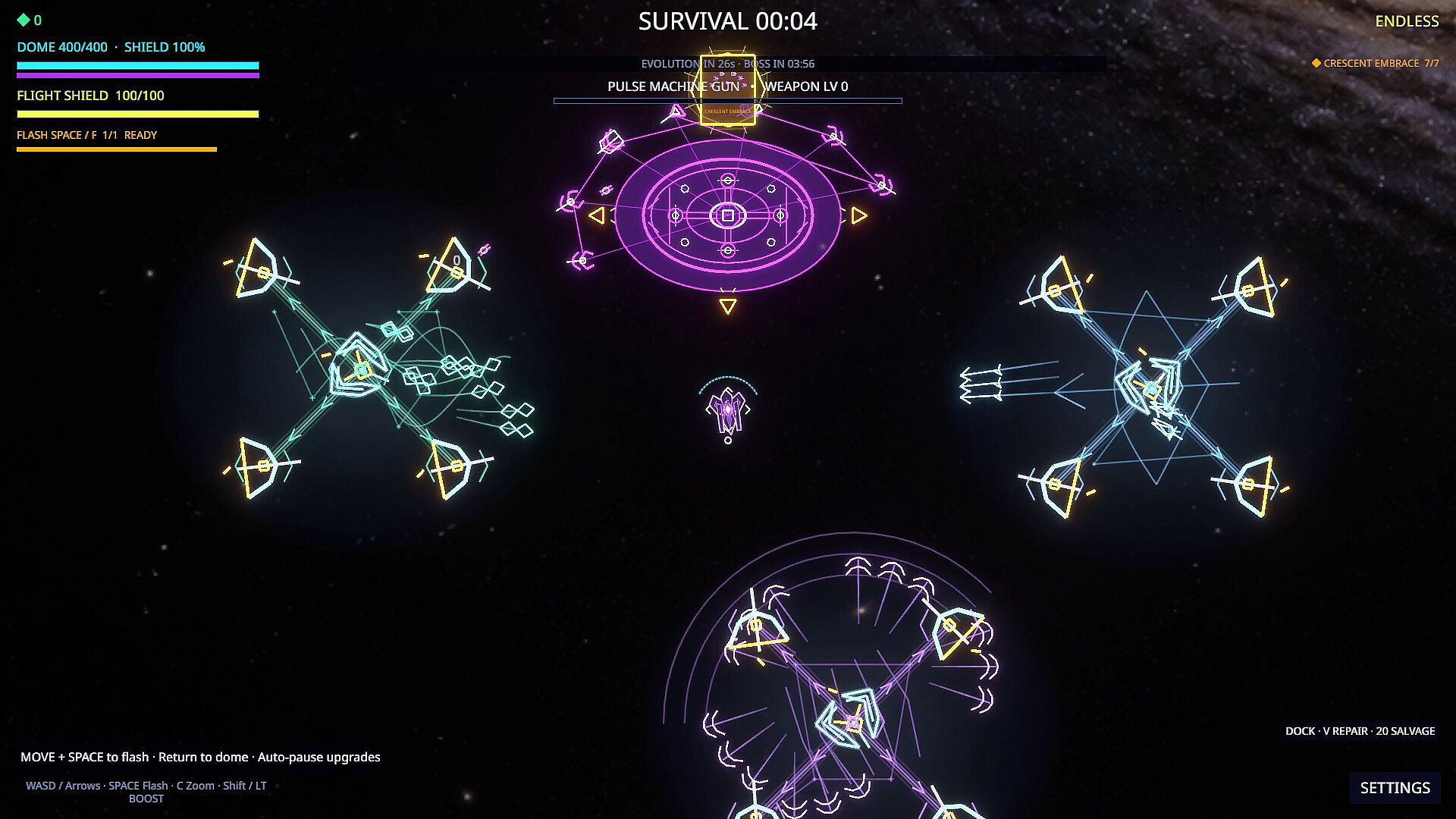
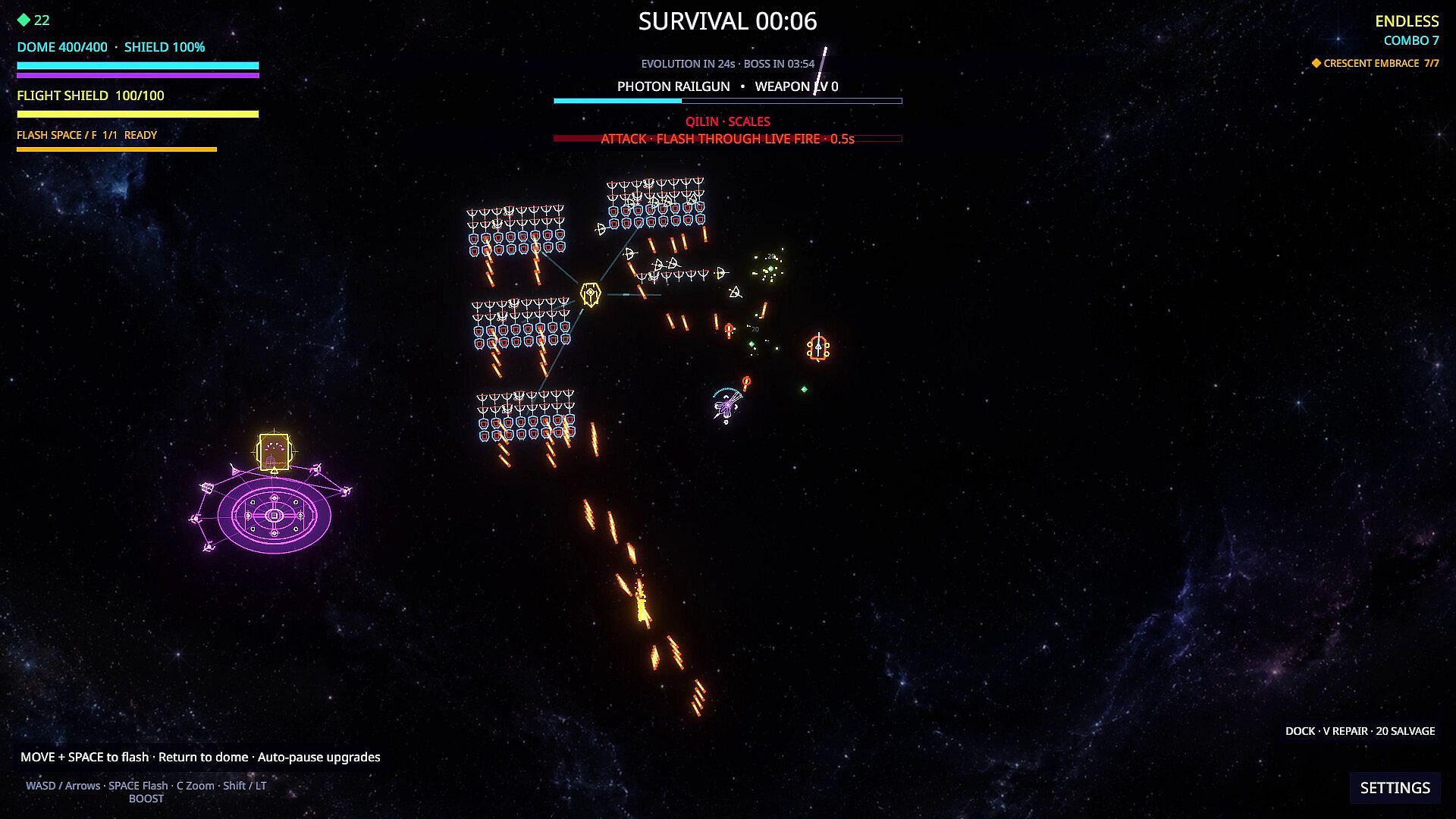
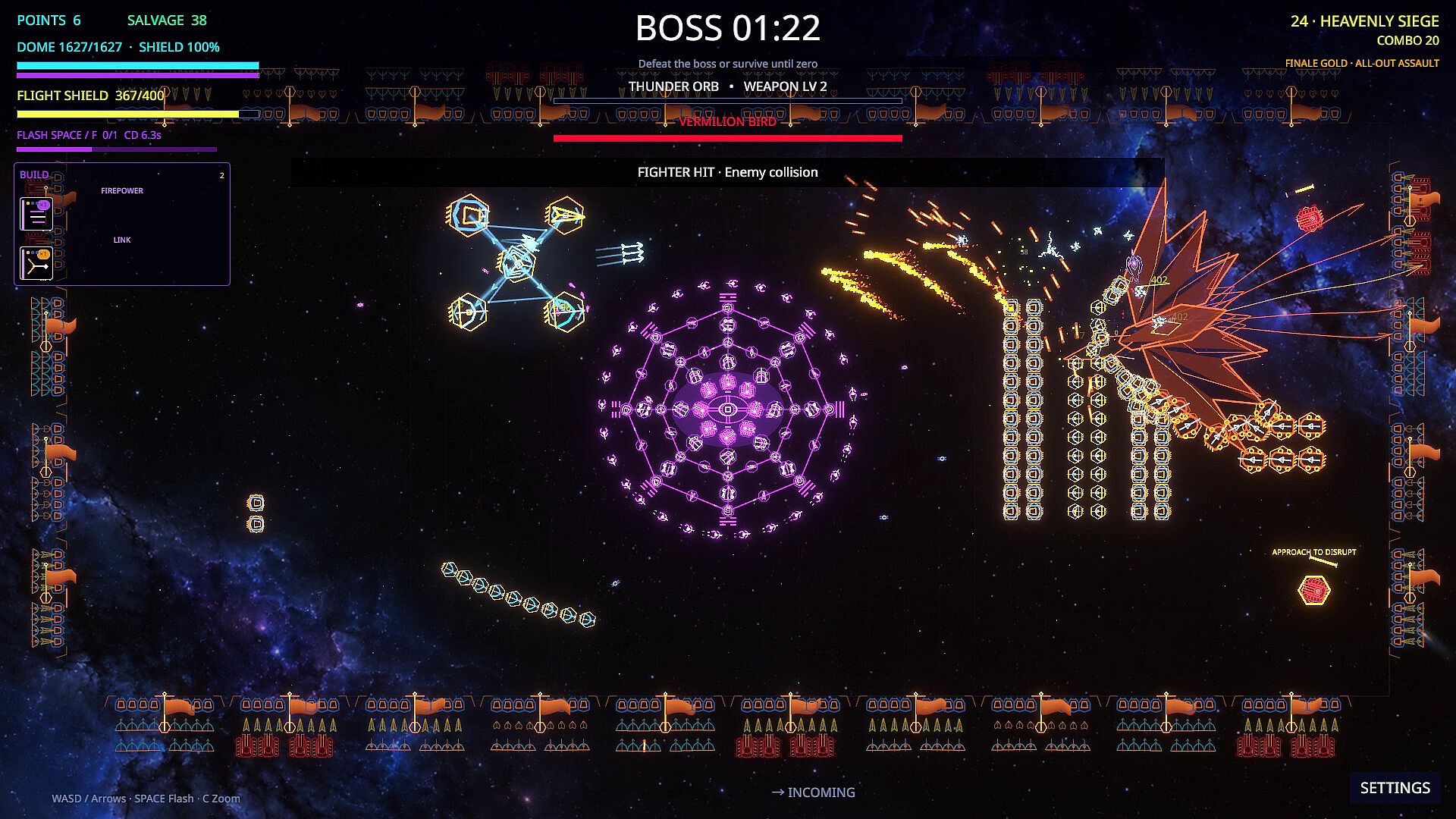
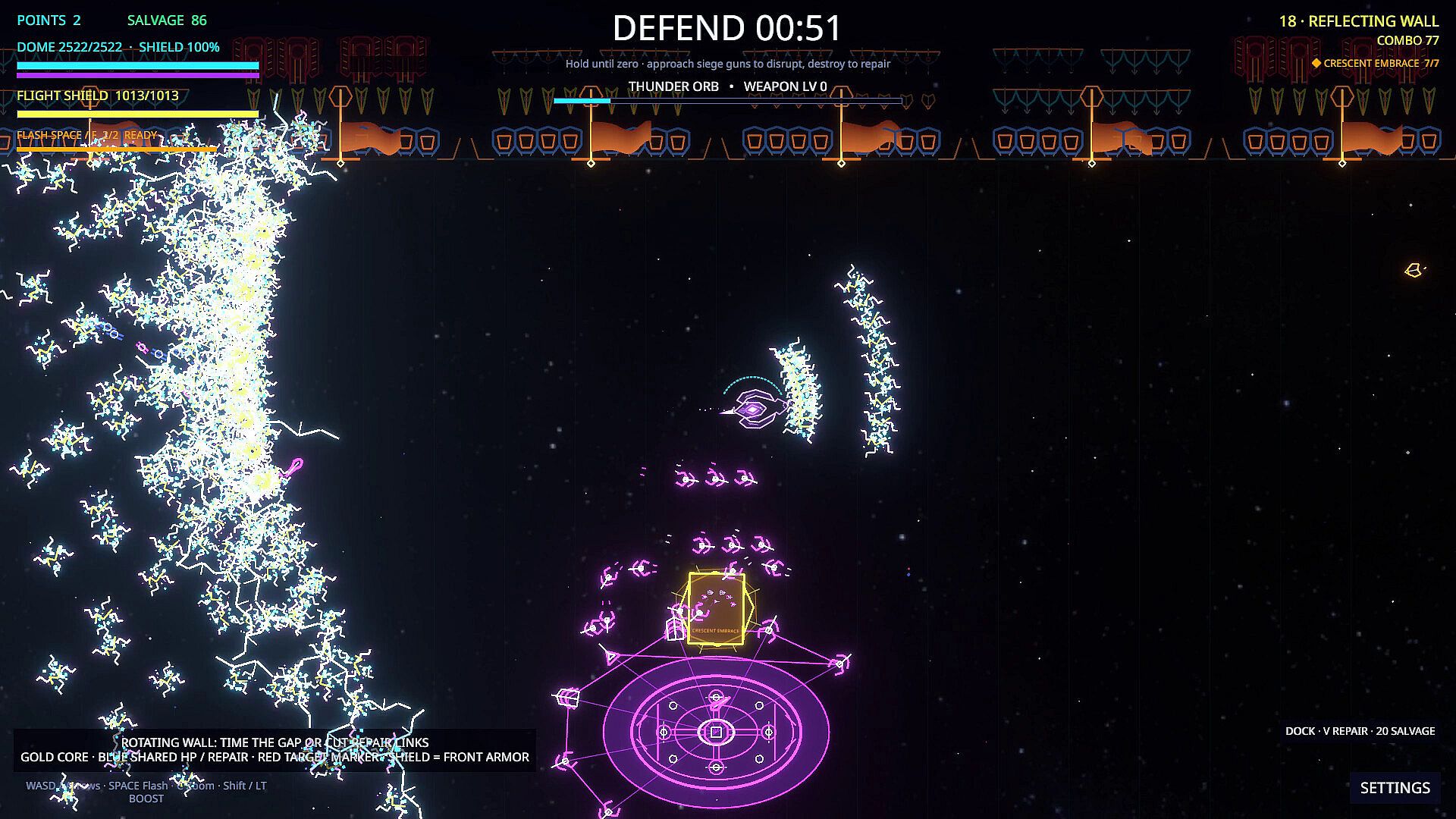
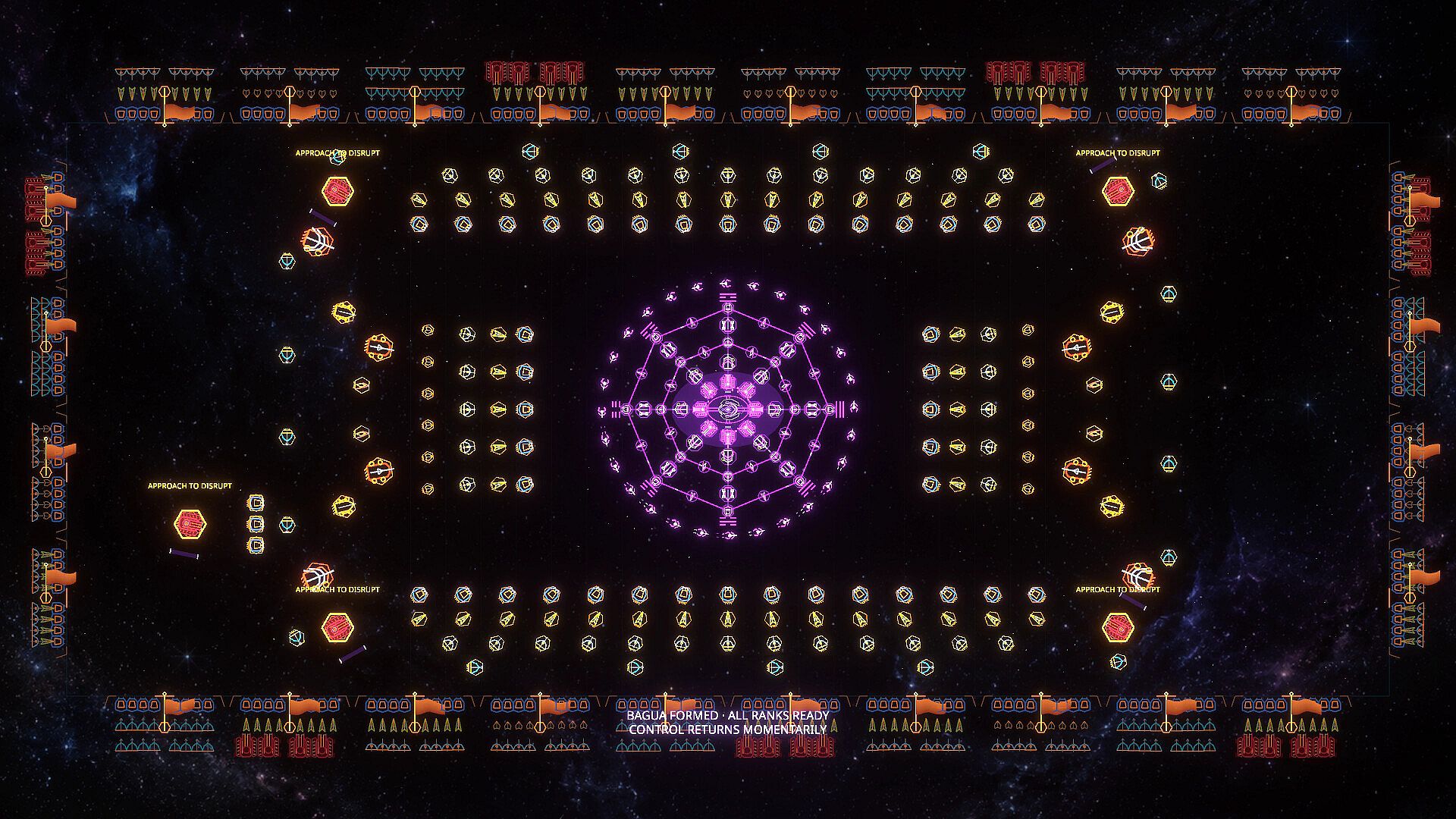
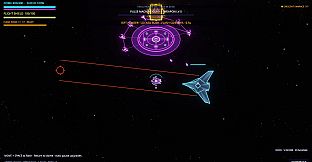
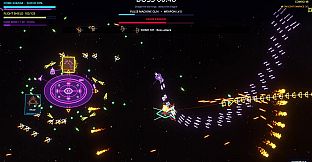
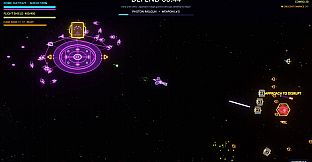
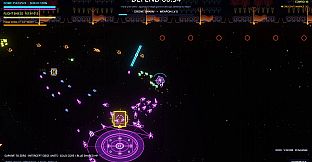
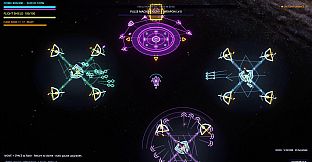
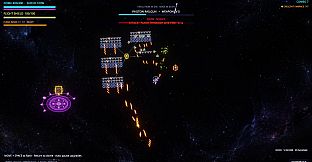
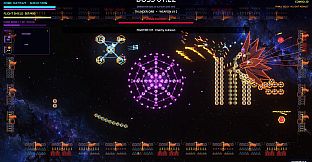
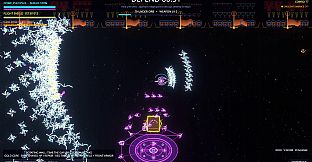
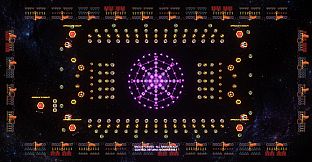
Deep Space Siege is a top-down space survival shooter that blends roguelite progression, precise movement, and base defense mechanics. Players control a single fighter tasked with protecting a central dome against waves of linked enemy ships that form constellations and coordinated formations. The game emphasizes automatic weapon fire while the player manages positioning, timing dodges, and upgrade choices to keep both the fighter and the dome intact.
Gameplay
Core play revolves around pushing out from the dome into enemy lines to collect upgrades before retreating to safety. Weapons activate automatically once selected, leaving the player free to focus on movement and evasion. Dodging takes the form of a violet lightning flash that can be chained with upgrades for consecutive bursts. Returning to the dome restores shields and speeds up dodge recharge, creating a push-and-pull rhythm between aggressive sorties and defensive repositioning.
Before each run, players pick a primary weapon that defines their starting approach. Options include the pulse machine gun for sustained fire, the scattergun for close-range spreads, the thunder orb for area lightning effects, the photon railgun for piercing lines, the missile launcher for explosive coverage, and the drone swarm for autonomous strafing support. Earned upgrades then reshape these weapons through branching skill trees that improve fire rate, projectile patterns, reach, and synergies. Defensive formations around the fighter further expand tactical options as the loadout evolves into a dense counteroffensive.
Enemy behavior adds layers of challenge. Ships connect into luminous constellations that share defenses and coordinate volleys. Formations advance in patterns, while rifts open to release charging hunters. Larger threats include the serpentine Azure Dragon and the spreading wings of the Vermilion Bird, each requiring players to read attack cues and locate gaps in their barrages.
Game Modes
The 24-stage campaign forms the main experience. Players collect salvage across stages, spend upgrade points between them, and fight through escalating armies and bosses. Completion unlocks harder playthroughs that test refined builds against increased difficulty.
Endless mode becomes available after the campaign. It pits the player against continuously scaling waves, constellations, and rift ambushes. Upgrade selections pause the action to allow deliberate planning, encouraging experimentation with different weapons and skill paths while chasing longer survival times.
Progression and Upgrades
Each run rewards salvage that converts into upgrade points for permanent investment across the campaign. These points feed into the fighter's skill tree, unlocking consecutive flashes, faster recharges, expanded projectile patterns, and cross-weapon synergies. The system rewards players who balance aggressive pushes with timely returns to the dome, turning early desperate escapes into sustained offensive power.
Support structures around the dome and fighter grow alongside the primary arsenal. Branching choices let players emphasize rate of fire, reach, or specialized patterns, creating distinct builds that adapt to different enemy formations and boss encounters.
Development and Future Plans
Deep Space Siege was built in Rust using the Bevy engine. Some background art, illustrations, upgrade cards, and localized text received assistance from AI tools during creation, with all assets prepared ahead of runtime. The developers plan ongoing refinements to controls, balance, and presentation while expanding content based on community input through the Steam Community hub. Feedback on weapons, encounters, and desired additions directly informs confirmed updates and roadmaps.
Is It Worth Playing?
Deep Space Siege suits players who enjoy roguelite runs combined with deliberate dodging and light base-defense pressure in a single-player top-down format. The automatic weapons reduce aiming demands, shifting focus to positioning and timing, while the dual survival requirement for fighter and dome creates meaningful risk-reward decisions. Ongoing developer support and responsiveness to feedback suggest continued improvements after launch. Those seeking precise movement challenges, build experimentation, and escalating enemy patterns will find a focused experience here, particularly if they appreciate indie action titles that reward adaptation over raw reflexes.












