


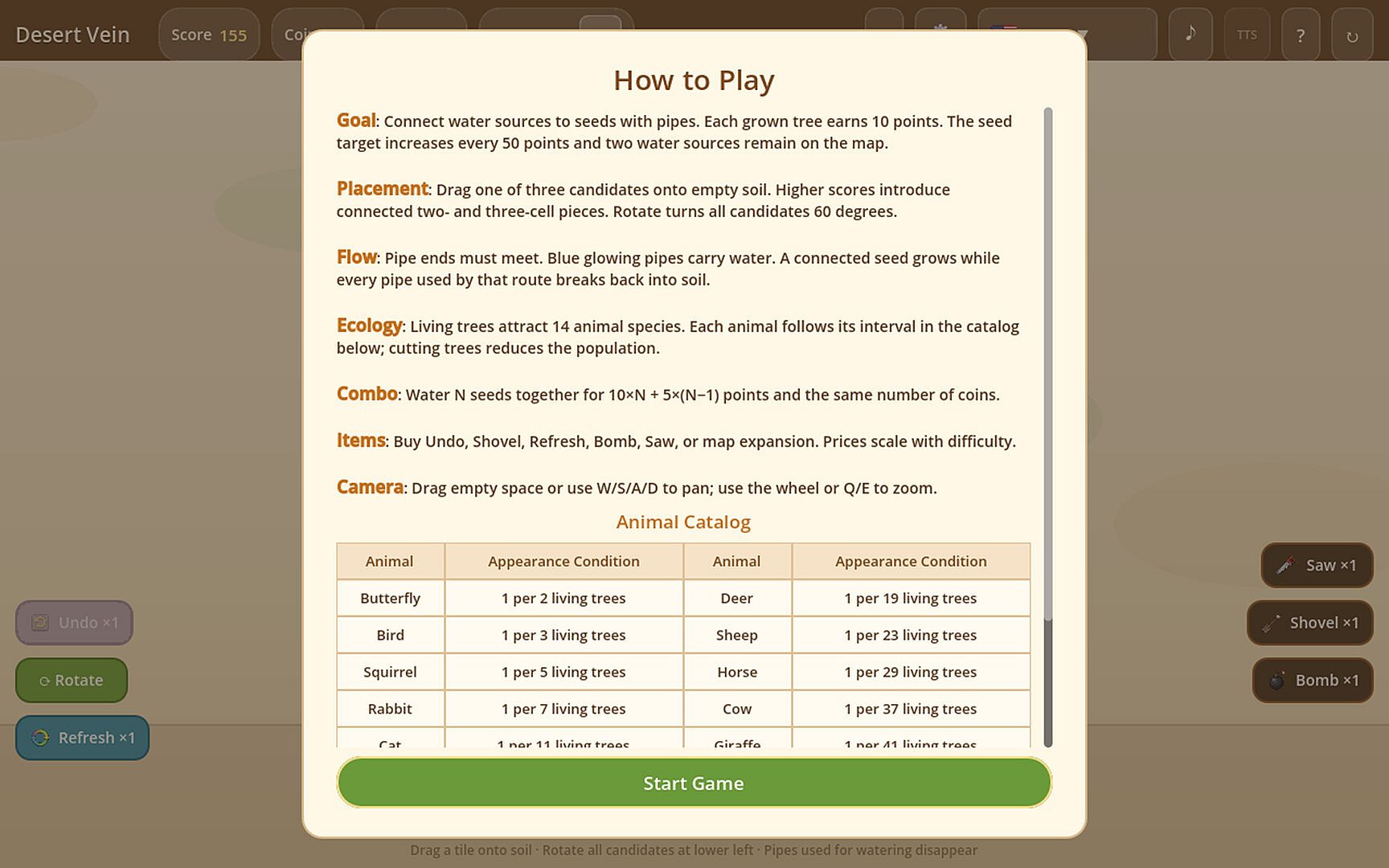

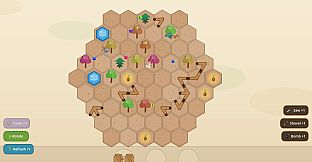

Desert Vein is a strategy, indie, and casual game for PC that centers on a relaxed hex-grid puzzle. Players restore life to arid terrain by routing water through pipes to dormant seeds, gradually transforming the landscape into a thriving forest while attracting wildlife.
Gameplay
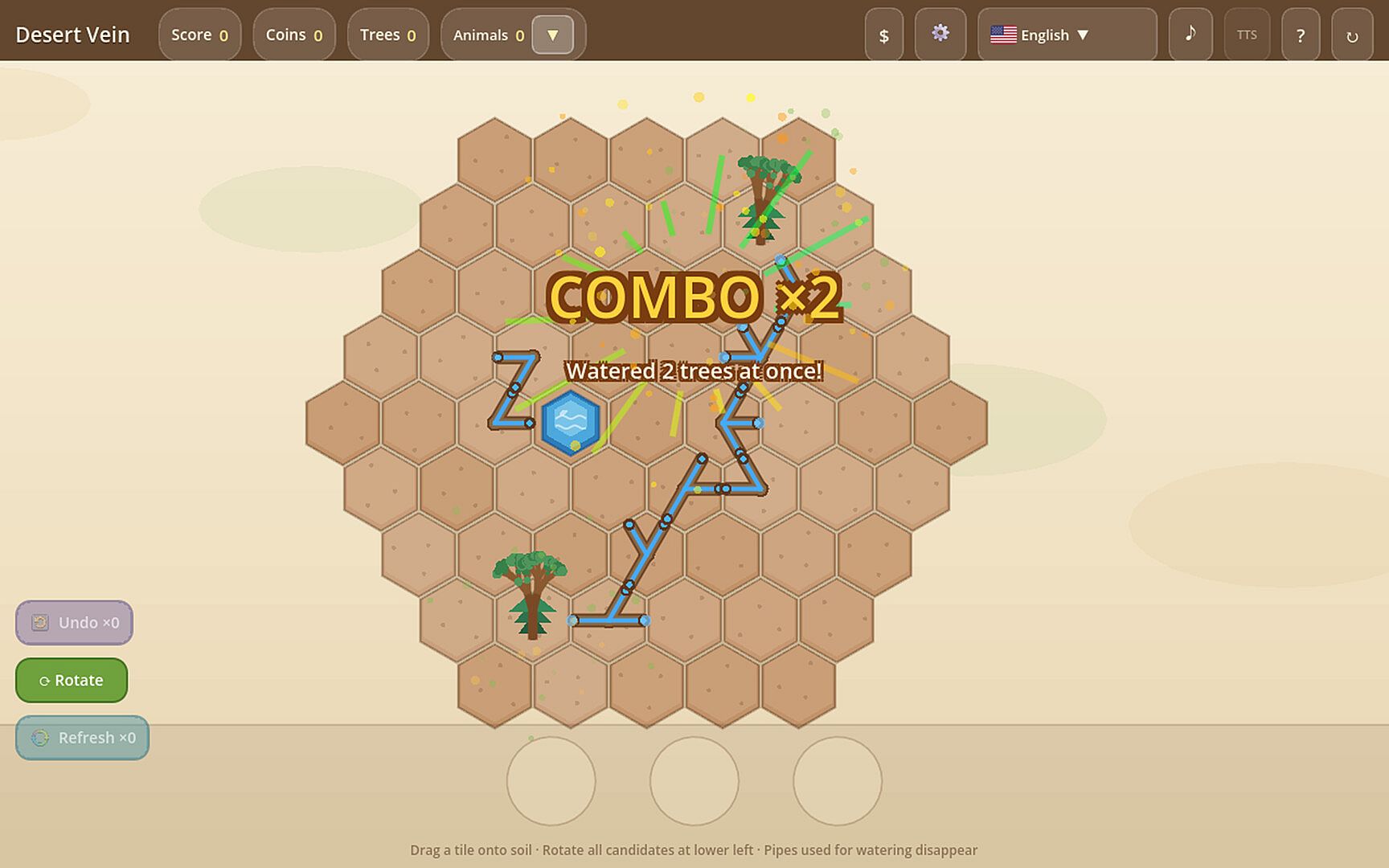
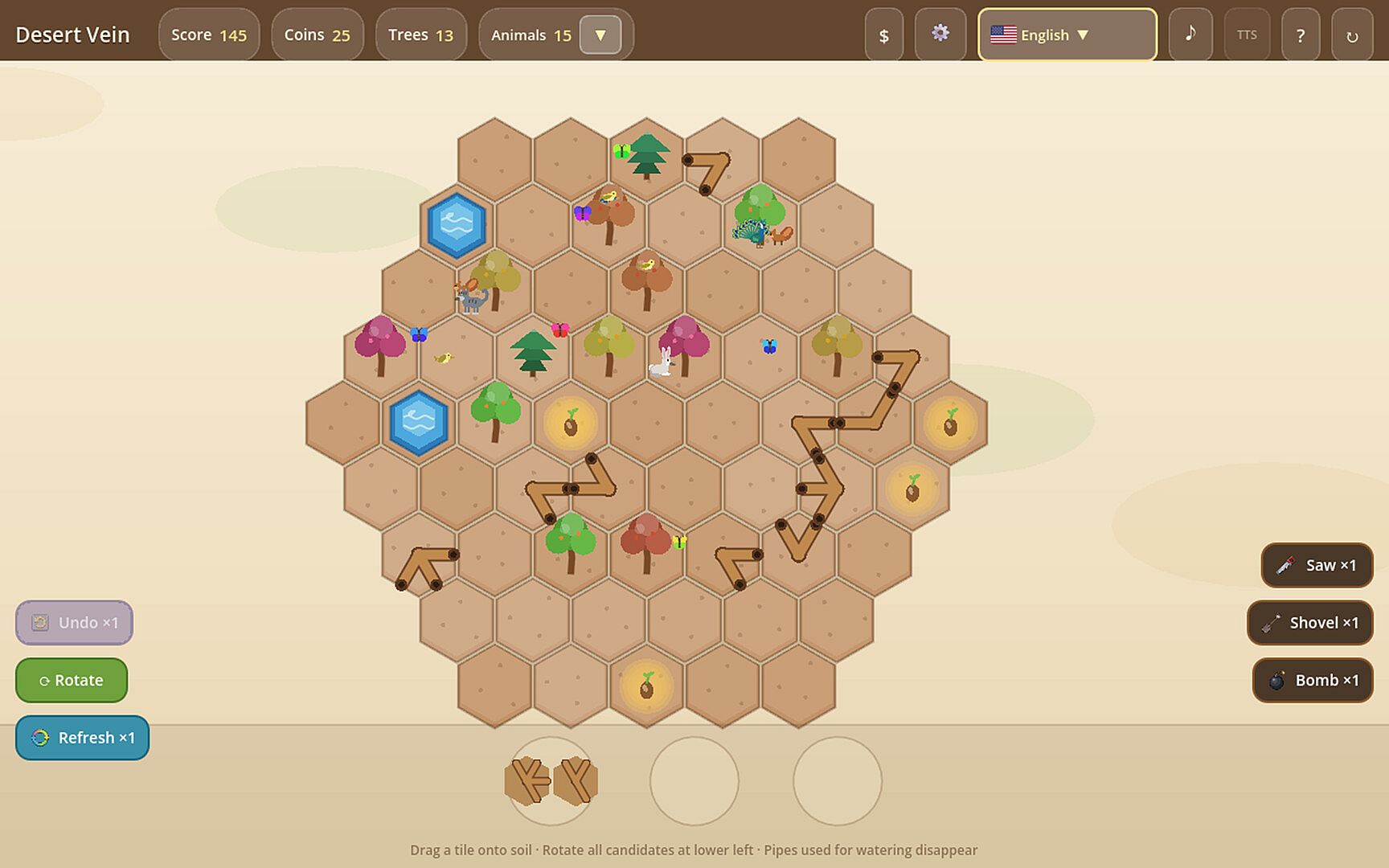
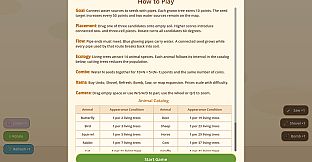
The core loop involves planning efficient waterways across a hex-based grid. Players place pipes and rotate them to link water sources with scattered seeds. Once a route succeeds, the pipes used in that path revert to soil, leaving the watered seeds to sprout. This mechanic encourages careful route design to minimize waste and maximize coverage on each map.
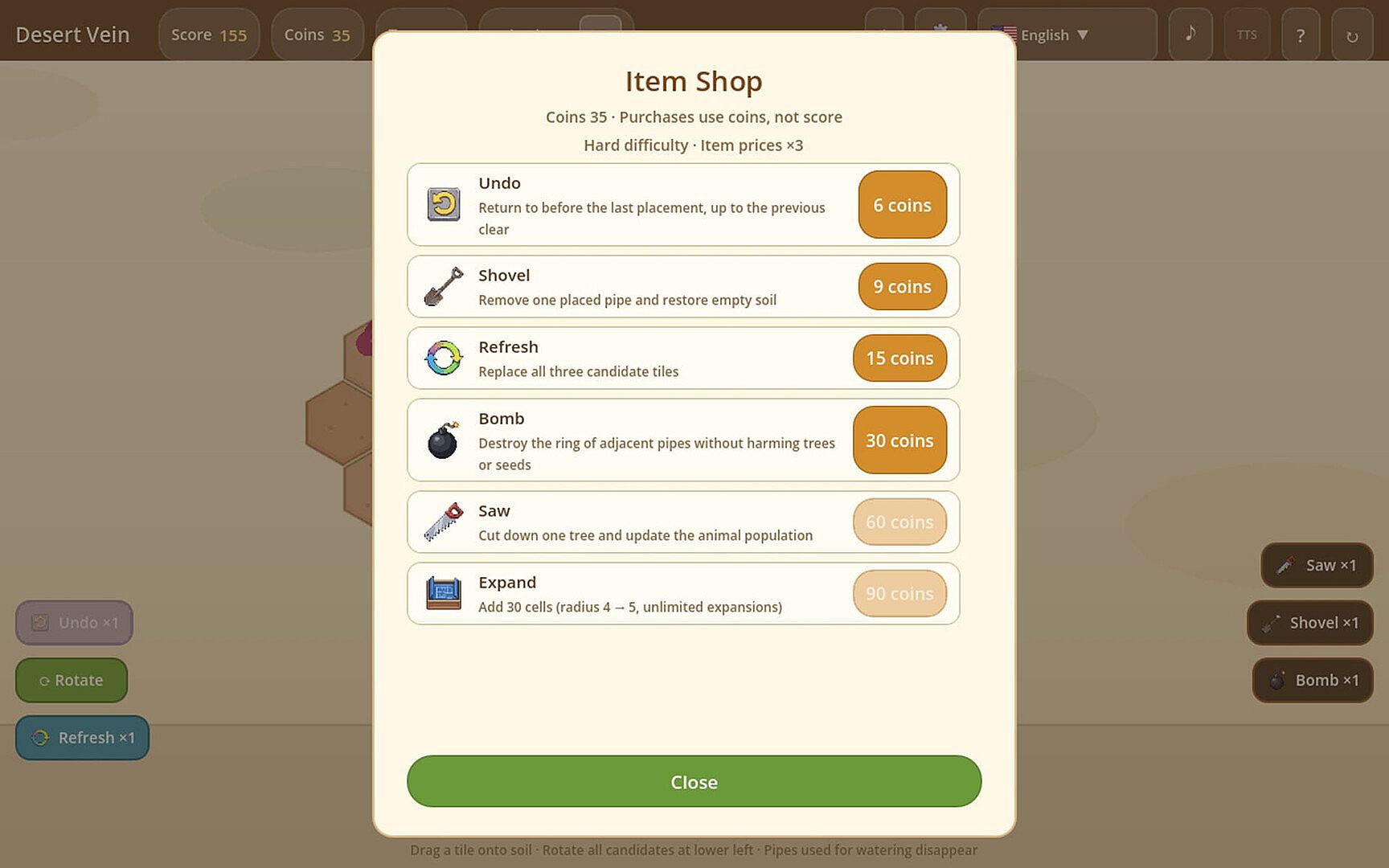
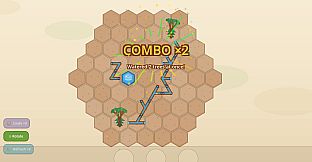
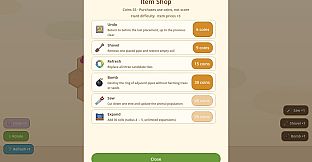
Combos arise when multiple seeds receive water in a single connected route. These simultaneous activations yield extra points and coins. Coins serve as currency for acquiring tools that assist with puzzle solving or recovery from mistakes. The available tools include Undo, Shovel, Refresh, Bomb, Saw, and options for map expansion. Item costs scale with difficulty level, while the base scoring system remains consistent regardless of chosen challenge.
As the oasis grows, the map can expand outward. Five varieties of trees become available for planting, and their presence influences the arrival of fourteen distinct animal species. Animal populations scale directly with the number and type of living trees established across the grid.
Game Modes
Desert Vein presents its challenges through a continuous single-player puzzle structure rather than distinct named modes. Progression occurs via successive maps that introduce more seeds, larger grids, and greater emphasis on combo efficiency. Difficulty adjustments primarily affect tool pricing and the density of obstacles, allowing players to tailor the experience without altering the fundamental scoring or growth systems.
Progression and Features
Early stages focus on basic pipe connections to isolated seeds. Later maps reward players who plan overlapping routes that water several seeds at once. Map expansion tools open new areas for additional seeds and tree placements, creating longer-term goals around forest density and wildlife diversity. The return of used pipes to soil after each successful watering adds a layer of resource management, as players must continually rebuild pathways on fresh terrain.
Tree varieties and animal species serve as visible milestones. Reaching higher tree counts unlocks more animal arrivals, providing a sense of tangible environmental change. This feedback loop ties directly to the pipe-laying decisions made throughout each session.
Is It Worth Playing?
Desert Vein suits players who enjoy methodical, low-pressure strategy puzzles with clear cause-and-effect progression. The hex-grid pipe system rewards thoughtful planning and combo awareness, while the coin economy and tool options provide flexibility for different skill levels. Those seeking a calm experience that still demands spatial reasoning will find the steady expansion from barren land to populated oasis satisfying. The game remains a focused indie title without additional layers such as competitive elements or ongoing seasonal content, making it ideal for short to medium sessions centered on puzzle completion and gradual world-building.