

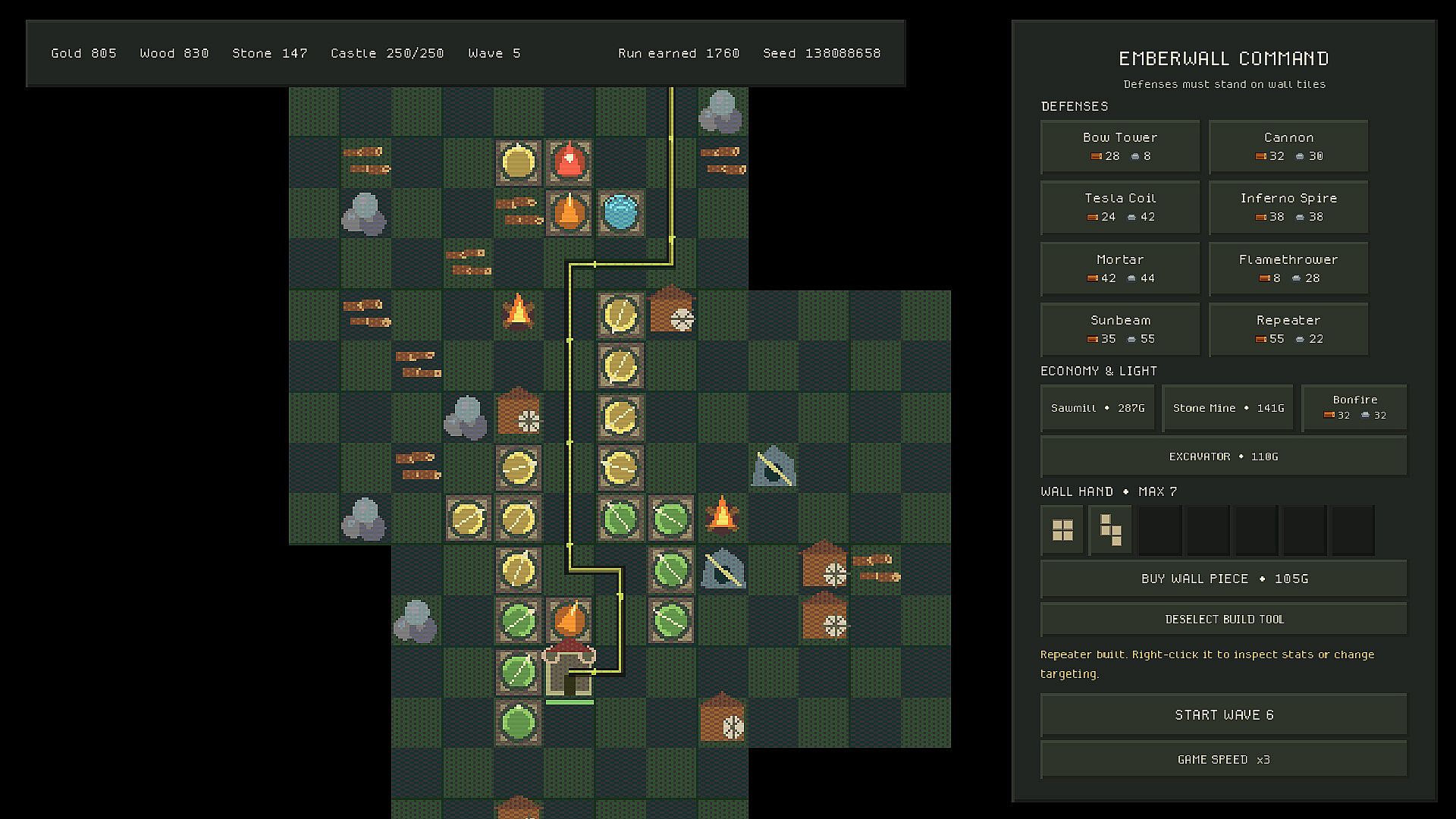
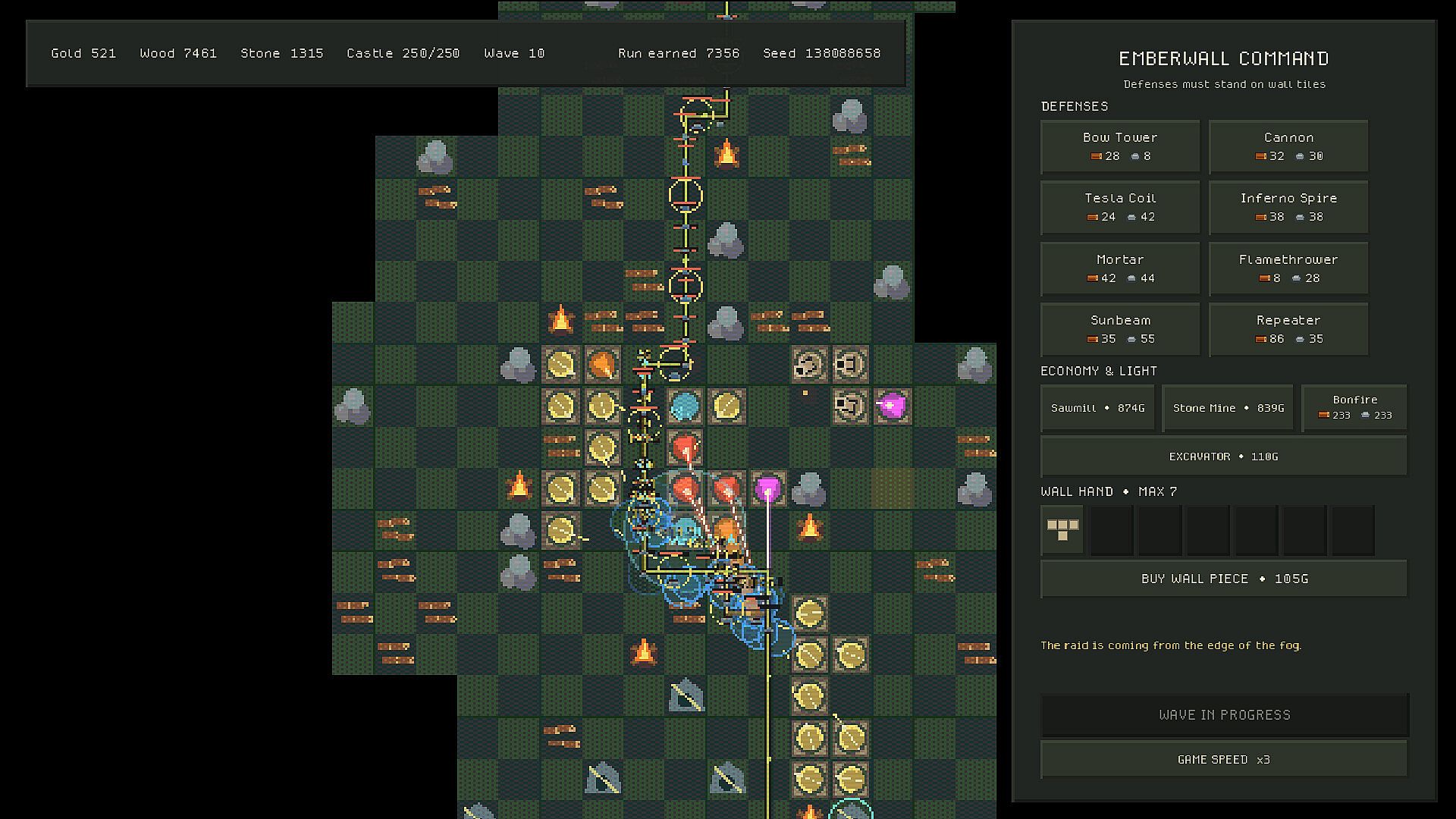
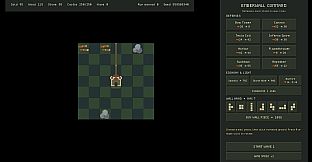
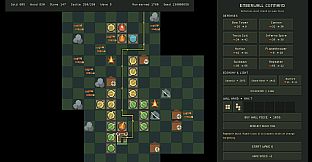
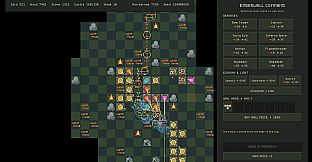
Emberwall is a top-down roguelite tower defense strategy game developed for PC. Players defend a castle from waves of enemies by reshaping the battlefield with tetromino-shaped walls, managing resources from deposits, and combining towers with elemental upgrades in runs that feature procedural maps and permanent progression systems.
Gameplay
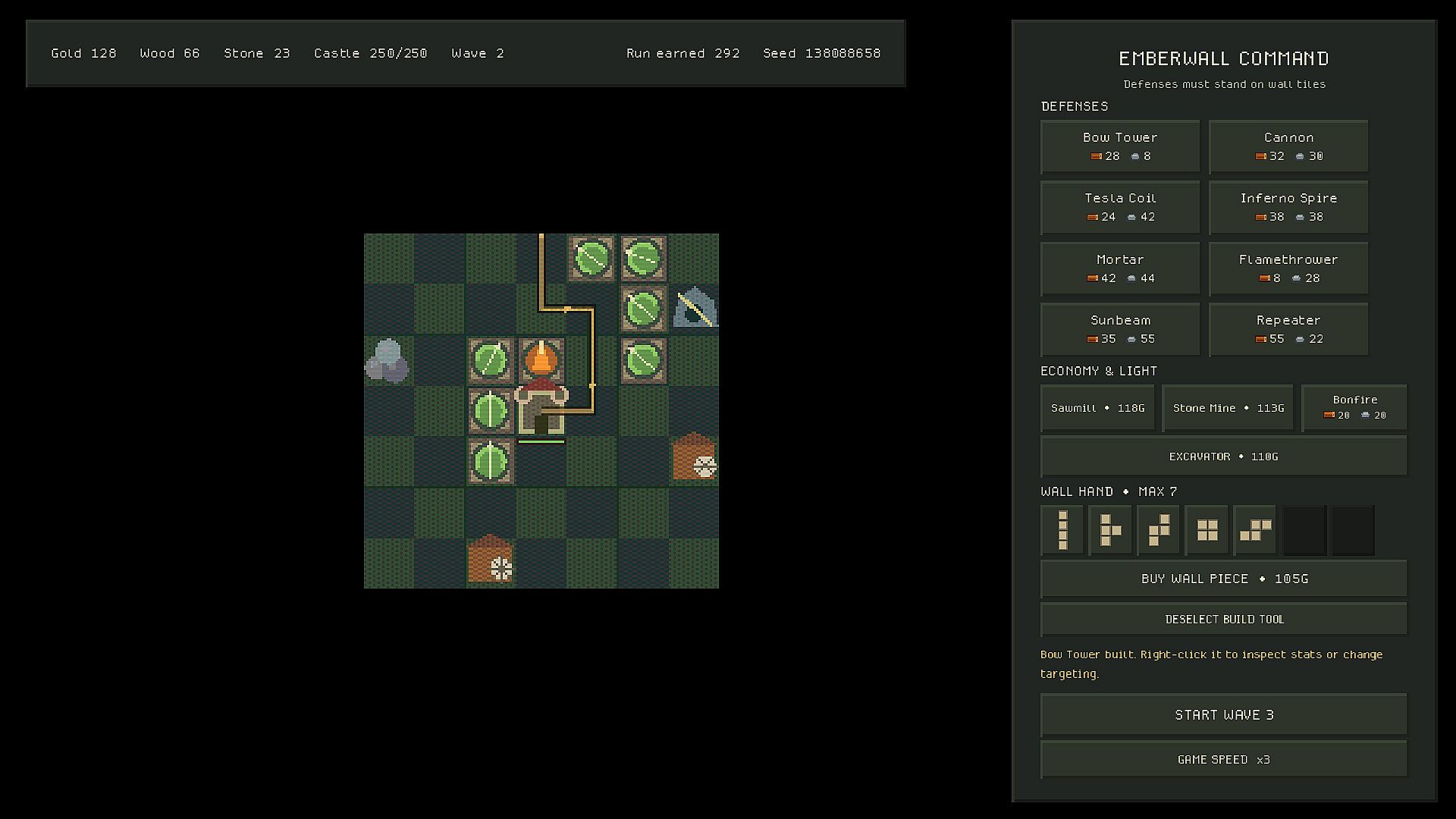
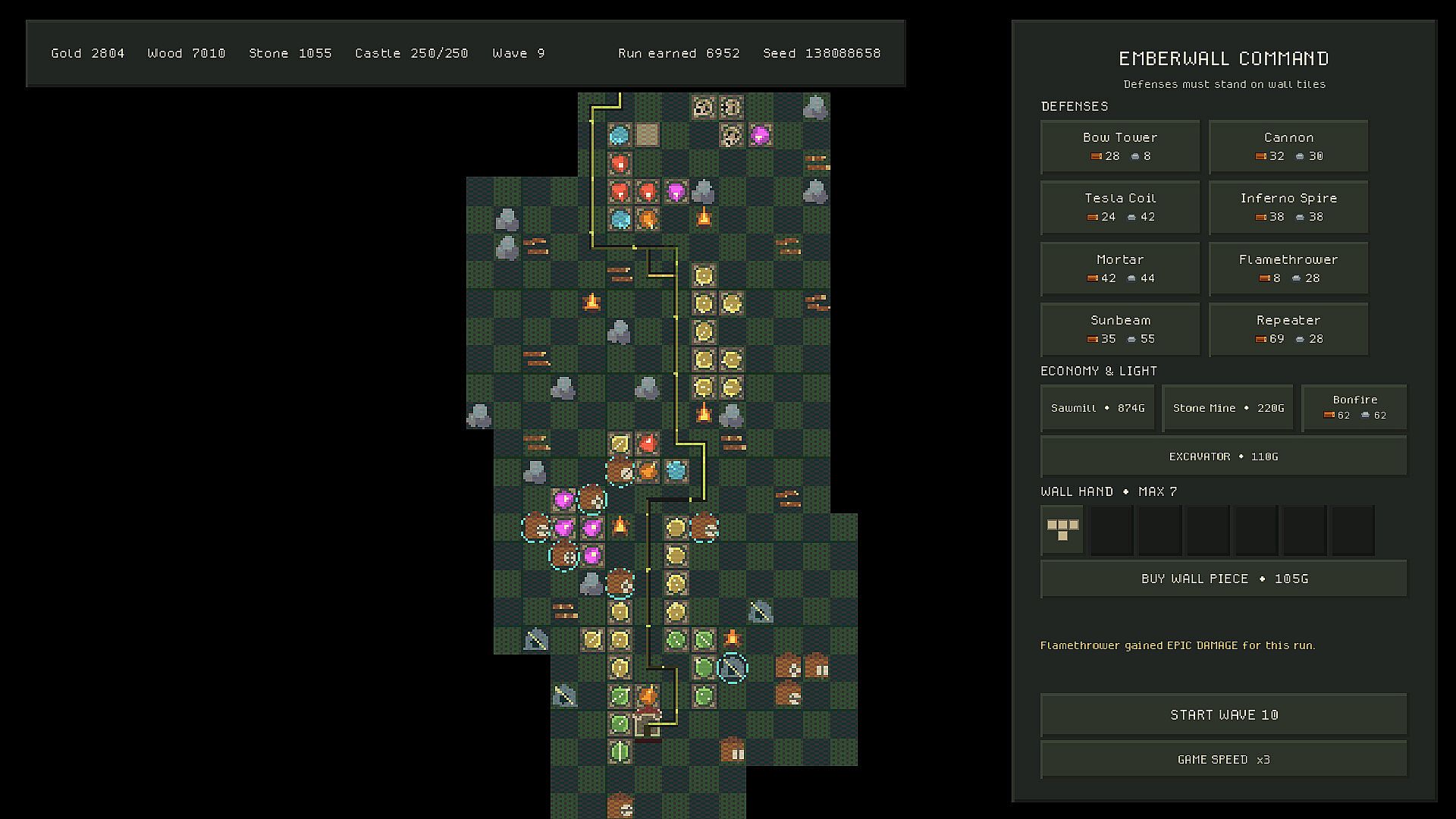
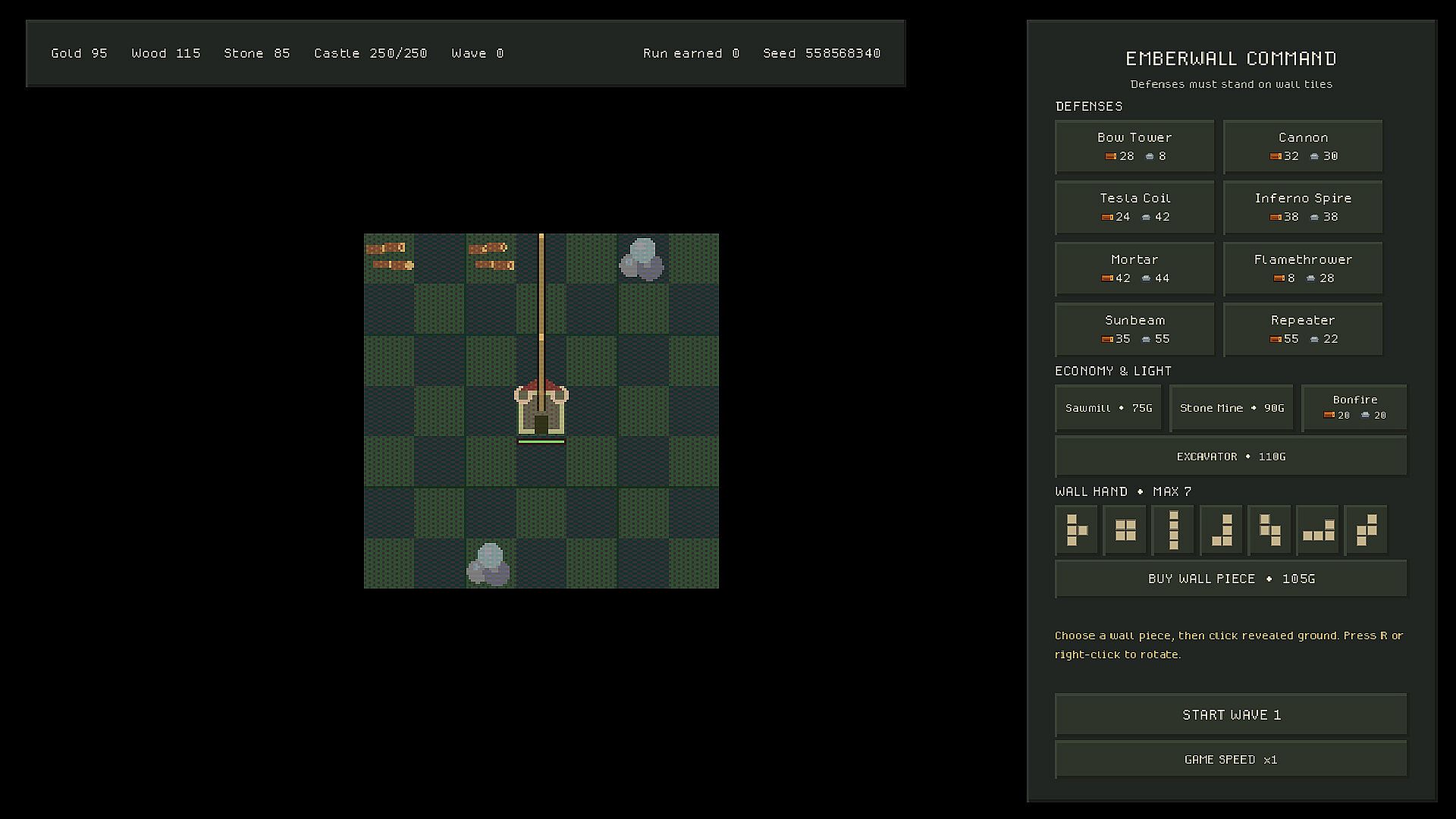
The core loop centers on path-building and defense placement across an expanding, fog-covered map. Enemies advance from the north toward the castle, and players place wall pieces to redirect or split their routes while positioning towers for maximum effect. Surrounding the castle entirely forces enemies to break through the weakest section, adding risk to overly defensive layouts.
Resource management plays a key role. Wood and stone deposits block paths and construction, so players build sawmills and mines on matching sites to generate materials during waves. These resources fund walls, towers, and map expansion. Bonfires push back the darkness to reveal new deposits and push enemy spawns farther away.
Tower options include bow towers, cannons, tesla coils, inferno spires, mortars, flamethrowers, sunbeam lasers, and repeating crossbows. Each has distinct attack patterns and upgrade paths. Targeting priorities let players focus fire on closest threats, highest-health units, lowest-health units, or those farthest from the castle. Base elements such as splash, scorch, hitch, blitz, or ice apply to towers, with combinations unlocking advanced effects like steam, flash freeze, thermal shock, backdraft, electrolysis, whiteout, and plasma link. Only one base element fits per tower, so choices carry weight.
After each wave, players select from three upgrade cards. These improve damage, range, or attack speed, add tower-specific abilities, bolster connected walls and production, or introduce challenges for bigger rewards. Rare, epic, and legendary cards deliver stronger effects, and some transform entire defenses. Later waves bring faster runners, armored foes, elites, and larger armies, requiring ongoing adaptation.
Gold collected carries over for permanent upgrades through the keep and armory. These improve the castle, resource output, new weapon unlocks, and starting power. Every run draws a different seed for fresh maps, resource placements, wall hands, and upgrade sequences.
Game Modes
Emberwall operates as a single-player experience built around roguelite runs. Each attempt presents a new procedural layout with its own resource distribution and enemy progression. Players complete successive waves while balancing expansion, defense, and resource gathering before facing escalating threats.
Permanent progression ties runs together. Gold earned funds upgrades that persist across attempts, allowing gradual improvement in castle strength, production efficiency, and starting tower capabilities. This structure supports repeated play as players refine strategies and unlock more options over time.
Key Mechanics and Progression
Elemental combinations and card upgrades create layered decision-making. A single tower might gain splash damage and then pair with scorch for thermal shock effects, but limited slots mean players must prioritize. Wall placement influences both enemy routing and tower positioning, turning the battlefield into a dynamic puzzle each wave.
Map exploration adds another layer. Limited vision from the castle requires bonfires to uncover deposits and shift spawns. Deposits themselves act as obstacles until harvested, forcing trade-offs between immediate defense and long-term growth.
Enemy variety increases with wave count. Early threats give way to specialized units that demand adjusted targeting and positioning. Studying visible routes before waves begin helps players prepare efficient counters.
Is It Worth Playing?
Emberwall suits players who enjoy strategic tower defense blended with roguelite elements and path-manipulation mechanics. The focus on tetromino walls, resource deposits, and elemental tower synergies offers depth for those who like optimizing layouts and experimenting with combinations across multiple runs.
The single-player format with procedural seeds and meta-progression supports extended engagement without requiring multiplayer. As an upcoming title planned for release on PC, it targets fans of indie strategy games who appreciate careful planning and incremental unlocks over fast-paced action.
With its emphasis on reshaping enemy paths and managing limited resources amid expanding threats, the game appeals to those seeking thoughtful defense setups rather than straightforward wave survival. Permanent upgrades provide a sense of ongoing development between attempts.