


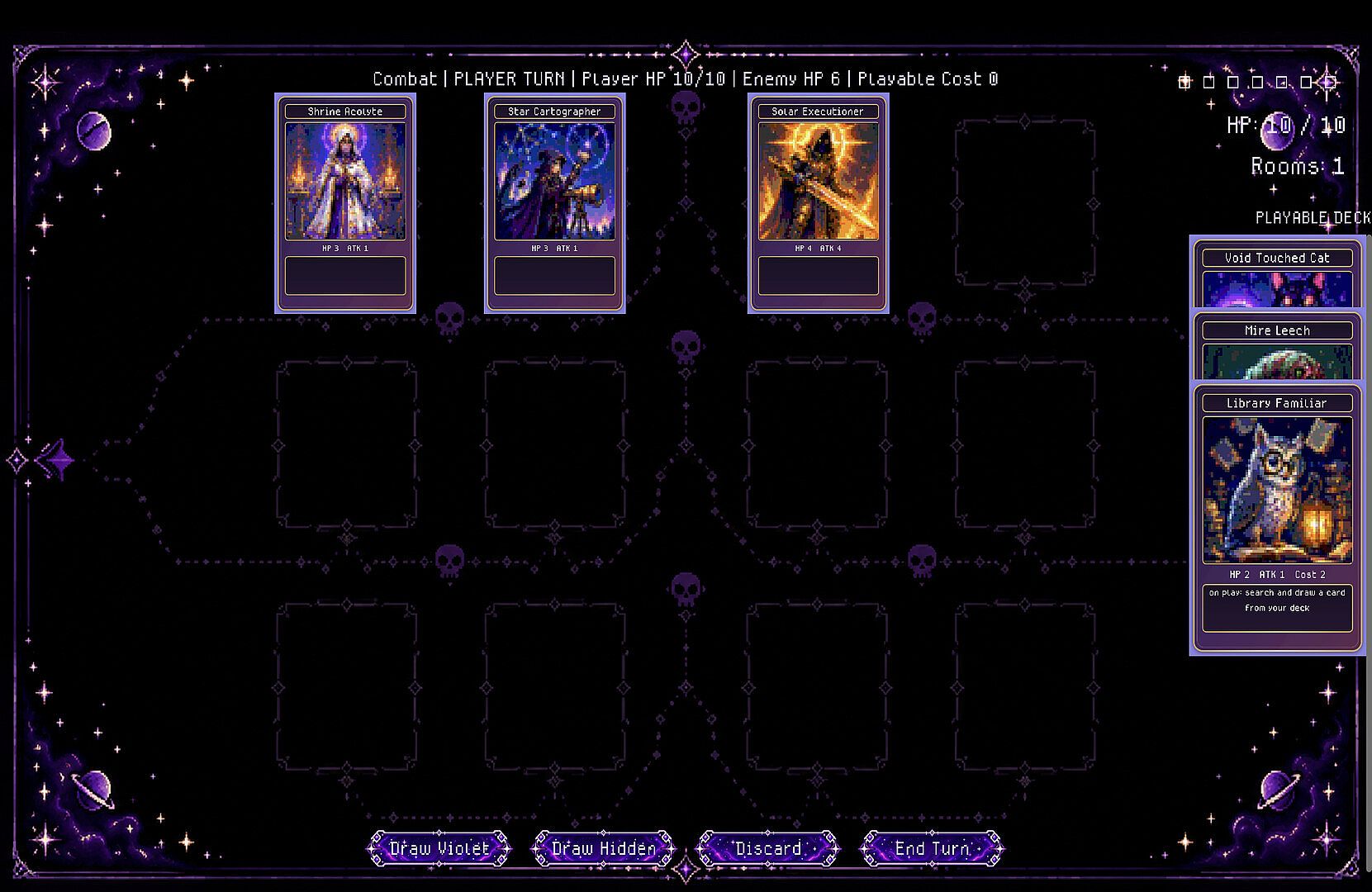
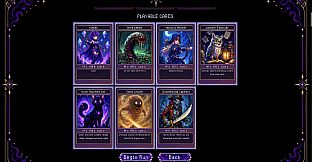
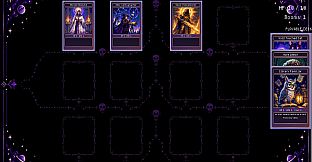
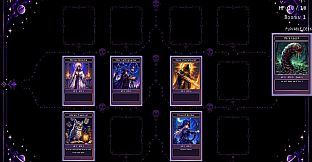
Violet Stardust is a single-player roguelike card battler developed by a solo indie creator for PC. The game centers on two interconnected decks that shape both exploration and combat in a pixel-art world of strange creatures and shifting locations. Players build creature cards for battles while using room cards to chart paths through randomized runs filled with enemies, resources, and crafting chances.
Gameplay
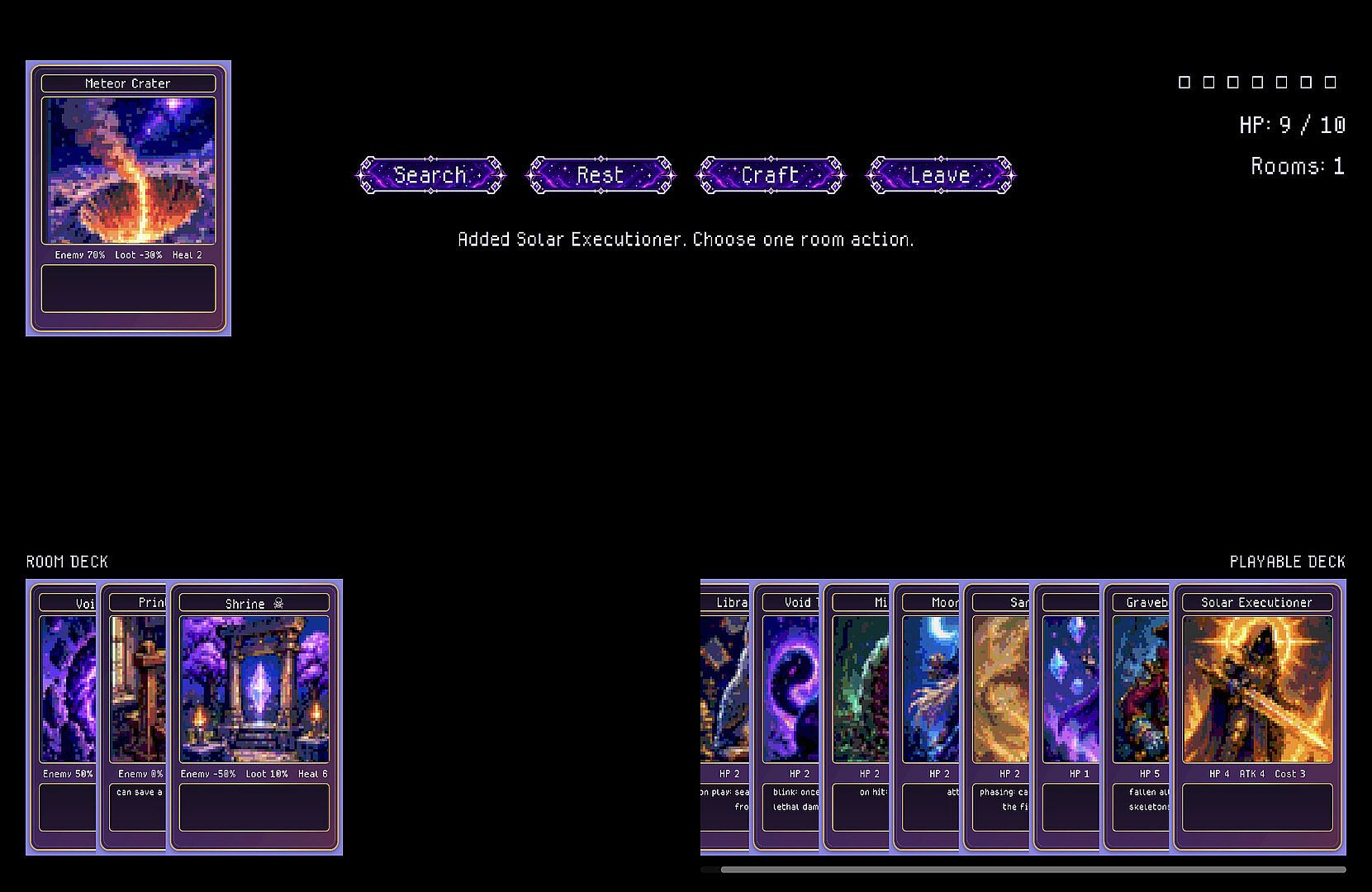
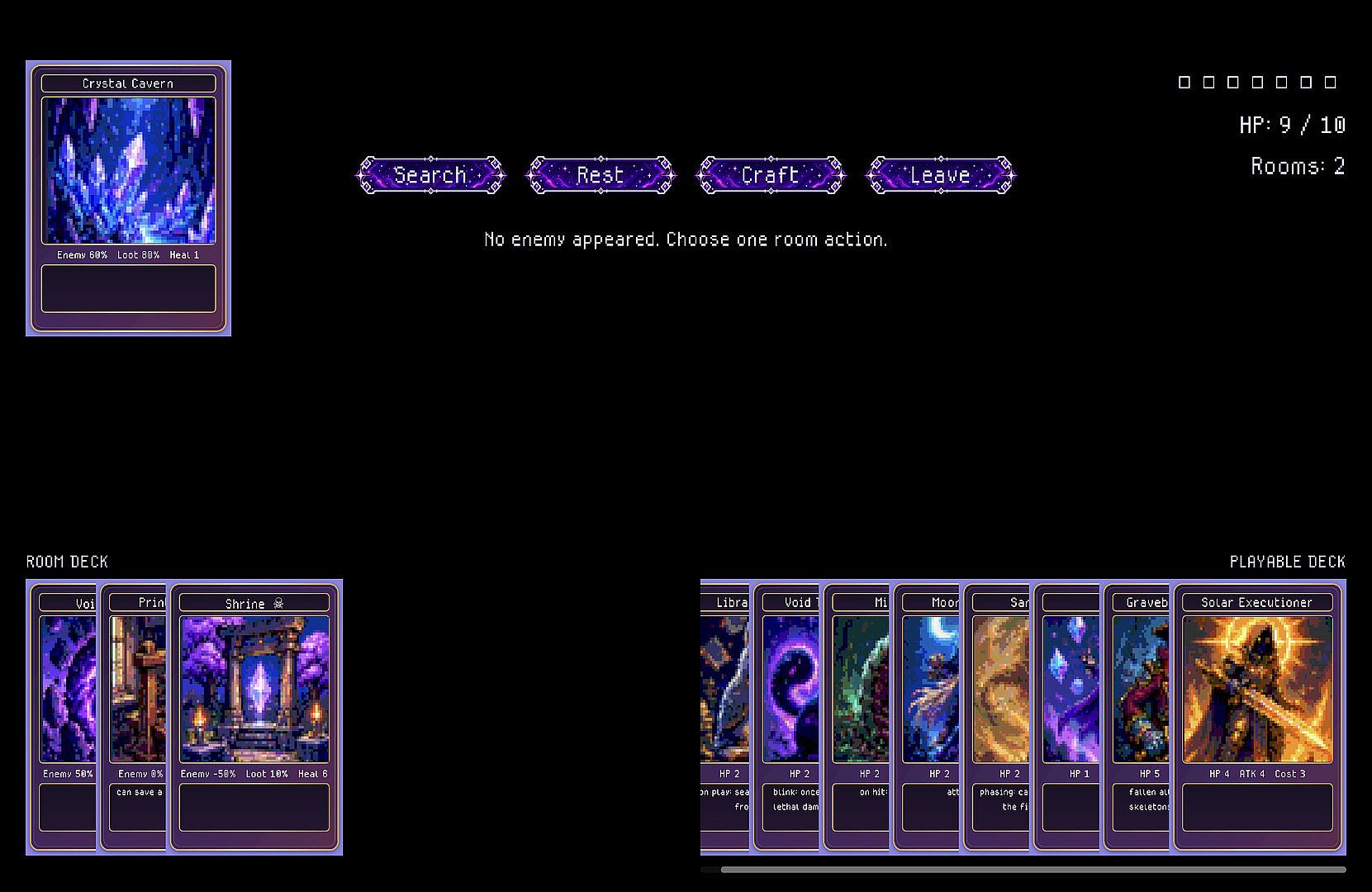
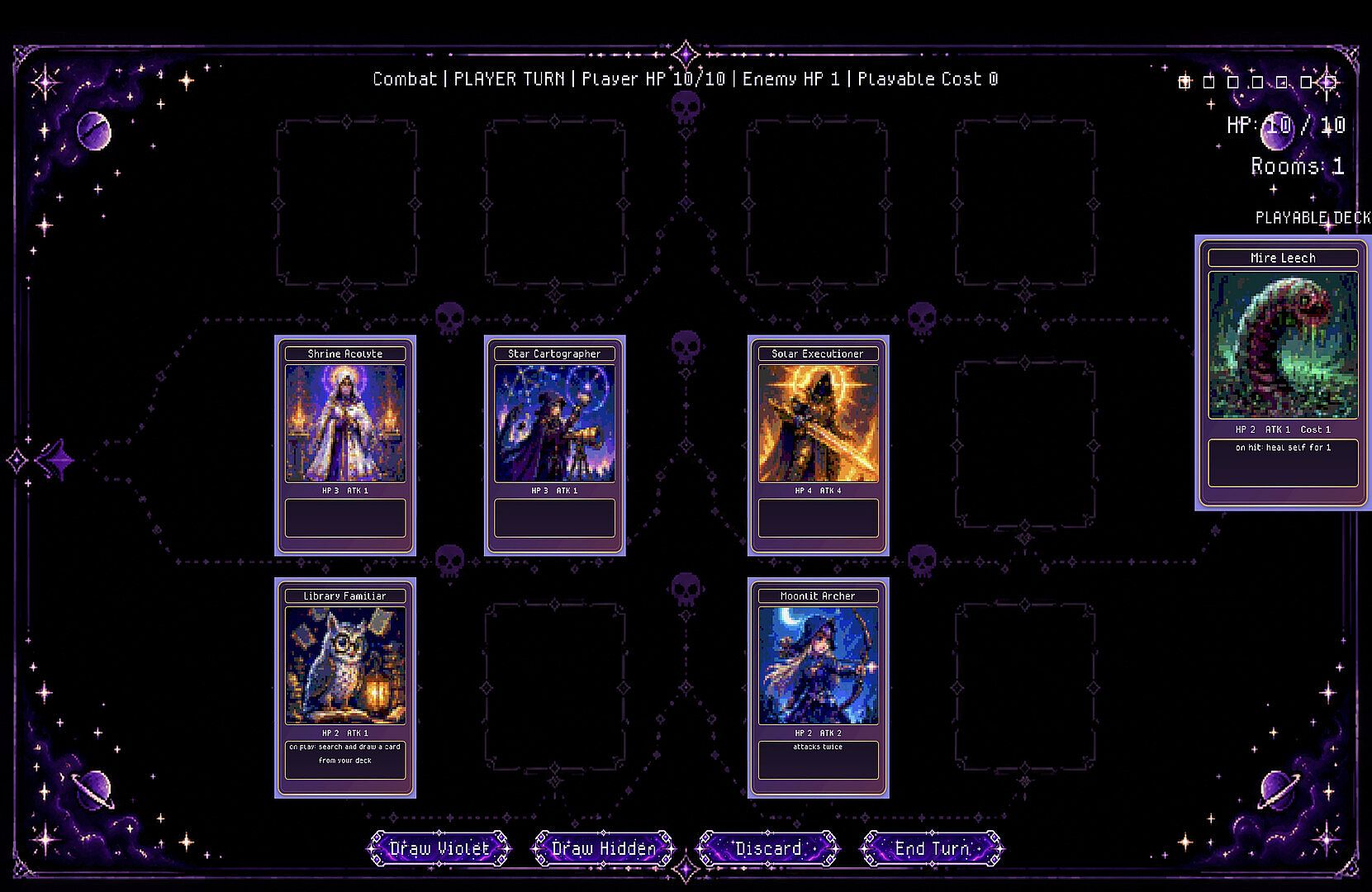
The core loop revolves around managing a room deck and a creature deck in tandem. Room cards set the next location, which might trigger encounters, recovery spots, or chances to gather new cards. Certain rooms advance progress toward a boss, so choices about when to advance carry weight across each attempt. Combat unfolds on a lane-based battlefield where creature placement determines blocking, breakthroughs, and direct strikes on opponents. Cards carry attack values, health pools, and abilities that interact differently depending on positioning and combinations.
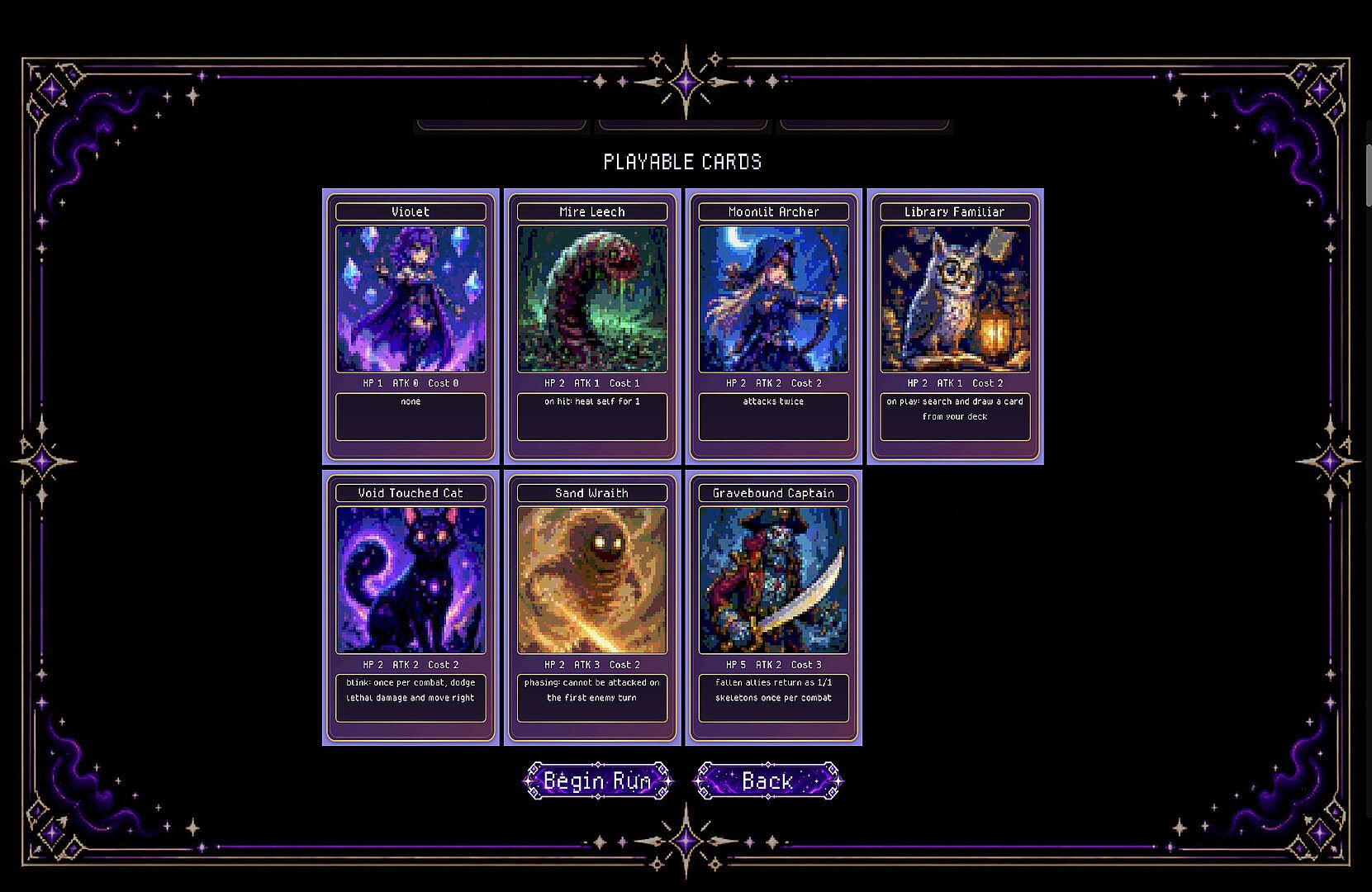
Crafting adds another layer. Room cards can merge into new locations, while creature cards allow ability transfers or merges of matching types to boost power. These systems encourage experimentation within a single run to adapt to escalating threats. At the end of a run, a printing press mechanic lets players permanently unlock discovered cards for use in future starting decks, creating gradual progression across multiple attempts.
Positioning in lanes matters for defense and offense, and some cards gain strength only through specific synergies. The retro pixel presentation supports a world of secrets and unexpected card interactions that reward careful deck shaping over repeated runs.
Game Modes
Violet Stardust operates as a single-player experience built around roguelike runs. Each attempt generates a fresh sequence of rooms and encounters drawn from the current decks, with randomization ensuring varied paths. There are no separate multiplayer or competitive modes; the focus stays on iterative solo progression through deck building and tactical combat.
Players advance by surviving encounters, collecting cards, and deciding how deeply to push toward bosses before resetting. The interconnected room and creature systems form the primary structure, with permanent unlocks serving as the long-term goal across successive runs.
Key Mechanics and Features
Deck building splits between exploration via rooms and direct confrontation via creatures. Lane combat requires thoughtful placement to counter incoming attacks while pushing damage forward. Crafting options let players combine elements to create stronger or entirely new cards, turning found resources into tailored strategies for tougher later stages.
Boss encounters scale with run length, testing how far a deck can stretch before a decisive fight. The printing press provides meta-progression by preserving useful cards for new runs, expanding starting options over time. Dozens of creatures offer varied stats and abilities that support both standalone power and combo potential.
Is It Worth Playing?
Violet Stardust suits players who enjoy roguelike deck builders with tactical elements and permanent progression systems. The dual-deck structure and lane combat differentiate it from standard card battlers by tying exploration directly to combat preparation. Those drawn to indie strategy titles with crafting and randomization will find the core loop consistent with the described mechanics.
As an upcoming release with no player reviews available yet, its appeal rests on the verified systems of room-based pathing, creature positioning, and cross-run unlocks. The solo-developer scope keeps the experience focused on these interconnected features rather than expansive side content. If the blend of roguelike runs, card crafting, and lane tactics aligns with personal preferences for strategic single-player games, it represents a targeted option in the indie genre.