








Empires of the Axis and Abyss is a 4X strategy game developed for PC that combines turn-based empire building with asynchronous multiplayer. Players command fleets across a shared galaxy as one of two to eight commanders, managing resources, research, and combat in a setting where timing and positioning matter more than real-time coordination. The game supports solo play against AI commanders through an online account, though it requires an active internet connection at all times.
Gameplay
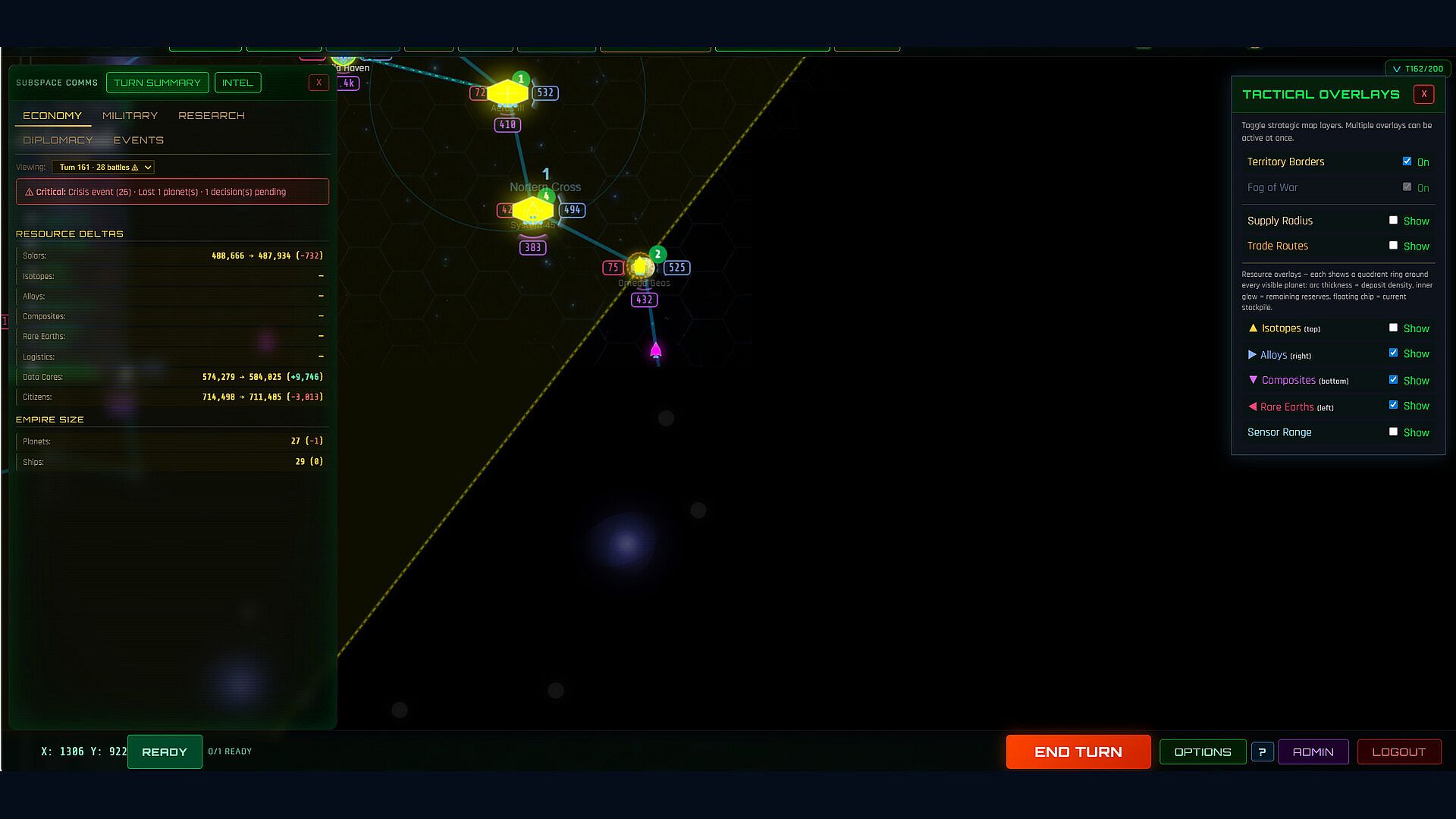
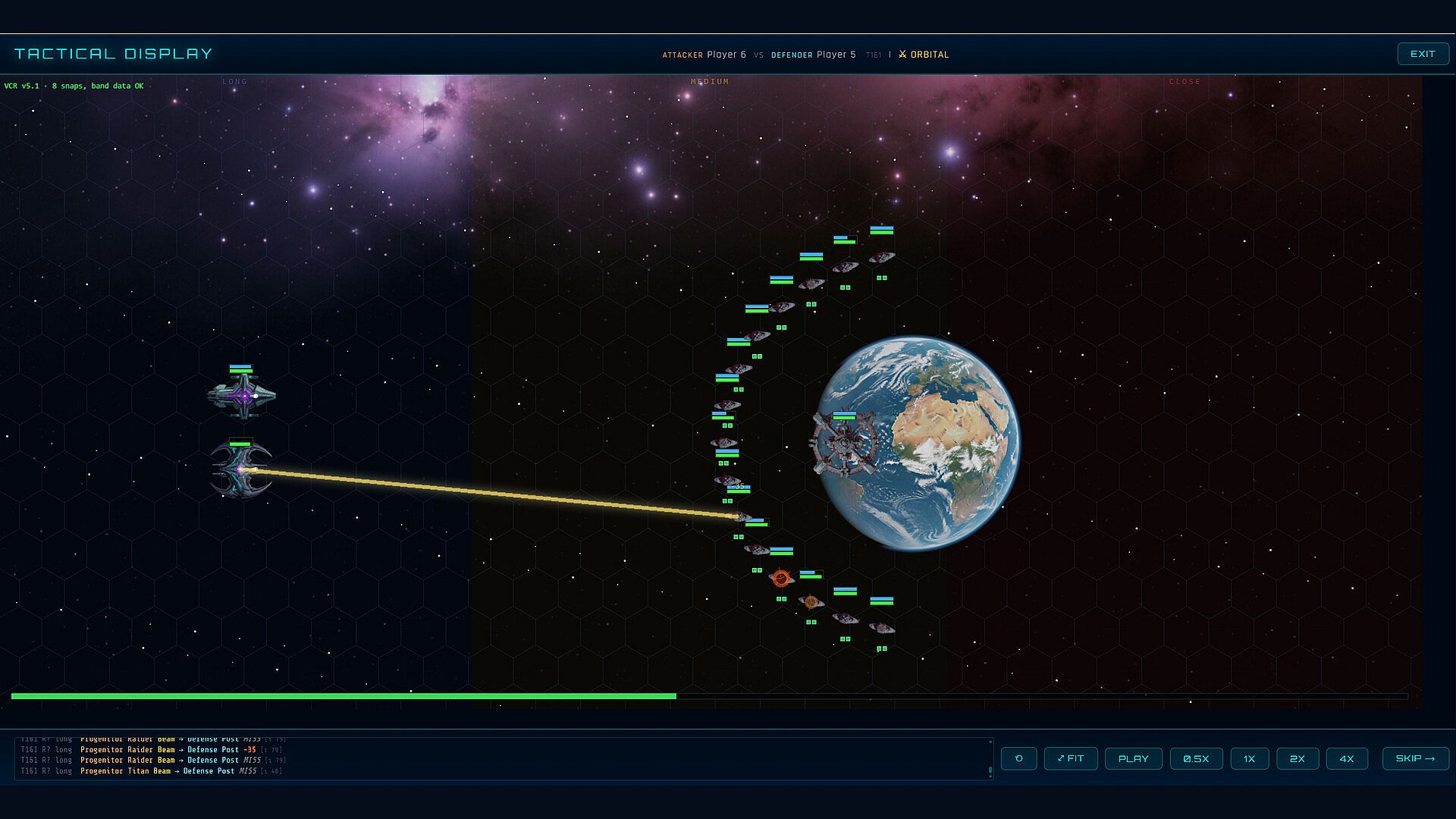
The core loop centers on planning actions that resolve on a central server without requiring all participants to be online simultaneously. Commanders set standing battle plans in advance, after which the host system executes combat and movement. Outcomes arrive as strategic summaries and combat recordings for review before the next planning phase begins. This structure keeps sessions flexible across time zones while preserving deterministic results.
Travel across the galaxy splits into two distinct systems. Axis lanes offer fast, predictable routes but create vulnerable choke points that opponents can contest. The Abyss provides lane-free movement to any coordinate, though fleets suffer attrition for each turn spent in the storms. Choosing routes forms the central strategic choice on every map, influencing expansion speed and defensive setups.
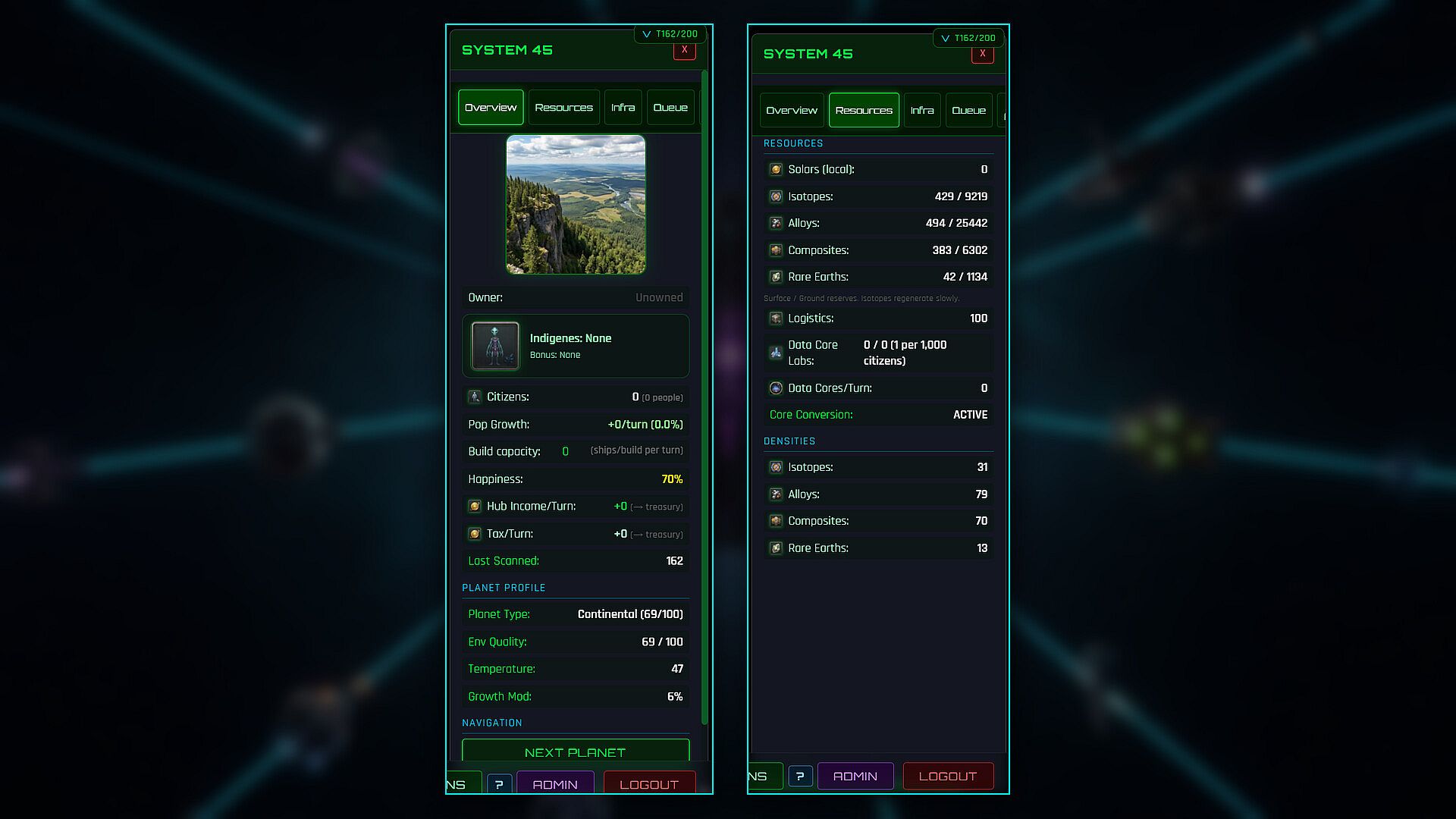
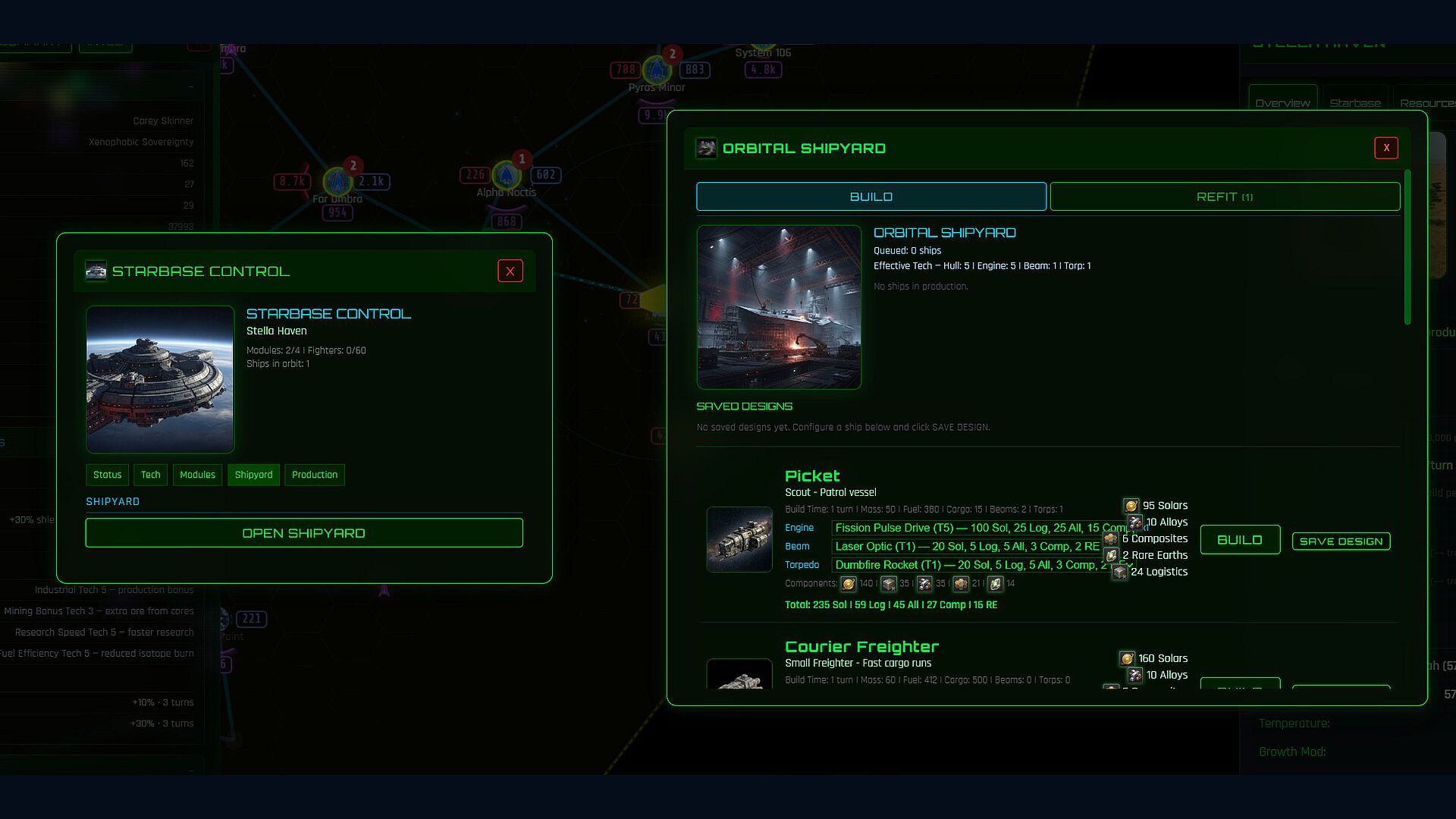
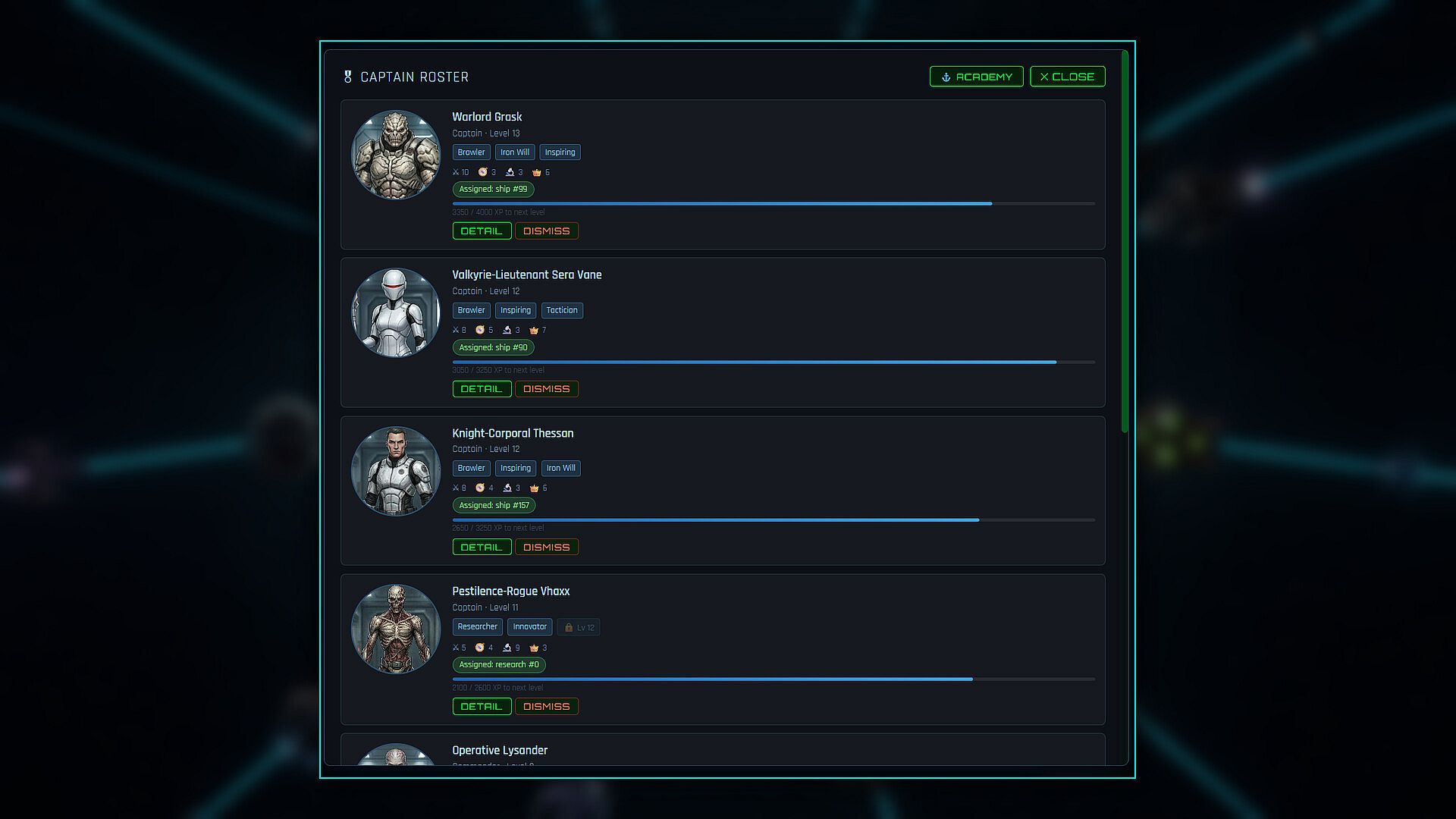
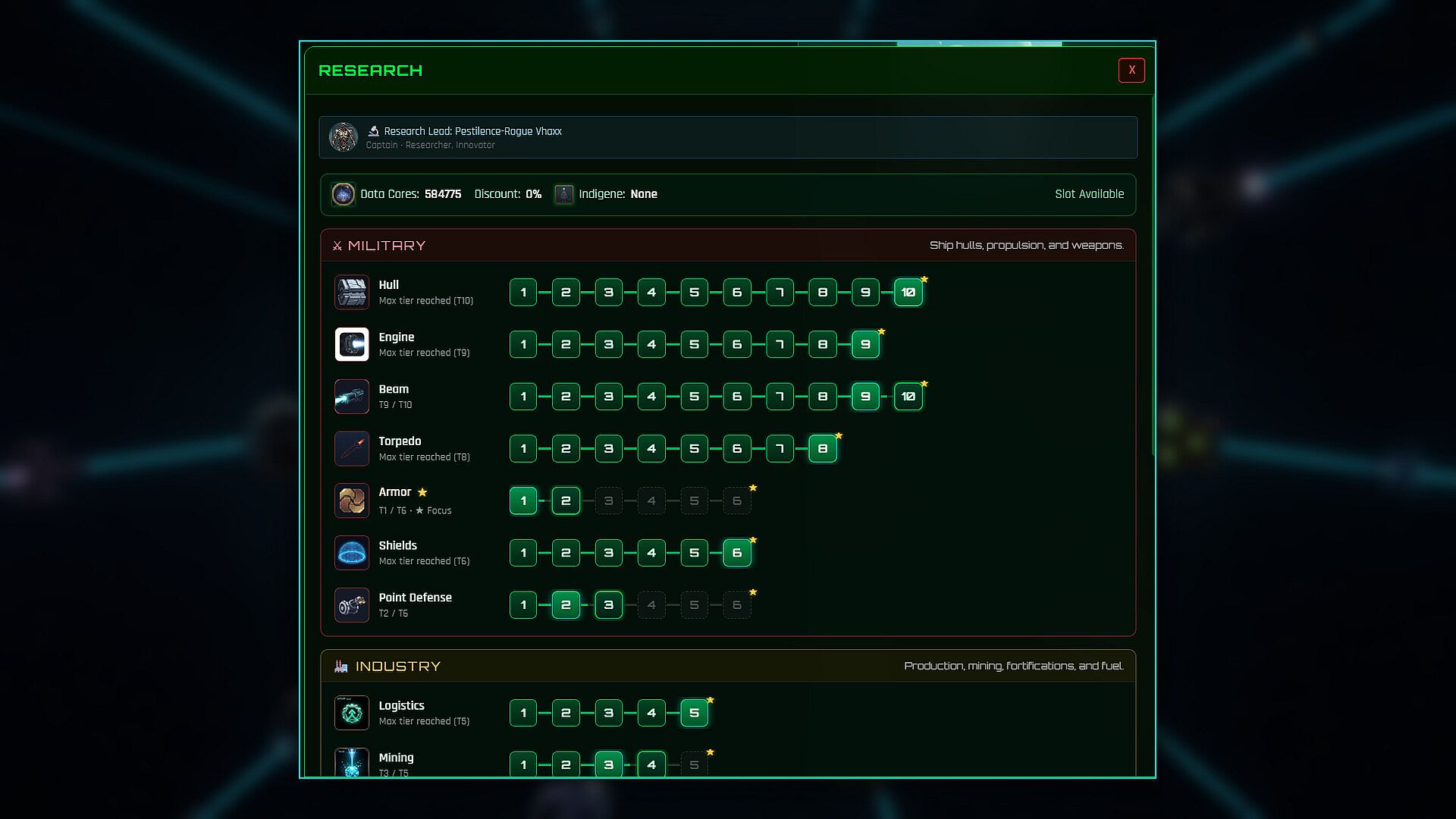
Fleets emerge from player design rather than simple stacking. Eight houses supply distinct doctrines, ship types, and advantages. Seventy-seven hulls combine with eight fitted modules, while three-band combat incorporates named captains who carry one of nineteen traits. Research spans fourteen disciplines balanced against six resources, supported by a galactic market, siege mechanics, and systems of territorial influence. One hundred eighty story events add narrative branches that range from minor anomalies to major decisions with lasting consequences. Victory conditions include domination, score accumulation, and research completion.
Game Modes
Asynchronous multiplayer forms the primary experience, allowing two to eight players to advance at their own pace on a shared server. Turns process automatically once plans are submitted, with results delivered for the next cycle. This approach suits groups spread across different schedules without forcing simultaneous sessions.
Solo play pits commanders against AI opponents in the same galaxy ruleset. The system handles all resolutions server-side, delivering combat records and strategic outcomes exactly as in multiplayer. No offline mode exists, so every session connects through a free account.
Strategic Depth and Systems
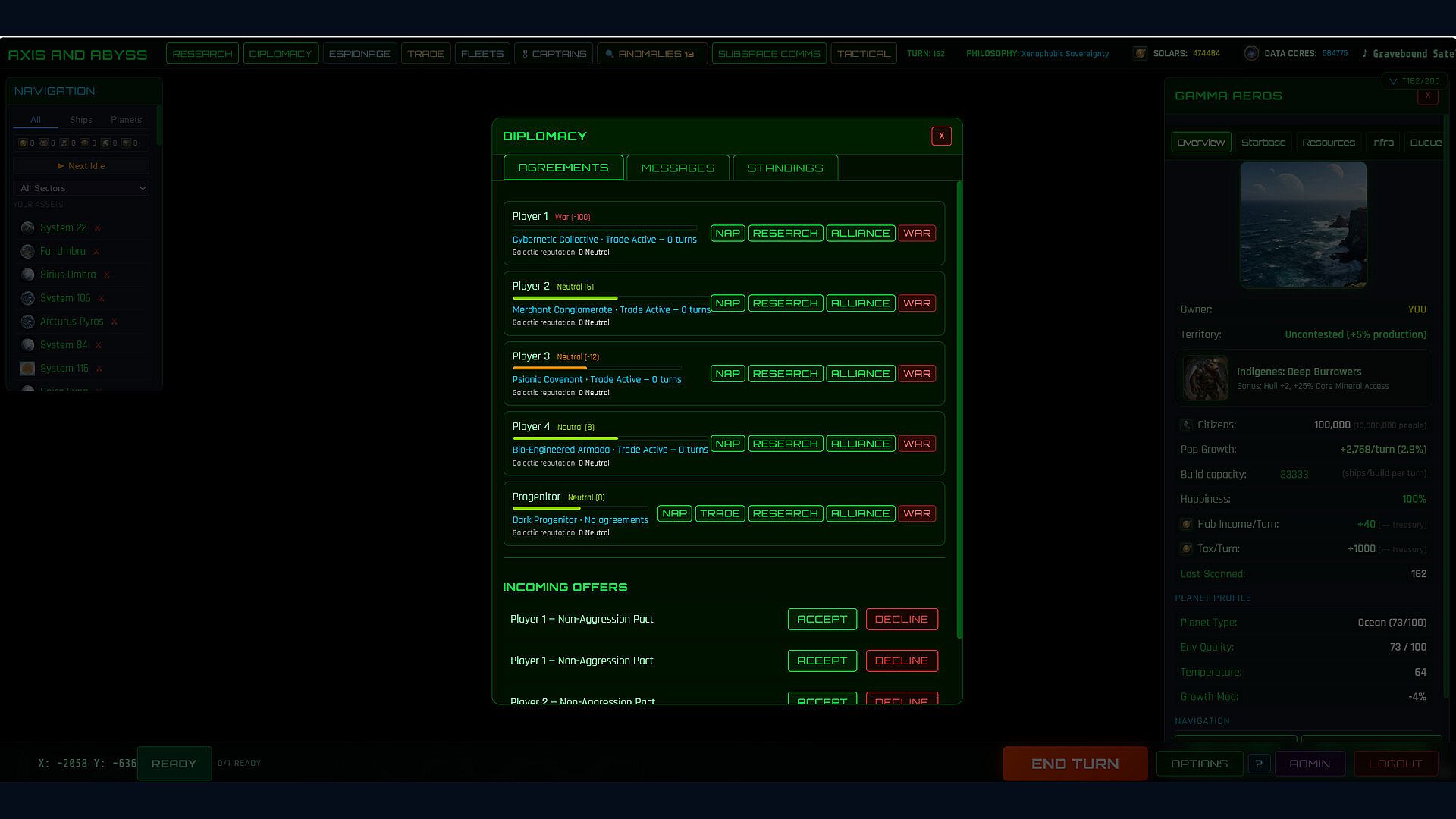
Map design rewards careful route selection between ordered lanes and chaotic storms. Fleets built around specific house doctrines gain advantages in certain combat bands or resource types, encouraging varied compositions across multiple games. Captain traits introduce targeted bonuses that interact with module loadouts and research paths. The market and influence mechanics add layers of economic competition and territorial control beyond direct conquest.
Story events integrate into the asynchronous flow, presenting choices that resolve between turns and shape long-term alliances or conflicts. Multiple victory paths prevent any single strategy from dominating, as domination requires sustained military pressure while research victories reward focused technological investment.
Is It Worth Playing?
Empires of the Axis and Abyss suits players who enjoy 4X strategy with flexible scheduling and deep fleet customization. The asynchronous resolution removes the need for coordinated play sessions, making it accessible for groups with mismatched availability. Solo AI matches provide a complete experience for those preferring single-player campaigns. The combination of route choice between Axis lanes and Abyss storms, house-specific doctrines, and layered systems of research, combat, and events creates repeated strategic decisions without requiring constant online presence. Those seeking structured turn-based space strategy with strong emphasis on planning and review will find the core loop rewarding, particularly when balancing economic, military, and research objectives across multiple victory conditions.