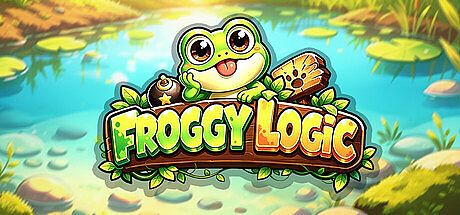




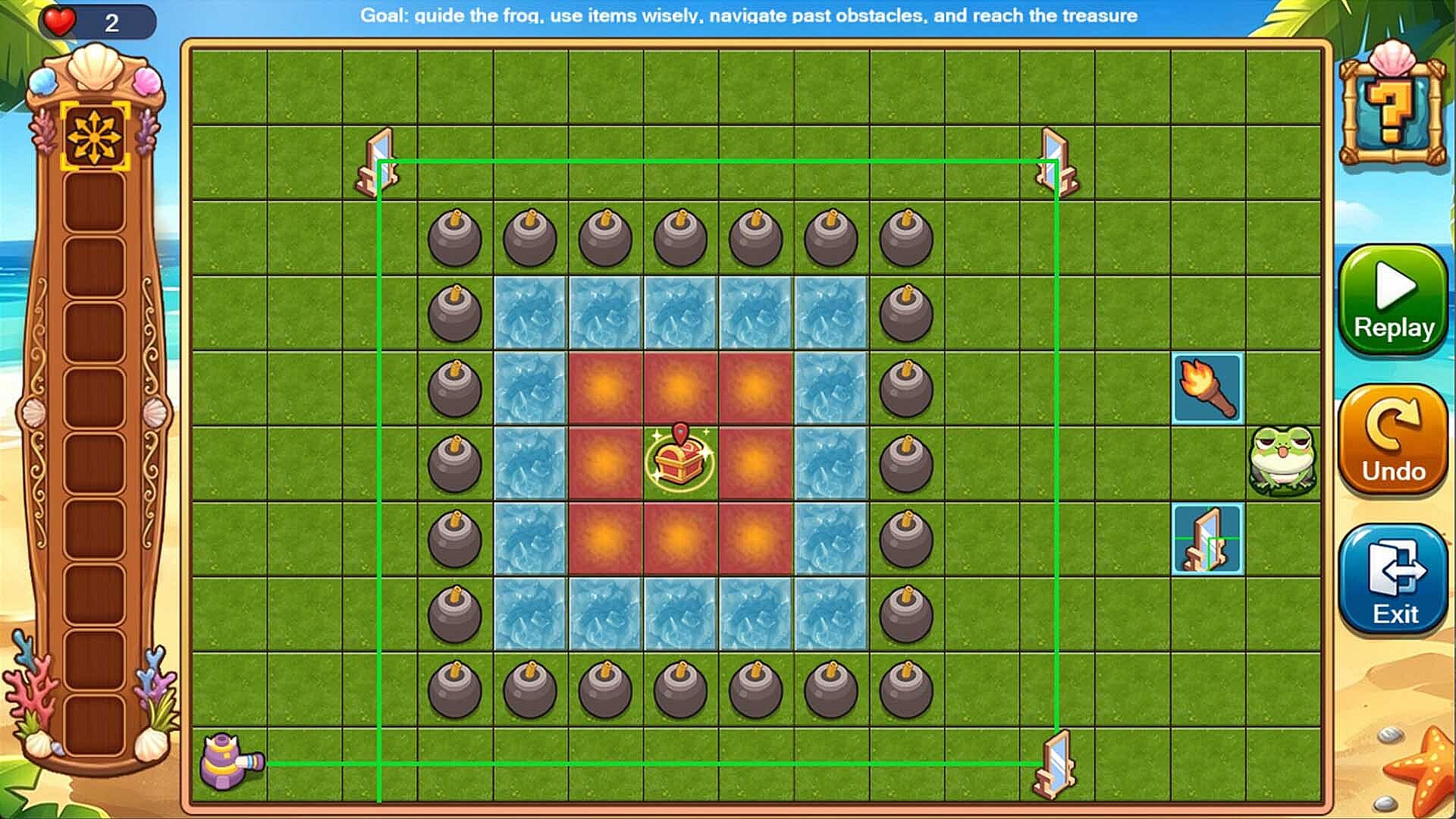
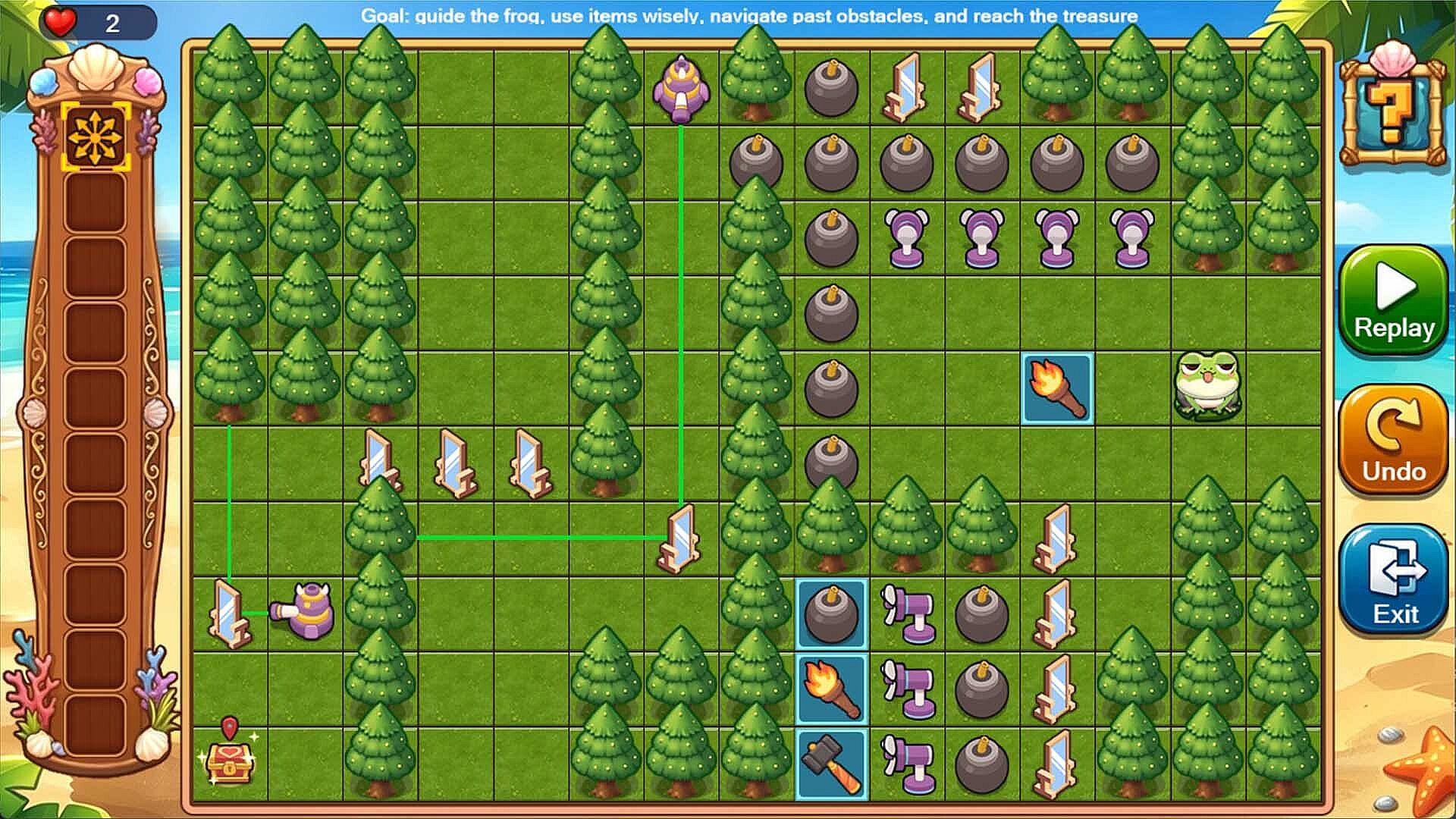
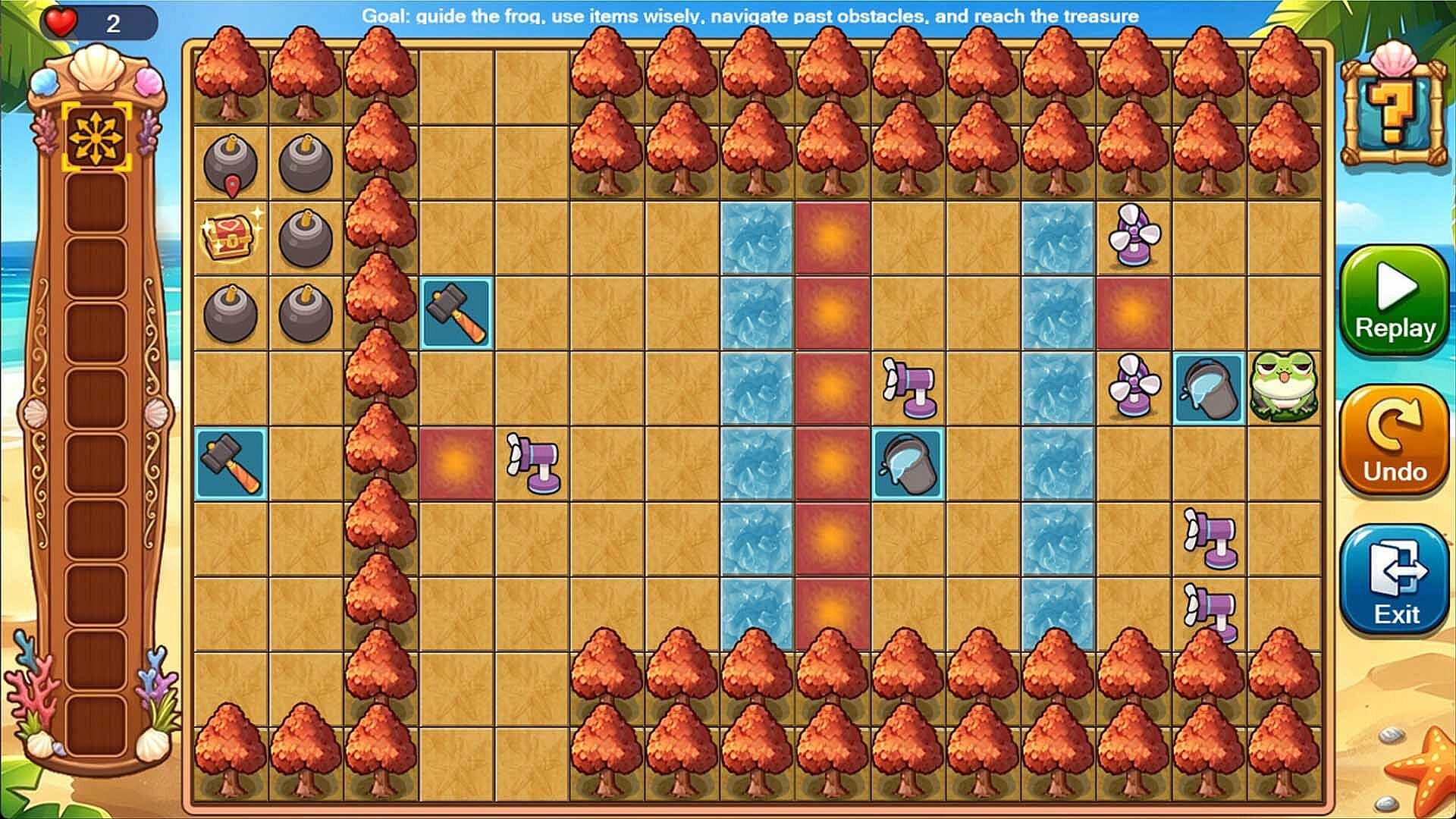
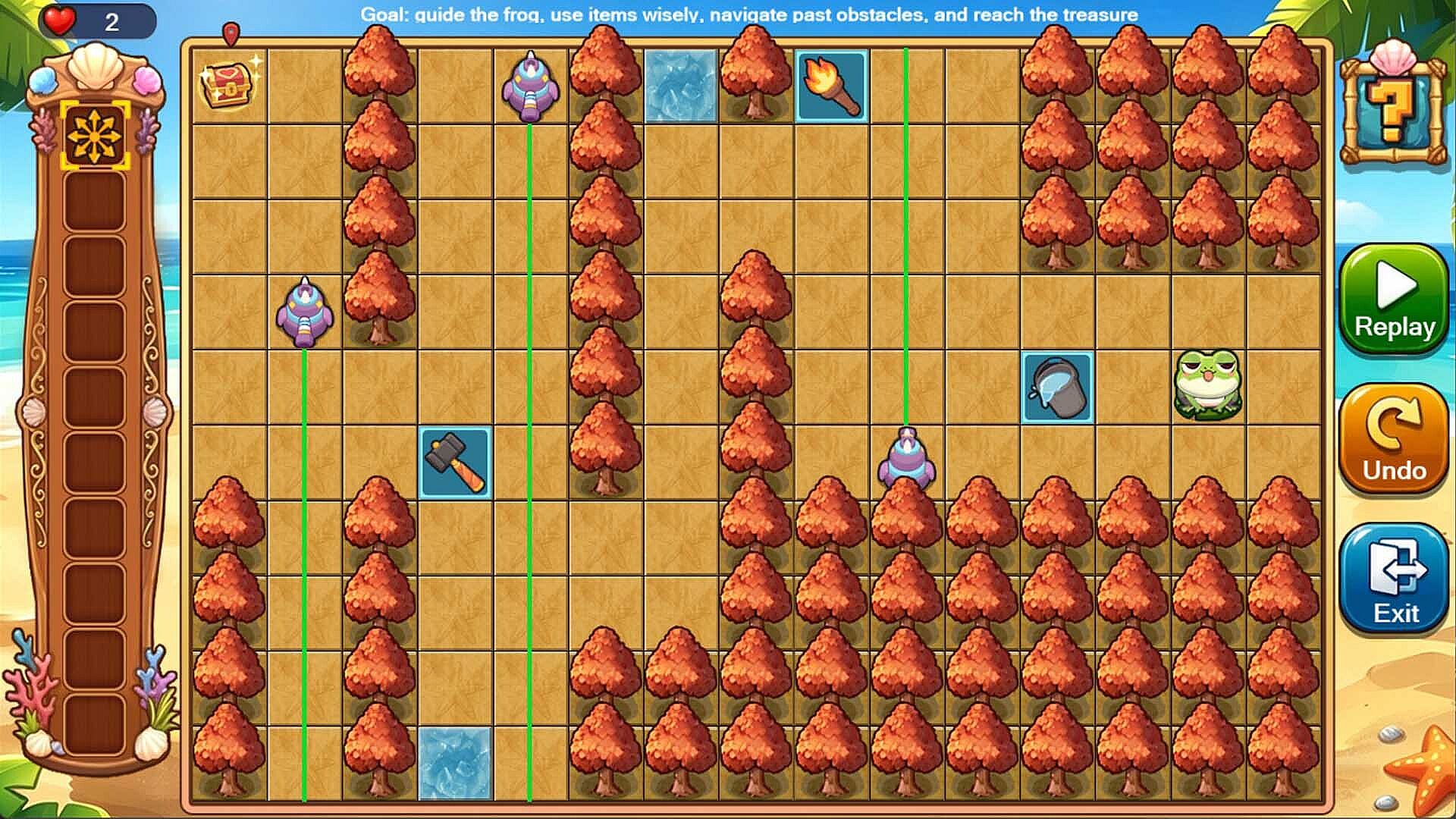
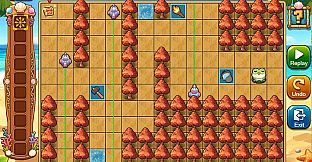
Froggy Logic est un jeu indépendant de stratégie et de réflexion sur PC, où le joueur guide une grenouille à travers des niveaux de puzzle complexes en exploitant des changements d'état et des interactions avec divers objets. Il faut traverser des labyrinthes truffés de dangers tels que des tours laser et des mécanismes environnementaux, tout en gérant un inventaire limité pour atteindre chaque sortie.
Gameplay
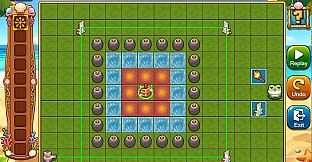
Le cœur du jeu repose sur les cinq états distincts de la grenouille, qui modifient ses possibilités de déplacement et de survie. À l'état normal, elle se déplace librement. L'état mouillé permet de traverser une fois un laser ou une zone enflammée après avoir utilisé un seau d'eau. L'état flottant se déclenche sur les cases de feu et empêche tout mouvement volontaire, tout en autorisant le passage au-dessus de certains obstacles et l'interaction avec les ventilateurs. L'état gelé immobilise la grenouille sur les cases de glace. L'état mort met fin à la tentative après un contact avec un laser ou une bombe.
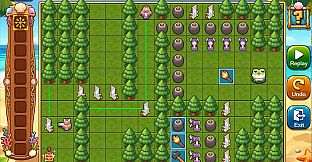
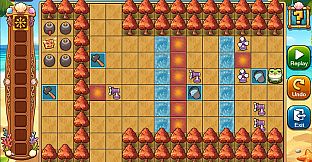
Les objets ramassés dans les niveaux occupent un inventaire de neuf emplacements et ouvrent la voie à des solutions créatives. La clé à molette permet de faire pivoter les tours laser ou les miroirs. Les miroirs renvoient les rayons lorsqu'ils sont placés. Les seaux d'eau déclenchent l'état mouillé. Les torches allument les bombes ou font fondre la glace, mais provoquent l'échec si elles sont utilisées sur la grenouille elle-même. Les marteaux ramènent au sol les grenouilles flottantes ou déclenchent les bombes. Les bombes explosent après avoir été allumées et détruisent tout dans un rayon de huit cases. D'autres objets plaçables incluent des tours laser qui émettent des rayons continus et des ventilateurs qui poussent les grenouilles flottantes dans quatre directions.
Les éléments du terrain ajoutent une couche supplémentaire de complexité. Les tours laser émettent en continu des rayons verts. Les miroirs existent en deux orientations diagonales pour rediriger les rayons. Les ventilateurs soufflent dans les quatre directions cardinales. Les cases de feu déclenchent l'état flottant à l'entrée. Les cases de glace provoquent le gel. Les bombes détruisent les objets proches lorsqu'elles sont activées par laser ou torche.
Modes de jeu
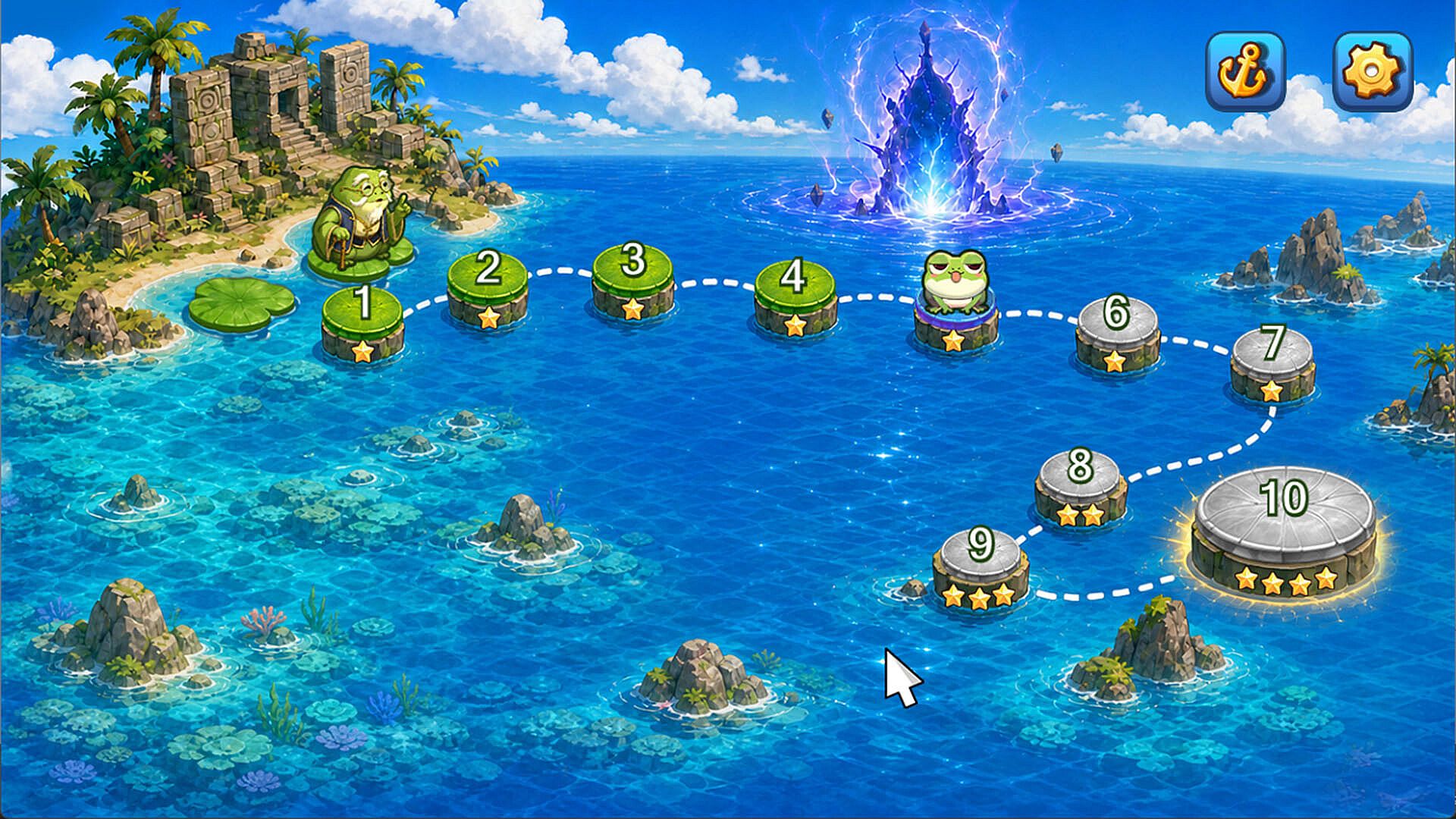
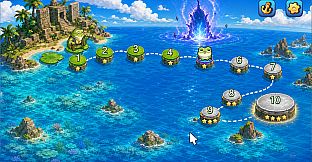
Le mode histoire propose l'expérience principale à travers neuf chapitres dont les niveaux se débloquent progressivement. Chaque chapitre introduit de nouvelles combinaisons d'objets et de terrains en s'appuyant sur les mécaniques précédentes. Les niveaux privilégient des solutions uniques qui récompensent l'observation des motifs laser et une planification minutieuse des itinéraires.
Le système de tutoriel présente les mécaniques une à une grâce à une guidance interactive. Il accompagne le joueur à travers le premier niveau et les changements d'état fondamentaux sans surcharge d'informations.
Conception des niveaux et progression
Les niveaux associent plusieurs mécanismes dans des agencements variés dont la complexité augmente au fil des chapitres. Les premiers niveaux se concentrent sur des changements d'état isolés et l'utilisation basique des objets. Les niveaux avancés exigent de combiner les états avec précision et de gérer l'inventaire. Plusieurs chemins valides existent souvent pour un même puzzle, encourageant l'expérimentation.
Le passage d'un état à l'autre constitue le cœur stratégique de chaque tentative. Le joueur élabore des séquences qui évitent les dangers tout en économisant les objets limités. En cas d'échec, le niveau se réinitialise simplement, permettant d'affiner la compréhension de la disposition à chaque essai.
Est-ce que ça vaut le coup d'y jouer ?
Froggy Logic s'adresse aux joueurs qui apprécient les puzzles réfléchis et la gestion des ressources en solo. Le système d'états et les interactions entre objets créent des prises de décision constantes sans faire appel aux réflexes. Ceux qui préfèrent une planification méthodique à l'action rapide trouveront les mécaniques captivantes tout au long des chapitres de l'histoire.
Le jeu est toujours en développement actif après son arrivée récente sur PC. Sa conception, qui privilégie des solutions flexibles plutôt que des parcours figés, favorise les rejouées sur un même niveau. Les joueurs en quête d'une expérience de stratégie compacte avec une progression claire y trouveront un contenu qui correspond à leurs attentes.