




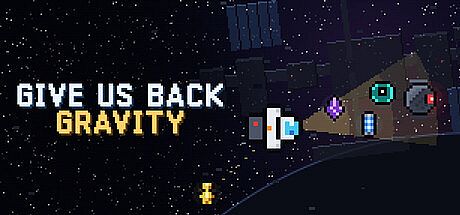


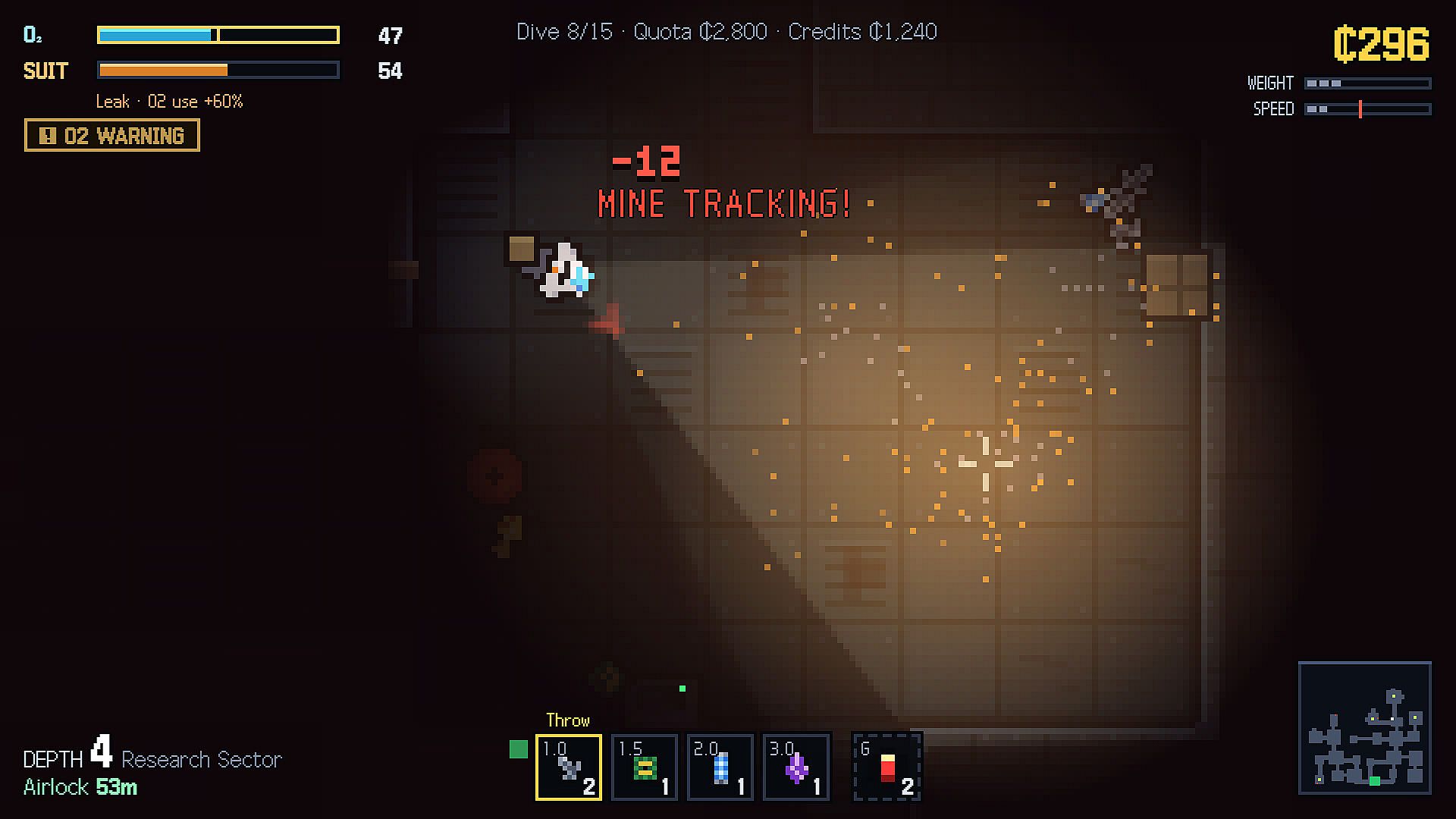
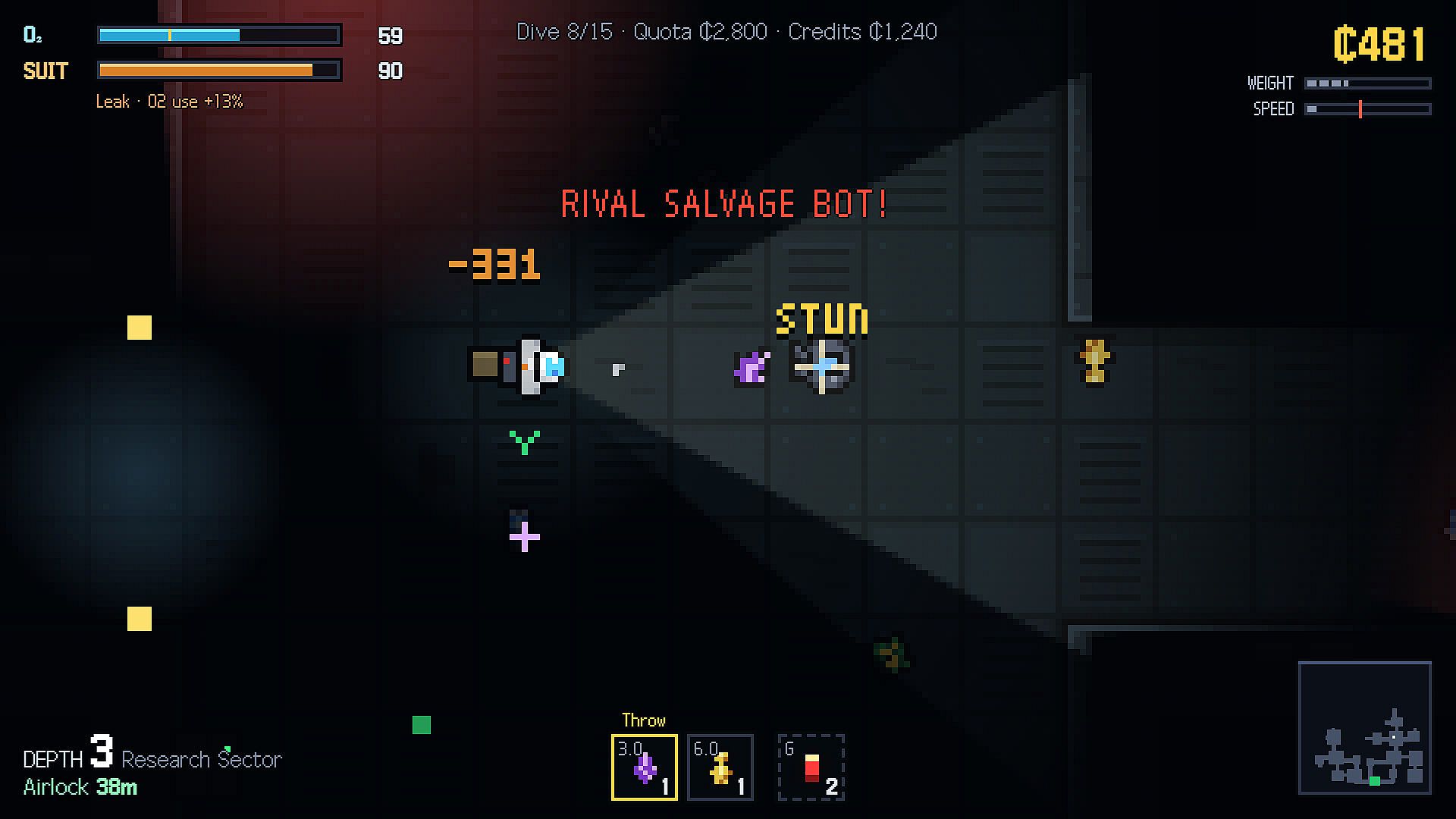
Give Us Back Gravity is an action indie game for PC that puts players in the role of a salvager working derelict space stations where artificial gravity has failed. The core experience revolves around momentum-based movement, oxygen management, and retrieving valuable scrap under constant time pressure.
Gameplay
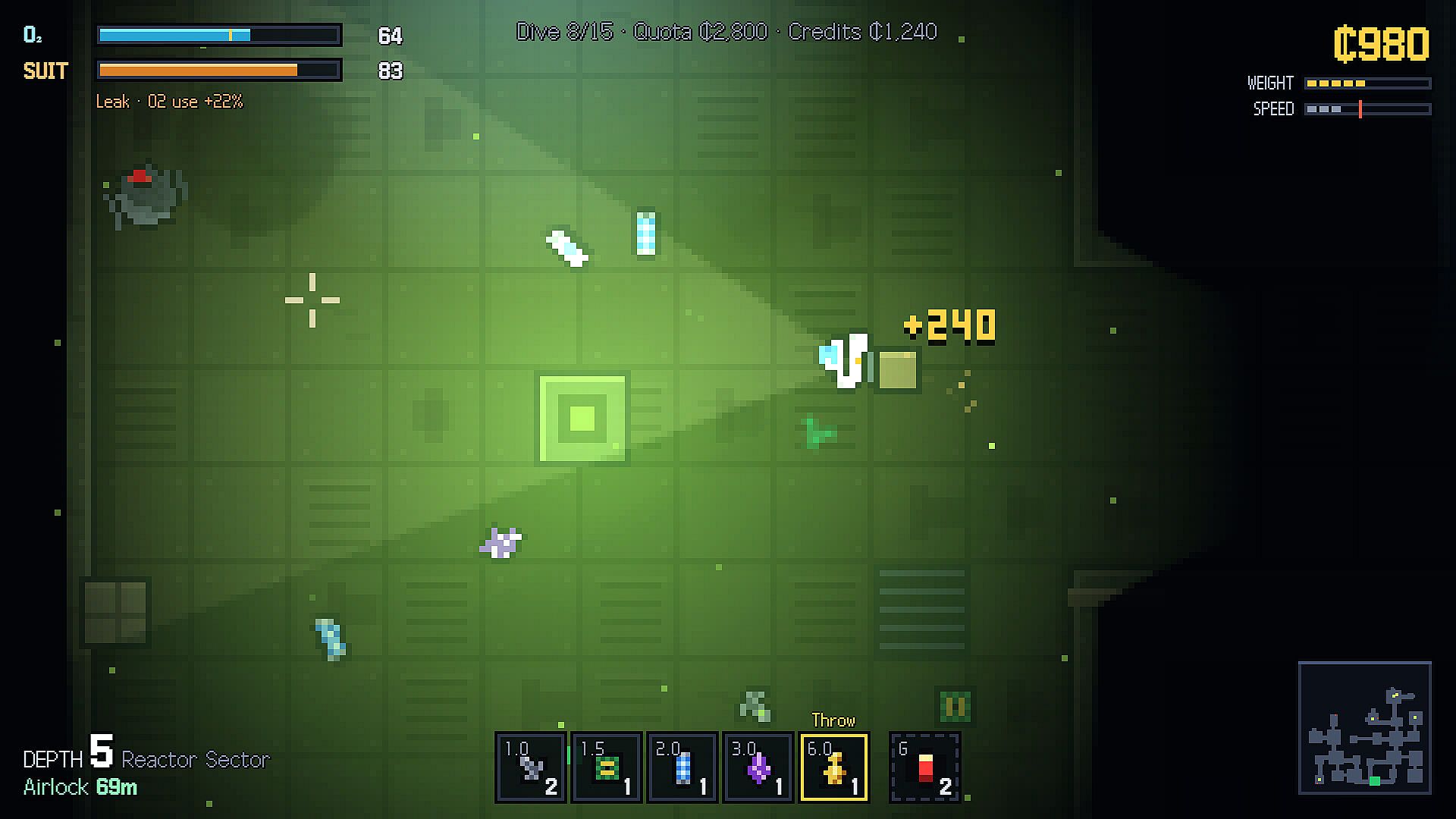
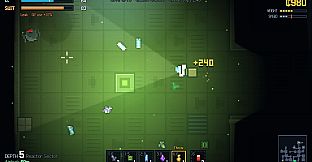
Players begin each run by pushing off from an airlock and drifting through the station using only initial momentum. Thrusters provide bursts of speed but consume oxygen, forcing careful planning on when and how to use them. Stopping requires physical interaction with the environment, such as kicking off walls, grabbing onto surfaces, or hurling collected scrap in the opposite direction to create counter-thrust.
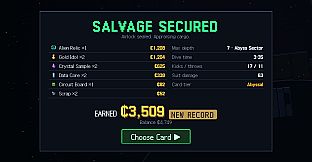
Carrying more cargo increases mass, which makes collisions with walls more punishing and alters how momentum carries the player through open spaces. The goal is to gather enough scrap to meet the quota and return to the airlock before oxygen depletes. Failure means the haul is lost and the attempt counts for nothing.
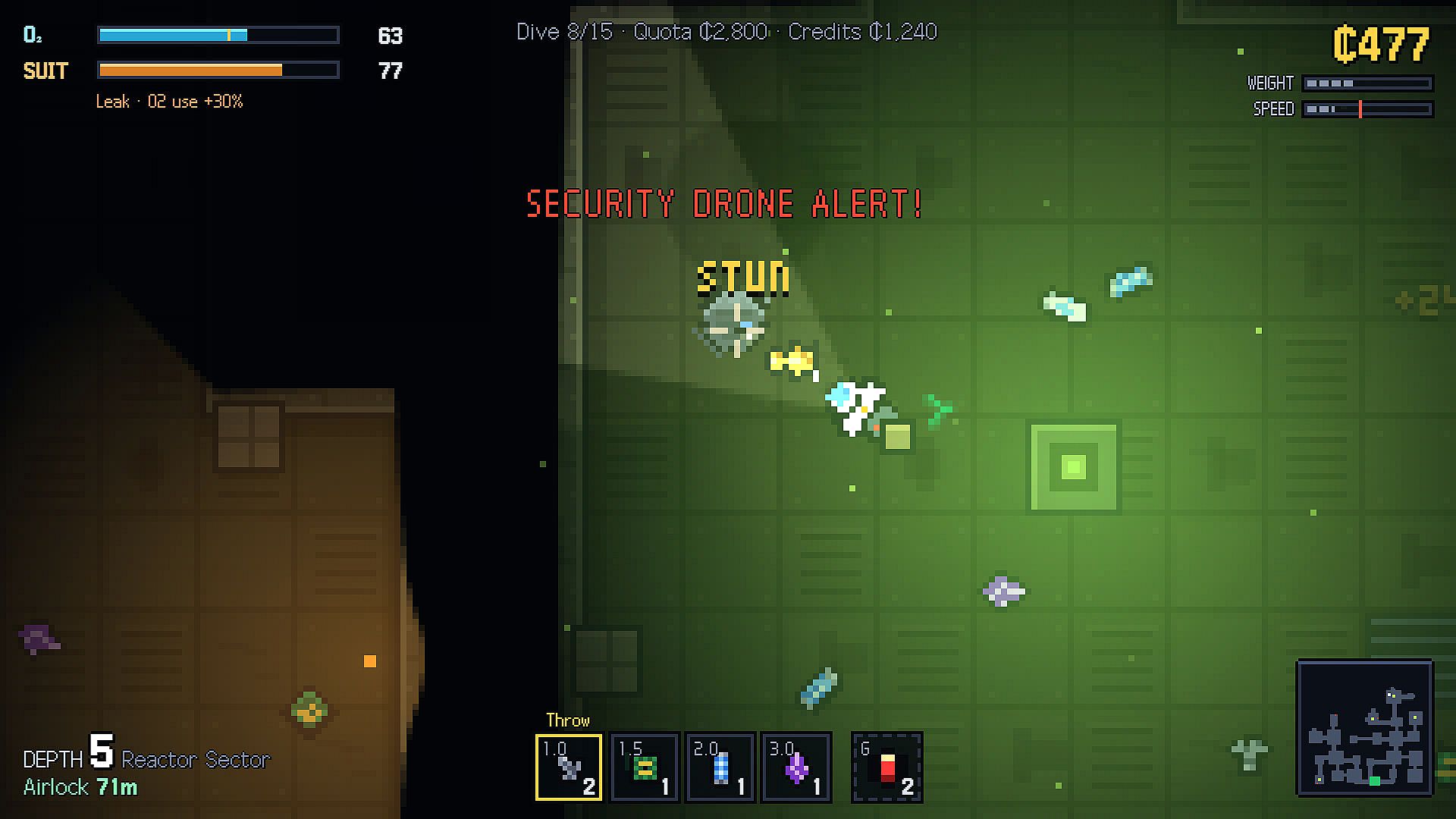
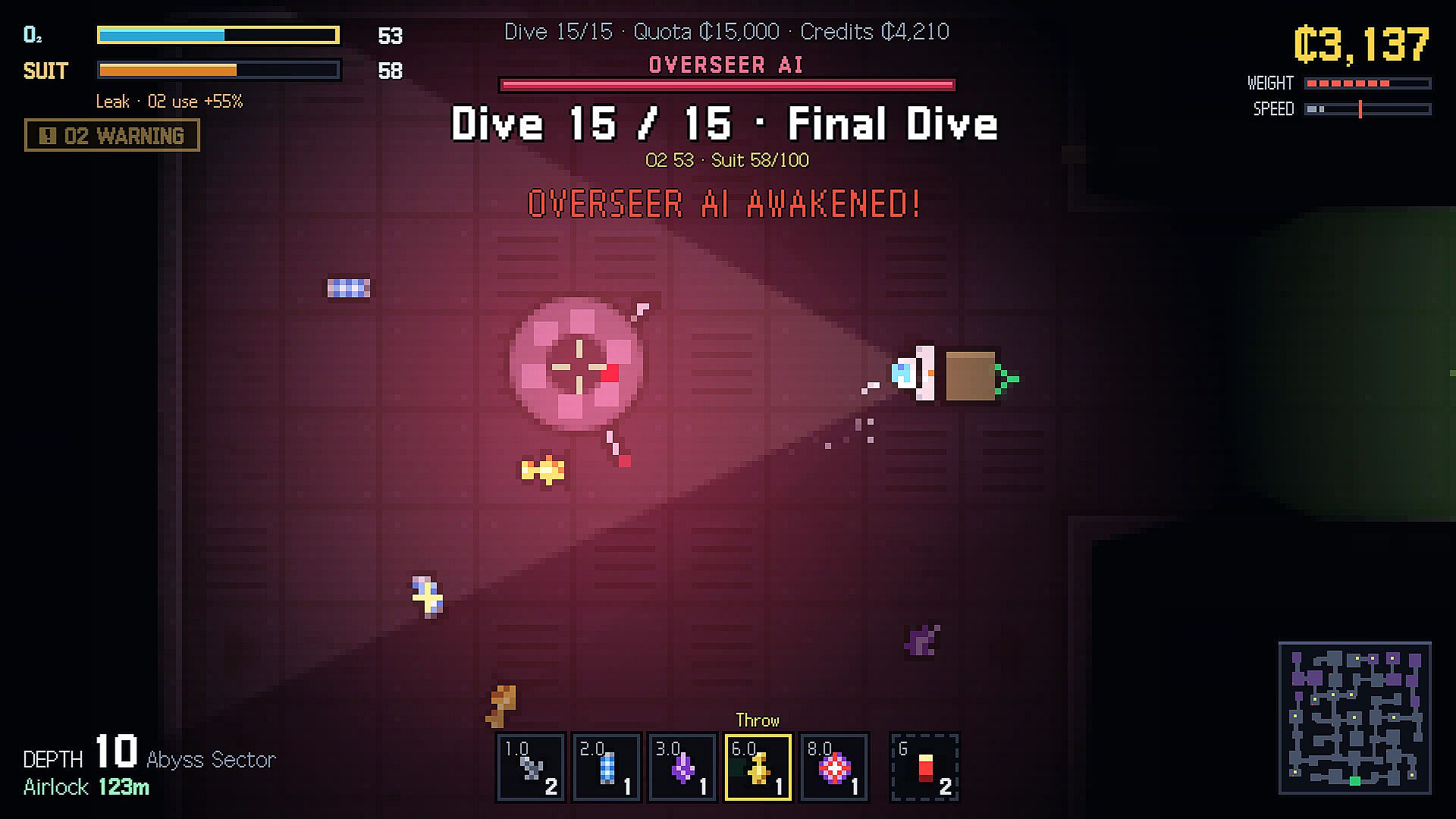
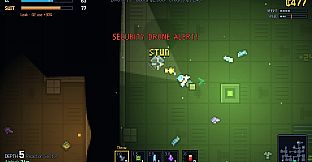
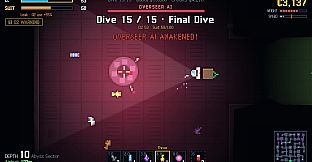
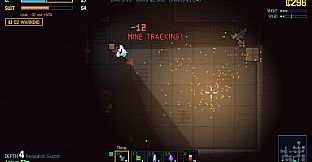
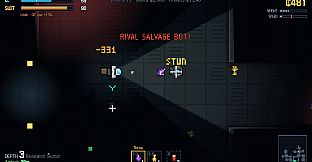
Stations are procedurally generated with changing layouts each dive. Deeper sections offer higher-value loot but introduce hazards including security drones, turrets, exposed reactor cores, proximity mines, and rival salvage robots capable of magnetically stripping cargo. An abyss section with no lighting adds further risk. Many obstacles can be neutralized or bypassed by throwing objects to trigger reactions or create distractions.
Game Modes
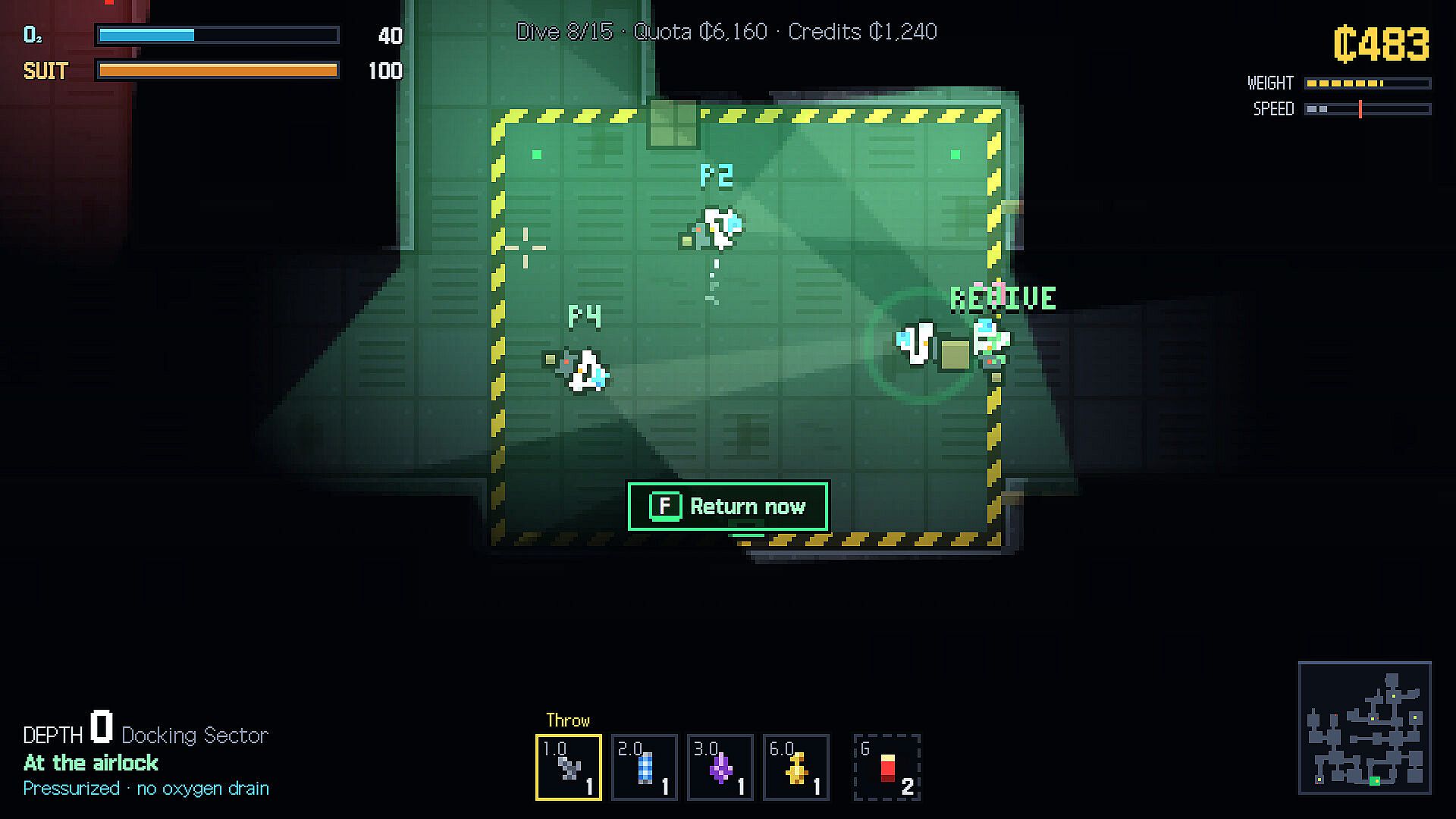
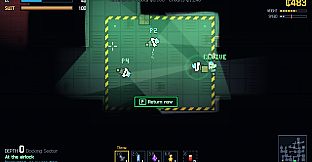
The primary mode consists of solo salvage dives where the player navigates alone, managing all movement and threats independently. Online co-op supports up to four players in a beta implementation. Teammates share credits and participate in voting on cards between dives. Downed players can be physically dragged back to the airlock by others to complete the run.
Both solo and co-op runs follow the same core loop of exploration, collection, and extraction, with co-op emphasizing coordination around shared resources and teammate recovery.
Progression and Systems
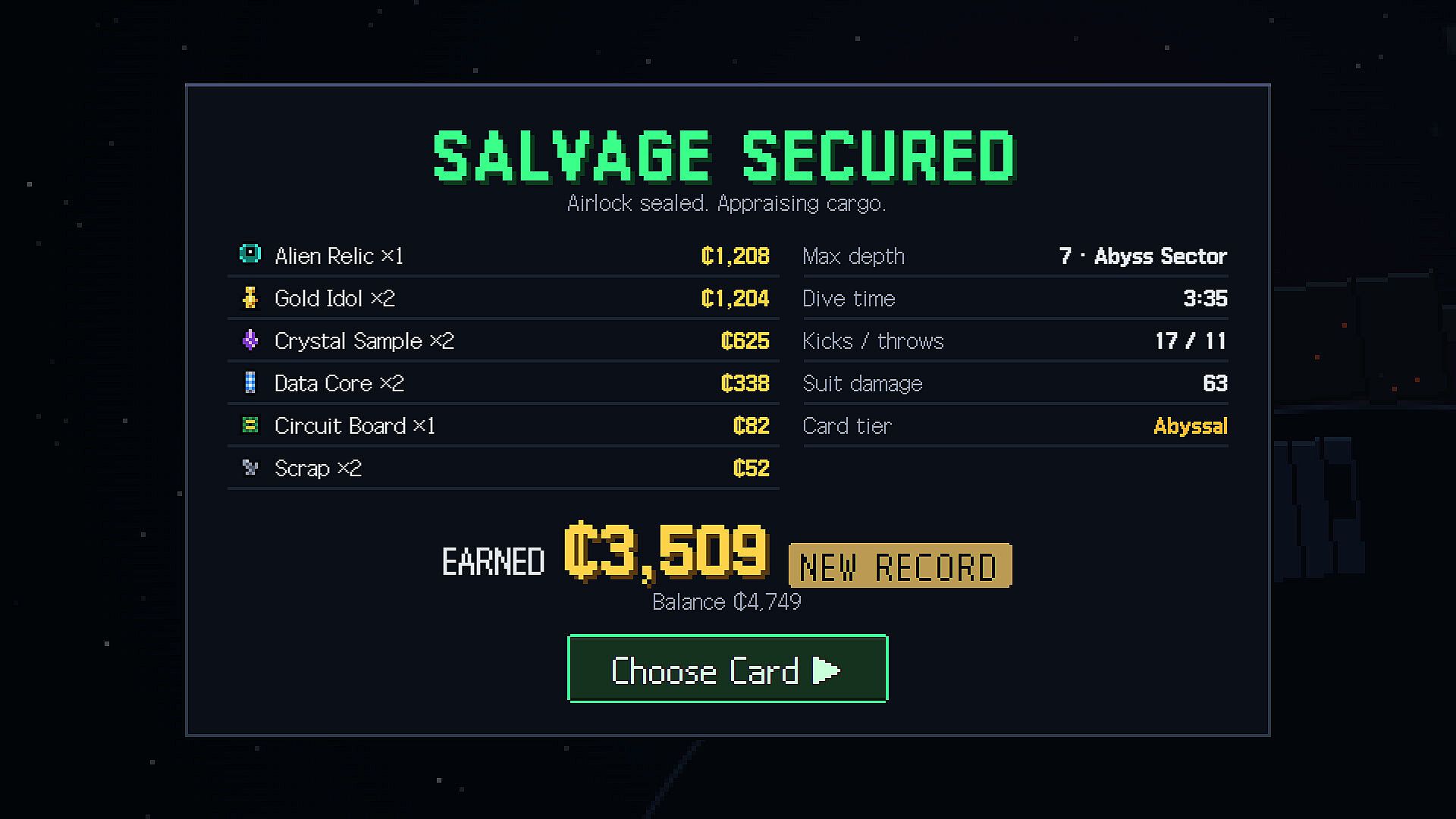
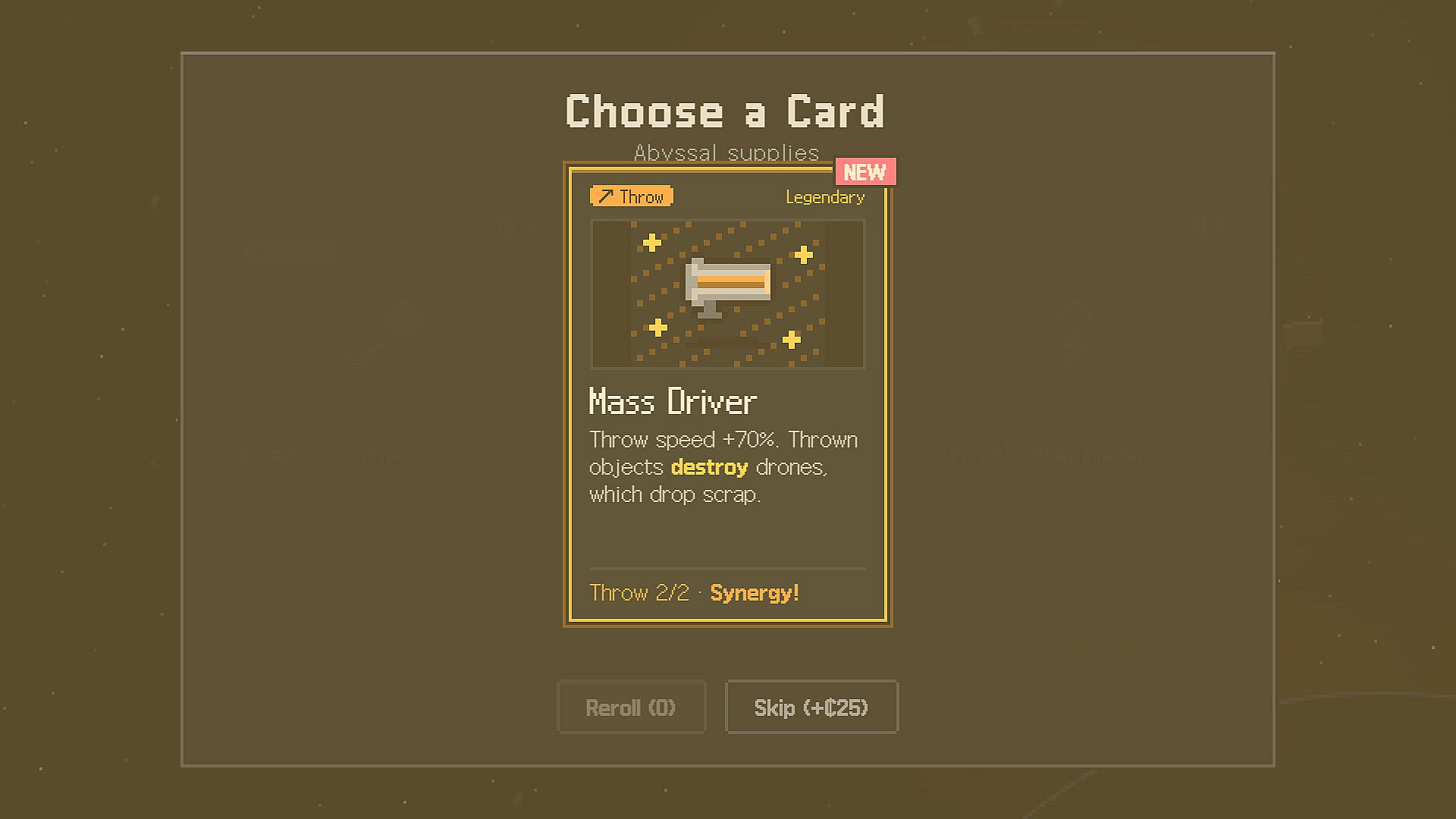
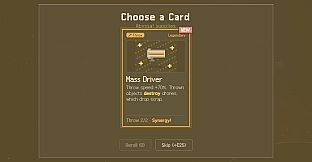
After each successful dive, players select a card from one of six families: Throw, Cargo, Oxygen, Mobility, Vision, or Trade. Collecting cards across families unlocks synergies that modify movement, resource handling, or combat options. Contracts require completing fifteen dives before retirement is possible, though players may choose to extend the contract for further runs.
Four unlockable suits provide visual and functional variety. Five hazard levels scale enemy presence and environmental dangers. Daily challenges offer repeatable objectives, while twenty-five achievements track specific accomplishments across runs. Full controller support is included for precise momentum control.
Is It Worth Playing?
This title suits players who enjoy physics-driven movement systems combined with resource scarcity and procedural exploration. The emphasis on momentum conservation, oxygen limits, and throwable-object problem solving creates tense, replayable sessions that reward experimentation with movement techniques.
Those interested in solo runs will find a focused challenge in managing hazards and quotas alone. Co-op adds a layer of teamwork for recovering teammates and coordinating card choices. The contract structure and card synergies provide clear long-term goals without requiring external progression systems.
Daily challenges and multiple hazard levels extend the experience for players seeking variety within the established loop. The game appeals most to fans of indie action titles centered on precise control and risk-reward scavenging rather than narrative or combat-heavy gameplay.











