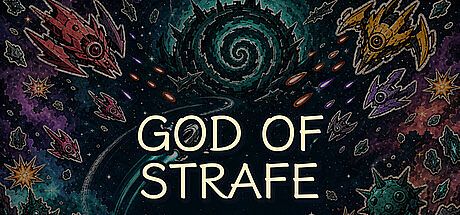


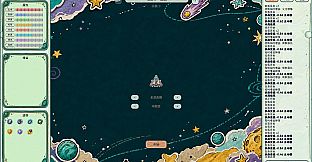
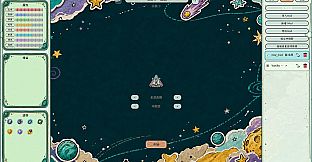
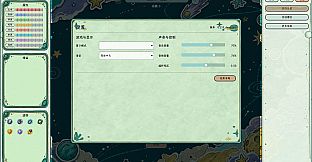
God of Strafe is an action indie game for PC that puts players in control of customizable ships during intense space runs. The core experience revolves around automatic weapon fire that frees attention for movement, item collection, and strategic decisions as pressure mounts with each advancing wave of threats.
Gameplay
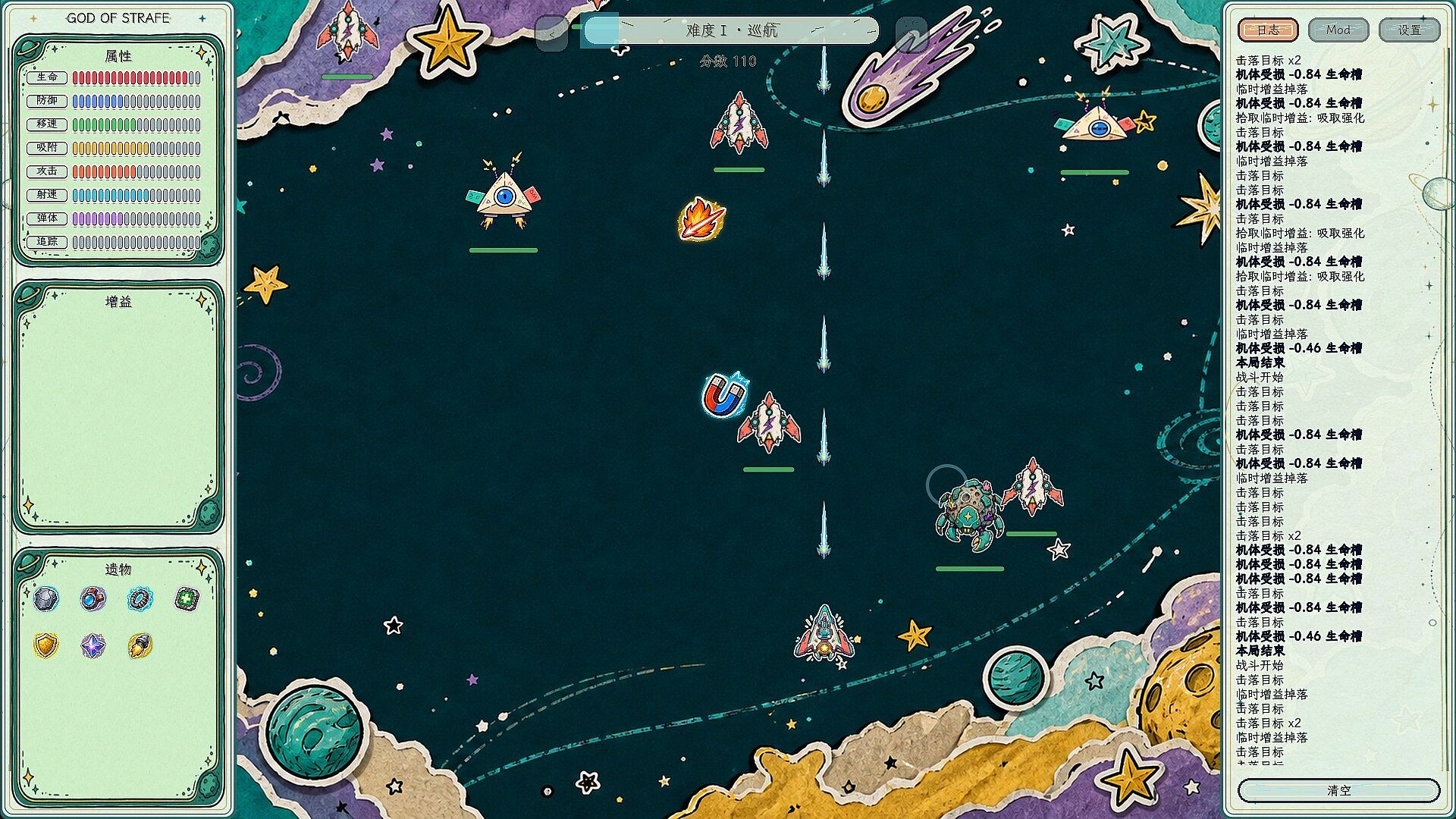
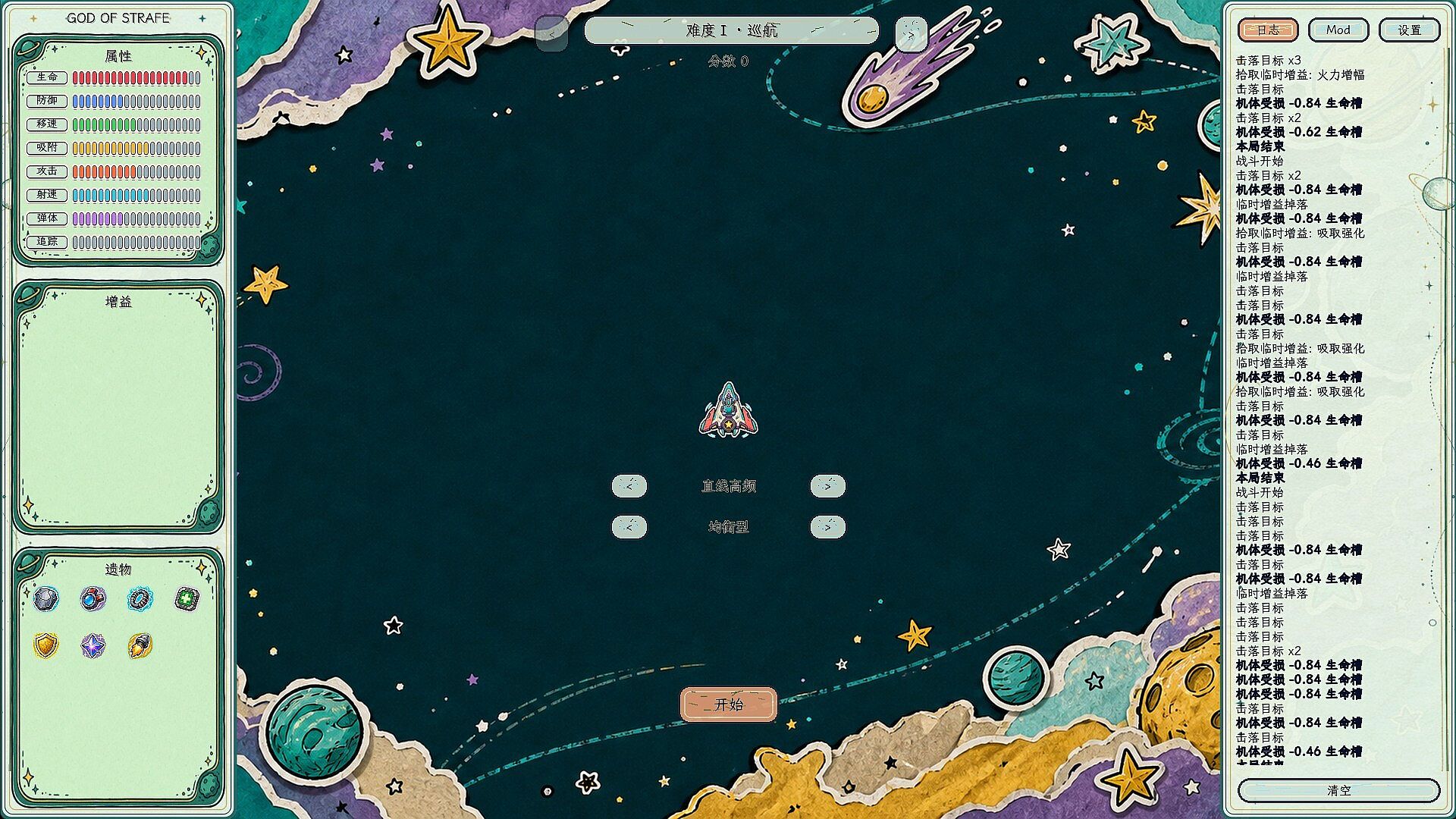
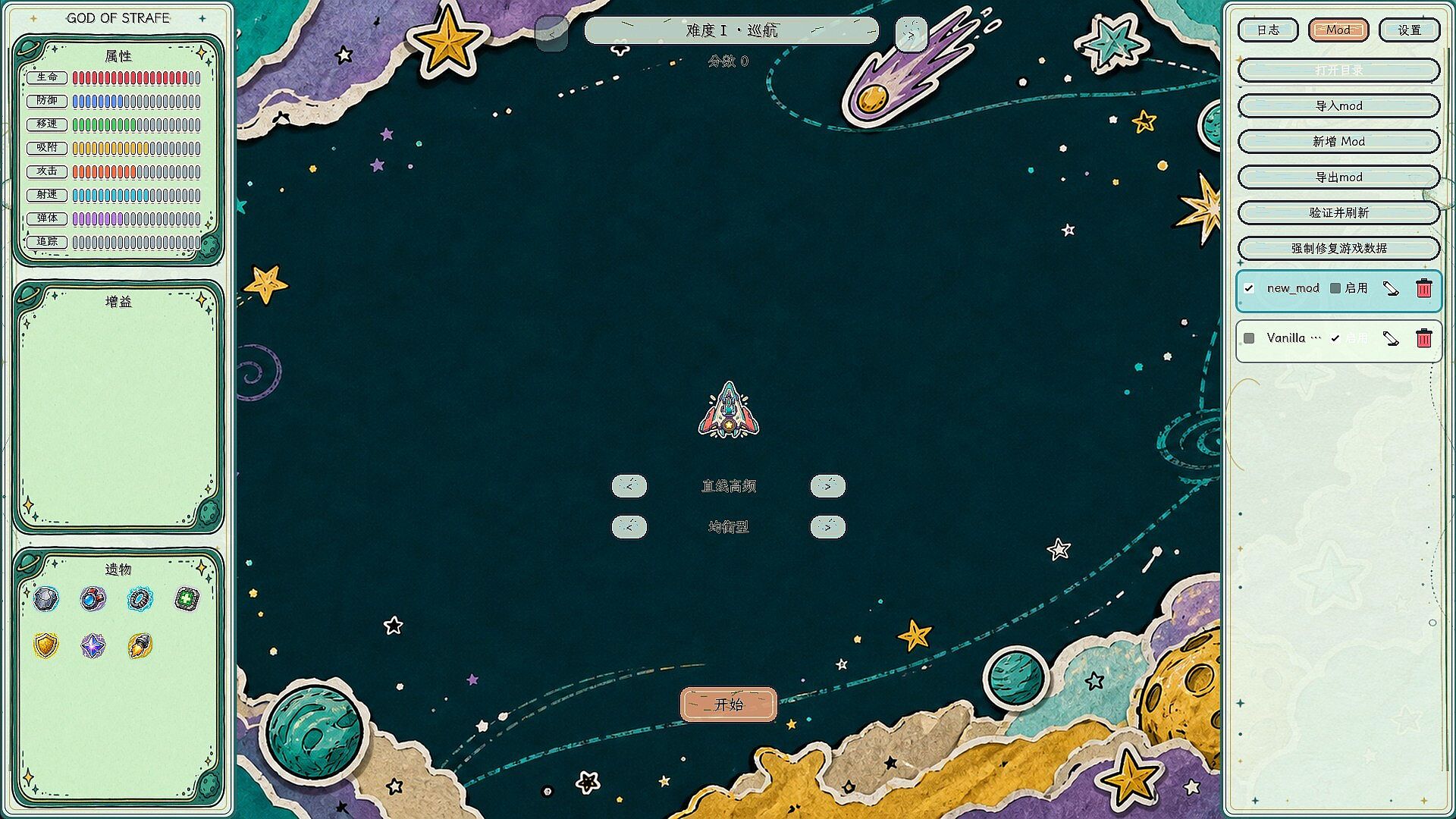
Players select one of three ships that prioritize balance, speed, or durability before entering a run. The chosen weapon fires without manual input, shifting focus entirely to dodging, collecting pickups, and managing build progression. Regular enemies, elite units, and bosses appear in increasing numbers and complexity, forcing constant adjustments to positioning as the battlefield grows denser and faster.
In-run buffs provide immediate or short-term enhancements that alter combat flow on the spot. Relics offer permanent upgrades that carry forward across attempts, allowing the same weapon to support varied playstyles through different combinations. With 30 enemies, four bosses, 12 buffs, and eight relics available in the base game, each run presents fresh variables even on repeated attempts.
Ten progressively unlocked difficulty levels scale the challenge after each boss defeat. Every completed run tracks time, kills, score, and the full build used, supporting quick restarts and experimentation with new ship and weapon pairings.
Game Modes
The primary structure centers on successive runs that escalate in density and speed. Each attempt begins with ship and weapon selection, then proceeds through waves that incorporate standard foes, elite variants, and boss encounters. Higher difficulties unlock only after defeating the current boss, creating a clear progression path that rewards repeated play with the same or different loadouts.
Build experimentation forms the backbone of replayability. Different weapon types emphasize rapid straight fire, wide spreads, homing shots, or heavy bursts, while buffs and relics layer additional layers of customization. The system encourages testing combinations that perform better under rising pressure rather than relying on a single optimal setup.
Progression and Customization
Unlocking higher difficulties expands the available battlefield intensity, with more enemies and tighter spacing appearing as levels advance. Relics accumulate lasting power that influences future runs, while buffs reset each attempt to keep decisions fresh. The recording of run statistics makes it straightforward to compare builds and identify what works against specific enemy compositions or boss patterns.
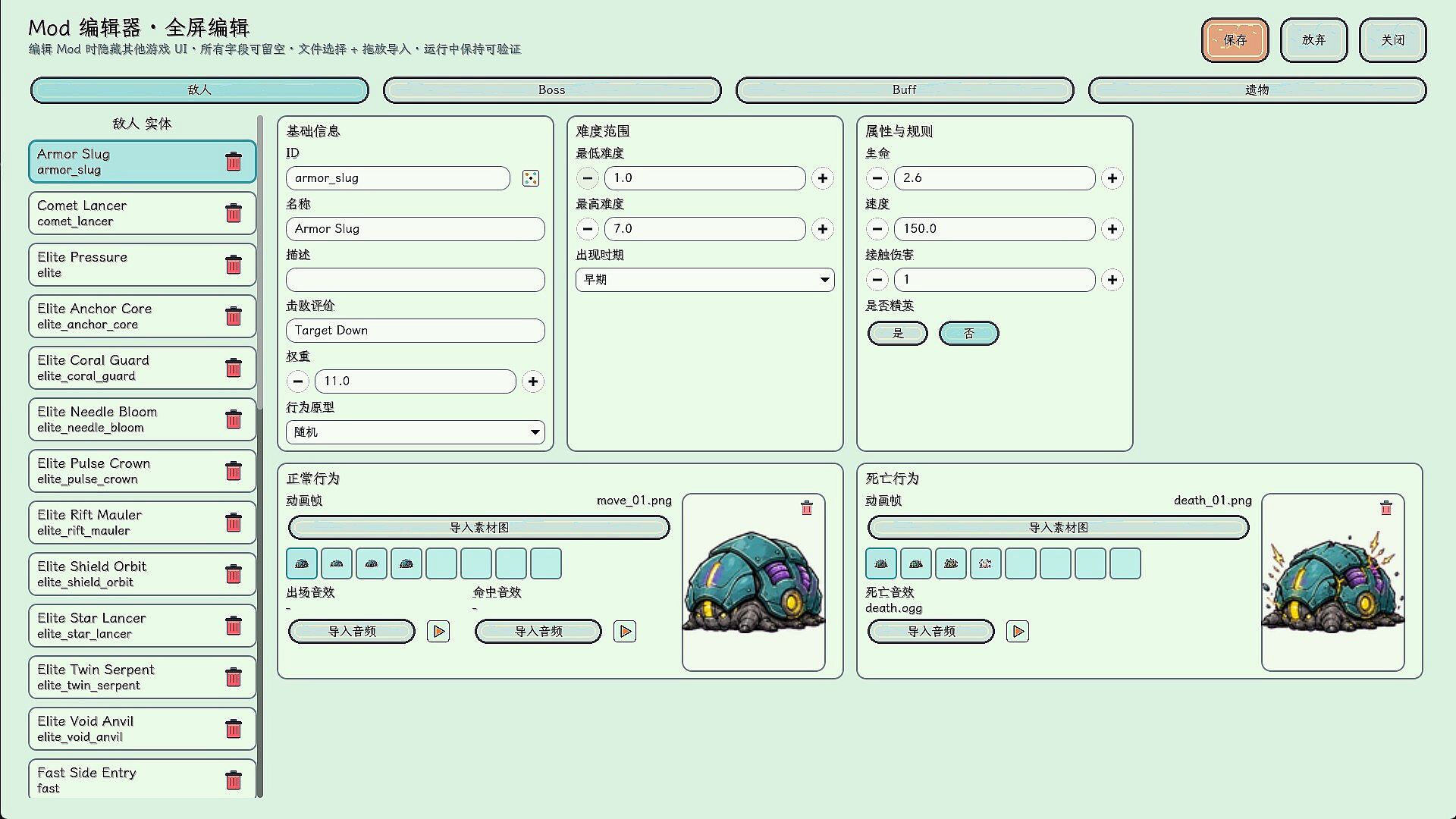
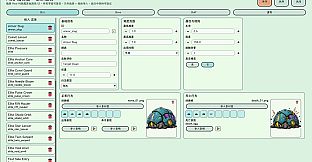
Local mod management expands options further. Users edit JSON files and supply custom images, animation frames, and audio to introduce new enemies, bosses, buffs, or relics. These additions load automatically at the start of the next run without requiring external services or workshop integration.
Is It Worth Playing?
God of Strafe suits players who enjoy roguelike action games centered on movement, build crafting, and escalating challenge rather than manual shooting mechanics. The automatic fire system rewards precise positioning and quick adaptation to changing threats, while the ship and weapon variety supports multiple approaches to the same content.
Those interested in modding will find straightforward tools for expanding the roster without coding knowledge. The current content of 30 enemies, four bosses, and supporting systems provides a solid foundation for repeated runs across ten difficulty levels, with built-in tracking to encourage optimization and variety.
Overall, the game appeals to fans of indie action titles that emphasize mechanical depth through positioning and progression systems over narrative or multiplayer elements. Its focused loop of ship selection, run execution, and post-run analysis delivers consistent opportunities for refinement and experimentation.