




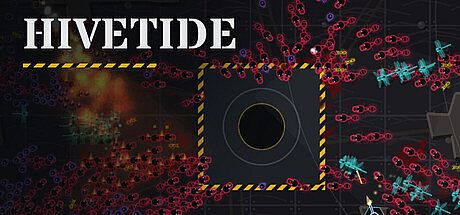


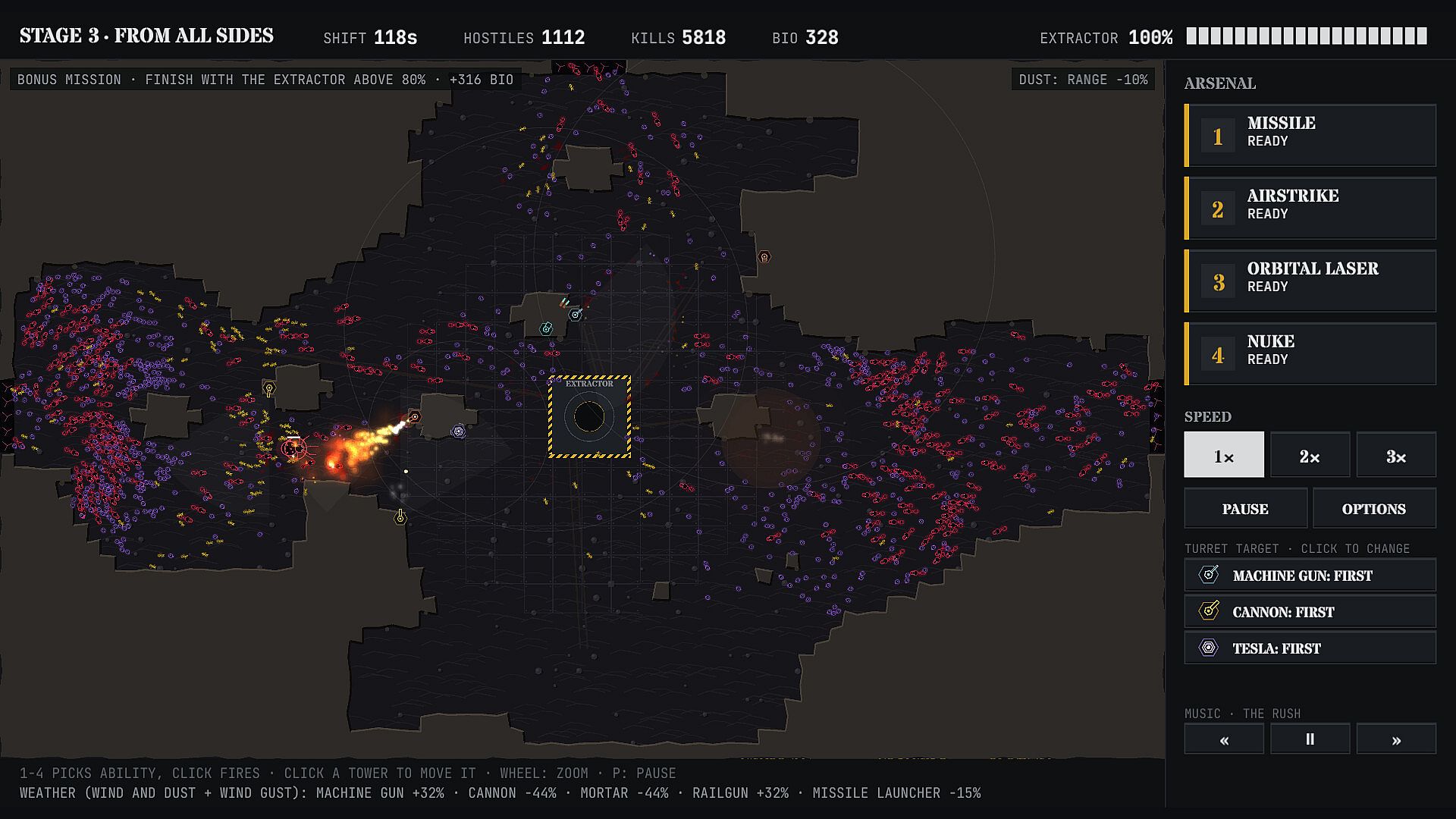
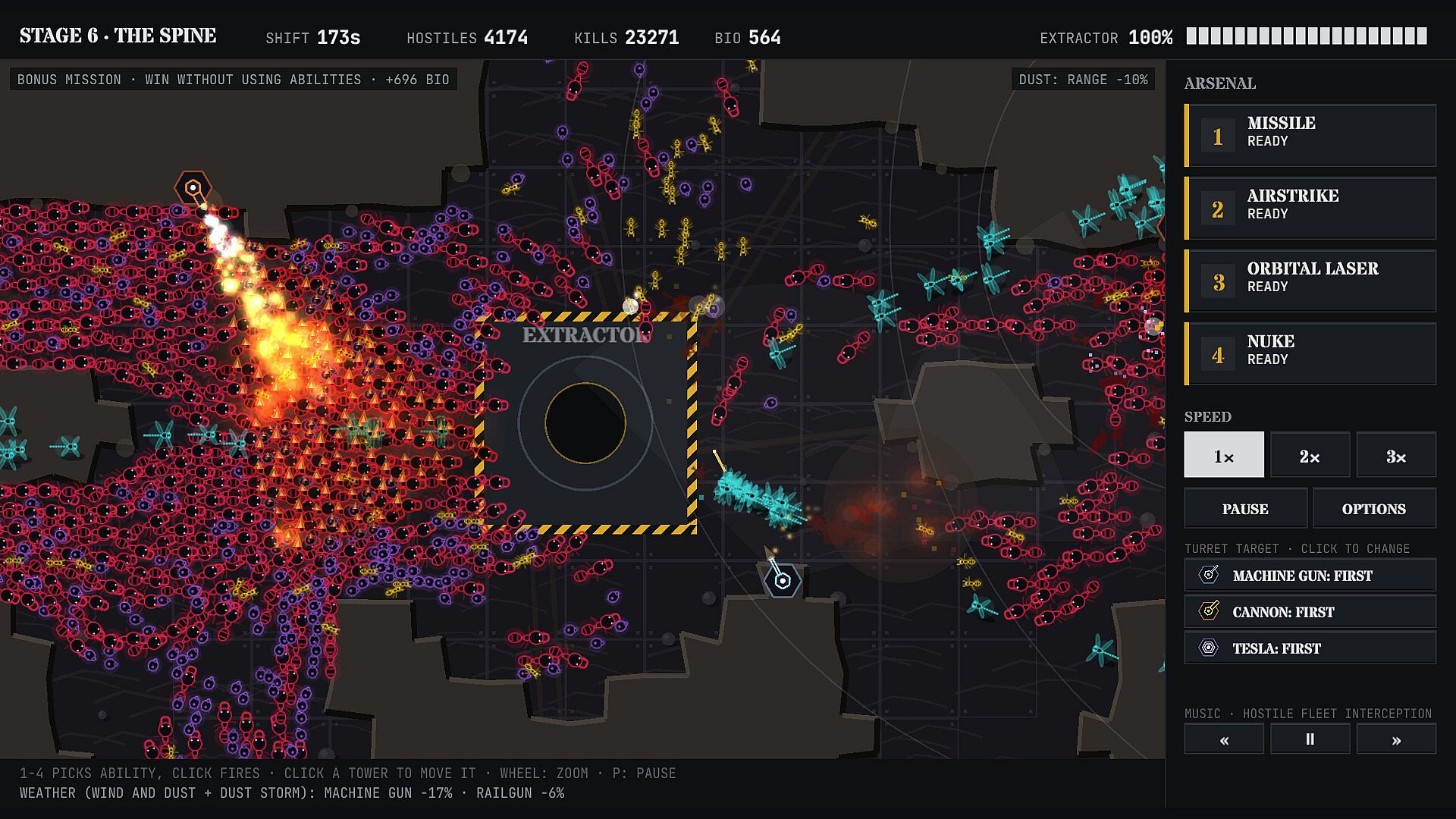


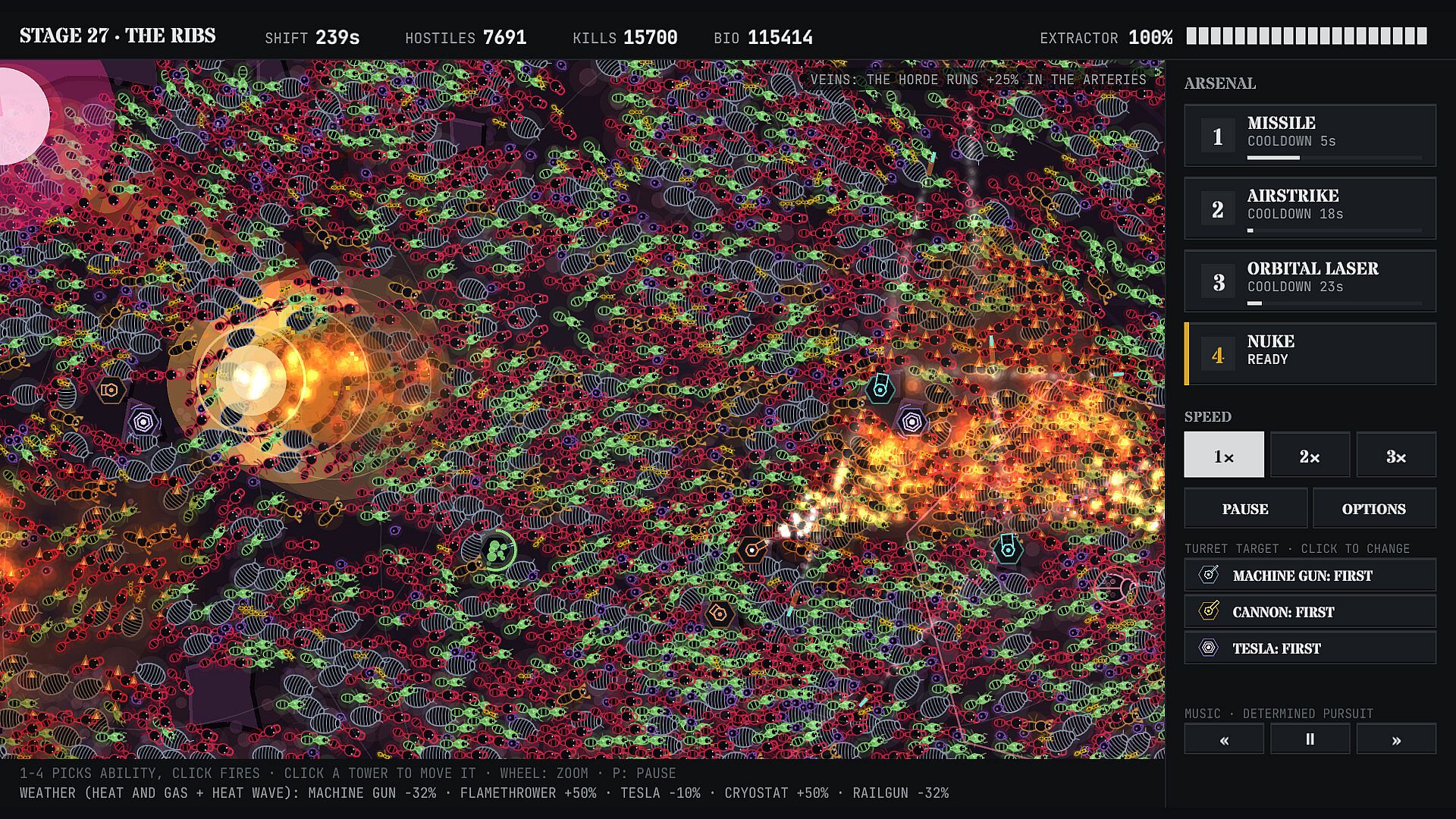



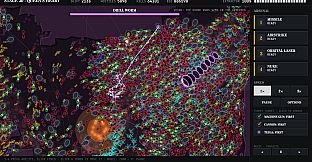



Hivetide is a strategy indie game on PC that blends incremental progression with tower defense mechanics. Players defend a single extraction rig against swarms of insects that behave like flowing water rather than following predictable paths.
Gameplay
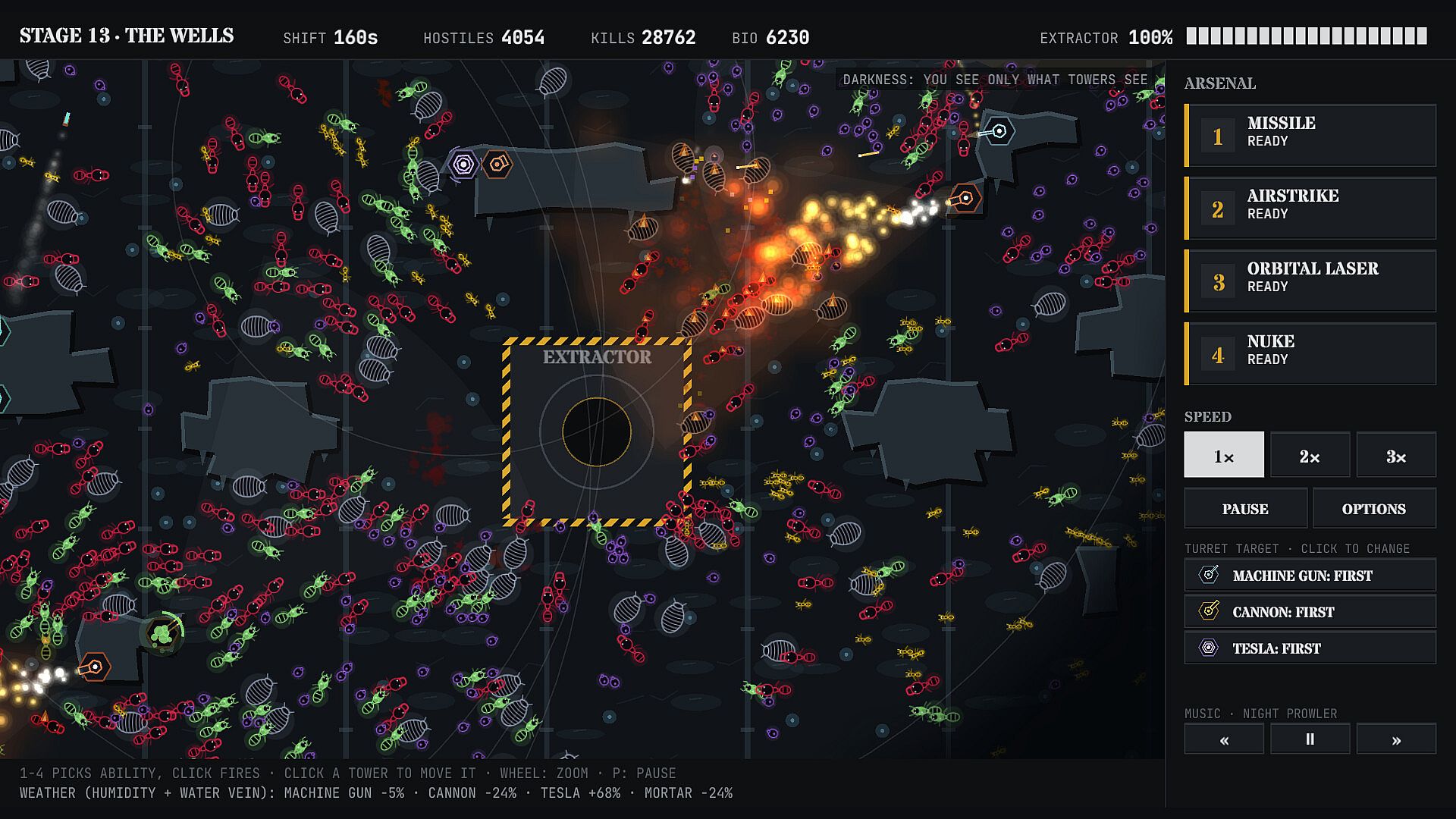
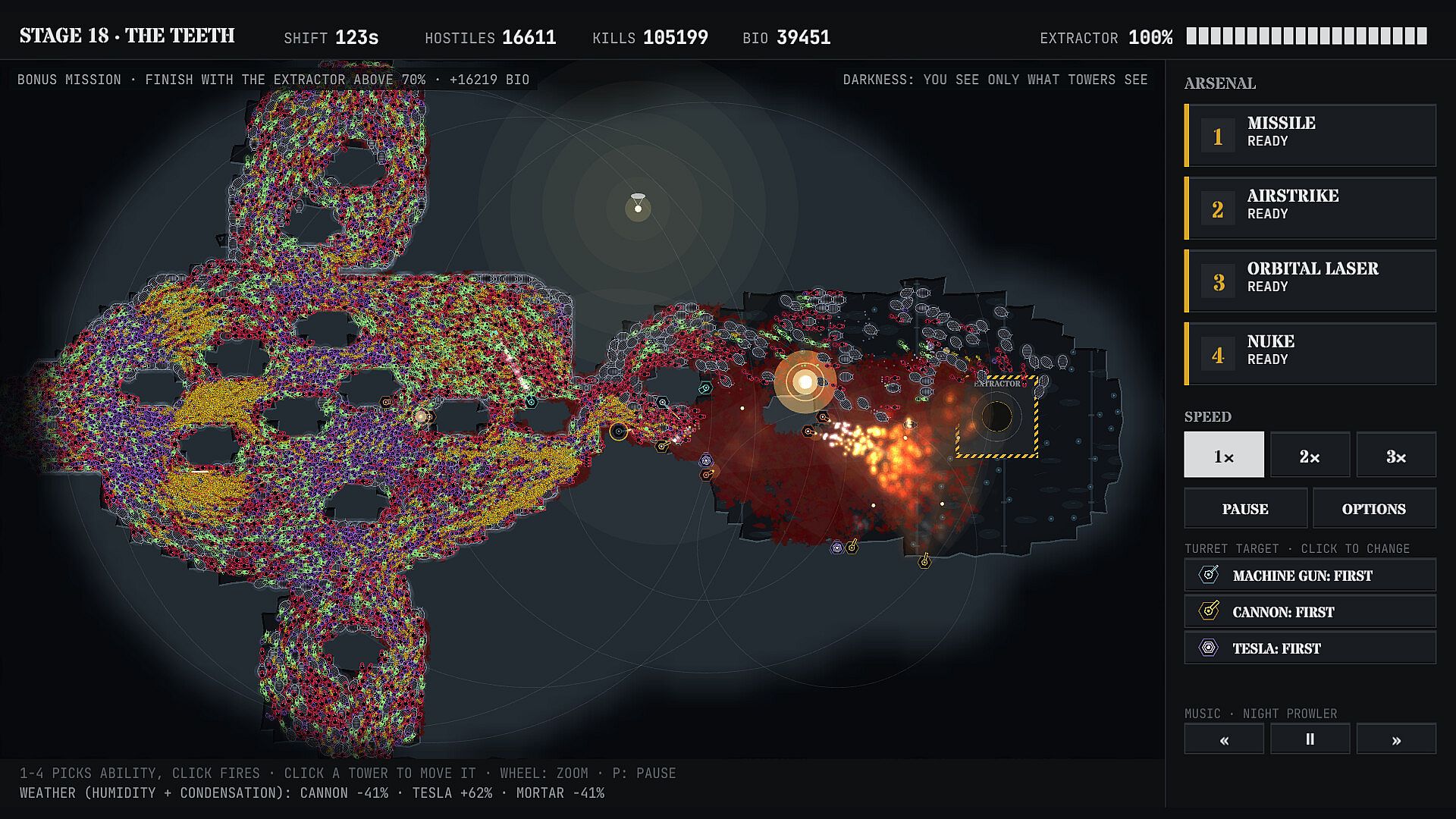
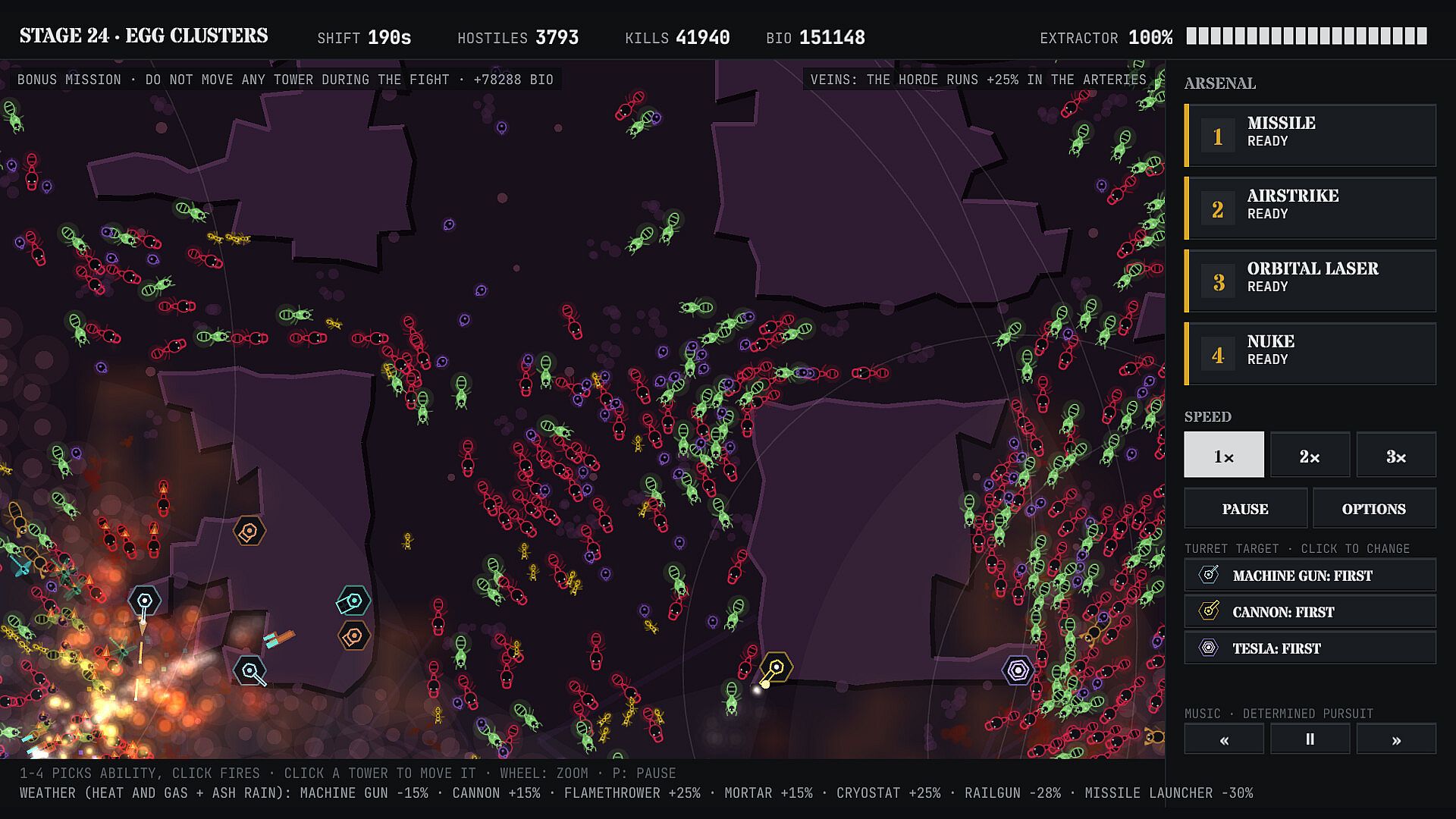
The core loop centers on protecting the extractor during each stage while harvesting biomass. Insects flood tunnels and reroute when paths become blocked, allowing thousands to appear on screen simultaneously. Towers can only be placed on solid rock overlooking tunnels, and players adjust each tower's firing arc by dragging its edges to account for line-of-sight obstacles created by the terrain.
Relocating a tower during combat requires a brief setup time, forcing careful decisions about positioning. Each of the eight towers offers distinct roles, from the rapid fire of the Machine Gun to the area control of the Flamethrower or the precision of the Railgun. Target priorities can be set to focus on threats closest to the extractor, the strongest insects, or the nearest ones.
Four distinct worlds introduce environmental variables that alter weapon effectiveness. Wind on the Surface affects projectile trajectories, while damp conditions in the Colony influence powder-based weapons and lightning. Heat in the Royal Chamber boosts fire damage, and magnetic fields in the Core disrupt guided munitions. Additional weather events can occur mid-stage, changing conditions dynamically.
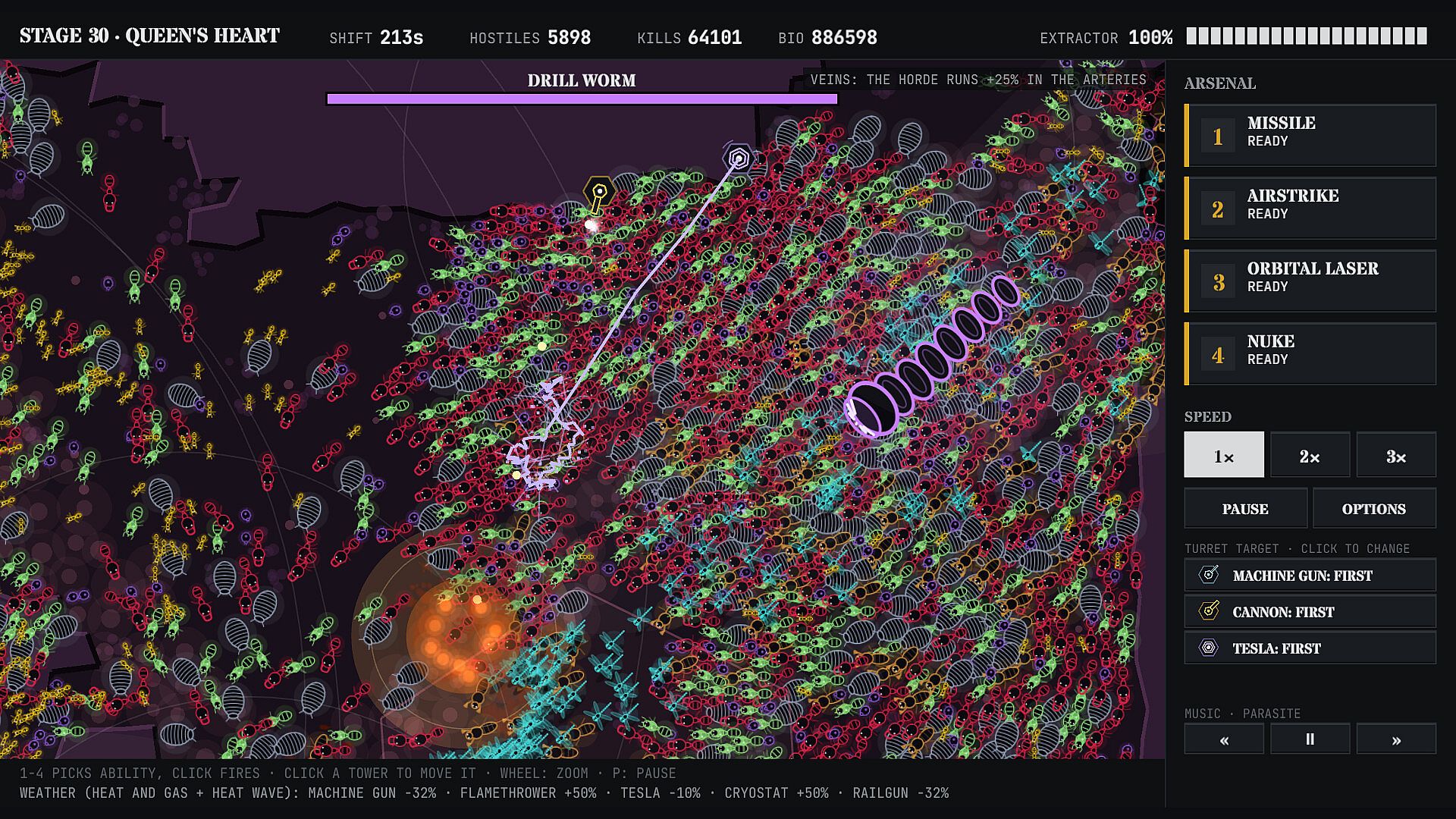
The terrain itself evolves. Limited visibility in the Colony restricts tower sightlines. Veins in the Royal Chamber speed up enemy movement, and Diggers create new tunnels. Collapsing rock in the Core opens unexpected shortcuts that can bypass initial defenses.
Game Modes
The campaign spans four worlds and forty stages, each on unique maps. Every world features new insect types, additional towers, a mid-stage mini-boss, and a final boss encounter that must be defeated to complete the stage. Special rule-breaking stages include defending two extractors simultaneously, operating under blackout conditions until flares appear, facing a flying swarm that bypasses ground defenses, or enduring continuous rock collapses.
Bonus objectives on every stage reward extra biomass and stars for completions under restrictions such as avoiding the nuke, leaving a tower slot empty, or preventing any flyers from reaching the extractor. After the campaign, Endless mode becomes available for each cleared world. Modifiers increase difficulty on previously completed stages, with medals tracking stacked challenges. A Daily Challenge presents the same stage and rules to all players each day, while a Veteran campaign replays all forty stages at higher difficulty.
Progression and Upgrades
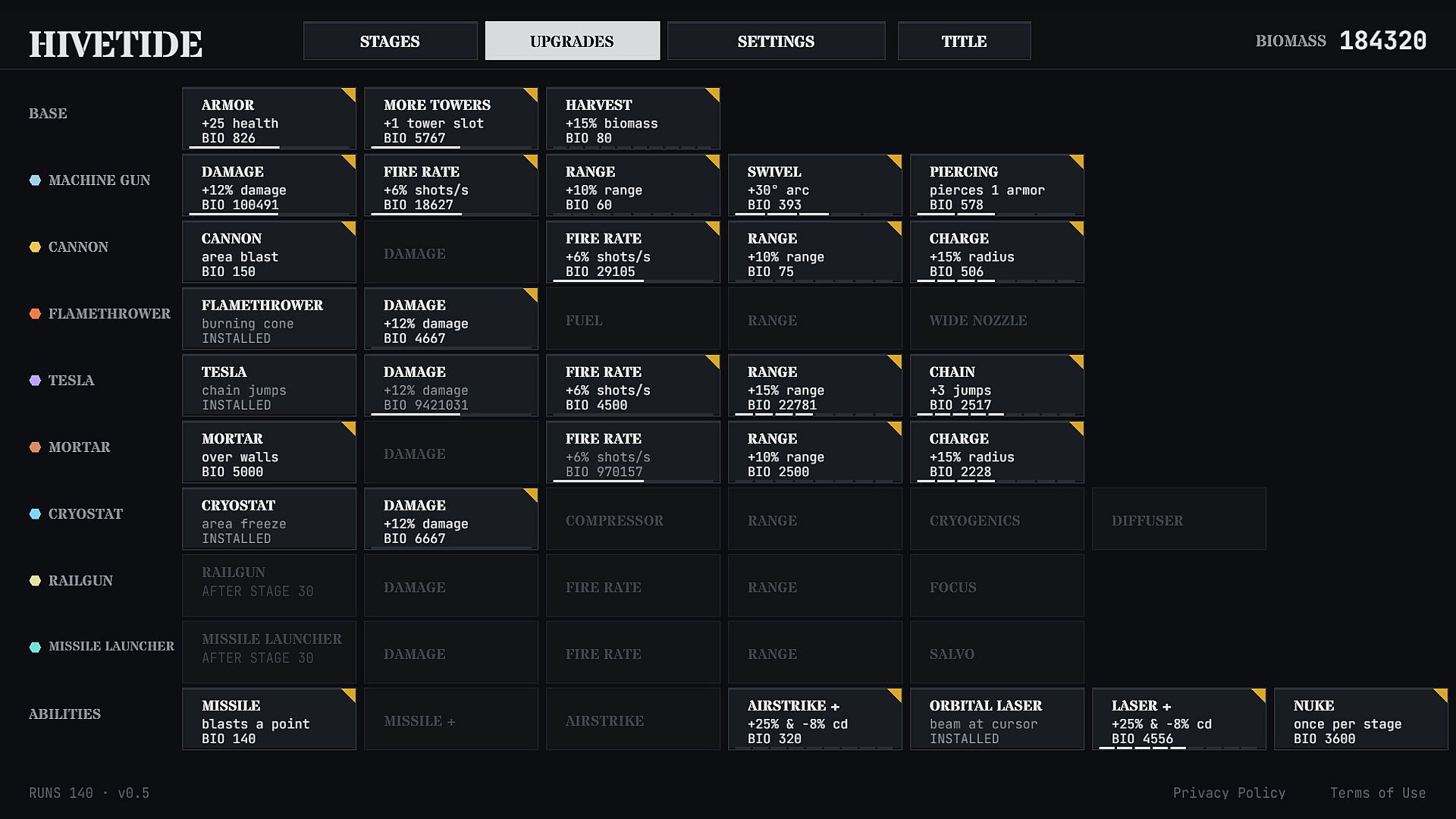
Biomass collected from every run, successful or not, funds a broad upgrade tree. Improvements cover damage, fire rate, and range for each tower type, plus extra tower slots, extractor armor, enhanced harvesting rates, and ability enhancements. Post-stage reports detail damage sources, idle towers, and weather impacts to guide future upgrades.
Four abilities provide emergency options: Missile, Airstrike, Orbital Laser, and a single Nuke per stage that covers the entire map. The game pauses for precise aiming or repositioning during ability use.
Accessibility and Features
Three difficulty settings adjust the campaign challenge. Colorblind modes support deuteranopia, protanopia, and tritanopia by recoloring insects. Controller support uses an on-screen cursor with button prompts. Playback speeds include 1x, 2x, and 3x options alongside pause. A bestiary populates with details on encountered insects and unlocked towers. All visuals are procedurally generated through code.
Is It Worth Playing?
Hivetide suits players who enjoy deliberate tower placement and adaptation over static defenses. The flowing enemy behavior, terrain changes, and weather shifts demand ongoing adjustments rather than one-time setups. Incremental upgrades and multiple campaign layers provide long-term progression for those who complete the main stages. The combination of single-extractor focus, relocation mechanics, and variable conditions creates a focused strategy experience that rewards experimentation with tower types and priorities. Those seeking traditional lane-based tower defense may find the fluid movement and environmental interactions a refreshing shift.











