






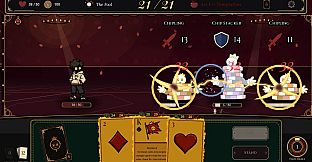
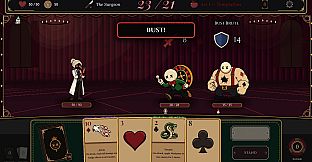
House of 21 is a strategy indie casual roguelike deckbuilder that turns the rules of blackjack into a combat system. Players find themselves trapped in a casino purgatory between life and death, where building a deck of standard playing cards becomes the key to survival against the House. The game emphasizes careful risk management as every draw pushes totals closer to 21 or over the edge into a bust.
Gameplay
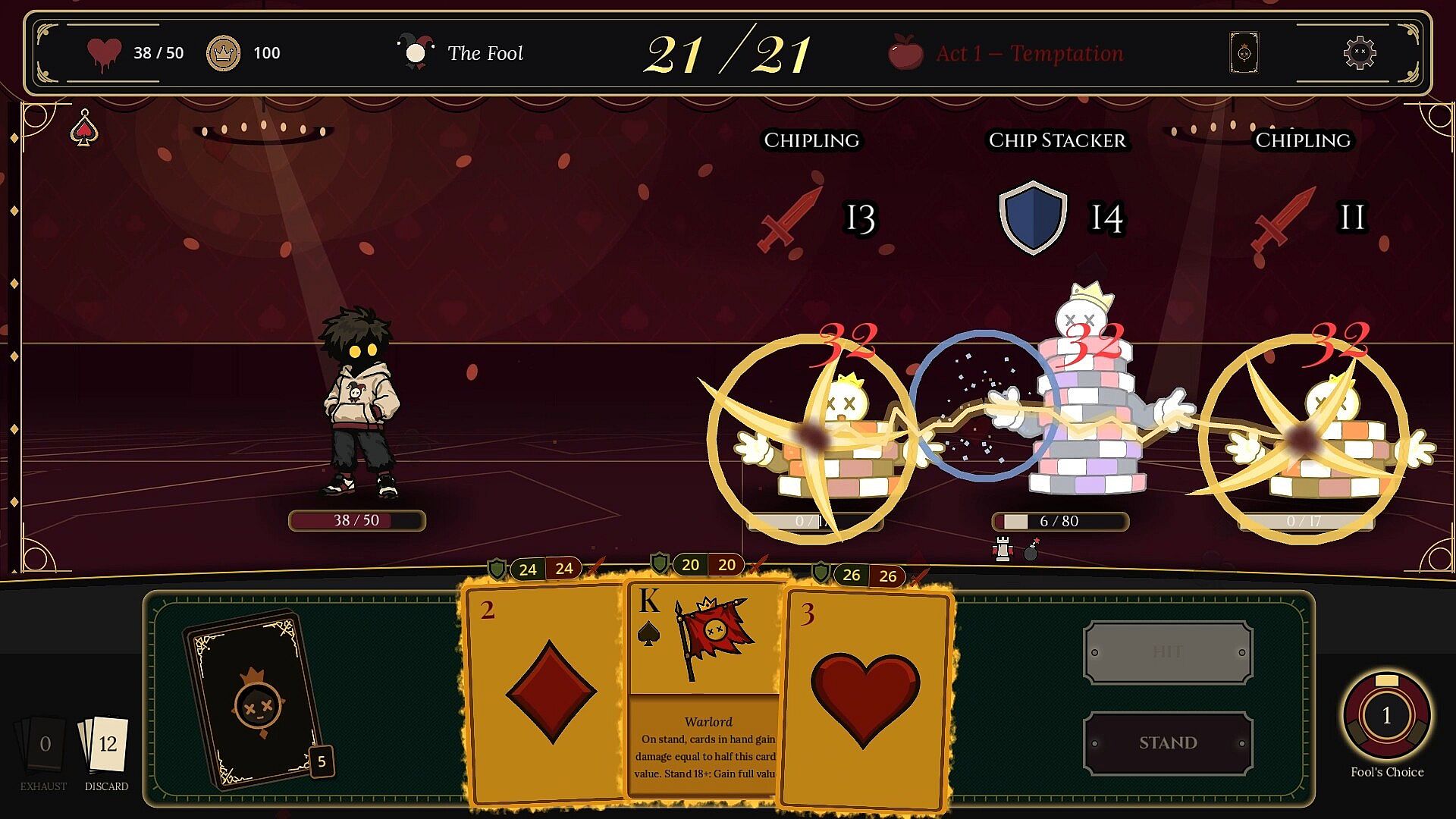
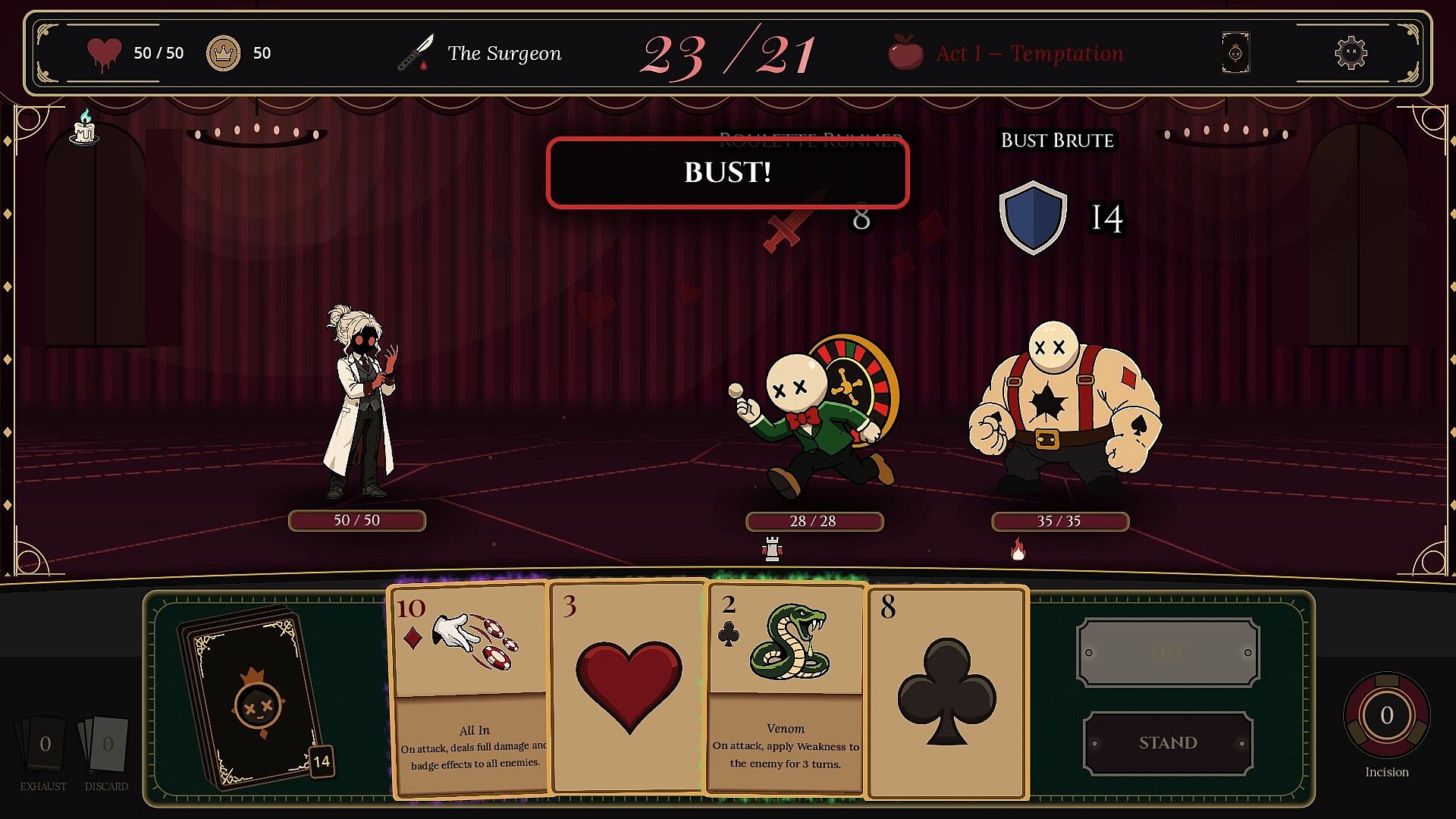
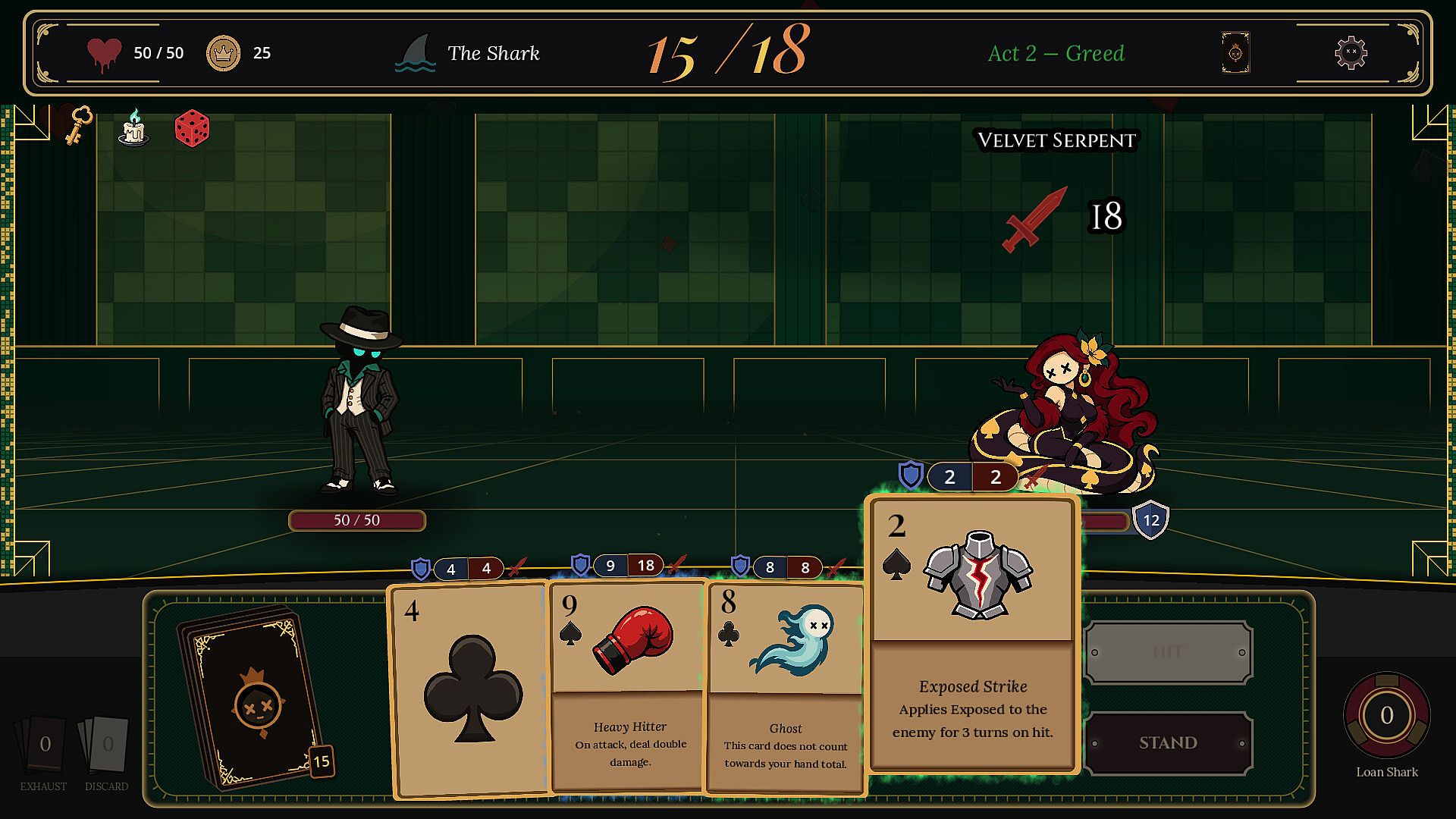
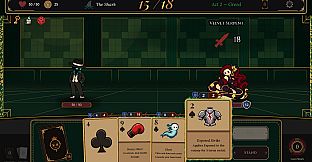
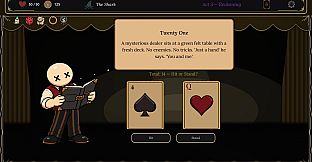
Combat revolves around drawing cards one at a time to build a hand total. Standing locks in the current hand while hitting exactly 21 doubles the damage dealt on the next attacks. Going over 21 causes a bust that halves the value of cards in hand and shrinks the available options for that turn. After standing, each card can be dragged onto enemies to attack or onto the player character to block incoming threats. Every card functions as both weapon and shield, forcing decisions on allocation based on the current total and enemy actions.
Badges attach permanently to individual cards and alter their behavior at key moments such as drawing, standing, hitting 21, busting, attacking, or defending. Up to two badges can stack on a single card to create layered effects, such as weakening multiple enemies on impact or combining damage with defensive triggers. Relics serve as passive items collected during a run that reward either consistent play or higher risk approaches while occasionally bending core rules. Enemies display their upcoming moves in advance, with some adapting dynamically based on the player's stand total or whether a bust occurred. Many foes carry unique traits that modify incoming damage or punish certain card values, and tougher variants appear as elites or bosses that progress through multiple phases while summoning support.
Game Modes
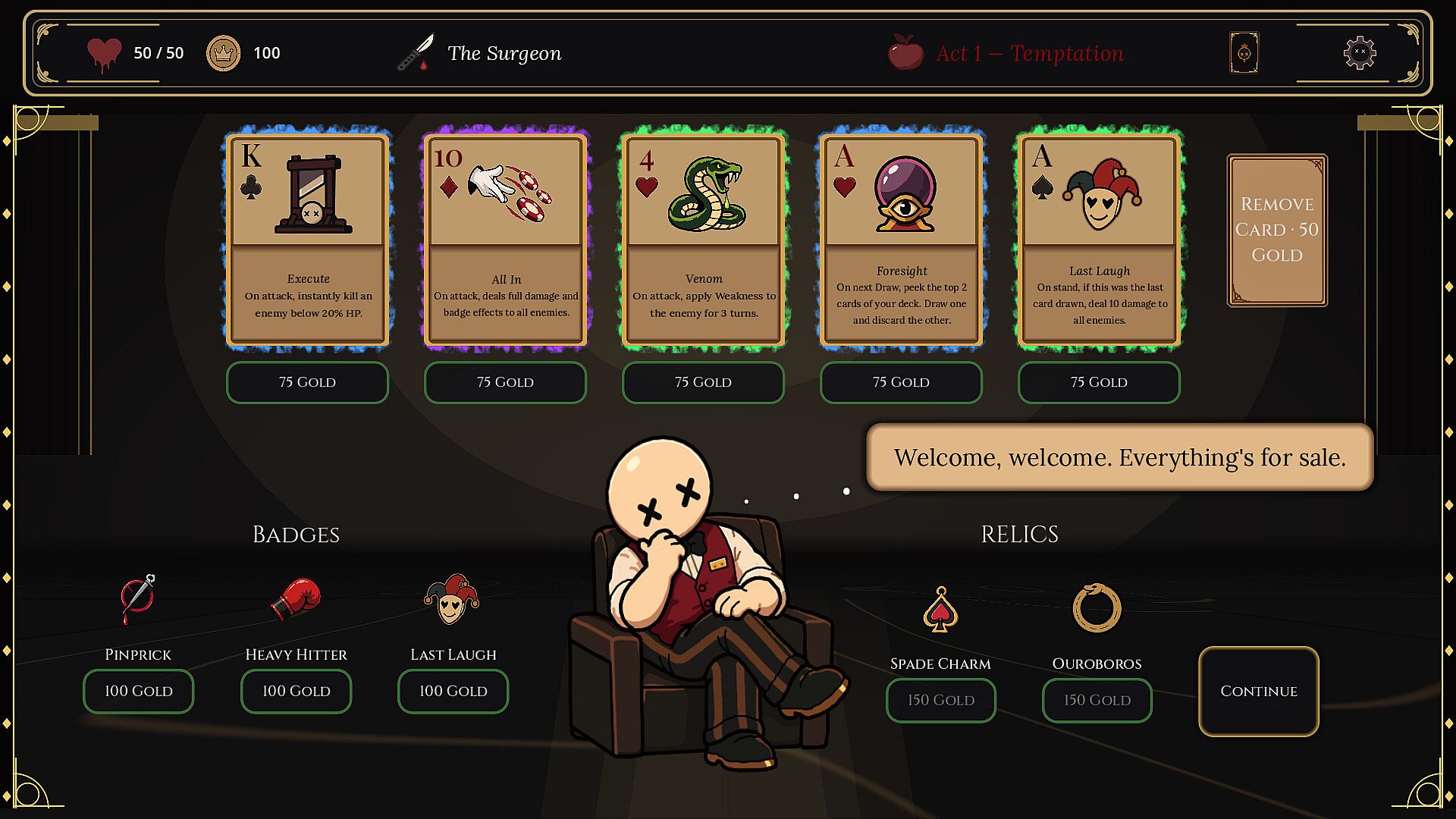
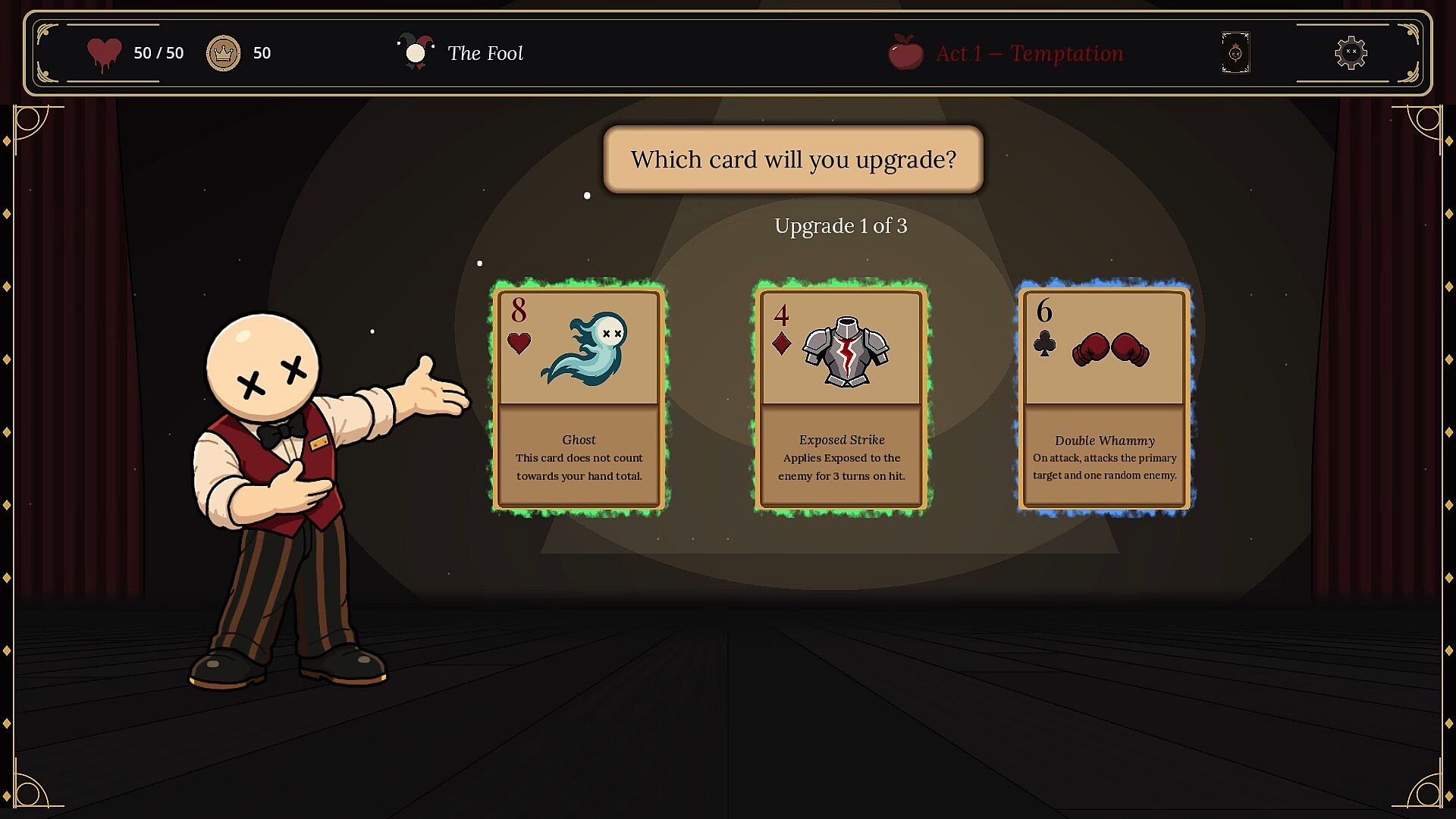
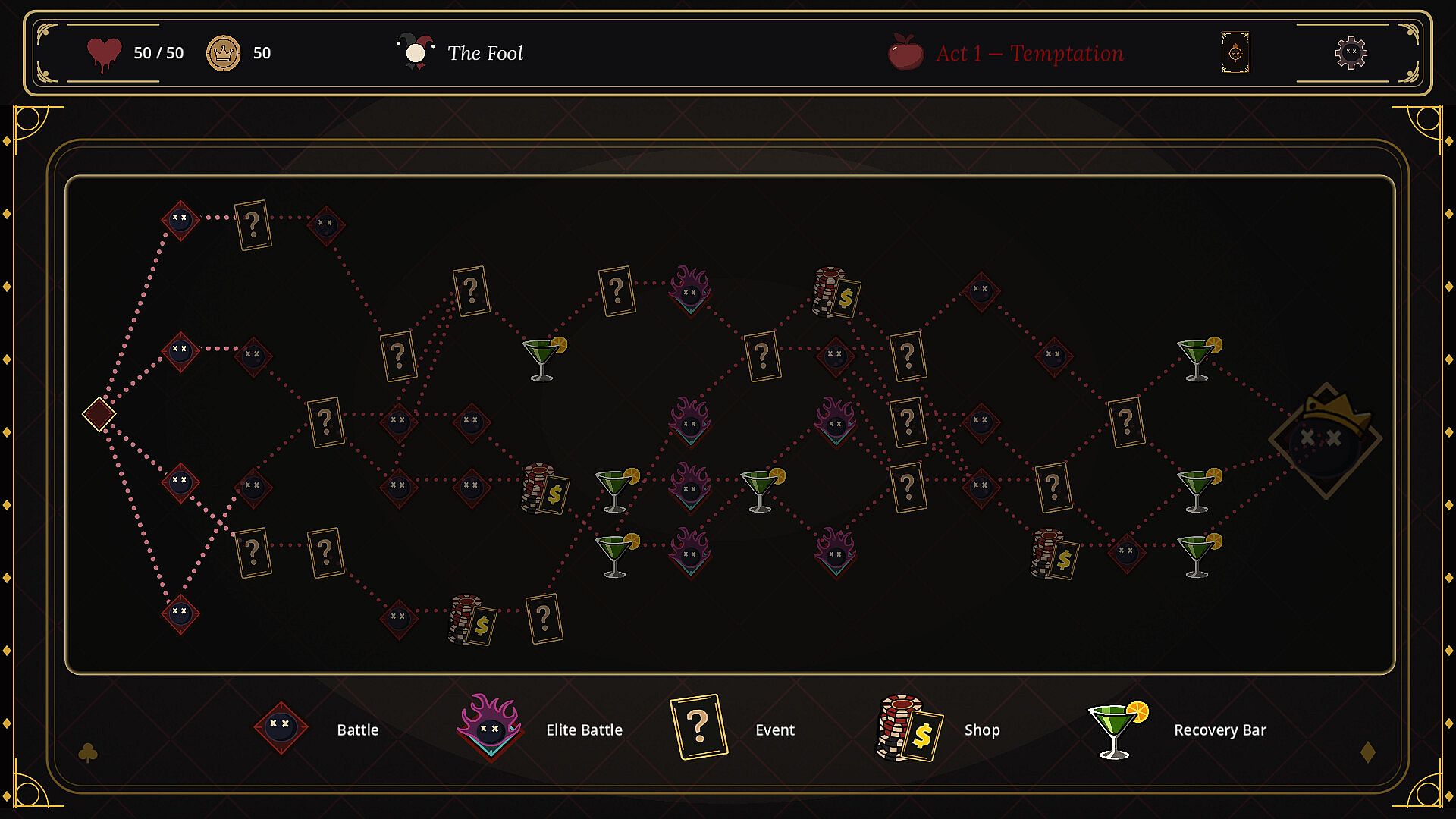
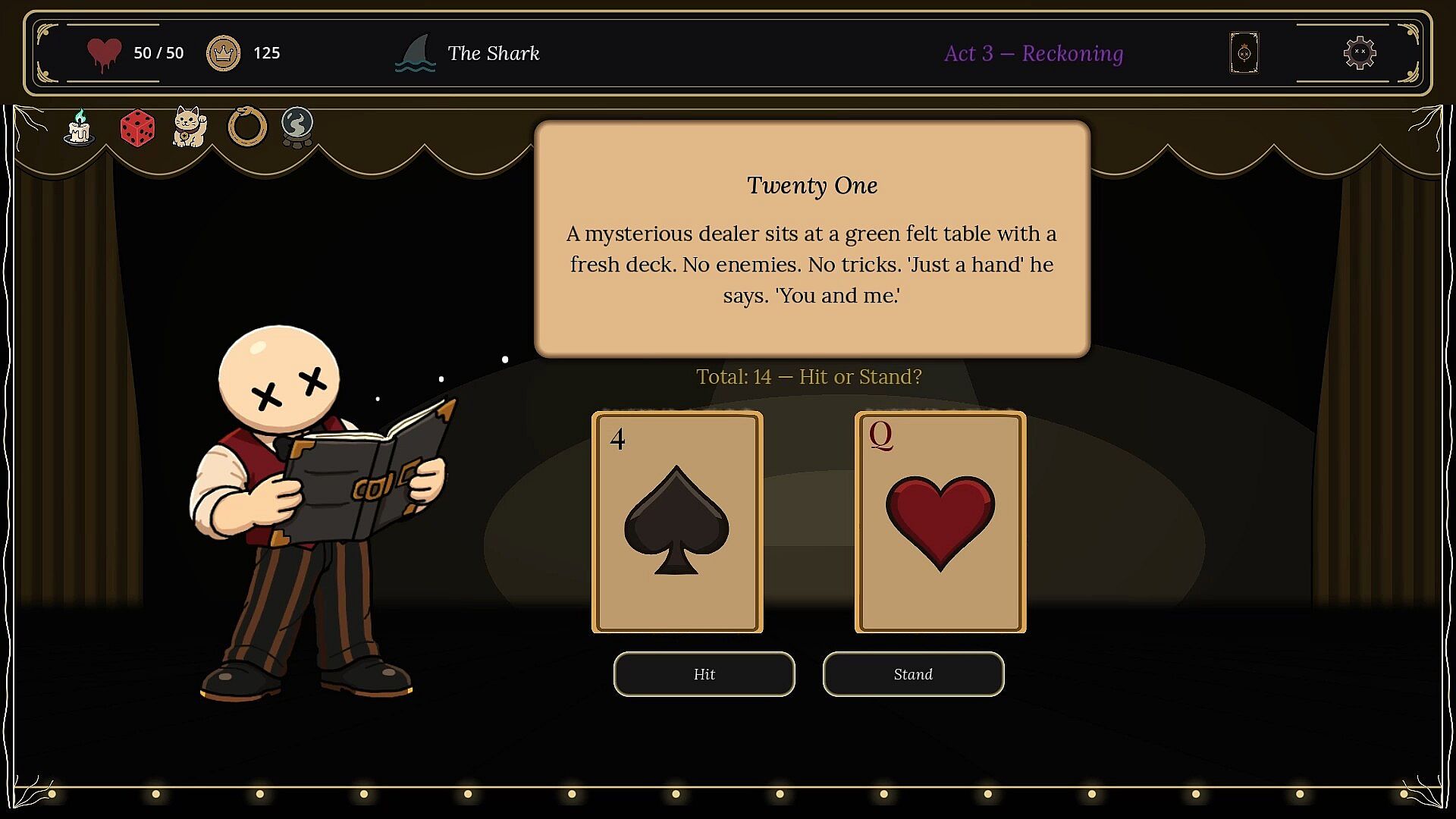
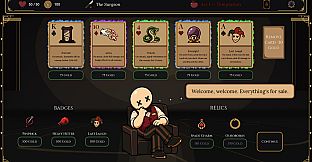
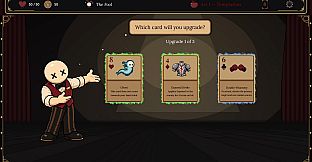
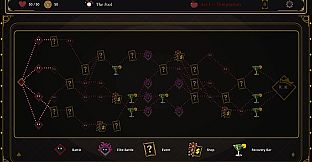
The core experience centers on roguelike runs across a procedurally generated map. Players navigate nodes that include standard battles, elite encounters, shops for purchasing or discarding badges relics and cards, and recovery locations. Events present choices that carry risks and rewards. Three distinct stages shape the journey with shifting enemy pools traits and overall tone. Three playable characters each bring a unique starting ability and influence deckbuilding priorities throughout a run. Card upgrades become available between battles through interactions with The Admin, the casino's mysterious host.
Core Mechanics and Progression
Deck construction begins with basic playing cards that gain power through badge attachments and relic synergies. The closer a hand pushes toward 21 without exceeding it, the stronger the resulting attacks and blocks become. Busting introduces a penalty that reduces hand size and card effectiveness, creating tension around every draw decision. Shops allow targeted upgrades or removals to refine the deck mid run, while events add branching paths that can grant powerful tools or impose lasting drawbacks. The three stages escalate difficulty and introduce new enemy behaviors, encouraging adaptation of strategies as runs progress from early temptation to final reckoning.
Is It Worth Playing?
House of 21 suits players who enjoy roguelike deckbuilders built around a familiar card game with added layers of risk and positioning. The blackjack foundation provides an accessible entry point while the badge stacking, relic collection, and enemy trait systems reward experimentation across multiple runs. Those who appreciate strategic decisions around when to stand or push further will find depth in managing hand totals against adaptive foes. The single player structure on PC focuses entirely on solo progression through procedural maps and character specific identities. Availability on PC makes it straightforward to try for fans of the genre seeking a fresh twist on deckbuilding combat.











