







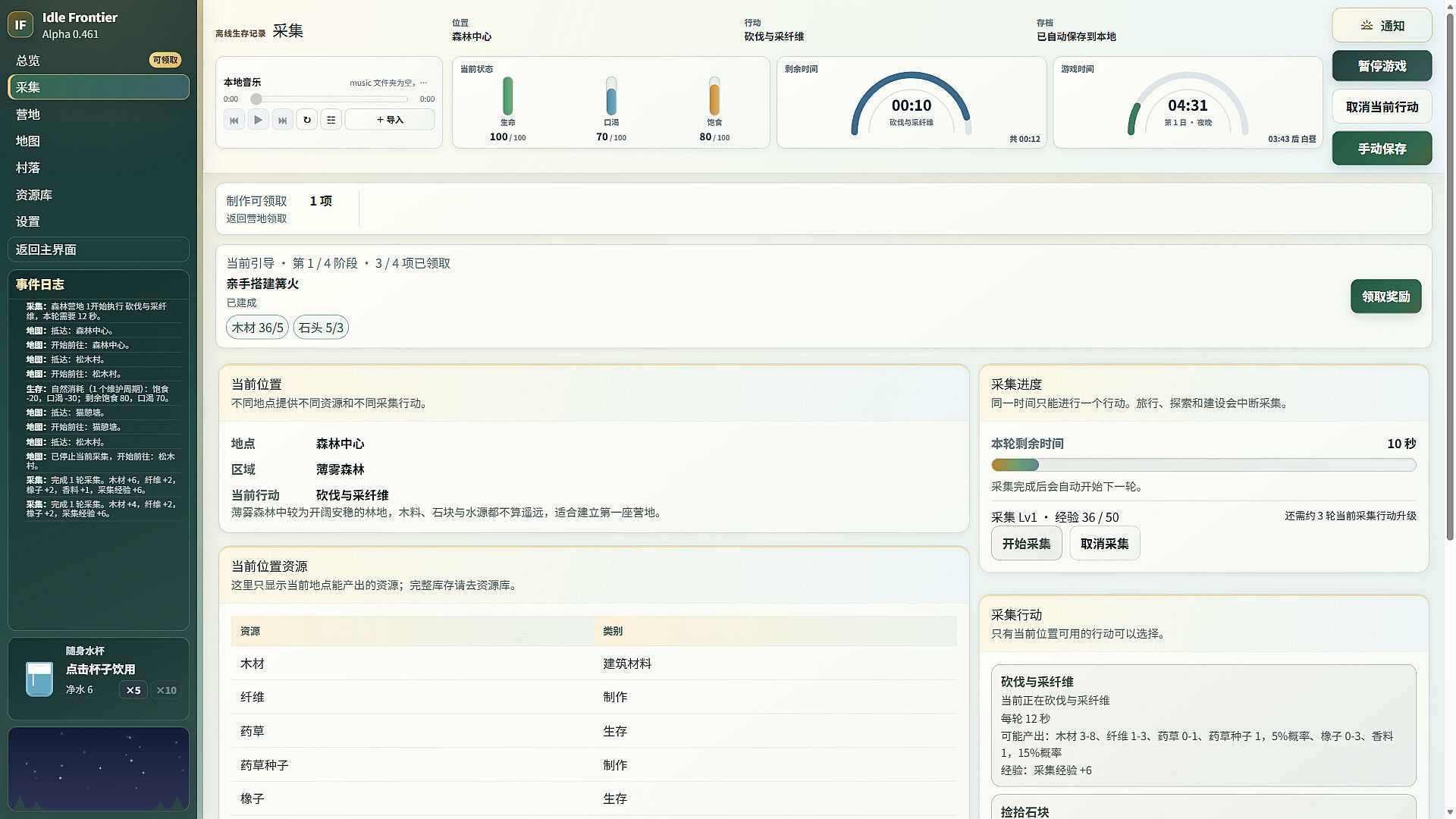
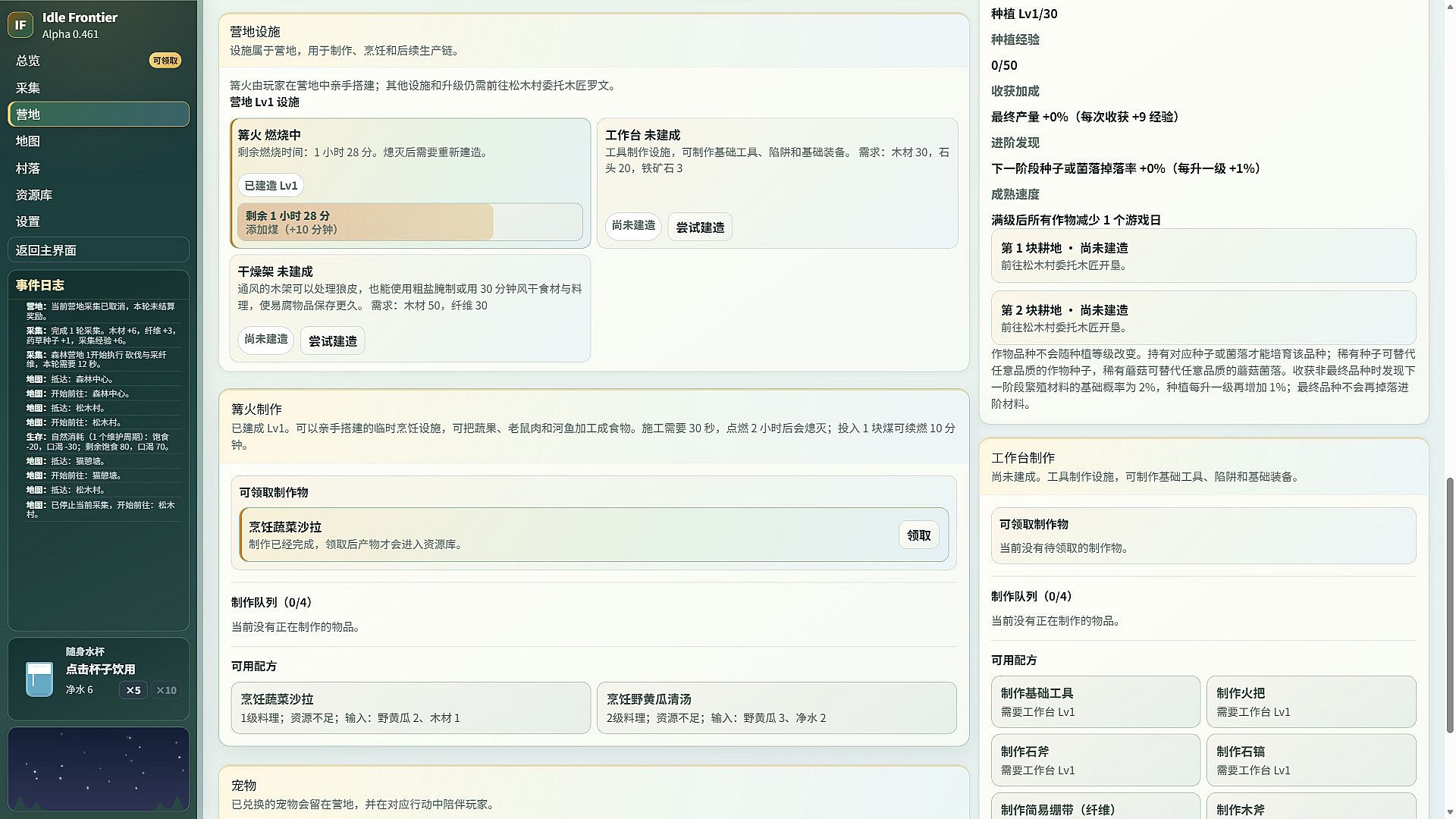
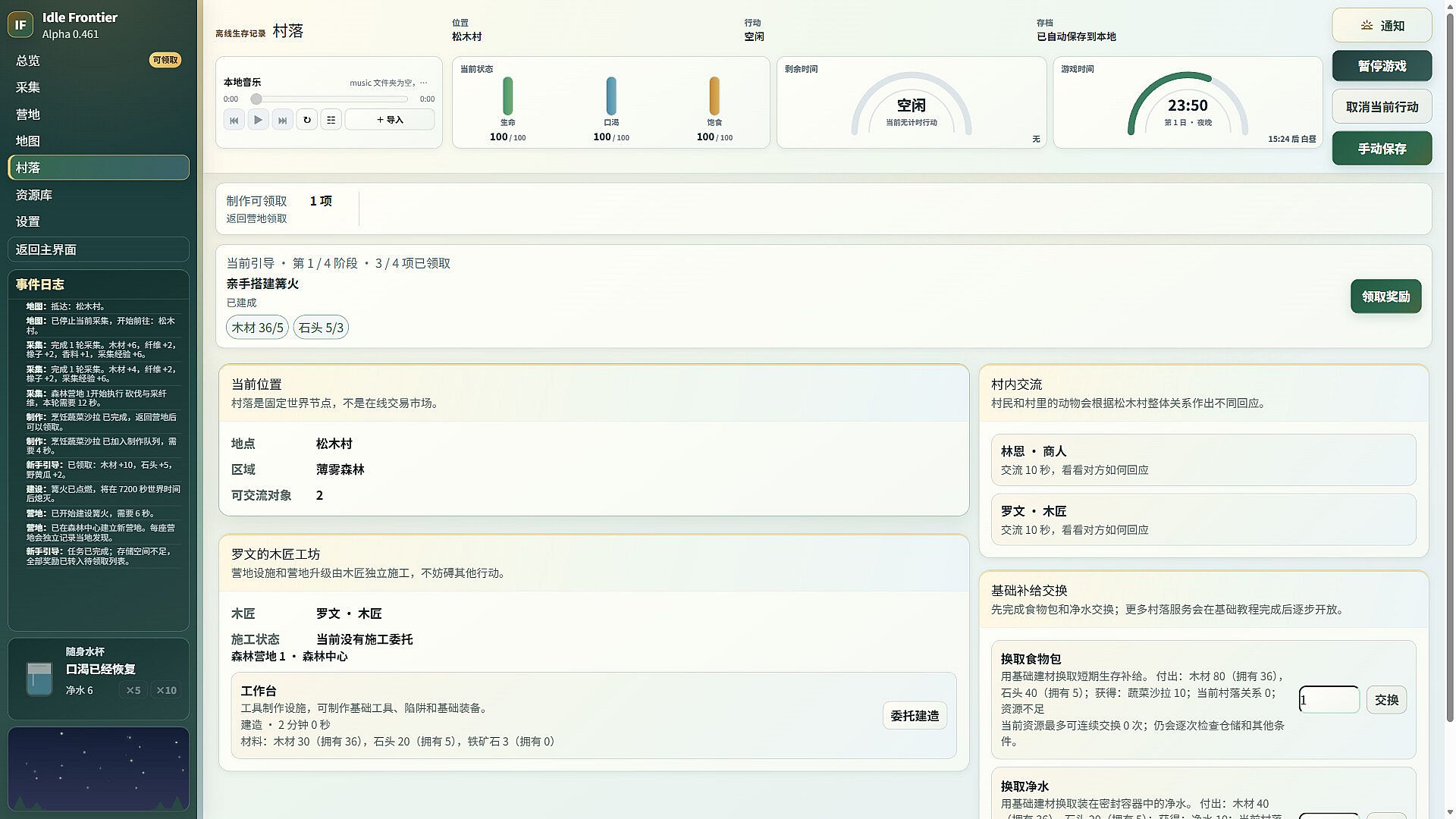
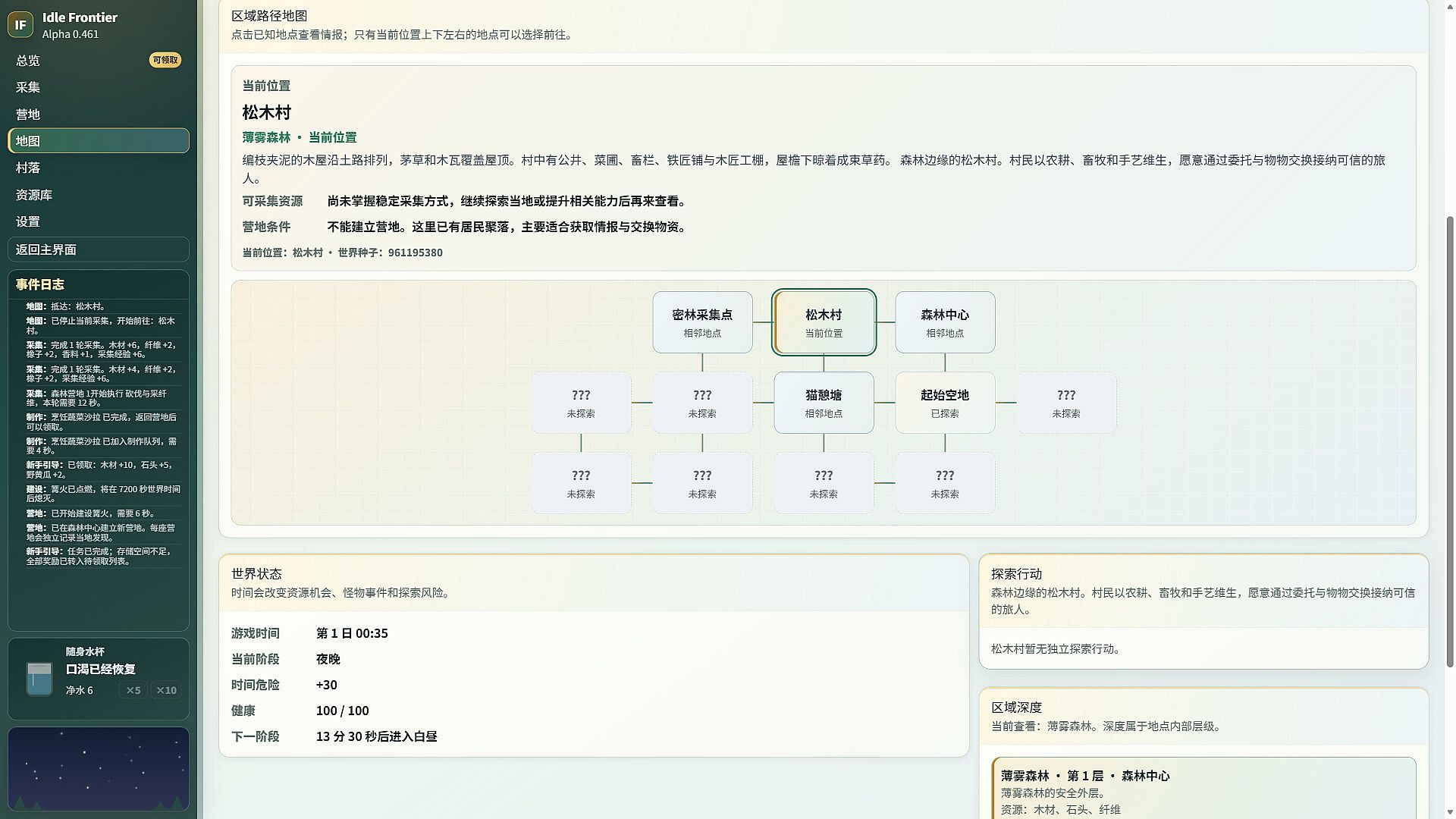
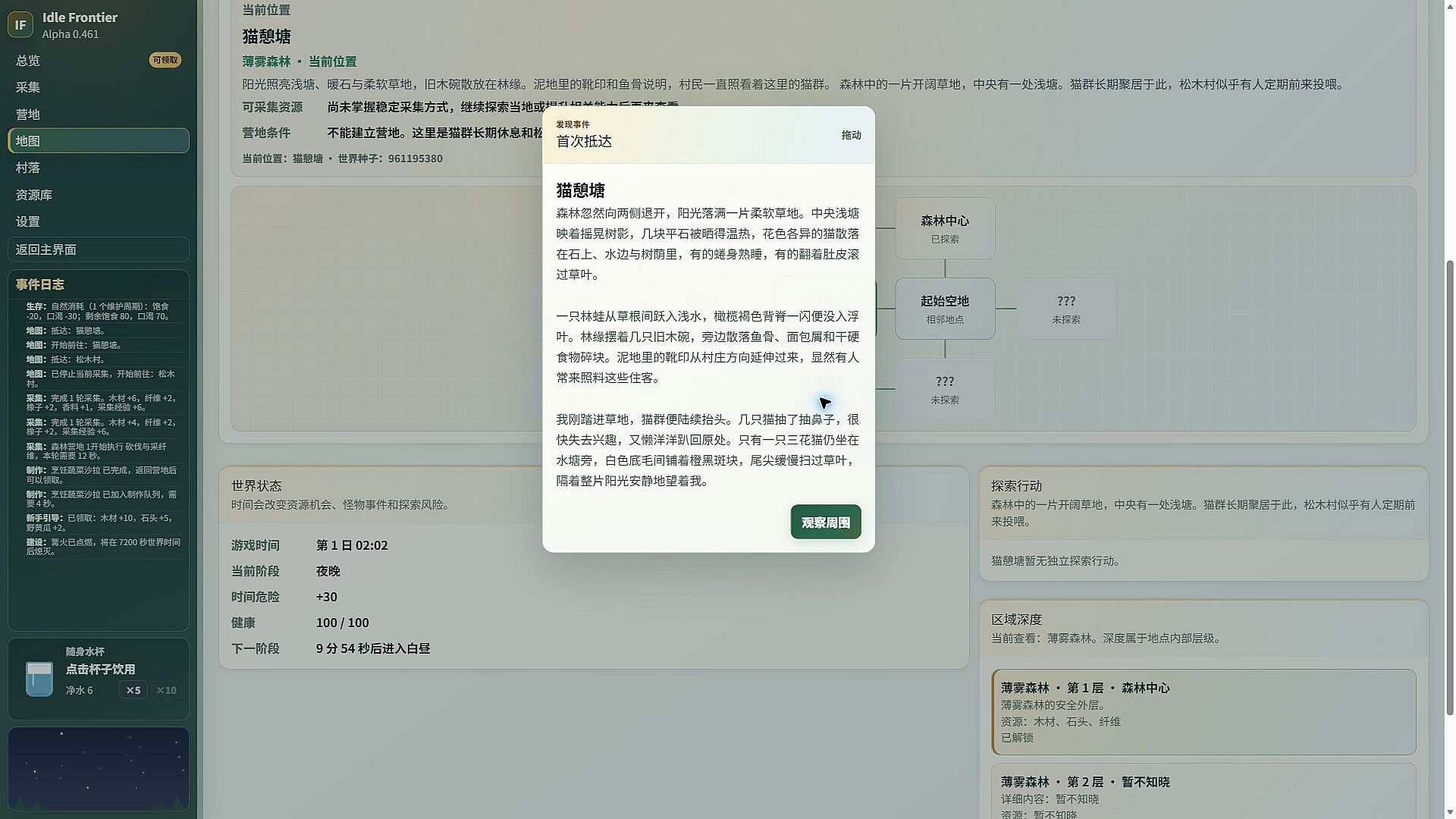
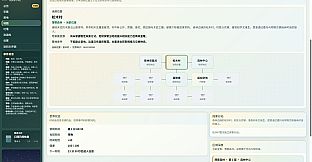
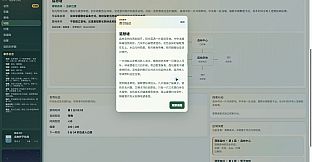
Idle Frontier is a single-player idle survival and resource-management game set in a fictional medieval world. Players begin with basic supplies like firewood and a warm meal, then expand through gathering, crafting, and exploration using a text-based interface on PC. The experience blends strategy and simulation elements in a relaxed, casual format that supports offline play and adjustable pacing.
Gameplay
The core loop centers on setting up gathering tasks to collect materials and craft tools. Players manage hunger, thirst, and supplies while preparing food through methods such as cooking, pickling, and drying. Skills improve with repeated use, which streamlines routine preparations over time. Exploration involves traveling across a regional map generated from a world seed, where surroundings and wildlife provide new encounters that populate an in-game encyclopedia.
Camp building forms another key part of the loop. Selecting a location allows construction of facilities that convert raw materials into useful items. Crops can be grown with improved seeds, and livestock cared for to support longer journeys. Multiple camps serve as rest points during extended travels. Village visits add social layers, where residents offer requests that can be completed in exchange for goods through bartering.
Offline functionality stores saves locally on the computer, allowing progress to continue without constant screen time. Game speed and difficulty settings let players match the pace to their preferences, whether focusing on detailed planning or simply tending the camp and reviewing travel notes.
Game Modes
Idle Frontier operates as a single-player experience with no multiplayer components. The design emphasizes flexible pacing through adjustable speed and difficulty options that suit different play styles. One approach involves active planning of supply batches and camp expansions, while another favors slower, more contemplative sessions focused on reading notes and maintaining facilities.
Offline mode supports checking in periodically for resource hauls after setting tasks and stocking provisions. The game can be paused entirely during busy periods, preserving the frontier state until the player returns. This structure accommodates both dedicated sessions and brief check-ins without requiring constant attention.
Exploration and Progression
Travel across the procedurally influenced regional map encourages curiosity about paths and discoveries. Each new find contributes to the encyclopedia, unlocking further possibilities for crafting and camp development. Preparation remains essential before venturing out, as supplies and tools directly influence survival and efficiency on longer routes.
Progression builds gradually through repeated actions that strengthen skills and expand capabilities. Establishing additional camps creates a network of safe points, while village interactions provide opportunities to acquire better resources and deepen connections with residents. The text-driven interface keeps focus on decisions rather than visual complexity.
Is It Worth Playing?
Idle Frontier suits players who enjoy idle mechanics combined with resource management and light survival elements in a medieval setting. The single-player format and offline support make it accessible for those seeking a low-pressure experience that fits around other activities. Adjustable difficulty and speed options allow customization for different comfort levels with planning or relaxed tending.
Early Access status means the game continues to receive improvements based on player input through community channels. Those drawn to strategy and simulation genres with a casual tone will find the core systems of gathering, crafting, and camp building align with the described features. The emphasis on personal pacing and discovery provides a steady sense of incremental achievement without demanding intense focus at all times.











