




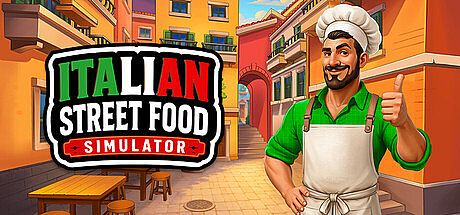


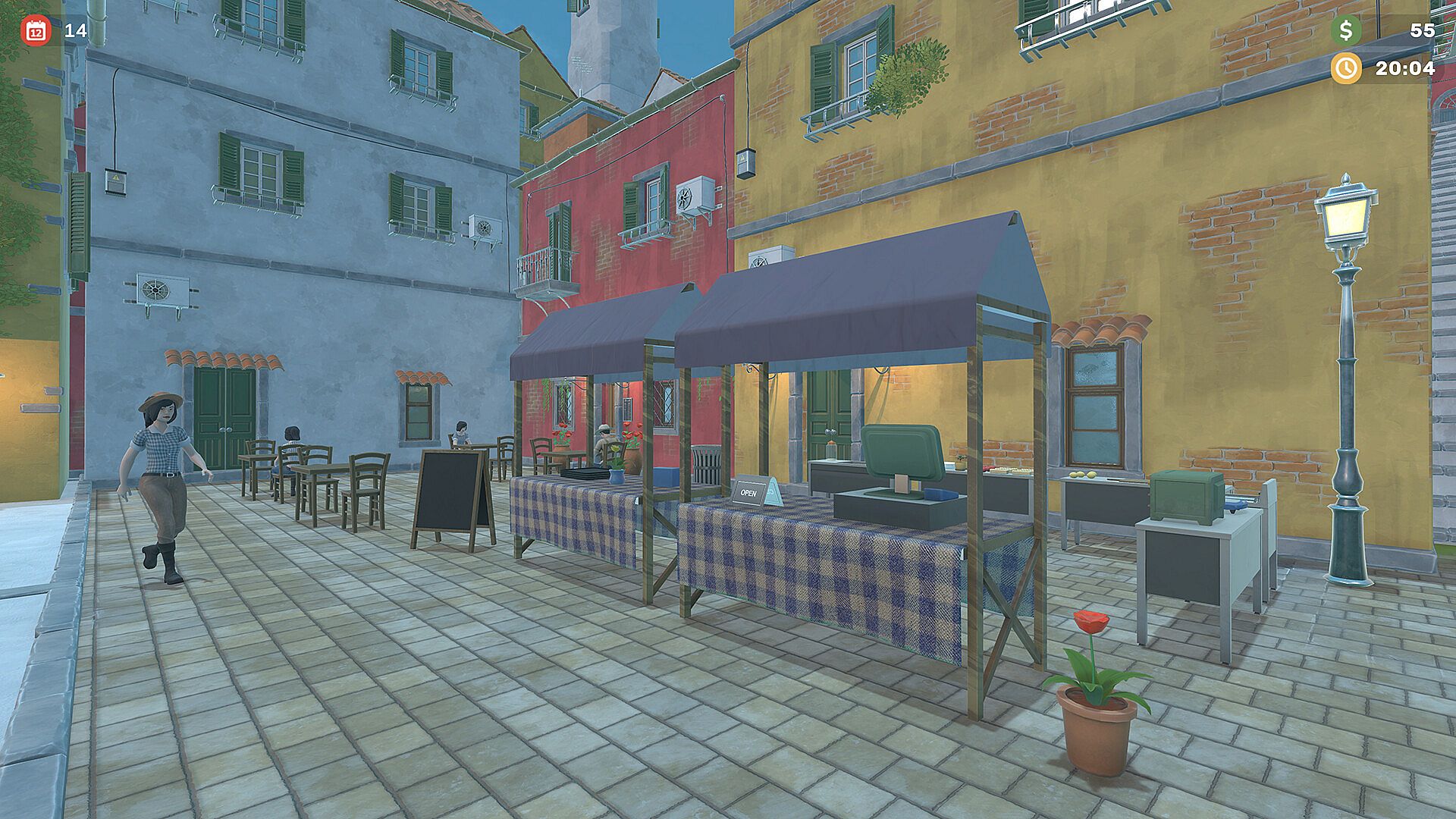
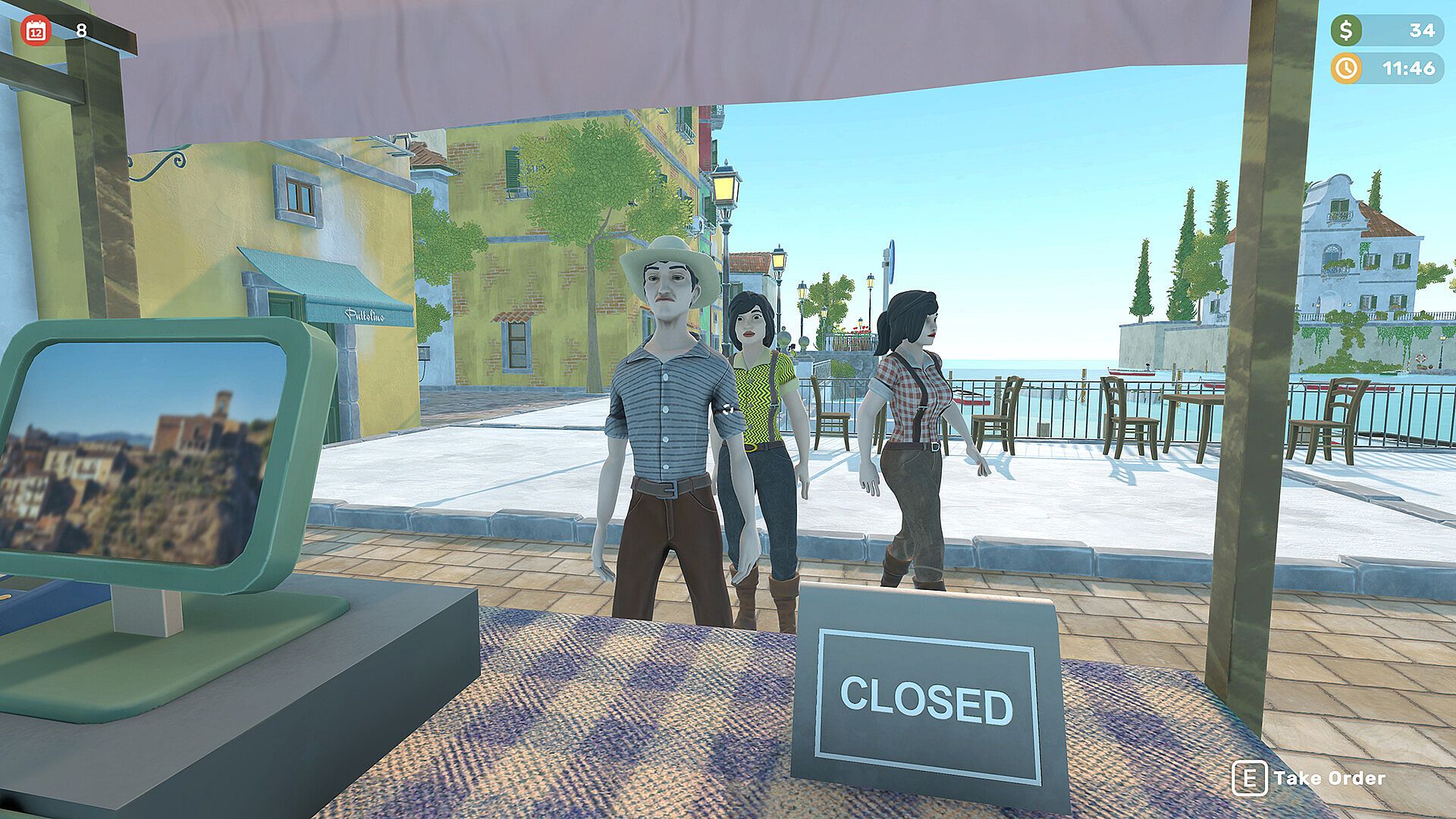
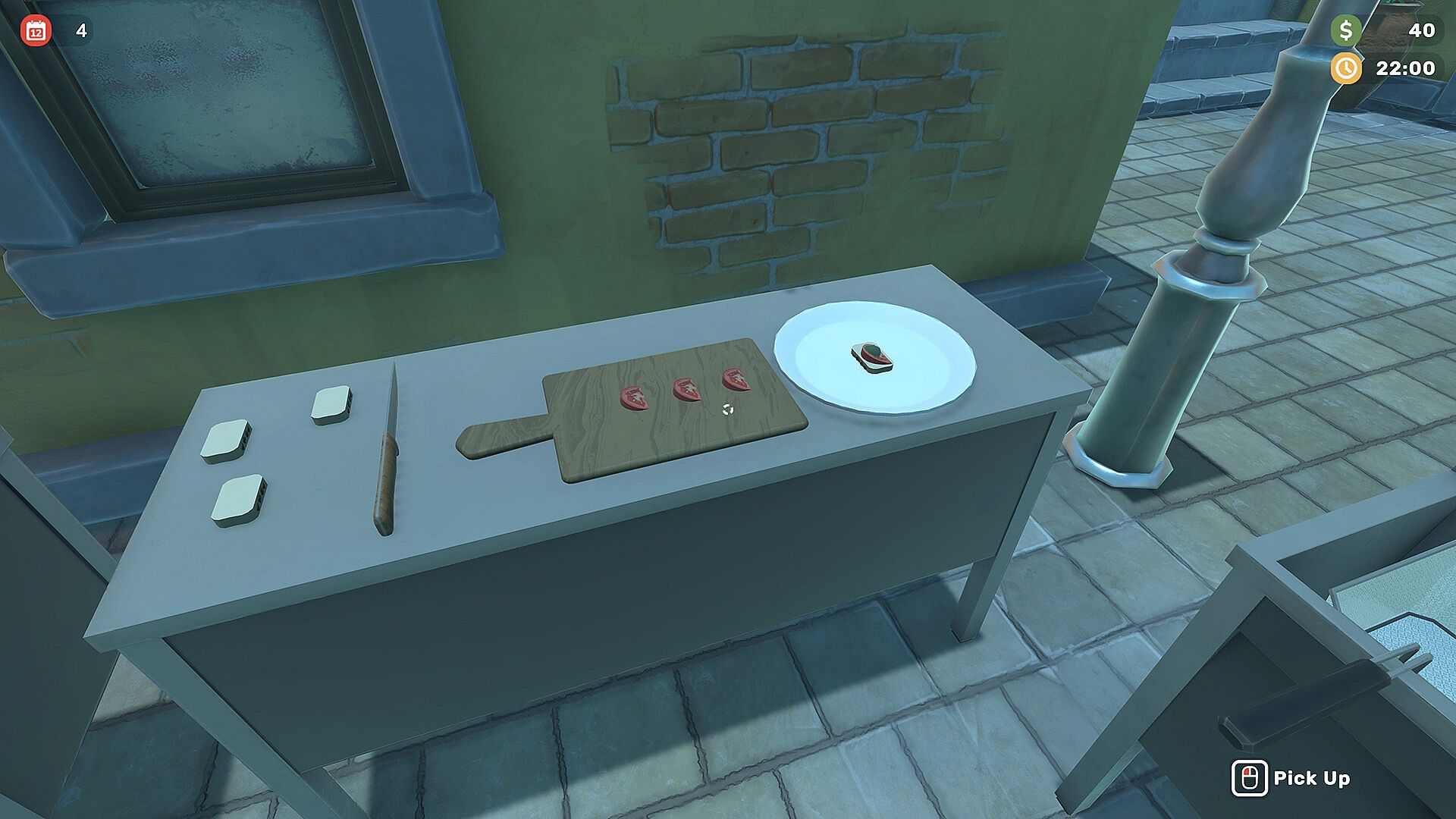
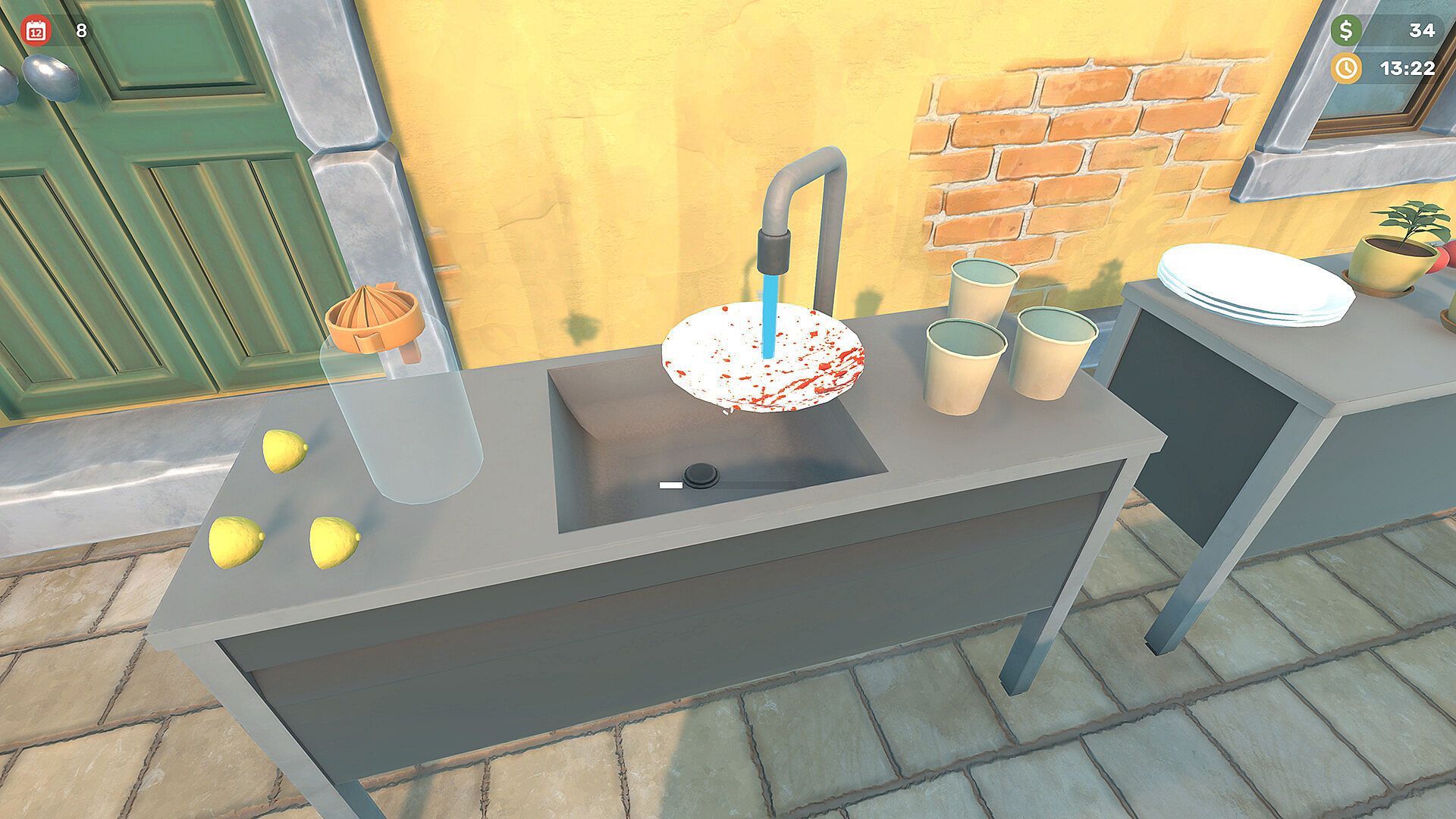
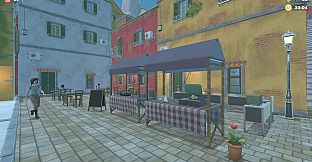

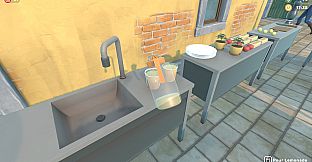
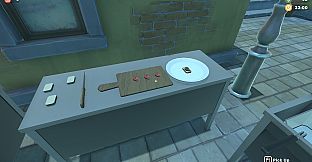
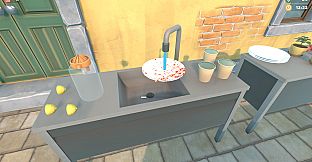
Italian Street Food Simulator is a first-person cooking and management simulation game set in a lively Italian coastal town. Players run a growing street food stand, handling every aspect of preparation, service, supply management, and business expansion in a single-player experience focused on realistic daily operations.
Gameplay
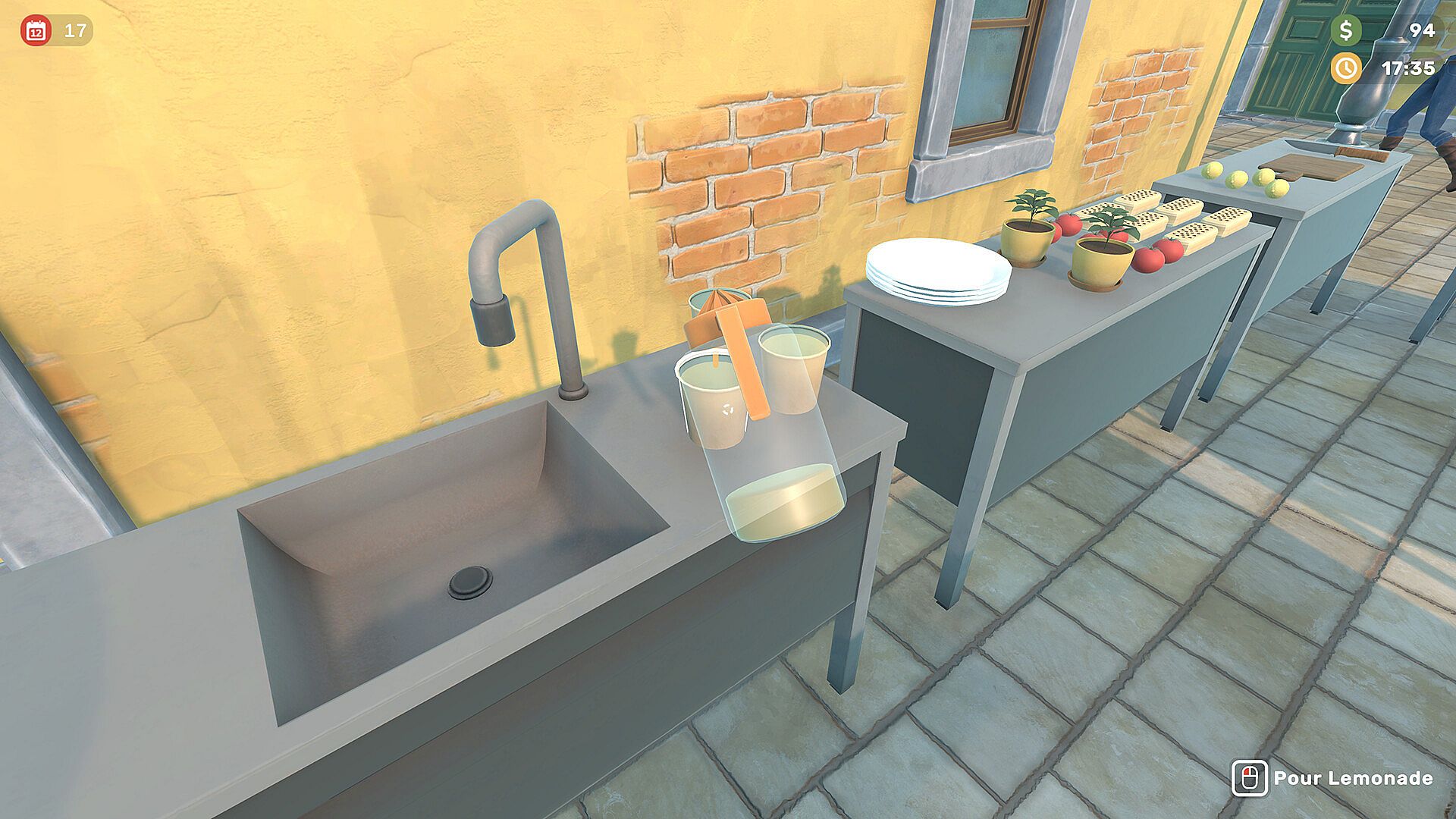
The core loop centers on preparing Italian street food favorites by hand. Players work directly with ingredients and equipment to fry, press, bake, assemble, and serve orders. Each dish requires multiple steps that become more involved as the menu expands with new recipes and tools. Busy periods demand quick decisions on task priority while keeping cooking stations active and supplies available.
Service splits between quick counter sales for walk-up customers and full table service for seated guests. Table service adds post-meal tasks such as clearing plates, washing reusable tableware, and resetting surfaces. Supply management requires tracking stock levels and making trips to the local market to restock before shortages occur during peak hours.
Workflow efficiency improves through practice. Players learn to balance simultaneous orders, monitor multiple stations, and handle tableware without interruptions. Earnings fund upgrades that expand seating, add equipment, and support a larger customer volume over successive days.
Game Modes
The game operates entirely in a single-player progression mode. Days advance sequentially as the stand grows from a basic setup into a busier operation integrated into the town. No separate competitive or cooperative modes exist. Progression ties directly to daily performance, with each completed day feeding into menu expansion, equipment purchases, and stand improvements.
Players manage one continuous business across multiple in-game days. Focus remains on adapting to increasing demand through better preparation and layout choices rather than branching scenarios or alternate rulesets.
Business Growth and Progression
Reinvestment forms the main driver of long-term play. Profits purchase new menu items, additional cooking stations, seating expansions, and stand upgrades. These changes increase capacity and introduce fresh workflow layers during service rushes. Early days emphasize basic order fulfillment, while later stages require juggling more complex recipes alongside customer seating and cleanup routines.
Market visits add a resource layer where players anticipate needs for the coming day. Strong preparation reduces downtime when multiple customers arrive together. The system rewards consistent attention to both front-of-house service and back-end organization.
Is It Worth Playing?
Italian Street Food Simulator suits players who enjoy detailed, hands-on simulation games centered on cooking and small business management. The first-person perspective places every action under direct control, from ingredient handling to customer delivery. Those who appreciate steady progression through upgrades and daily optimization will find the structure engaging.
The title remains in early access with a planned release on November 5, 2026. At this stage, the experience matches the described single-player loop of food preparation, counter and table service, supply runs, and business expansion. Casual simulation fans seeking a focused, realistic food stand simulator may find it a worthwhile addition once available, particularly if they value methodical task management over fast-paced action or multiplayer elements.











