

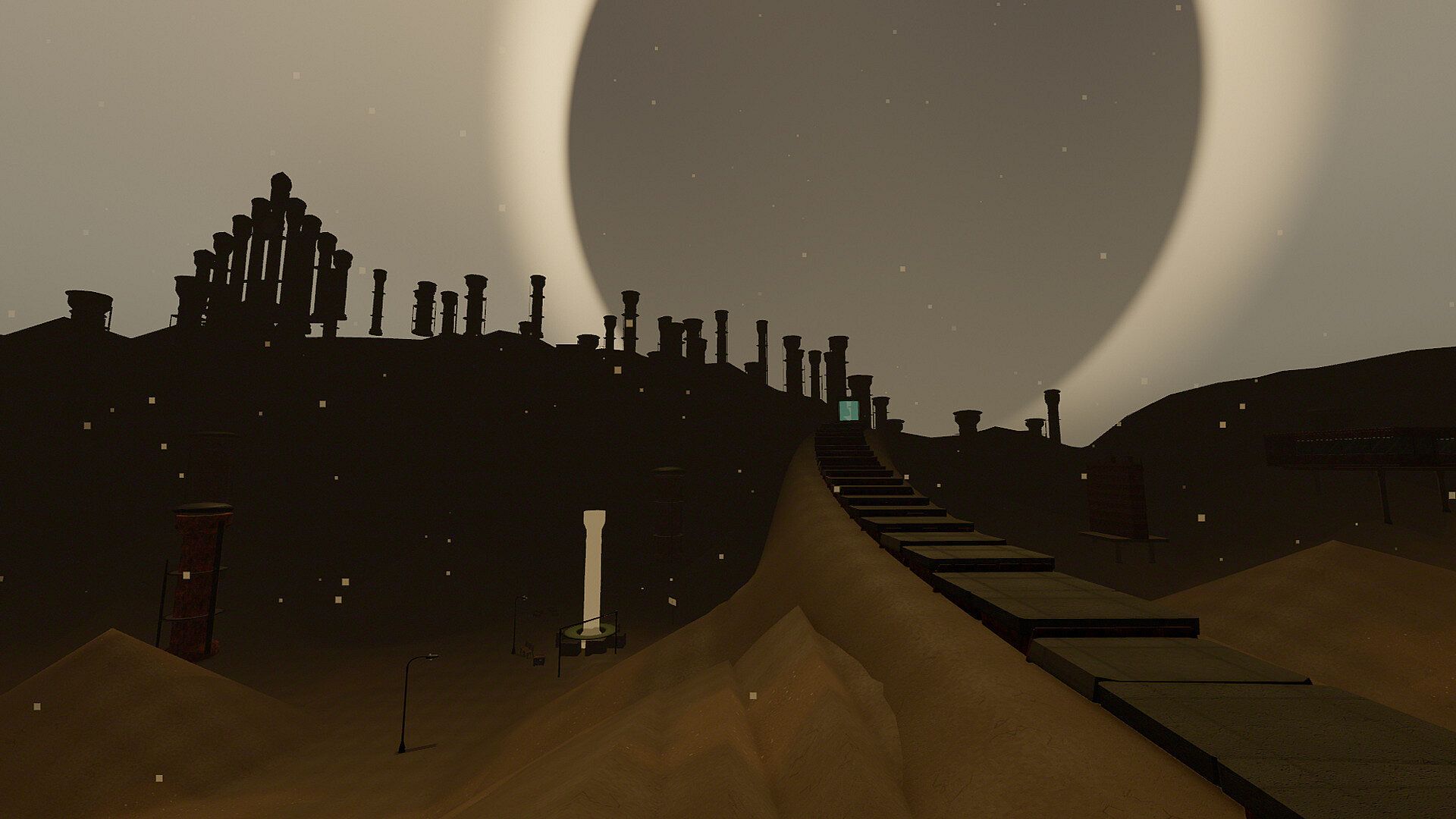
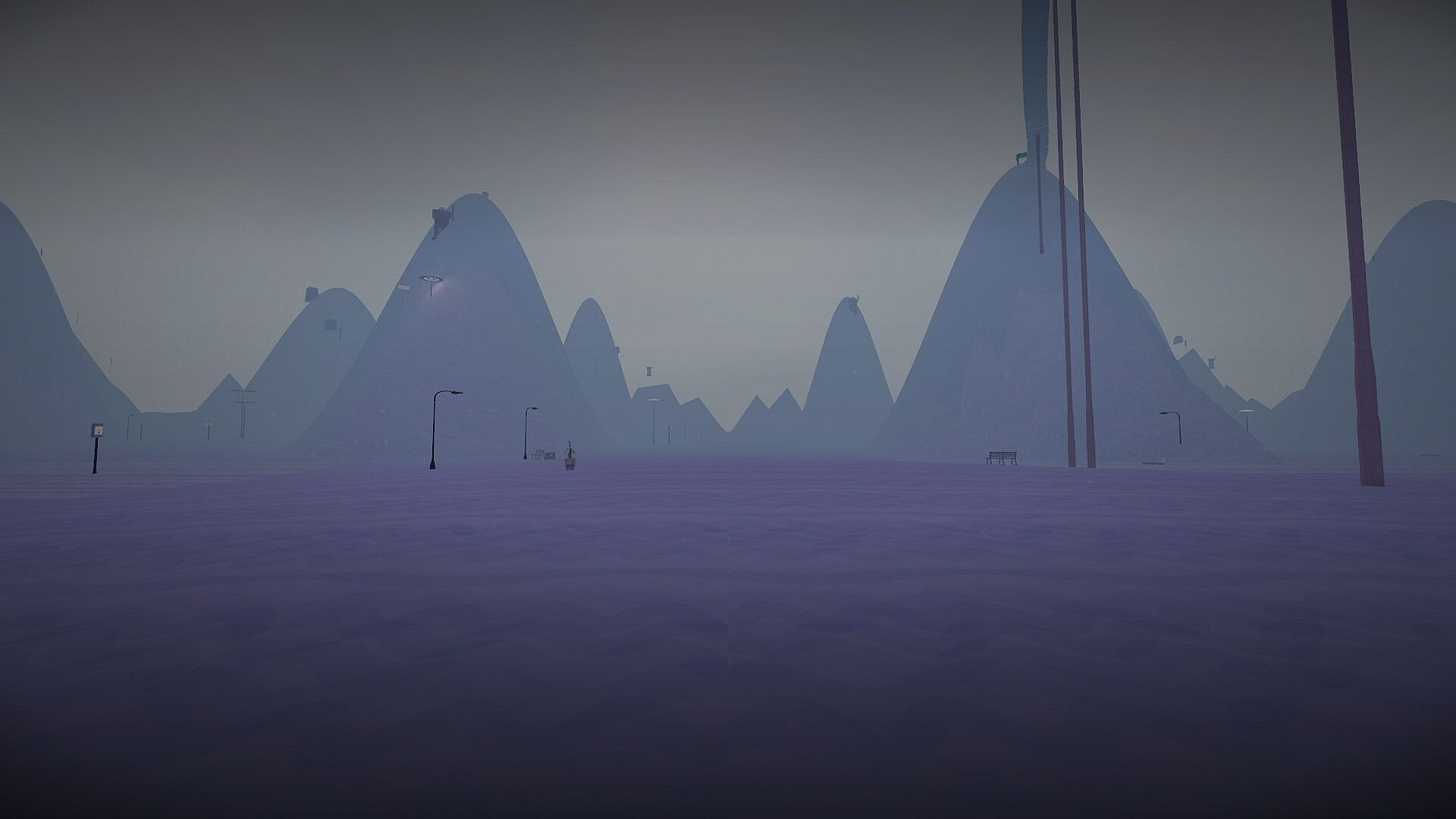
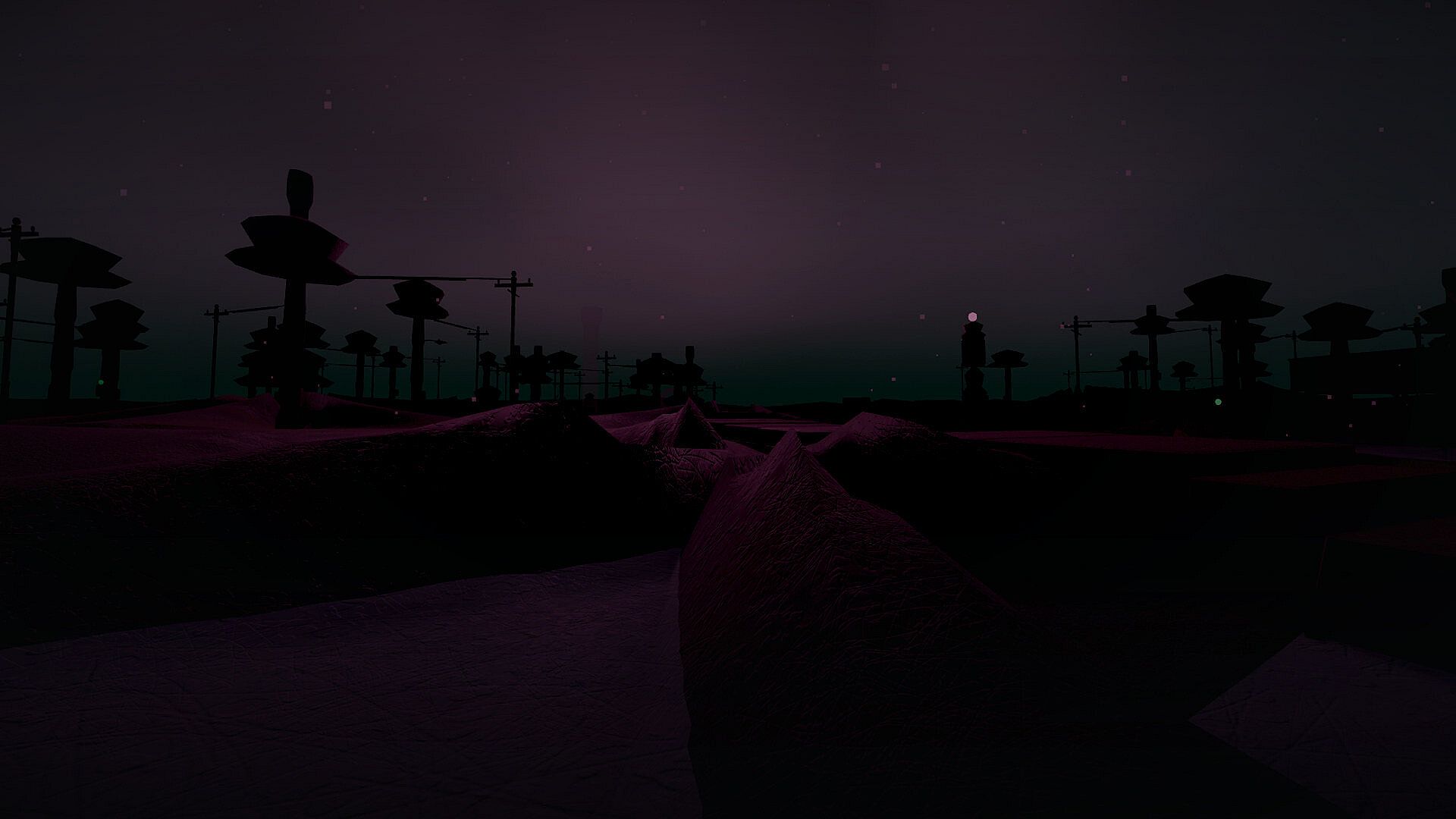
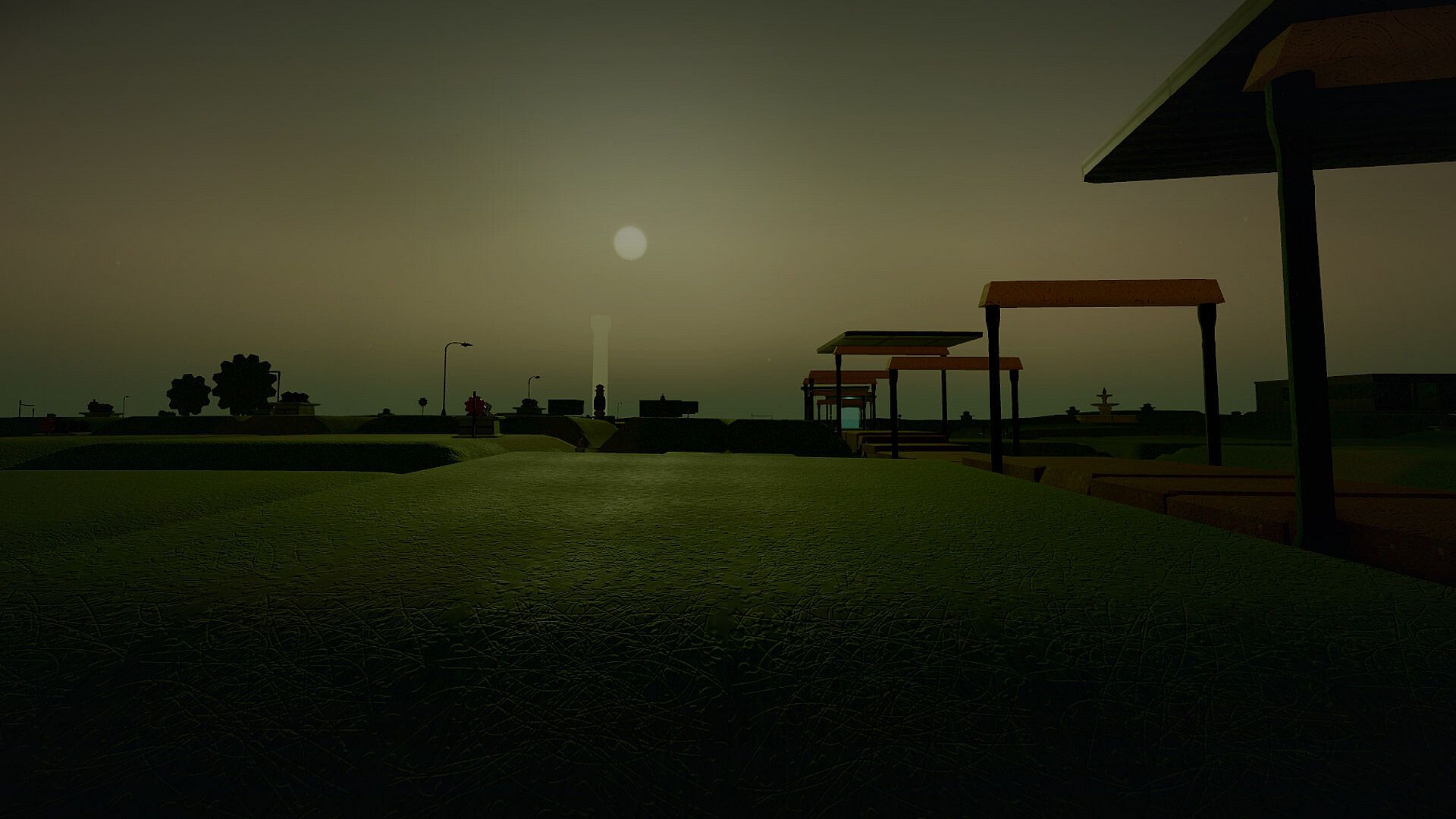
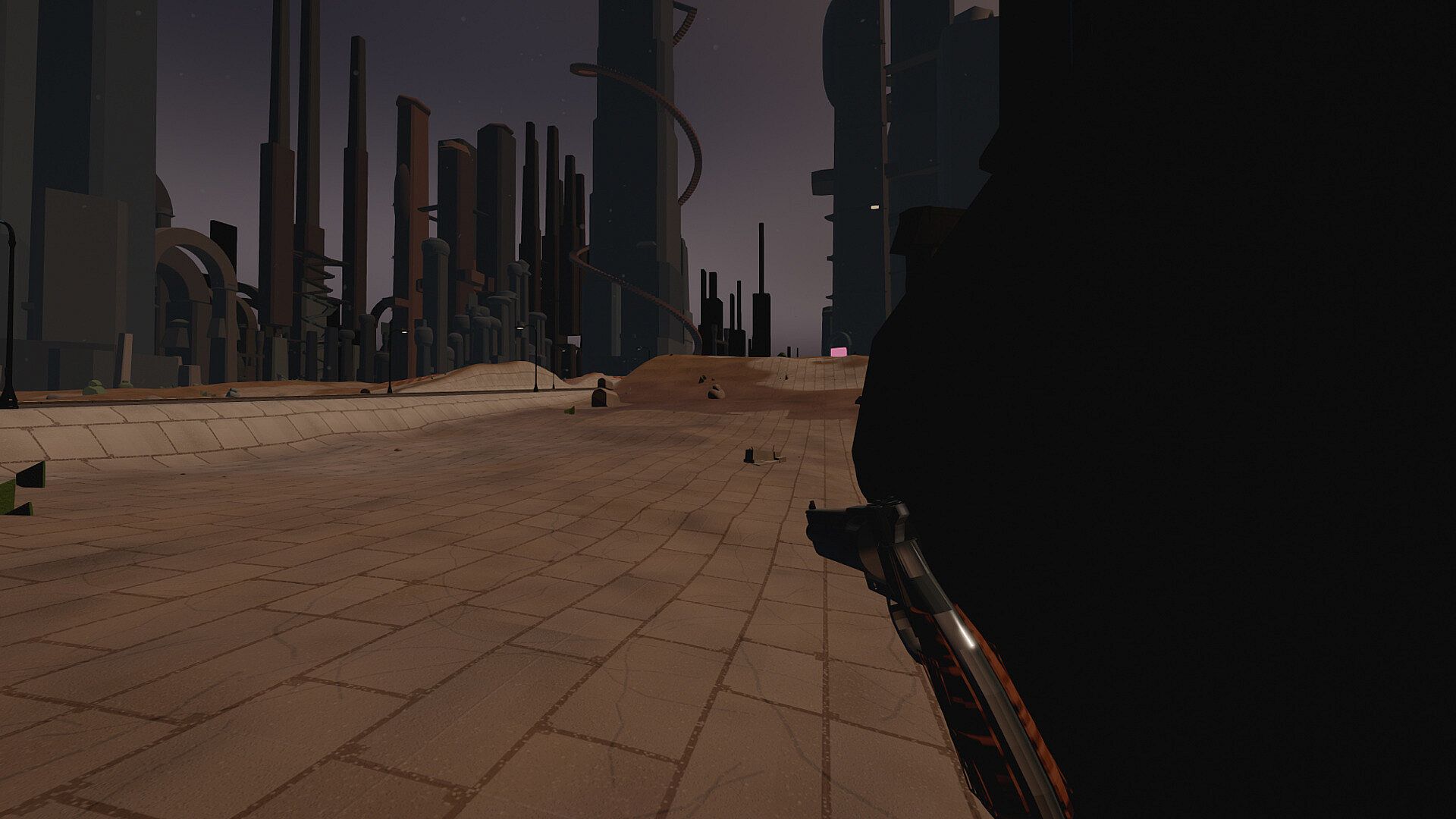
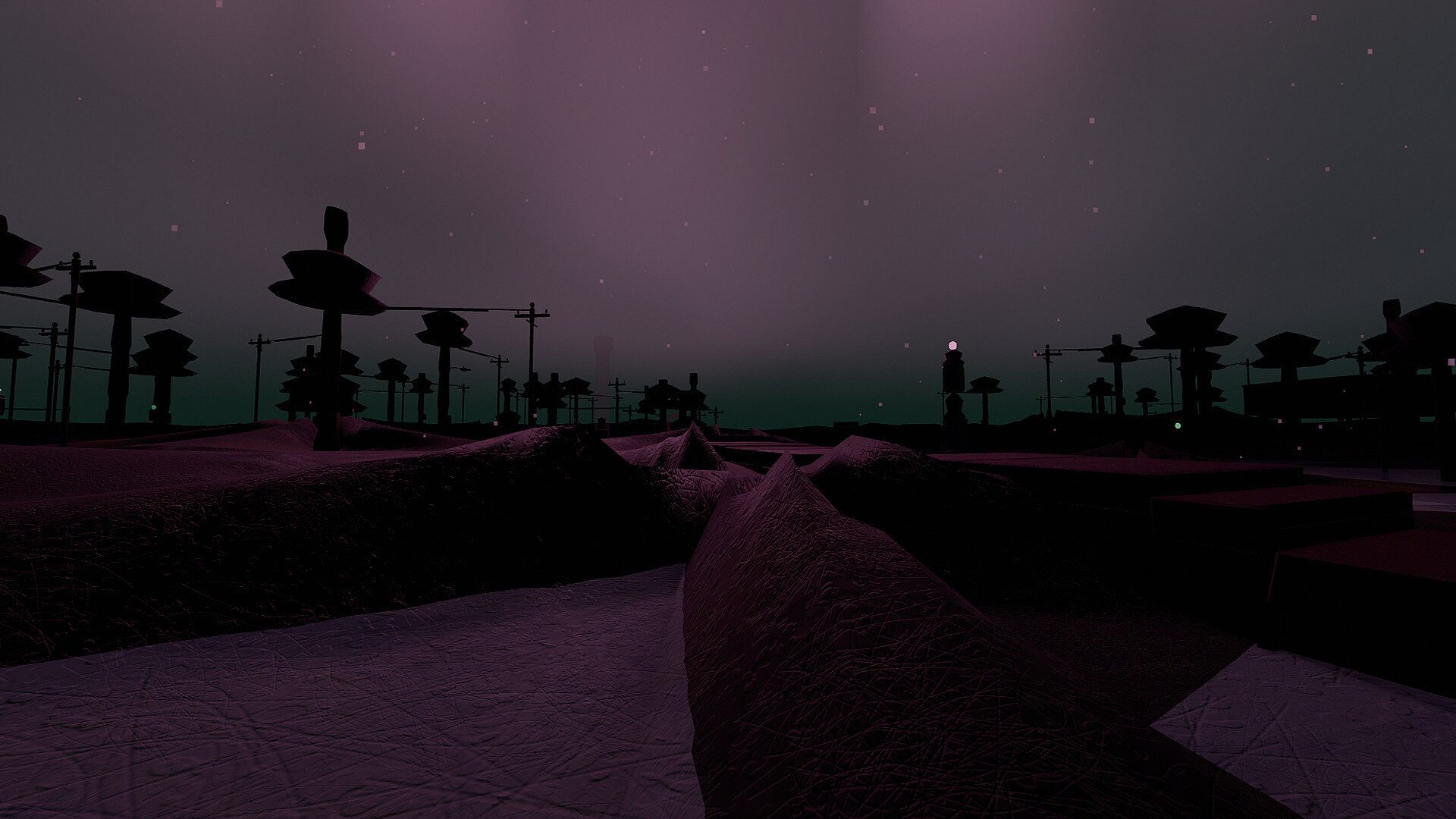
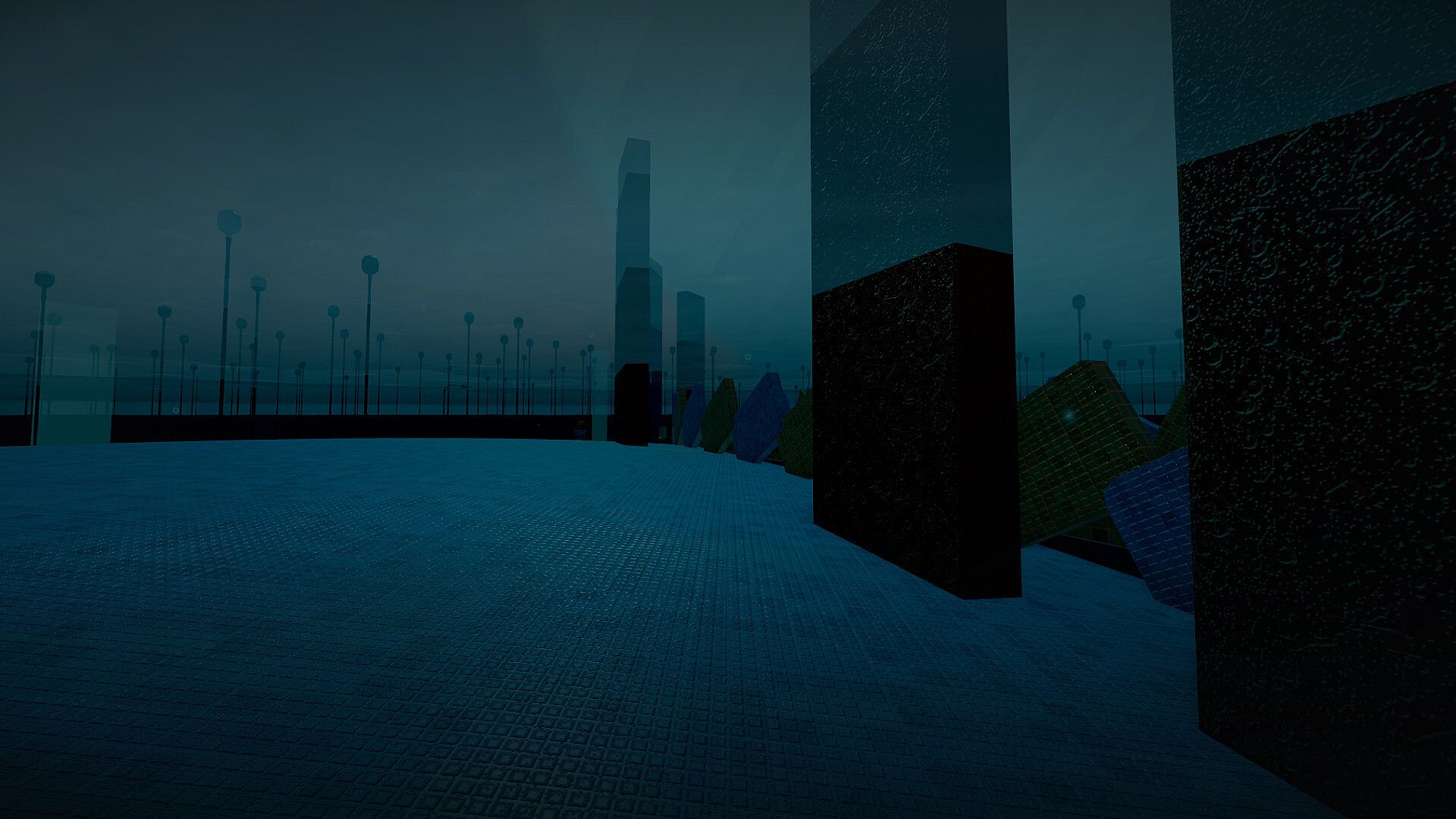
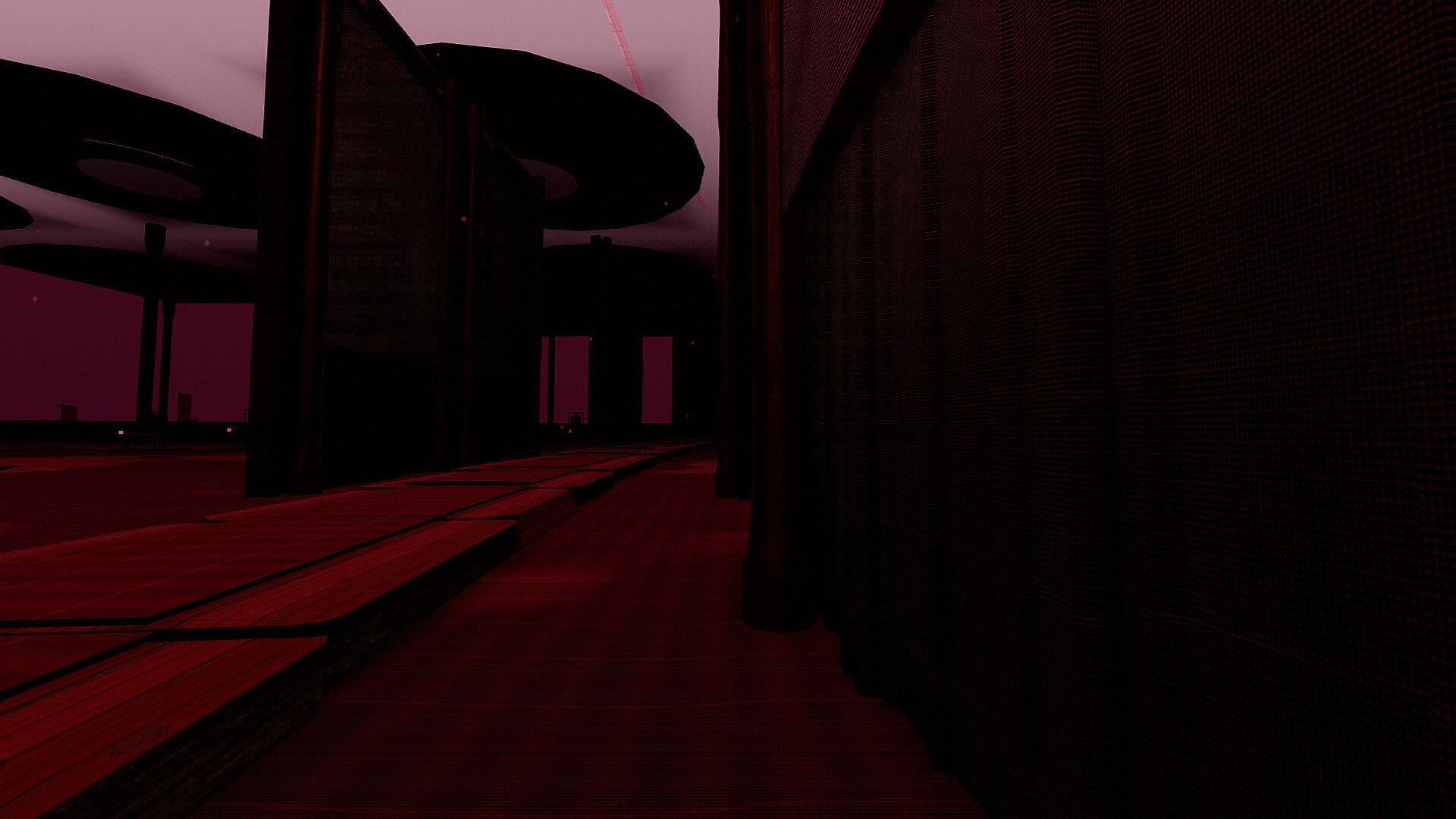
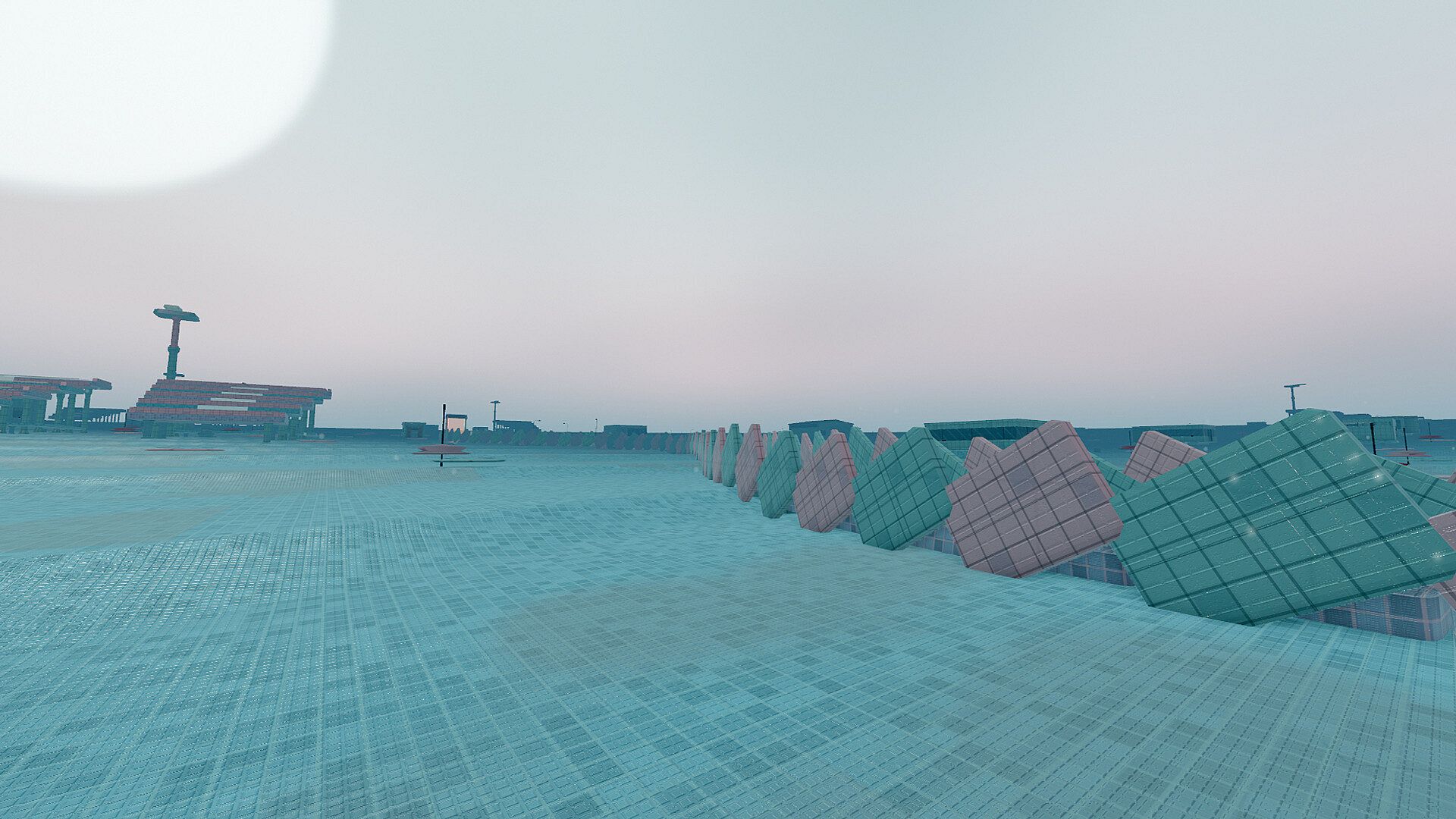
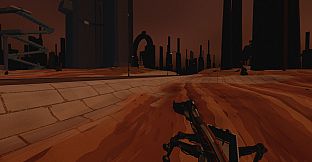

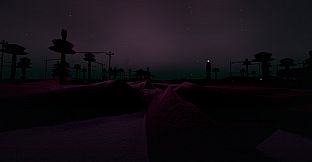

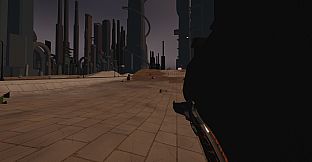
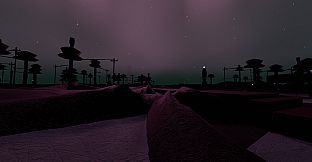


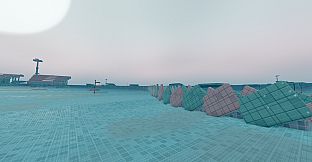
LIMINAL is an indie simulation and adventure game built around first-person exploration and industrial salvage in a vast, infinite environment. Players navigate an overworld where rolling barrens shift into carved canyons and ancient ruins give way to machine fields, with a bruised-violet megacity emerging from the haze. The experience emphasizes learning through direct interaction rather than guided objectives.
Gameplay
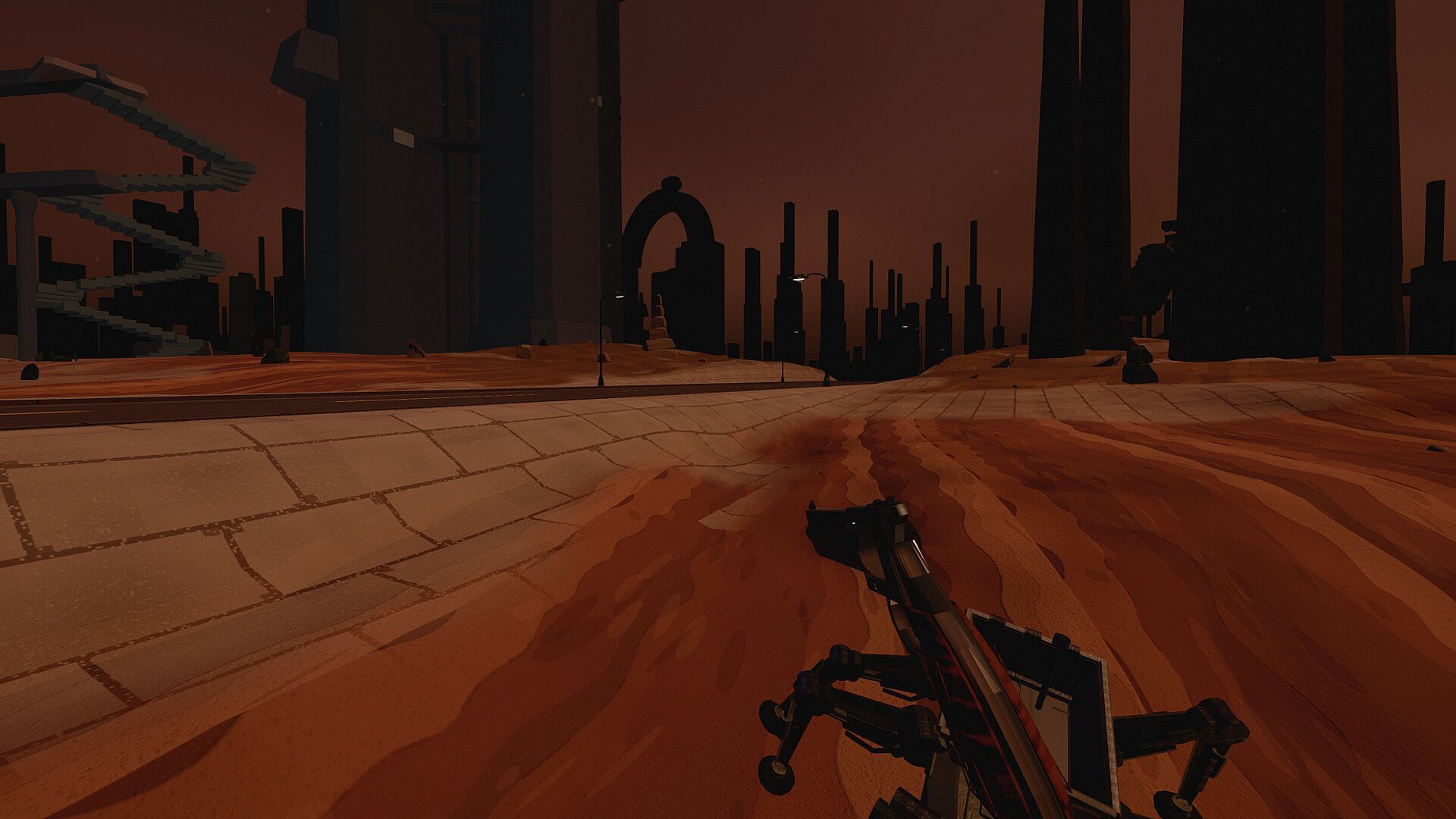
The core loop centers on placing a Root Beacon to activate a network of machines. Six-legged harvesters move across the terrain to locate salvage, cut into objects and structural foundations, and transport visible cargo back to the network. Multiple harvesters assigned to one structure divide the work along its perimeter. As support weakens, sections fracture, fall under physics simulation, settle, and become new harvestable wreckage.
Recovered resources include steel, copper, rubber, plastic, glass, stone, and intact machine components. These materials support progression through merging three standard harvesters into a Walking Foundry. The foundry enables fabrication of additional harvesters, deployment of relays to expand the network, and construction of Shaft Crawlers for vertical excavation. Relocating the Root Beacon causes the entire mobile fleet to fold and follow.
Thresholds scattered throughout the overworld connect to isolated procedural realms. Each realm presents distinct terrain, architecture, materials, weather, sky, sound, and physical properties. Examples range from flooded museums and abandoned malls to impossible pools, black forests, lunar offices, snowbound stations, and cloud cities. The same seed generates consistent landforms, yet structures can reappear in altered configurations upon return visits. Fog banks shift, light changes, small animals respond to presence, and active machines continue operations independently.
Game Modes
LIMINAL runs as a continuous single-player experience without separate modes or competitive elements. The overworld serves as the primary space for ongoing salvage and network expansion, while thresholds provide access to self-contained realms for focused exploration. Four specific cathedral realms stand apart by housing fully playable pipe organs. These instruments feature two manuals, pedals, sixteen drawstops, a working swell box, and 117 playable keys, integrated directly into the environment rather than presented as separate activities.
The Procedural World
Absence of maps, quest logs, or markers defines the navigation approach. Players build familiarity by walking and observing changes in the landscape. Terrain stays fixed across sessions with the same seed, but dynamic elements such as moving fog, shifting light, and machine activity create variation. The 47 procedural realms each carry unique atmospheric and physical traits, encouraging repeated crossings to uncover differences in salvage opportunities and environmental interactions.
Is It Worth Playing?
The game suits players who prefer deliberate, unguided exploration in simulation and adventure titles. Its systems reward observation and incremental network building over rapid progression or combat. The integration of functional pipe organs in cathedral realms adds a distinctive interactive layer for those interested in atmospheric details. With no traditional objectives or external guidance, the title appeals to individuals comfortable directing their own pace through a persistent, physics-driven world. Availability remains limited to PC, and the experience stands alone without additional content layers.