




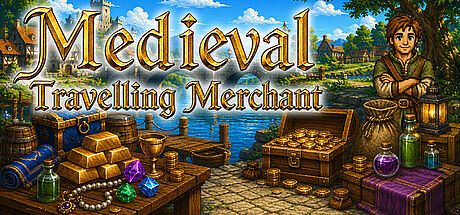



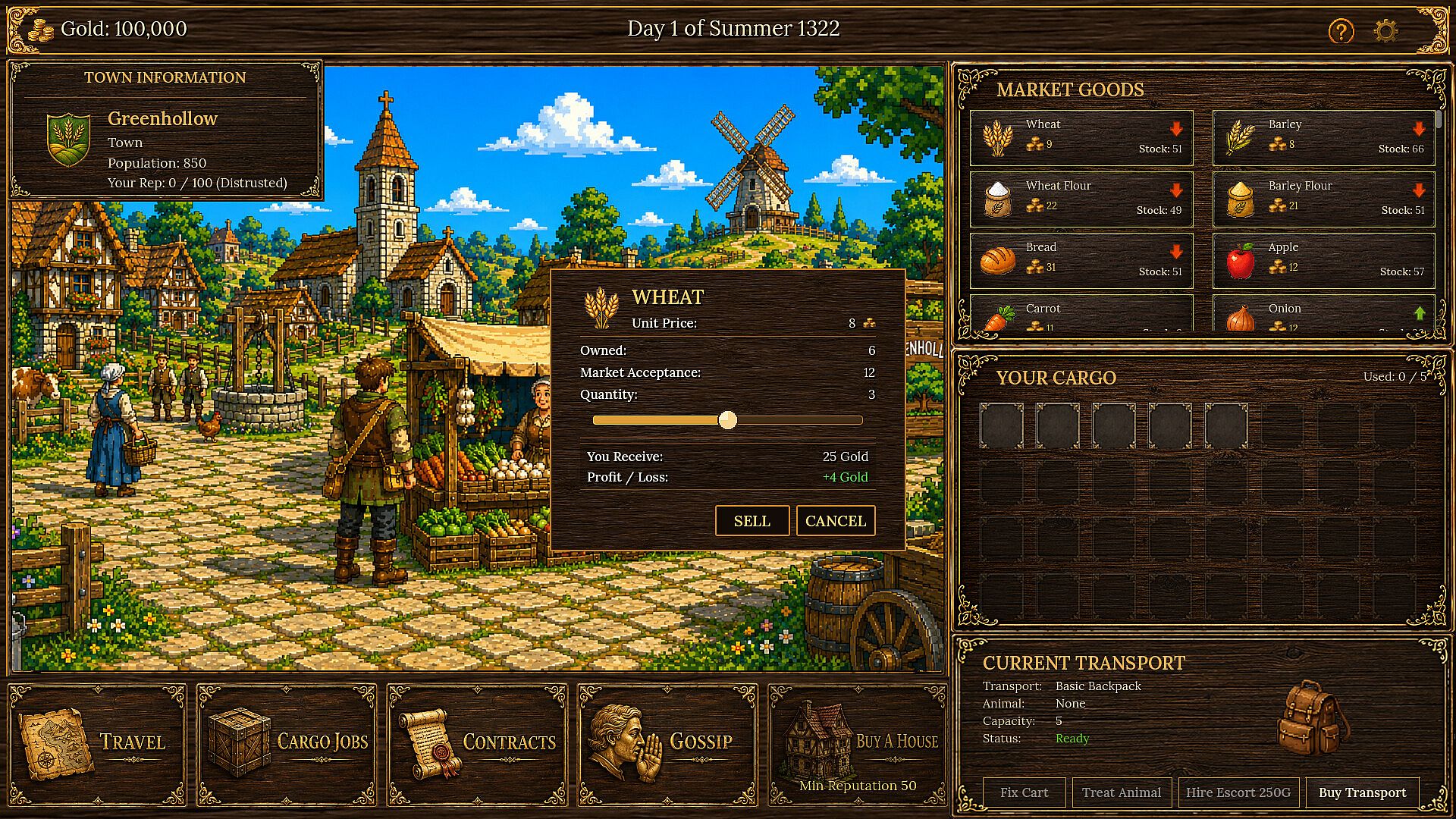
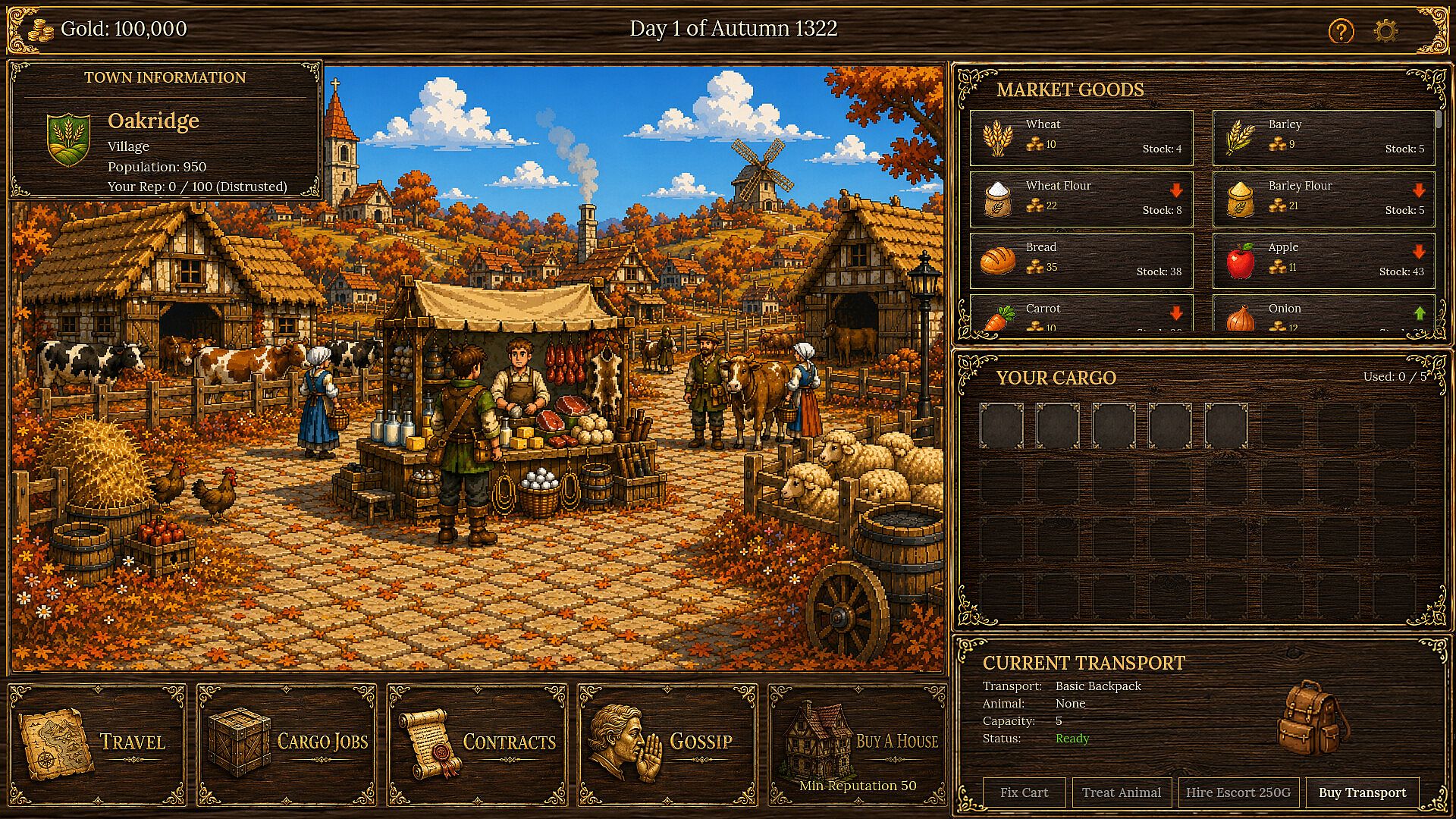
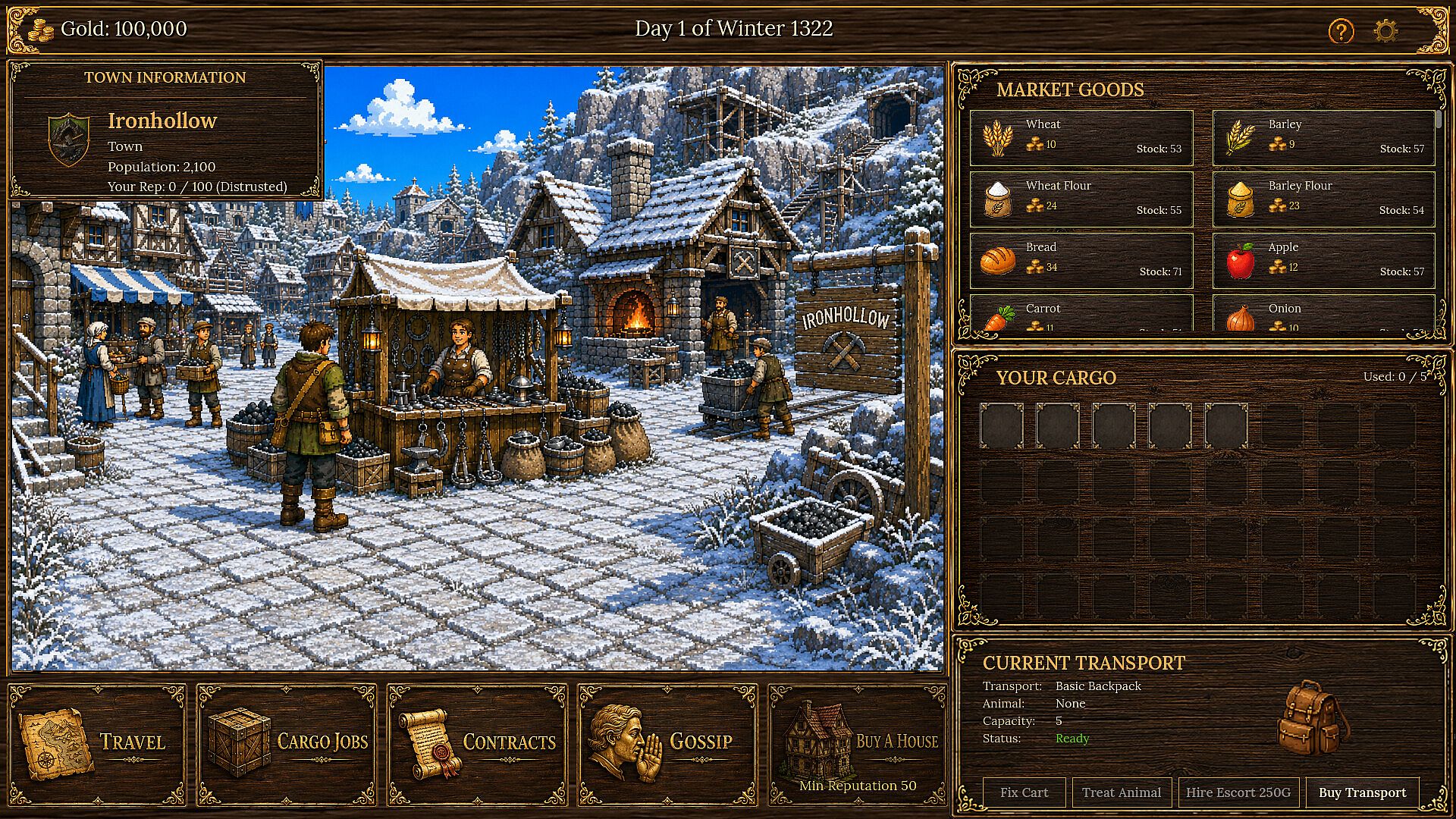
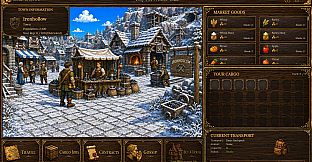
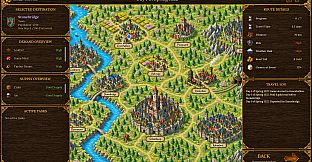
Medieval Travelling Merchant est un jeu de stratégie, indépendant, casual et simulation sur PC entièrement centré sur le commerce dans un univers médiéval. Le joueur gère une activité marchande en se déplaçant entre les différentes localités, achetant au plus bas là où les biens sont abondants et revendant au plus haut là où la demande crée des opportunités. L'expérience reste concentrée sur les décisions économiques, sans combat, système d'artisanat ni construction de ville pour détourner l'attention du cœur du jeu : planifier ses itinéraires et observer les marchés.
Gameplay
Le gameplay repose sur une économie vivante où chaque localité suit sa propre production, sa consommation, ses stocks et sa demande. Les prix évoluent en fonction de facteurs concrets : production locale issue des fermes ou des mines, besoins des habitants au fil du temps, taille de la population et impact des échanges du joueur ou des concurrents. Les excédents favorisent les achats, tandis que les pénuries permettent des ventes plus avantageuses. Les livraisons importantes font évoluer les prix progressivement, si bien que vendre une cargaison entière d'un coup peut rapporter moins que des transactions plus petites et mieux réparties dans le temps.
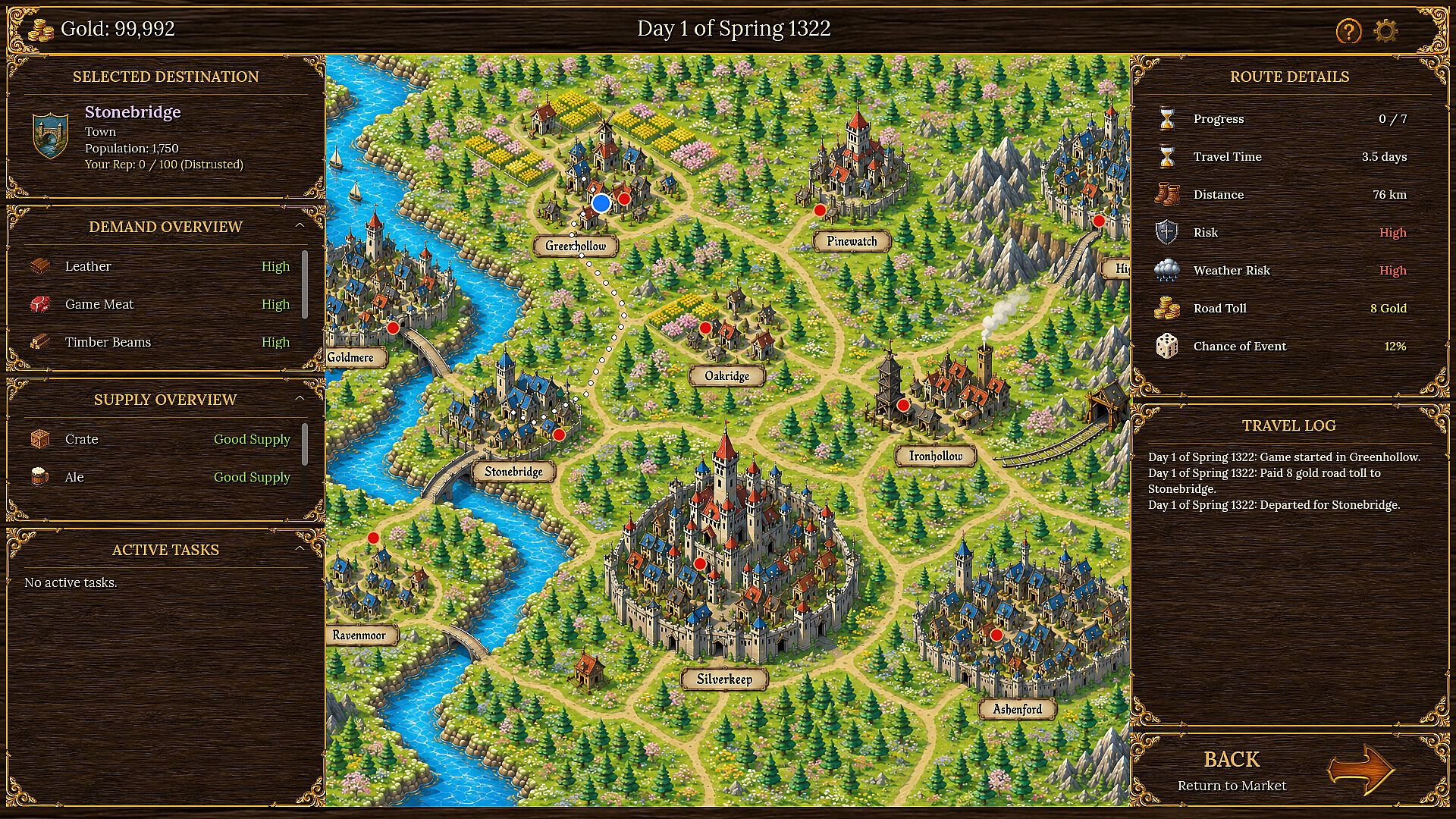
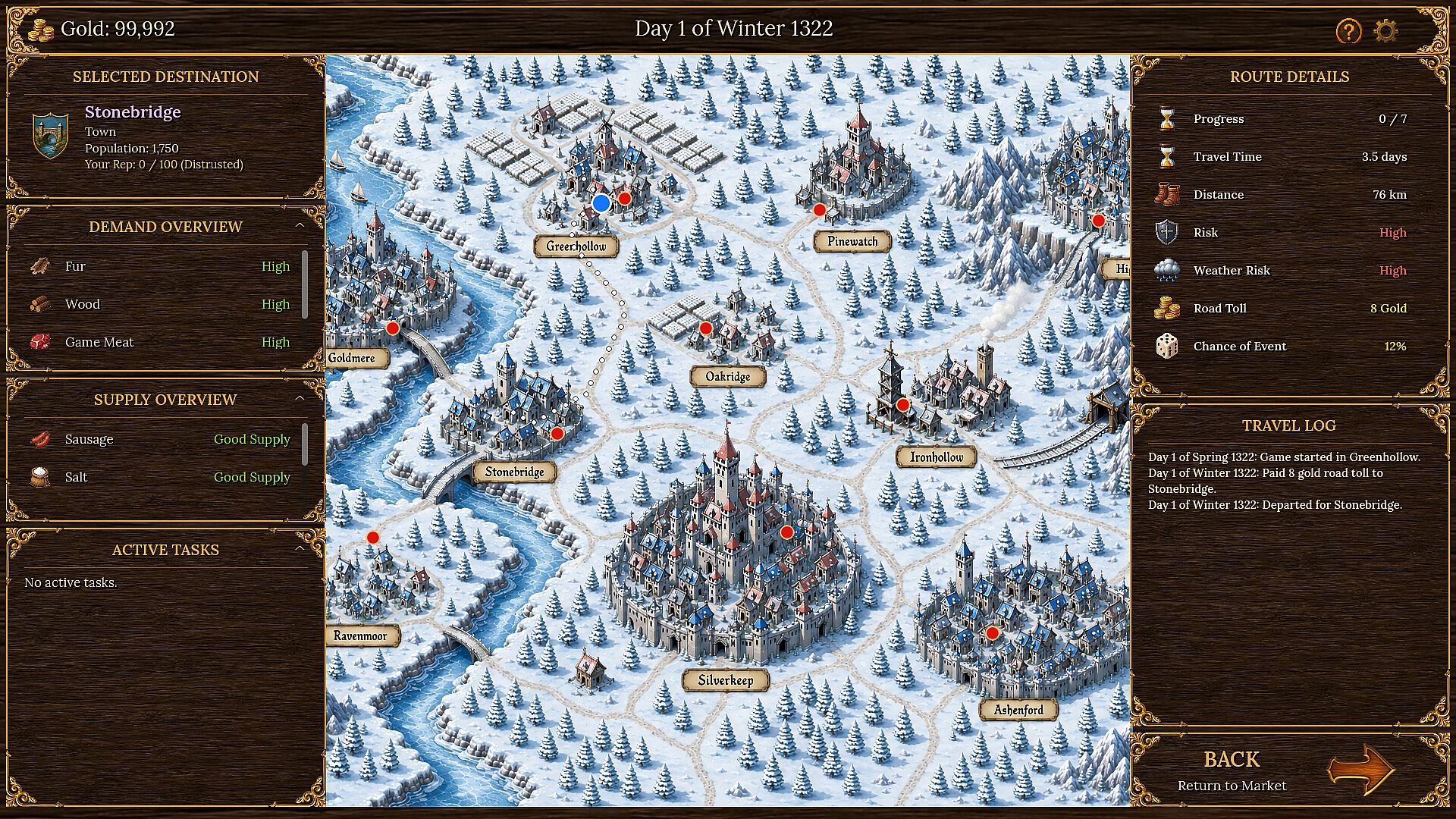
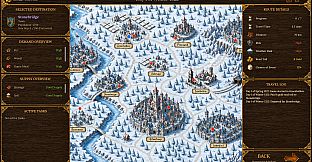
Les déplacements relient villages, bourgs, villes, une grande cité et la capitale royale, chacun possédant une identité économique propre liée à son type et aux métiers de ses habitants. Un choix de 125 biens est disponible, des produits courants comme le grain, la farine, le pain, la viande, les produits laitiers, le bois, le minerai, les outils, le tissu et la bière, jusqu'aux articles de luxe tels que le vin, les épices, les livres, les bijoux, les parfums et les vêtements nobles. Les saisons modifient la production, l'état des routes et les schémas de demande au fil du printemps, de l'été, de l'automne et de l'hiver, influençant la fiabilité des itinéraires.
La gestion du capital implique d'équilibrer les investissements entre la cargaison, les améliorations de transport comme les animaux et les chariots, les escortes pour la protection, les péages, les réparations et des options plus longues comme l'acquisition de maisons. Chaque configuration de transport offre un compromis entre capacité, vitesse, coût, durabilité et exposition aux risques. Des marchands rivaux opèrent de manière indépendante, transportant des biens et modifiant les conditions du marché, ce qui peut ouvrir ou fermer des opportunités selon le moment choisi.
Game Modes
Le commerce libre constitue l'activité principale, permettant d'observer les marchés, de choisir ses routes et de s'adapter aux évolutions sans contrainte extérieure. Les missions de livraison proposent des cargaisons scellées avec un paiement fixe à la livraison réussie, offrant une alternative plus encadrée à l'achat et à la revente libre. Les contrats de commerce exigent de se procurer des biens spécifiques avec ses propres fonds et de respecter des délais, ajoutant une pression sur le timing et l'approvisionnement.
Les maisons servent de jalons de progression en débloquant l'accès à de nouvelles localités et à des réseaux commerciaux plus étendus, tout en faisant office d'investissements. Ces options s'intègrent à la même économie sous-jacente sans basculer vers d'autres styles de jeu, maintenant l'accent sur les décisions commerciales dans toutes les activités.
Economy and Progression
Les marchés réagissent de manière dynamique aux actions du joueur et à la simulation en cours. Les achats réduisent les stocks et peuvent atténuer les pénuries, tandis que les ventes augmentent l'offre et risquent de saturer le marché, réduisant les marges futures. Les marchands rivaux participent à ces évolutions en effectuant leurs propres livraisons. Le manuel fournit des indications sur l'identité des localités et leurs schémas de consommation sans révéler les formules exactes ni les itinéraires rentables fixes.
La progression s'effectue par l'amélioration de la capacité de transport, l'accumulation de capital pour des échanges plus importants ou plus risqués, et l'acquisition de maisons qui élargissent la carte accessible. Aucune stratégie universelle ne s'applique : les trajets courts et sûrs peuvent se passer d'escortes, tandis que les longs trajets de biens de grande valeur peuvent justifier des dépenses de protection malgré les coûts continus.
Is It Worth Playing?
Medieval Travelling Merchant convient aux joueurs qui apprécient les simulations de commerce réfléchies et sans pression temporelle ni mécaniques annexes. Le rythme posé permet d'étudier les mouvements de prix, de peser les marges par rapport à la distance et au risque, et de décider de la quantité à vendre avant que la saturation n'intervienne. Ceux qui recherchent une expérience économique pure avec des choix significatifs en matière d'allocation de capital, de sélection d'itinéraires et de gestion des quantités trouveront les systèmes gratifiants. Le jeu reste disponible en solo sur PC, sans éléments multijoueurs confirmés ni modes supplémentaires au-delà des opportunités centrées sur le commerce décrites.












