






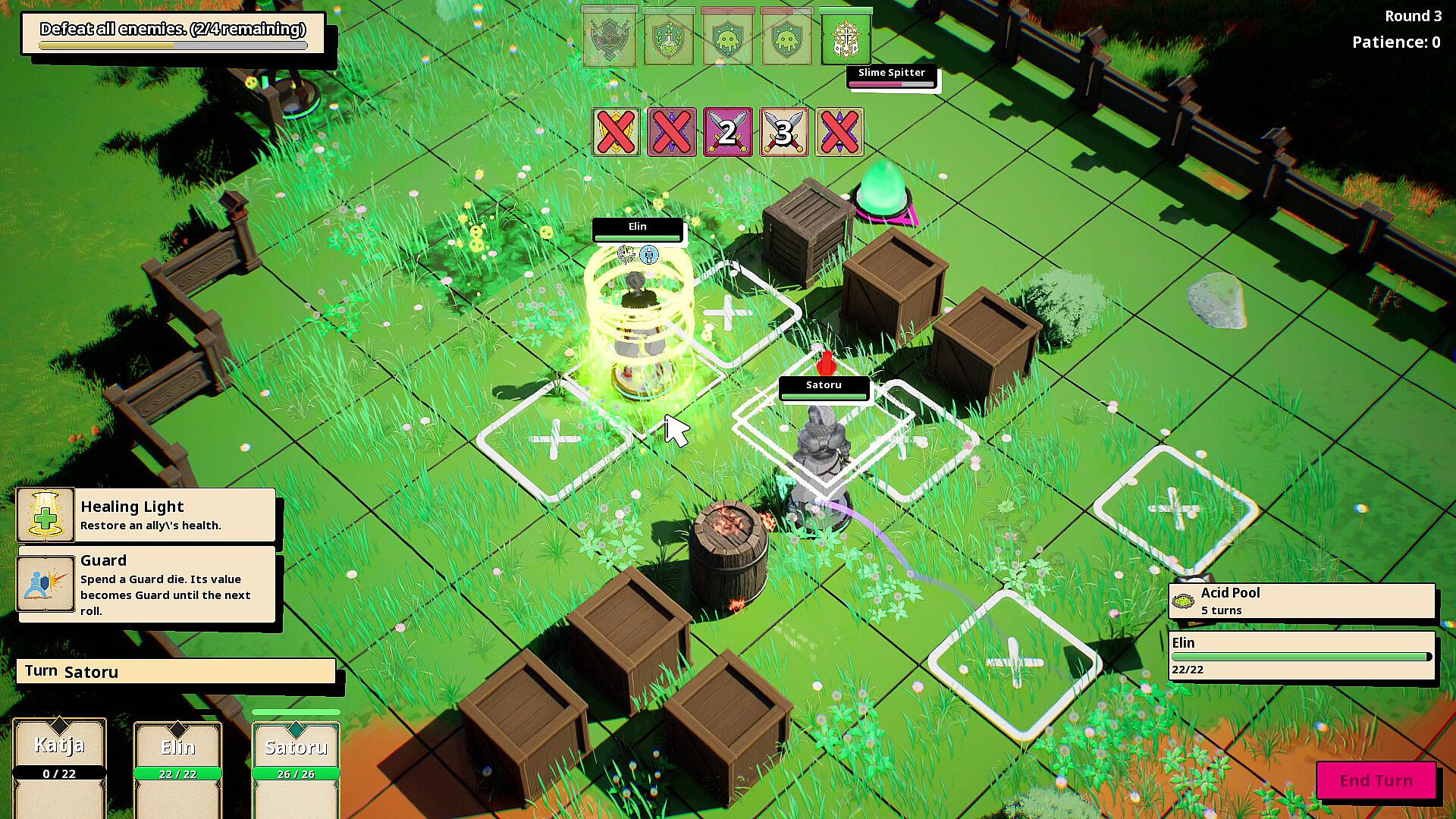
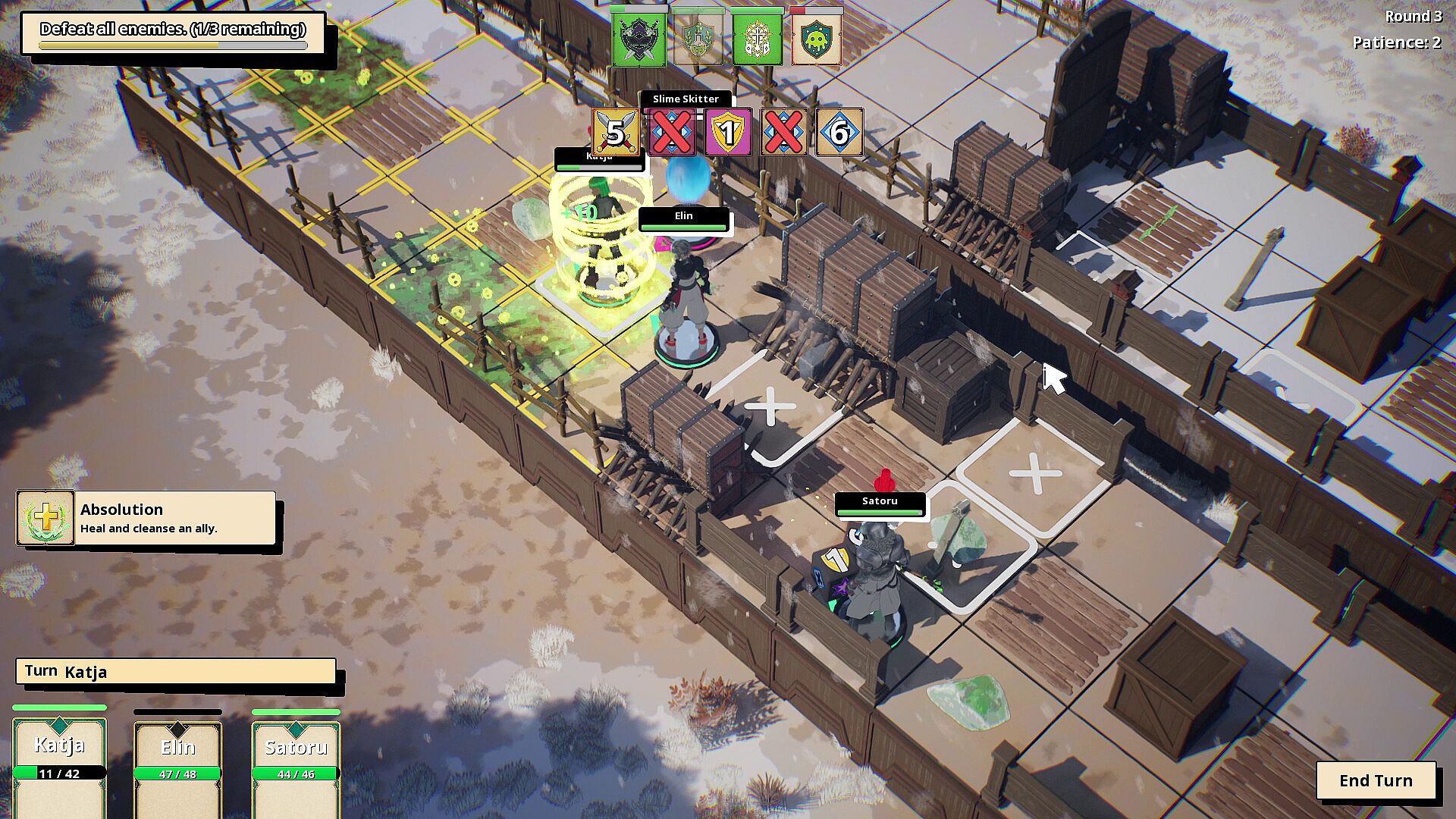
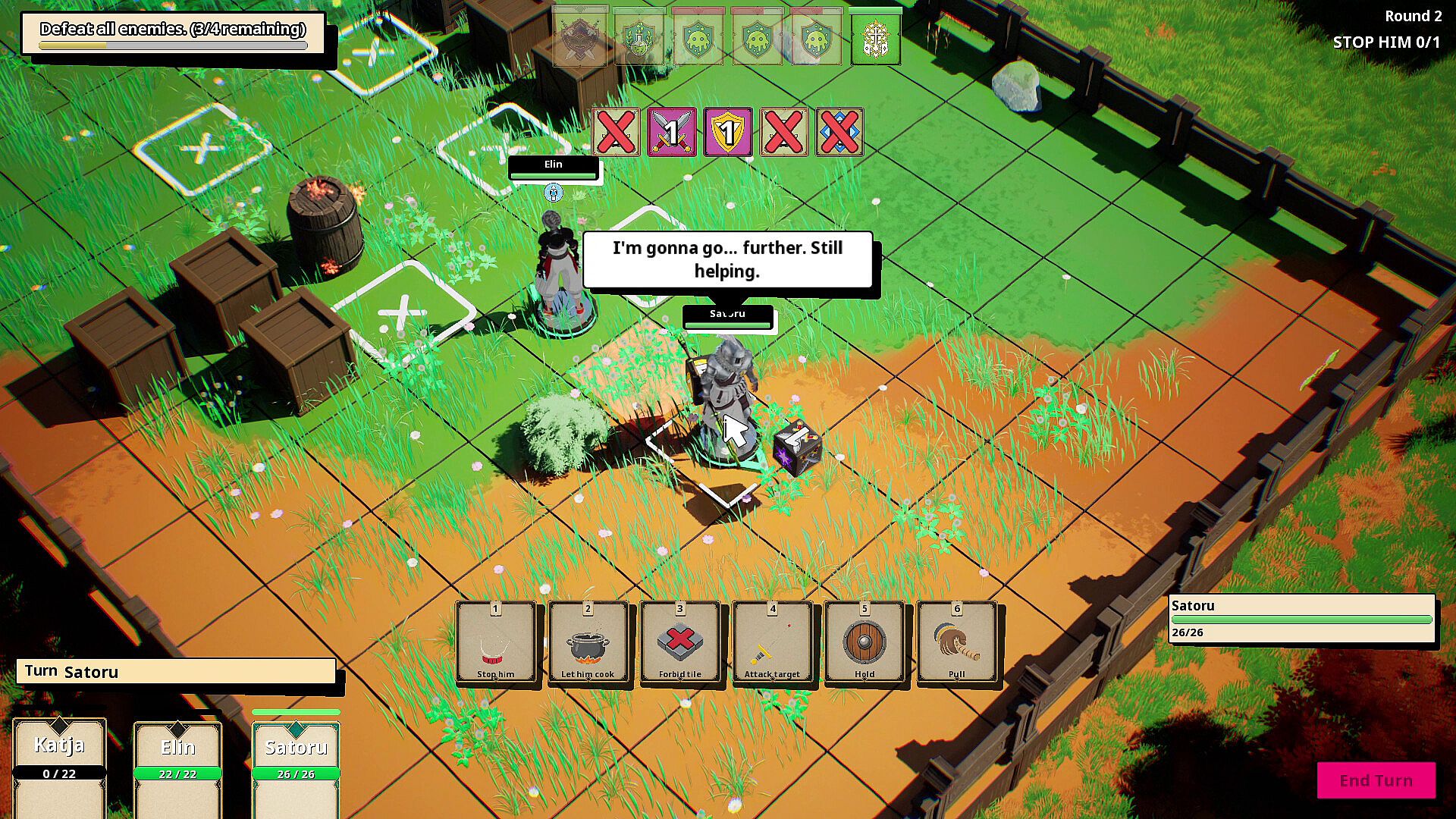
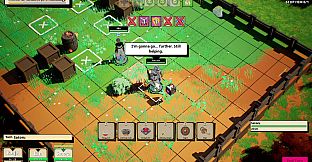
My Friend is a Moron is a co-op tactics roguelite that blends strategy, indie, and casual elements into a grid-based experience for one to three players on PC. The core premise places players alongside an unreliable AI-controlled hero who makes independent decisions, sometimes brilliant and sometimes disastrous, while the group shares resources and navigates procedurally structured maps filled with interactive terrain.
Gameplay
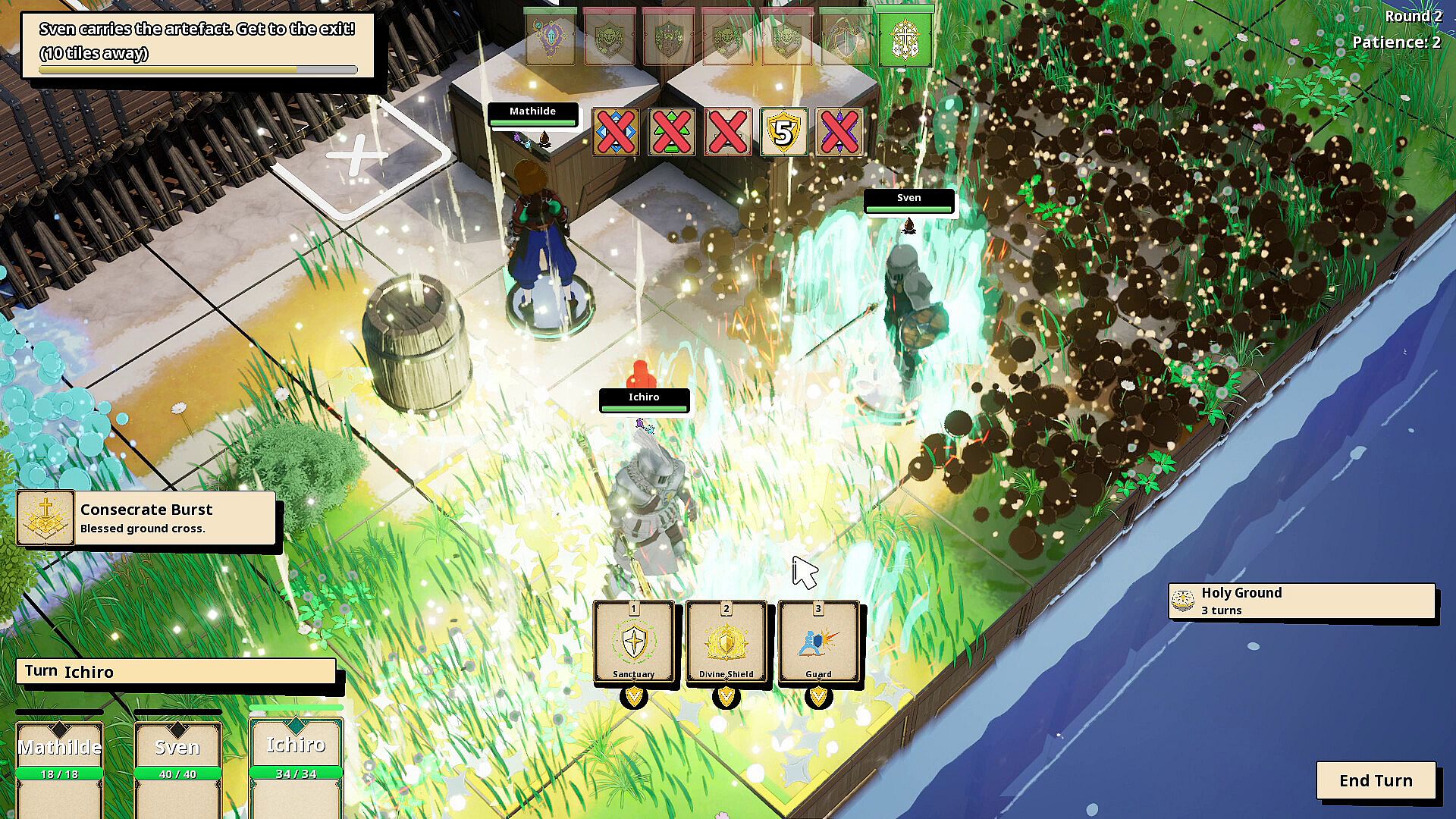
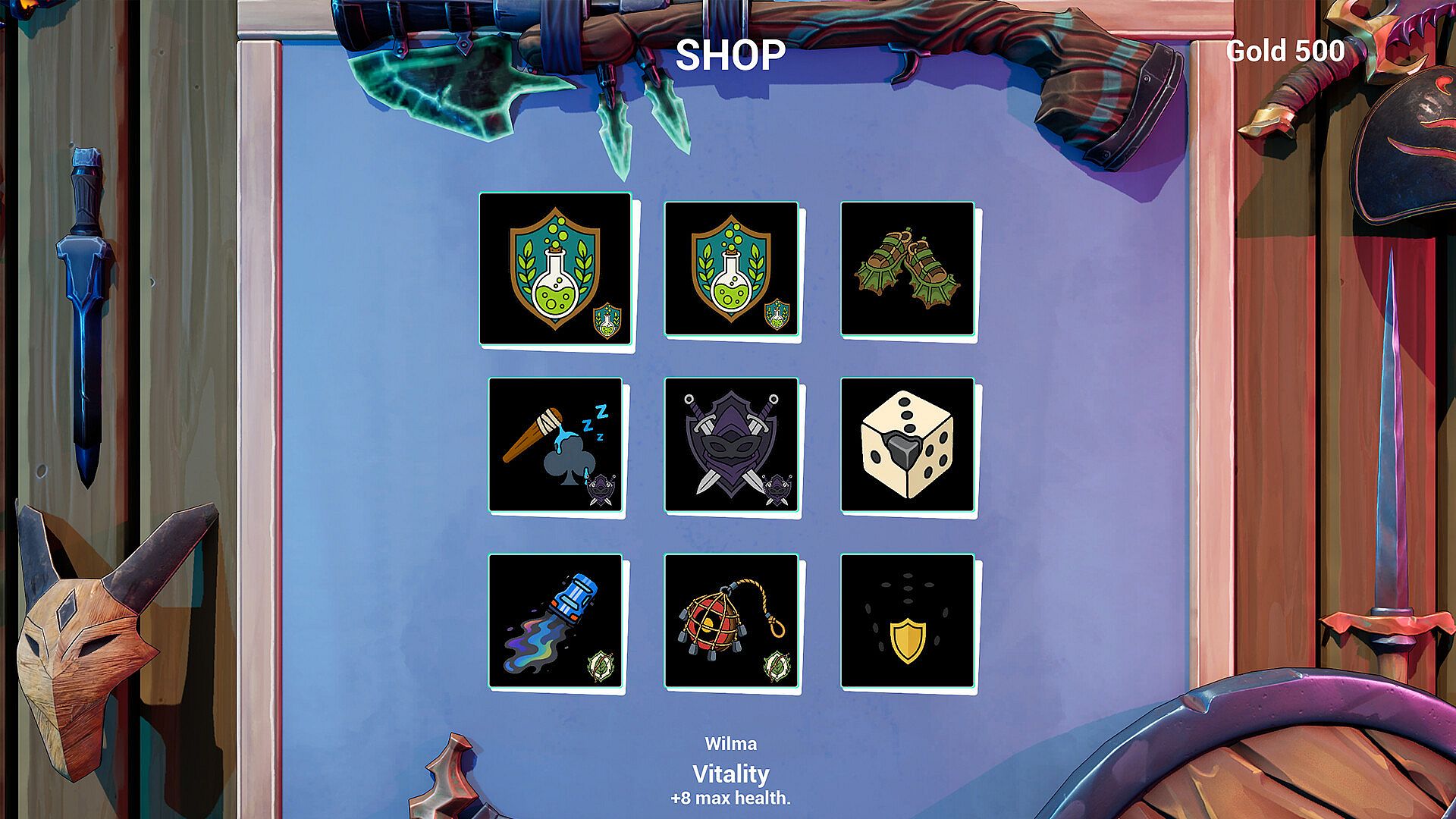
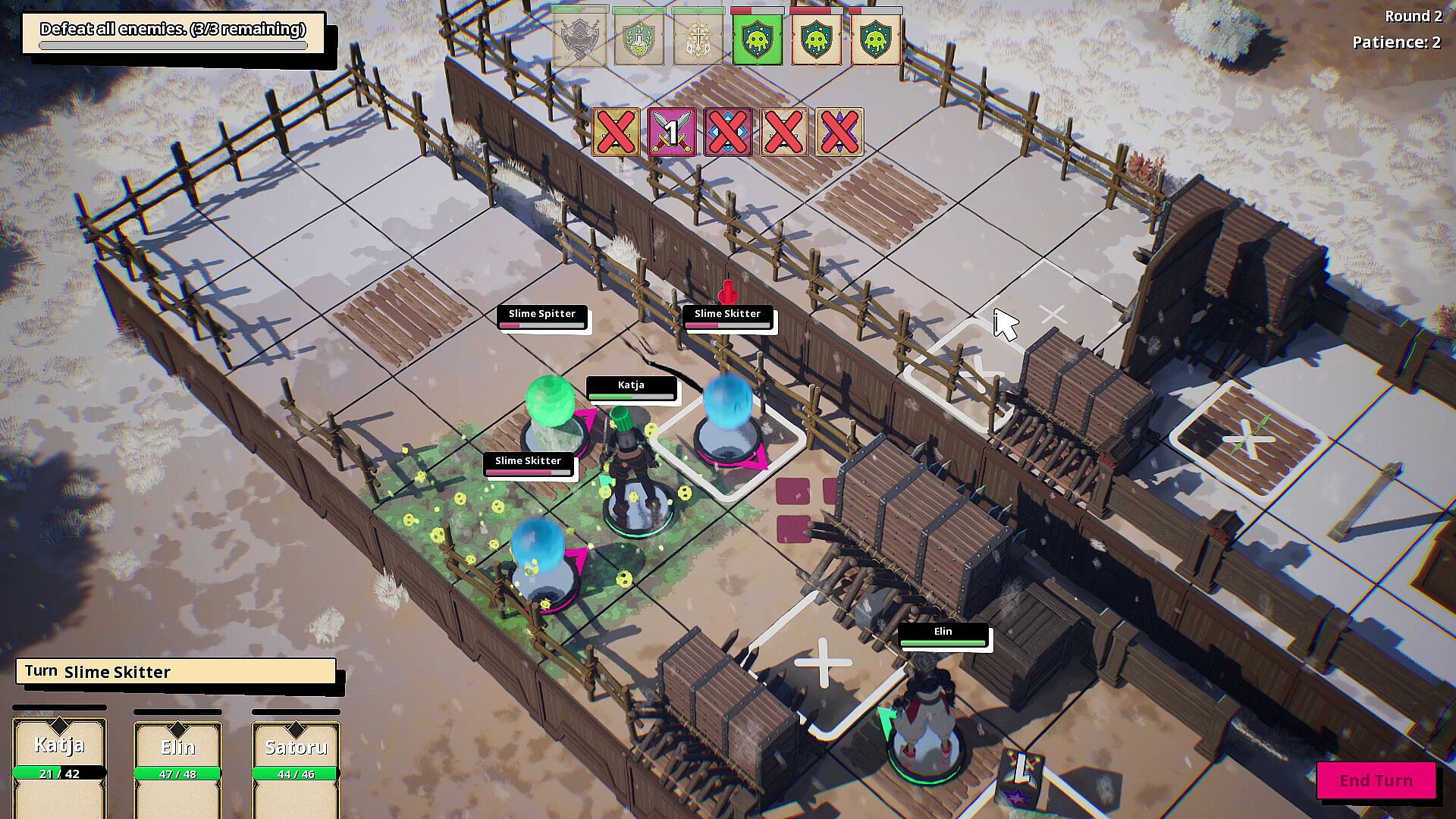
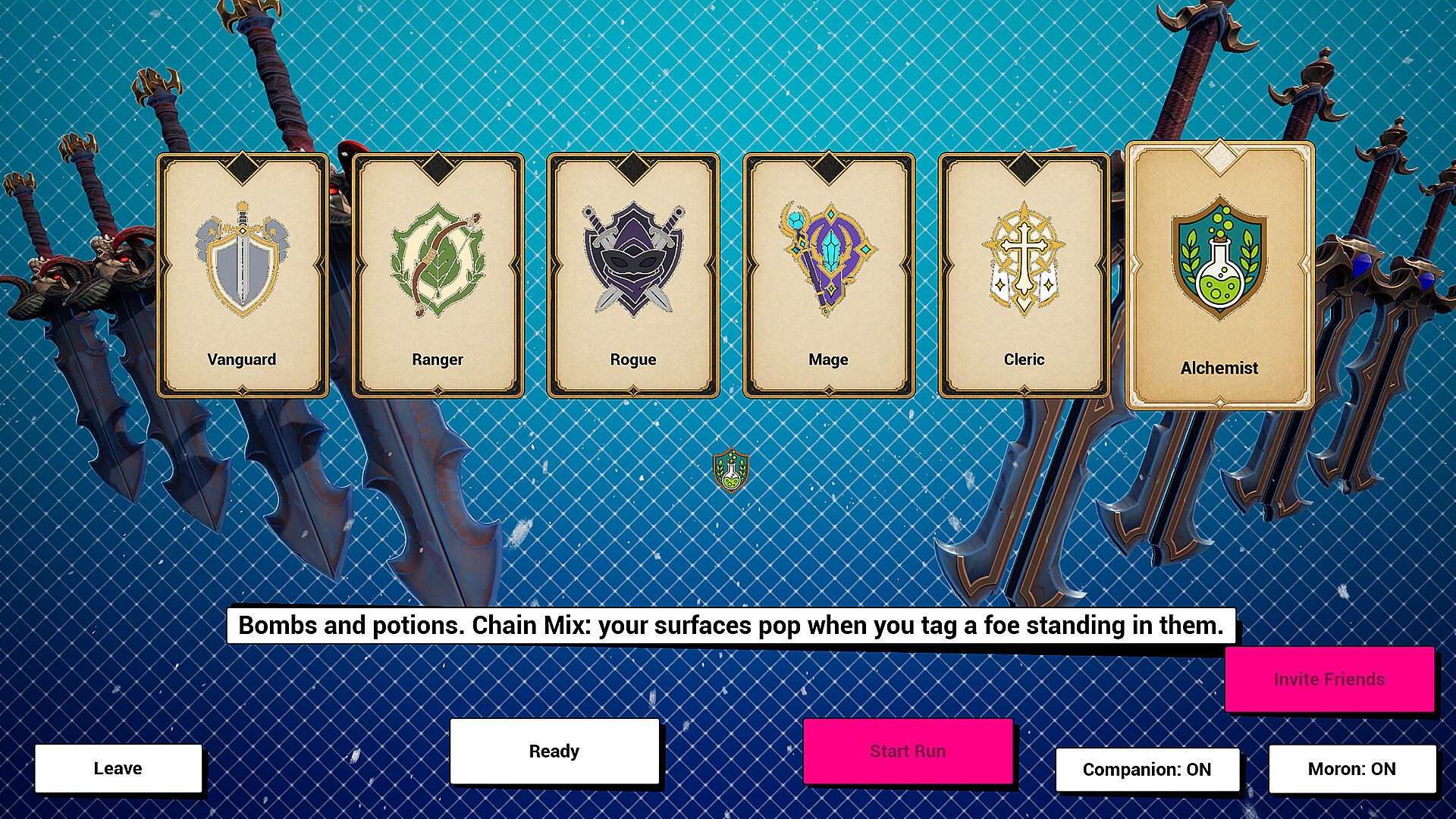
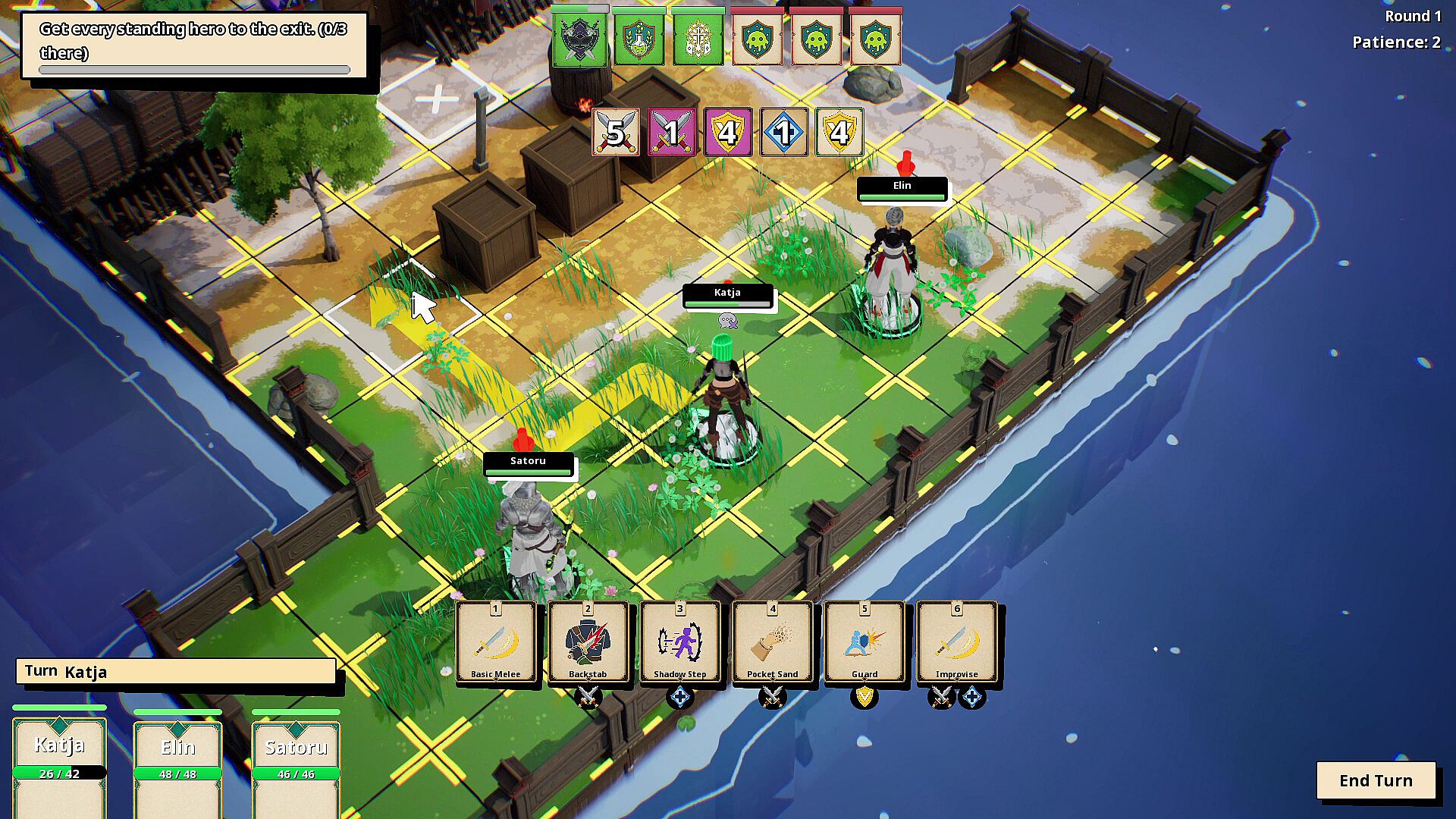
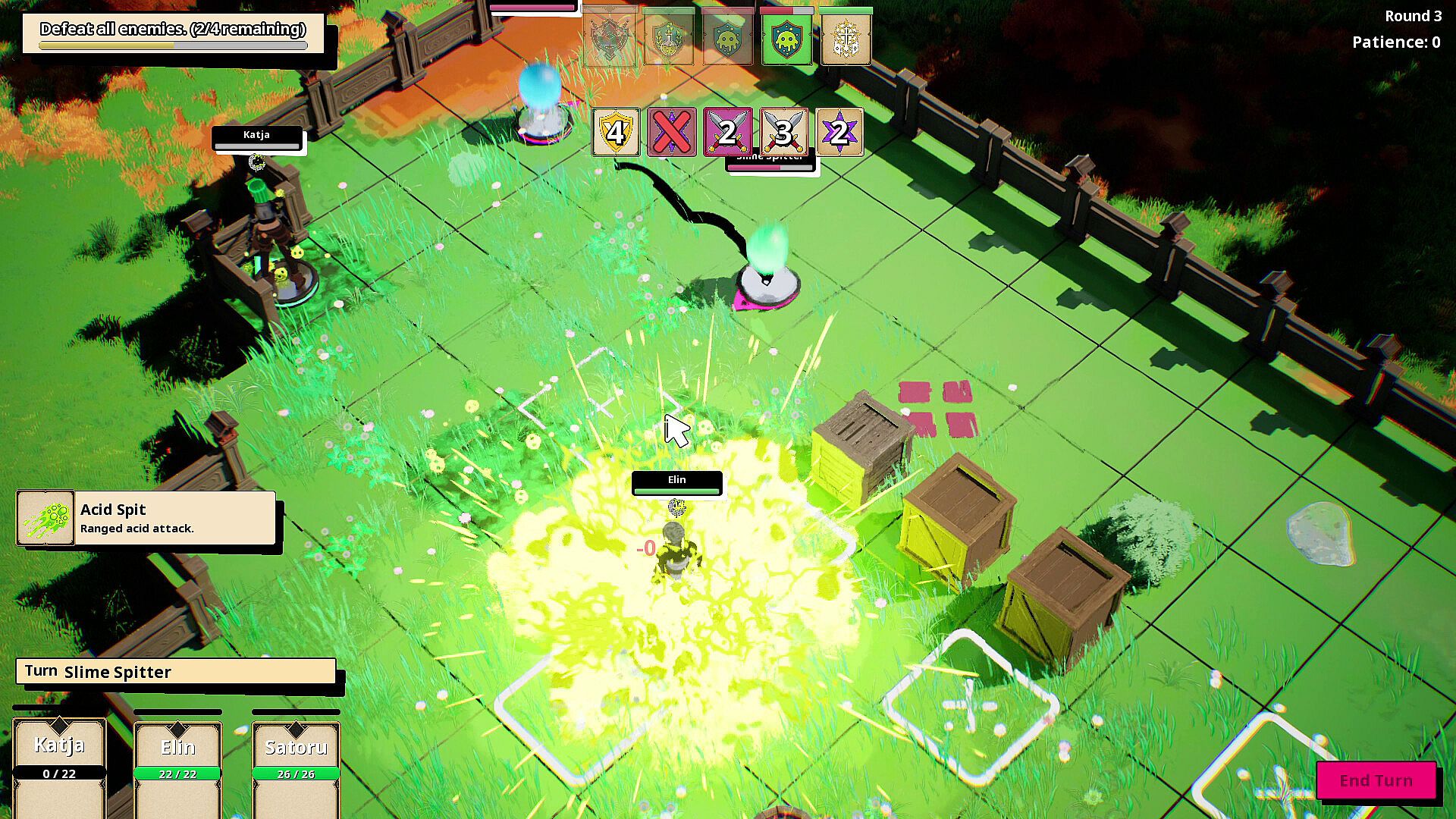
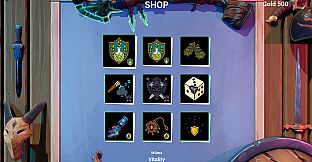
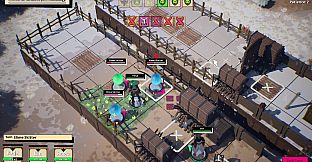
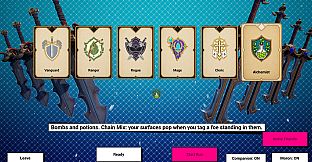
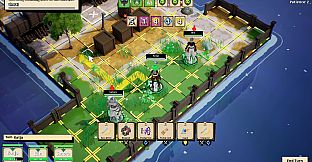
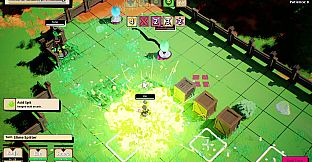
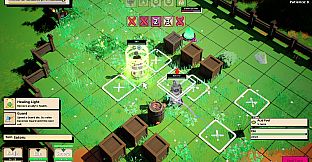
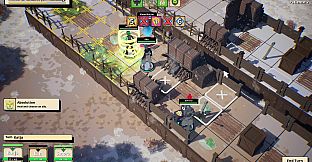
Combat unfolds on a grid where environmental factors drive strategy. Oil spreads fire, water conducts lightning, ice causes slips, acid damages over time, vines entangle, and spikes injure on contact. Players can relocate tiles to reposition hazards or create new problems for enemies. The shared dice system forms the heart of each turn. A party of up to three heroes draws from a pool of five six-sided dice that roll into categories such as movement, attack, spell, guard, or wildcard. Unwanted results can be rerolled once before assignment, and larger abilities may consume multiple dice at once. The numeric value on each die further modifies outcomes, with low rolls enabling double hits and high rolls expanding areas of effect. Six base classes-Vanguard, Ranger, Rogue, Mage, Cleric, and Alchemist-each split into two subclasses for a total of twelve progression paths. More than 160 spells, abilities, and upgrades appear across these options, with permanent growth after battles through shops, campfires, and a workshop for dice customization.
Game Modes
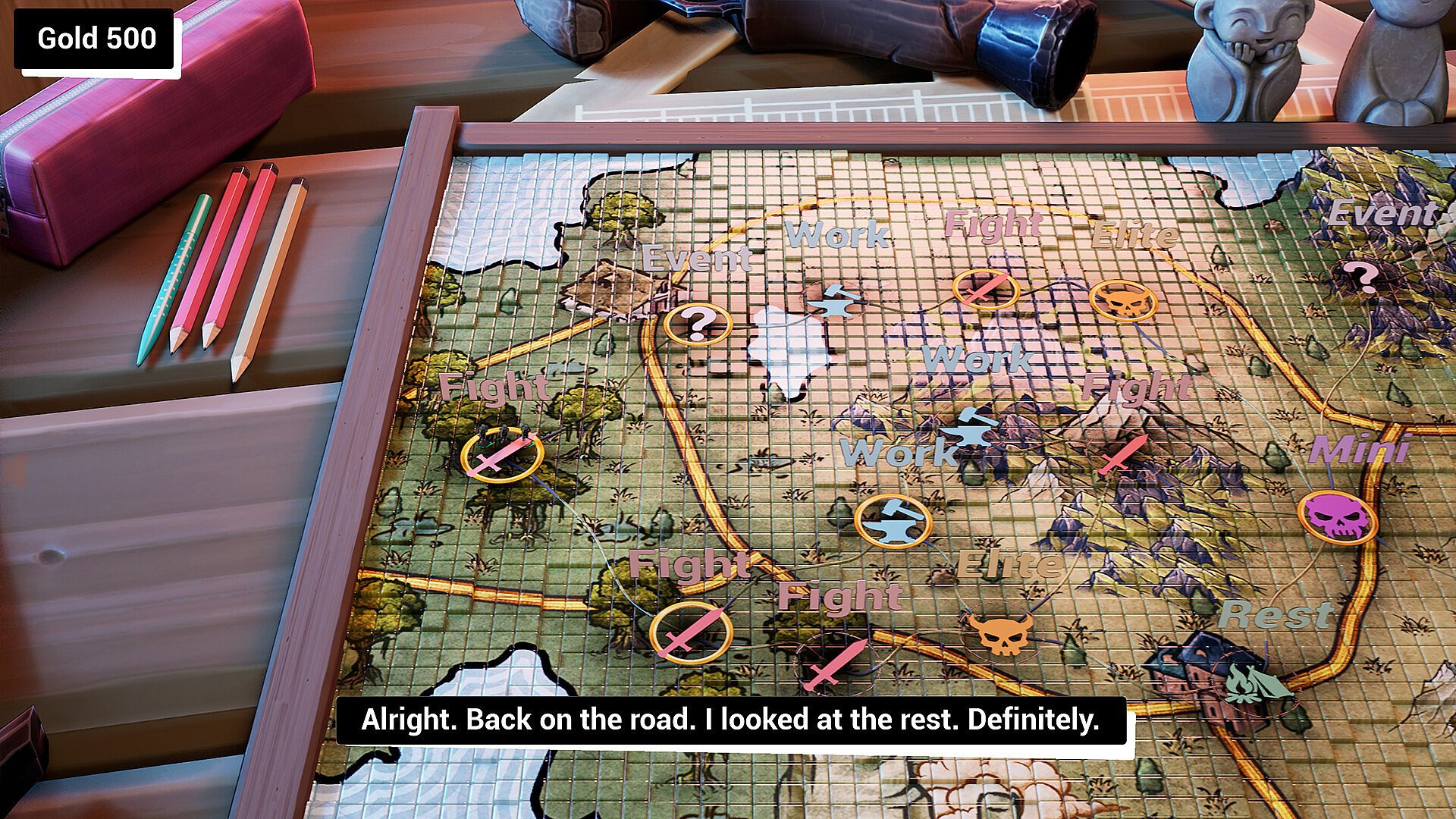
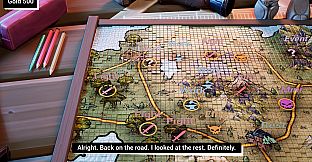
The experience supports solo play with the AI teammate handling one hero slot, local or online co-op where one player controls the AI character while others manage their own, or full multiplayer with the AI disabled entirely so friends occupy every seat. Maps feature gold-framed reliable information alongside sketchy notes from the AI scout that may or may not prove accurate, introducing risk when following supposed shortcuts or avoiding minibosses. Procedural generation ensures varied runs, while the AI maintains its own priorities and questionable tactics regardless of mode.
Core Mechanics and Progression
Every run emphasizes resource management and adaptation. The shared dice pool forces constant negotiation over allocation, turning each turn into a puzzle of maximizing value from limited rolls without leaving teammates short. Terrain manipulation adds another layer, as moving a tile can redirect fire, isolate enemies, or create slippery zones that affect the entire party. After combat, players strengthen the group through purchases, rest, or dice modifications before continuing. The AI scout's map annotations add unpredictability, rewarding cautious interpretation over blind trust. Friendly fire remains a constant possibility, turning environmental hazards into tools that demand careful positioning.
Is It Worth Playing?
This title suits players who enjoy tactical grid combat combined with chaotic co-op elements and roguelite progression. The dice-driven system and environmental interactions create repeatable depth, while the AI teammate introduces humor and tension through its independent, often flawed choices. Those seeking straightforward single-player campaigns or purely competitive multiplayer may find the shared resources and unreliable partner less appealing. Availability centers on PC with flexible player counts from solo to three, allowing groups to experiment with AI assistance or pure human coordination. The combination of class variety, ability discovery, and map uncertainty supports multiple runs without relying on external updates or seasonal content. Players who value creative problem-solving around shared limitations and interactive battlefields will likely find the most satisfaction here.











