







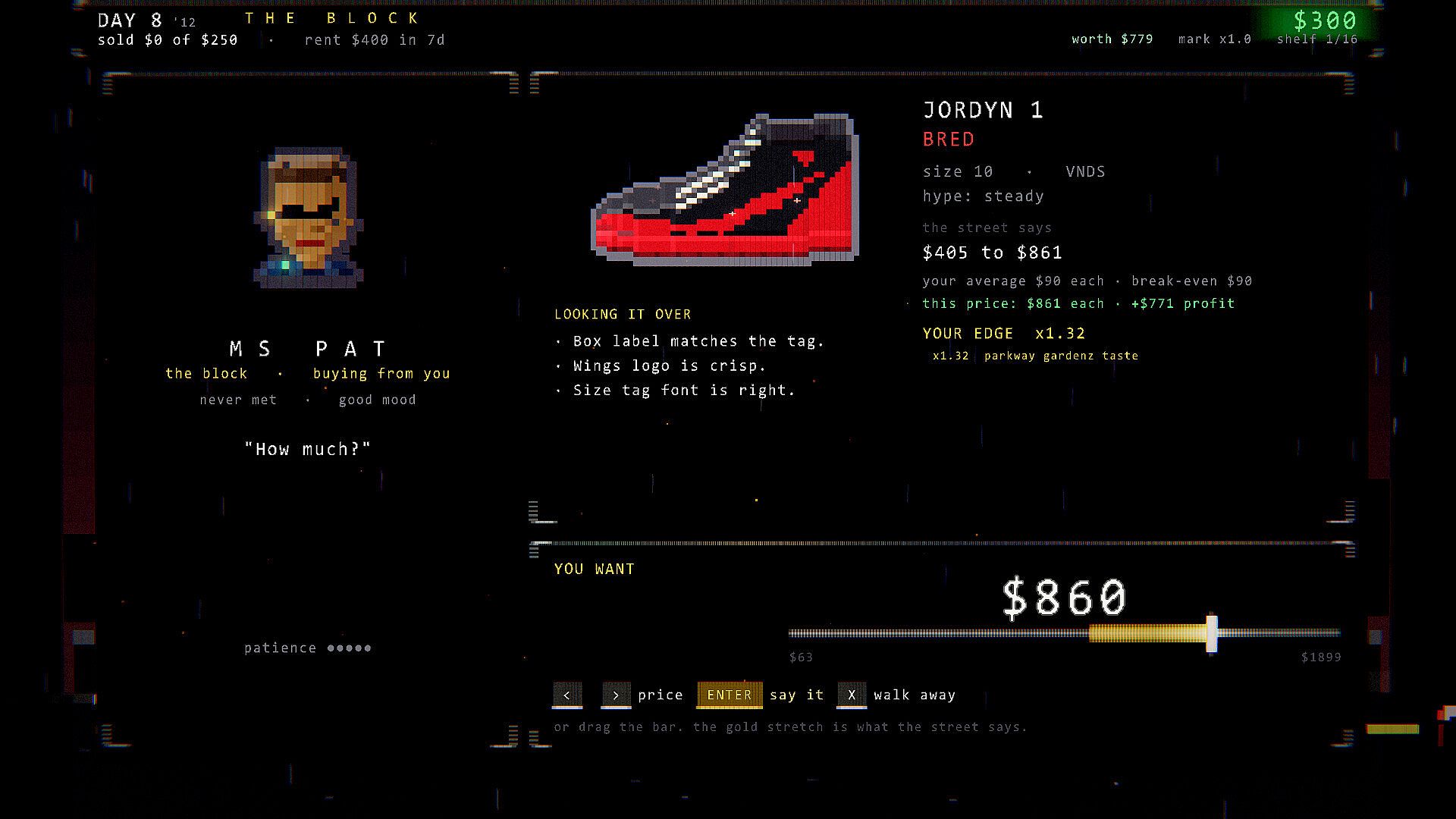
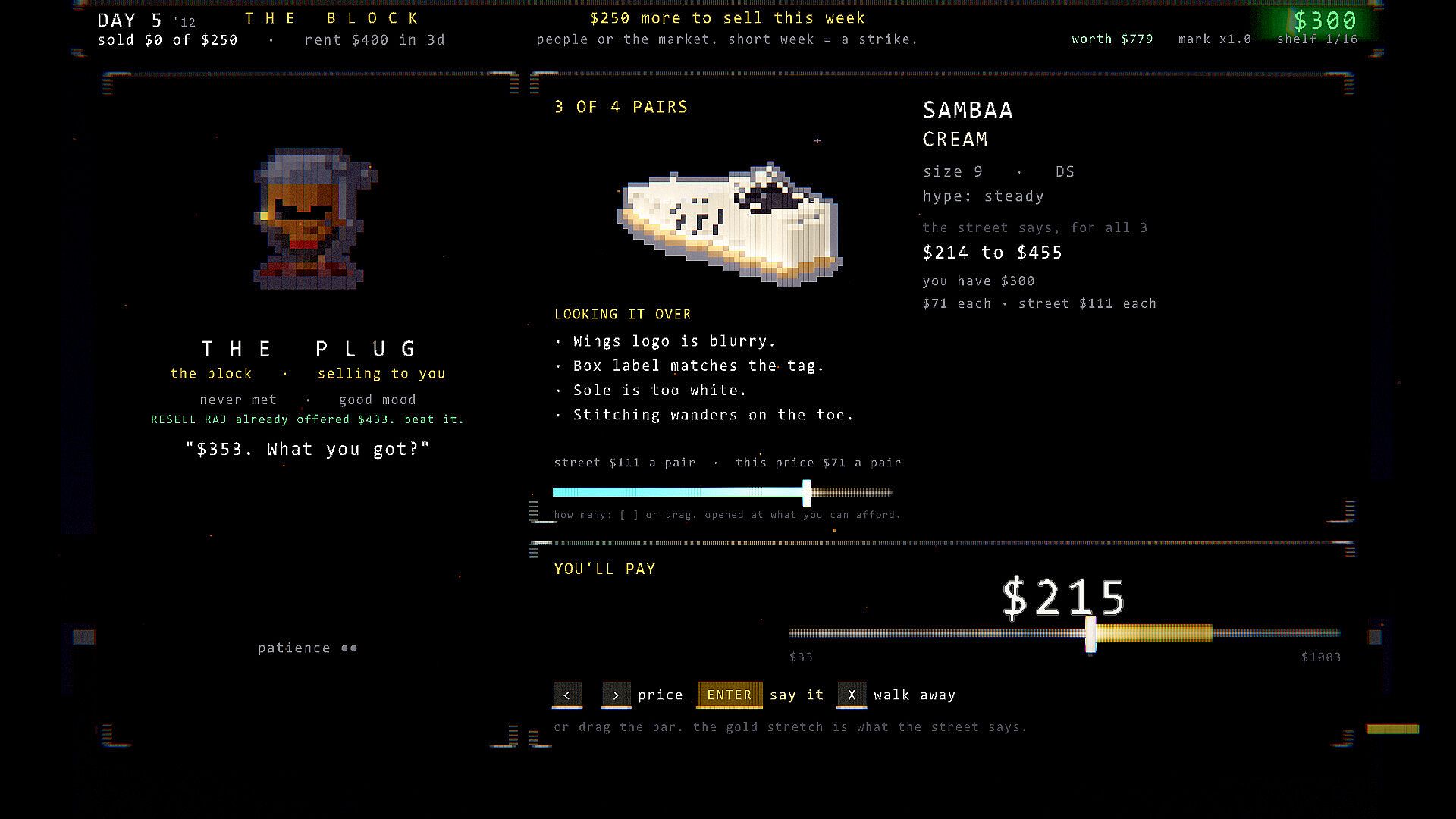

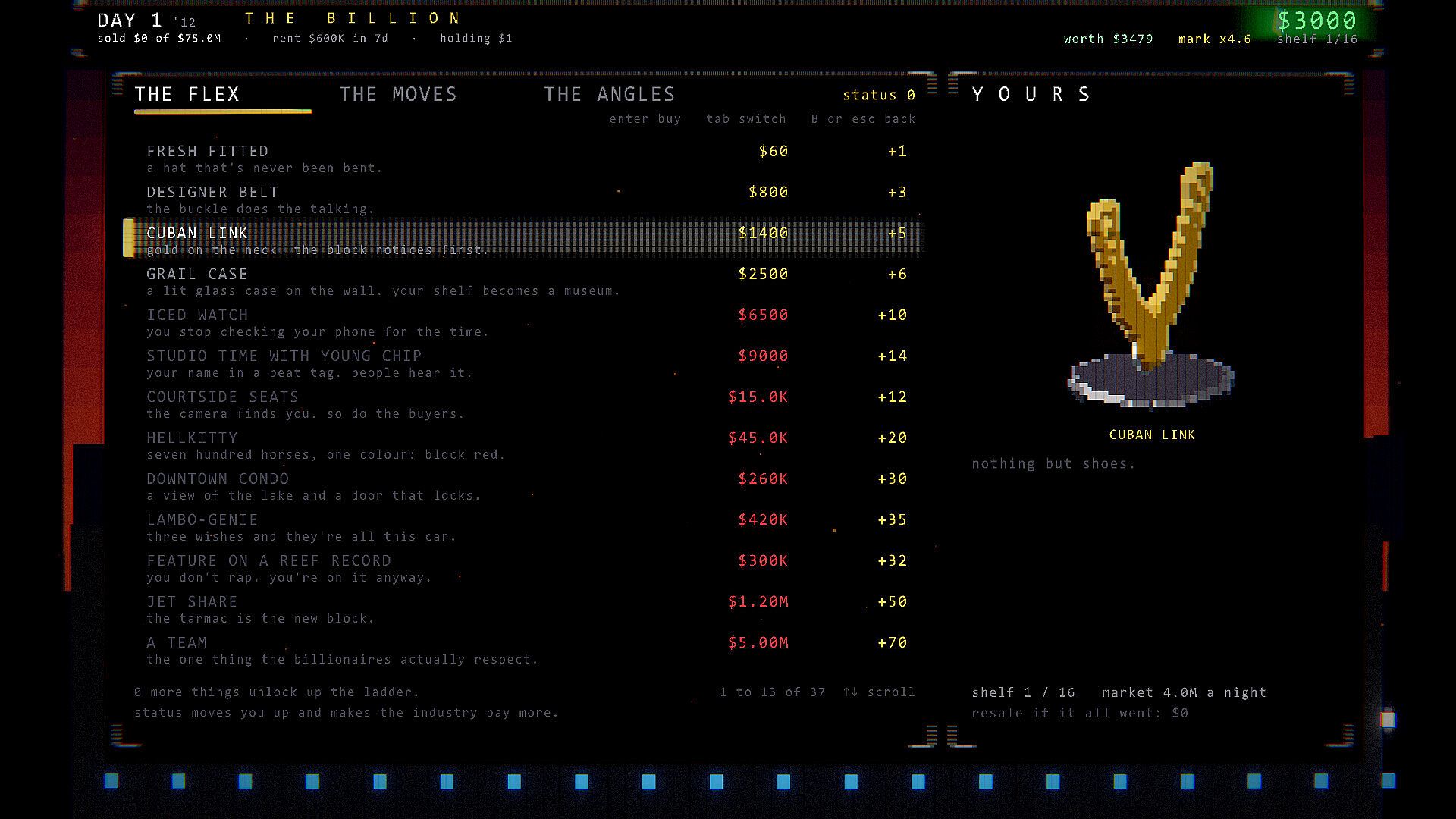
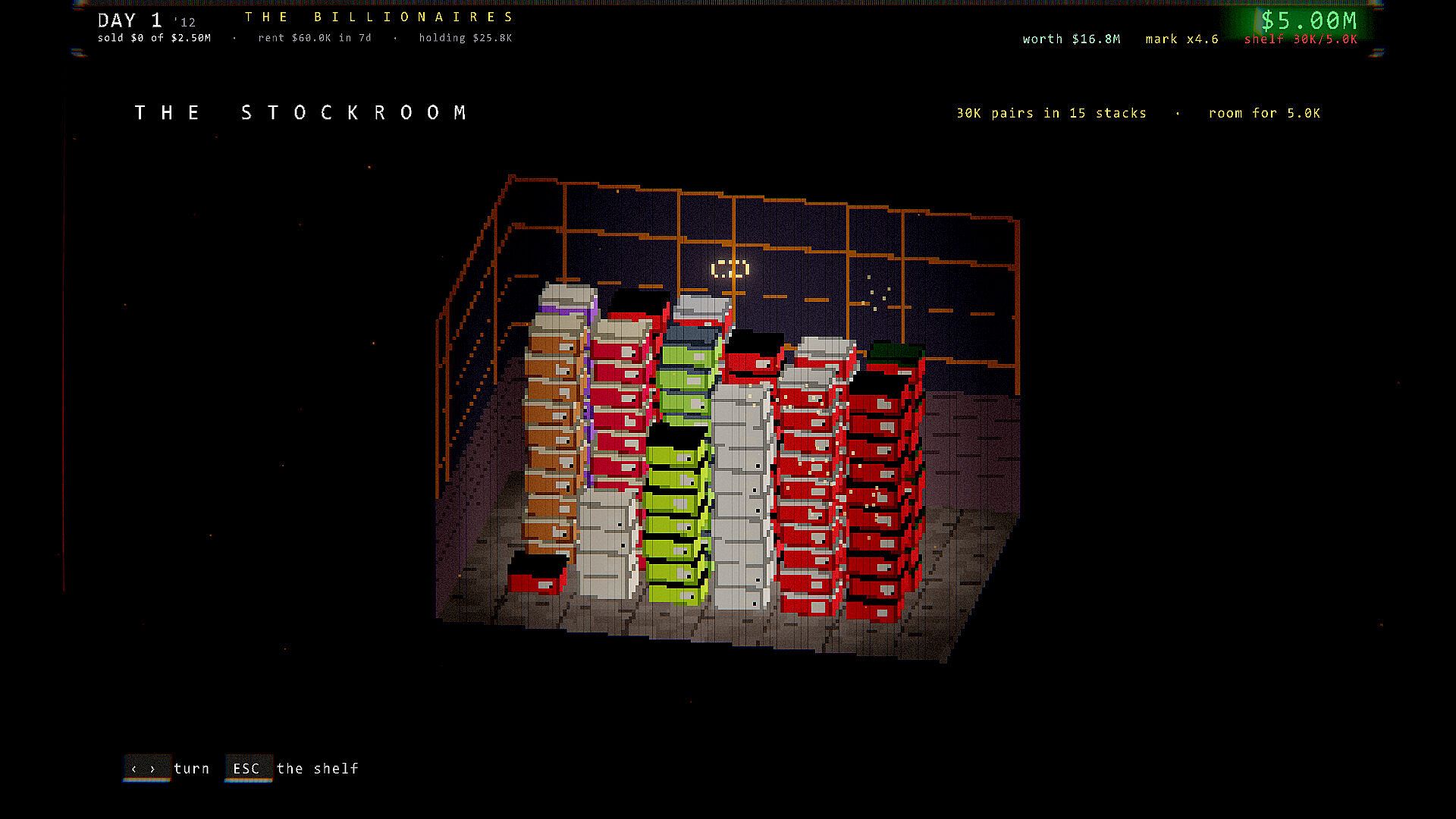
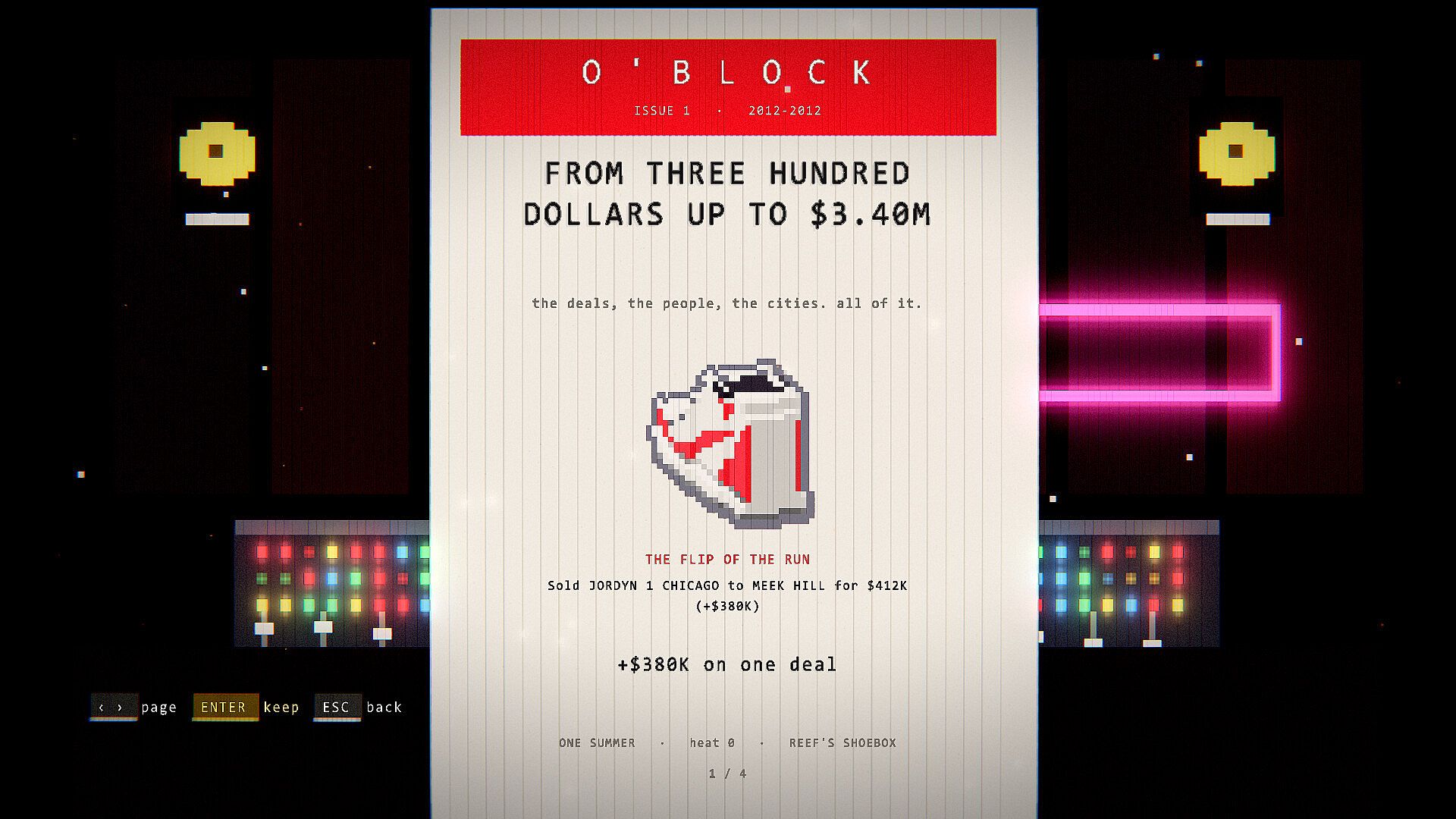

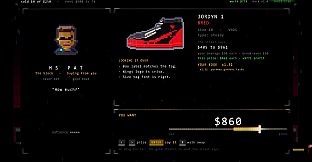
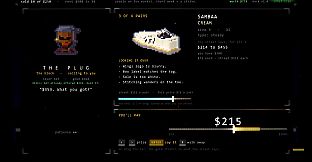
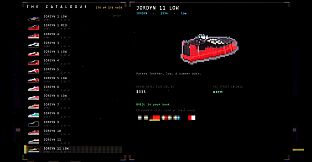

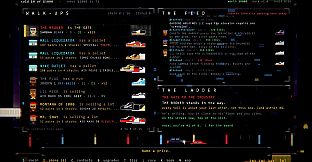
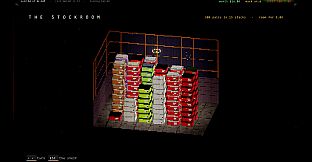

O'BLOCK is a strategy and simulation game where players build a sneaker trading empire starting from a single block. The core loop centers on negotiating deals by reading hidden reservation prices, moods, tells, and patience levels in every transaction. Success depends on spotting fakes through details like fonts, smells, or slumped toes, then flipping pairs for profit while managing rent and quotas in a parody-filled world of exaggerated industry figures.
Gameplay
Players begin by choosing one of six origins, each carrying a distinct upside and drawback that shapes early decisions. Deals unfold through direct number exchanges, with opponents revealing information indirectly through their responses. Reading a pair involves more than the person across the table. One tell might suggest authenticity, but two or more point to a counterfeit that could lead to losses if purchased too quickly.
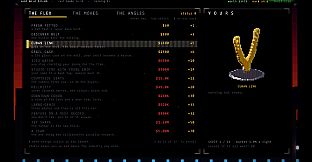
Angles add layers to every negotiation. Fifty-six distinct angles can be drafted and stacked in specific orders. Combinations like GOLD CHAIN double every bonus, FULL HOUSE multiply returns by the total number of angles held, and COPYCAT replicate the effect of the angle positioned to its right. Proper sequencing turns a single sale into multipliers reaching x12 or higher. Heat levels from one to ten intensify pressure, forcing quicker reads and riskier calls as the game progresses.
Corporate expansion follows the initial climb. Players incorporate their operation, hire staff, and automate processes until the original block feels distant. Shoe design covers silhouette, upper, sole, factory location, colorway, collaborations, run size, and drop strategy. Taking the brand public opens access to real financial instruments, including bonds booked at market coupons, convertibles, swaps, and tenders. A full set of financial statements tracks performance, while analysts apply discounted cash flow models to value the stock. Derivatives trading includes Treasury positions, yen carry trades, commodity futures, index options, collars on company shares, and margin loans that carry spiral risks.
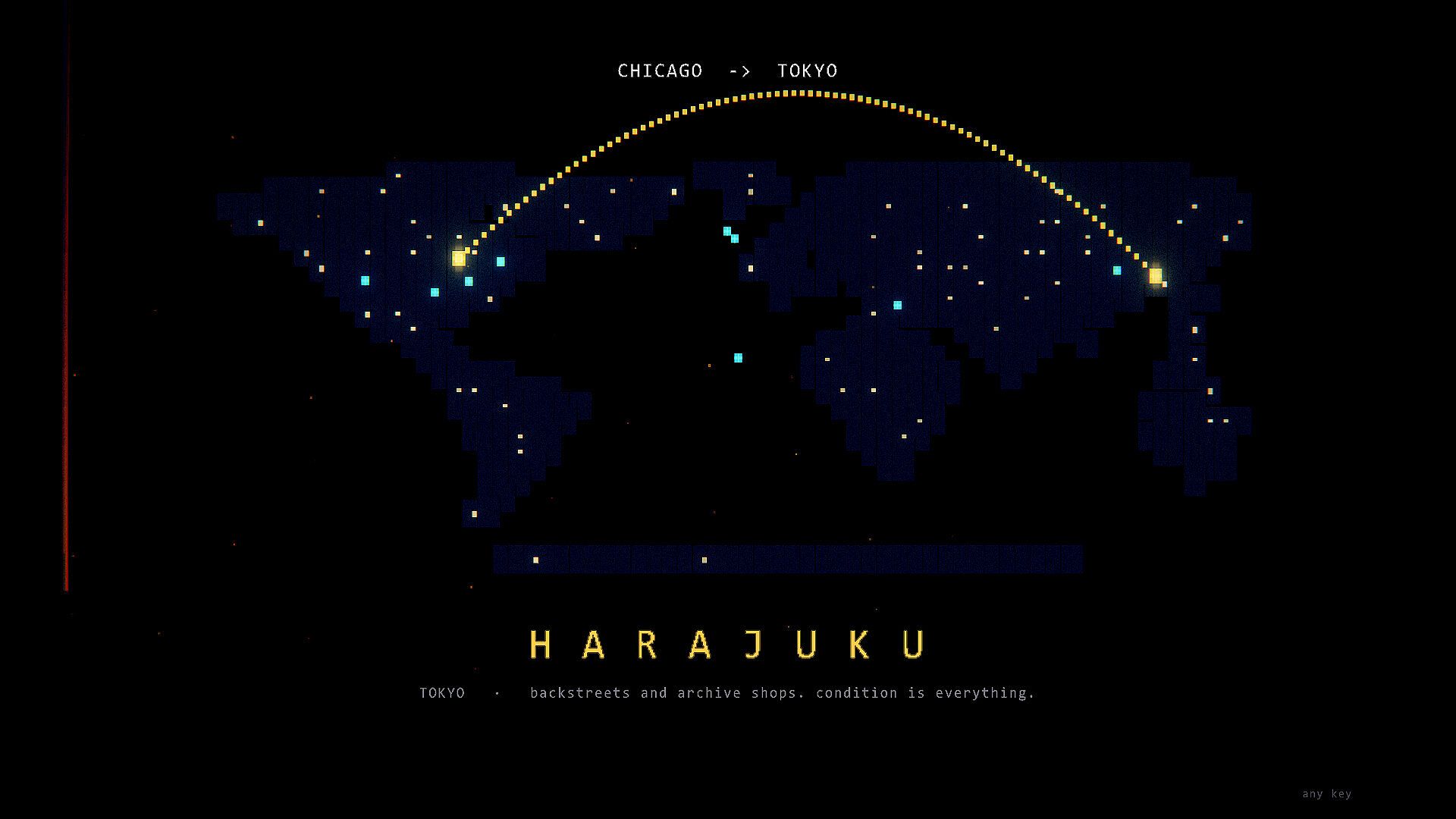
The broader economy runs on live rules. Central bank meetings occur every six days under a Taylor rule framework. Yield curves shift and invert, triggering recession signals. Quantitative tightening drains reserves and spikes repo rates. Credit spreads, volatility measures, and multiple currencies react to surprises. Input costs for hides, rubber, oil, and cotton fluctuate with factory location and border tariffs, directly affecting margins on every batch.
Game Modes
Three distinct modes structure play. The long climb requires reaching a billion dollars through sustained growth and repeated negotiations. A thirty-day summer mode compresses the experience into a single intense period with fixed constraints. The daily seed mode resets with a fresh starting position each day, emphasizing quick adaptation and short-term optimization.
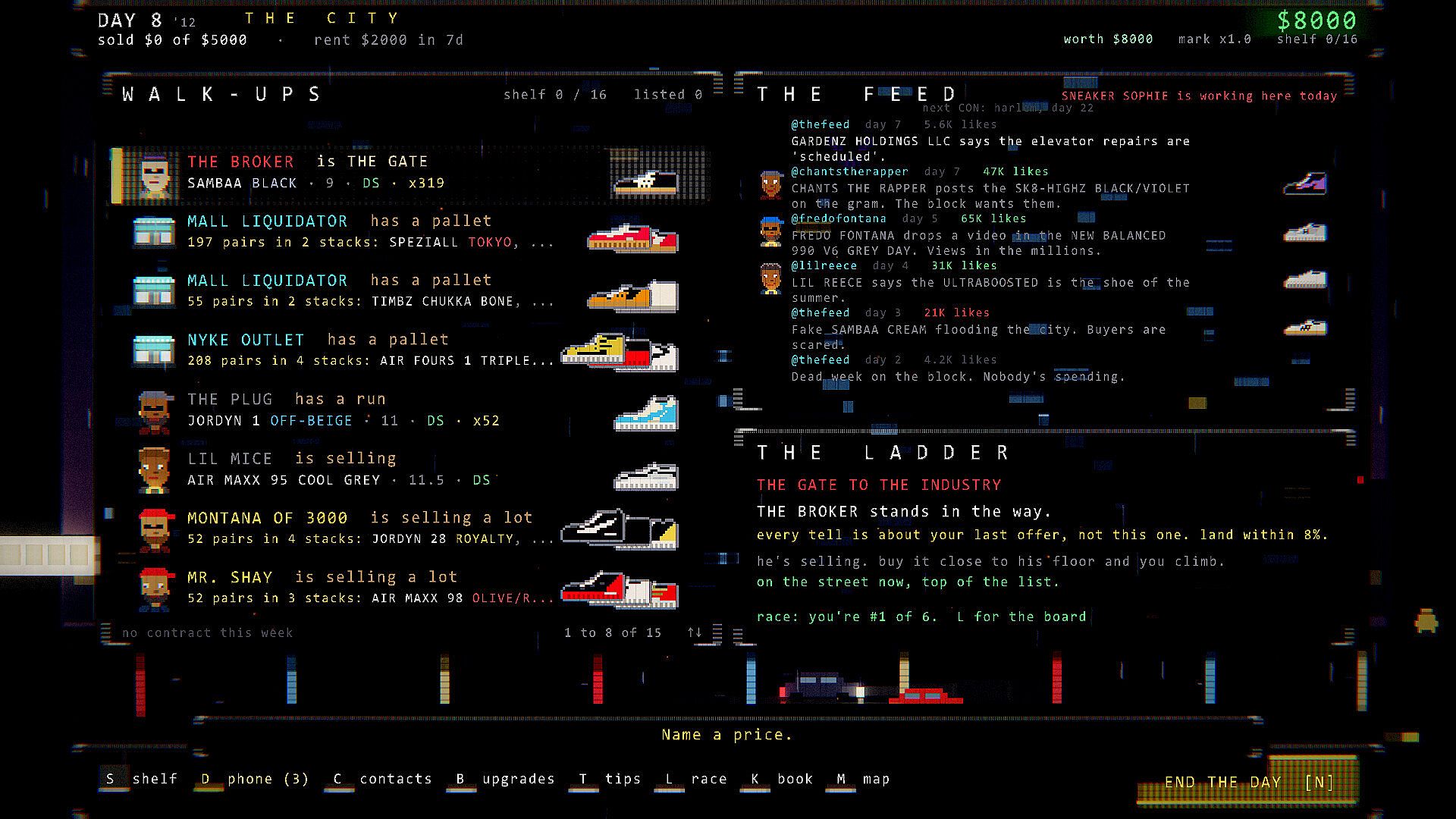
Weekly cycles govern all modes. Meeting rent and sales targets avoids strikes. Clearing the quota unlocks the back room, where new angles, one-shot tips, rerolls, and interest on held cash become available. Twelve gate bosses stand between progress stages. Each presents unique challenges, such as reversed tells, escalating floor values during conversation, moving reservation prices after every offer, or complete silence that forces pure observation.
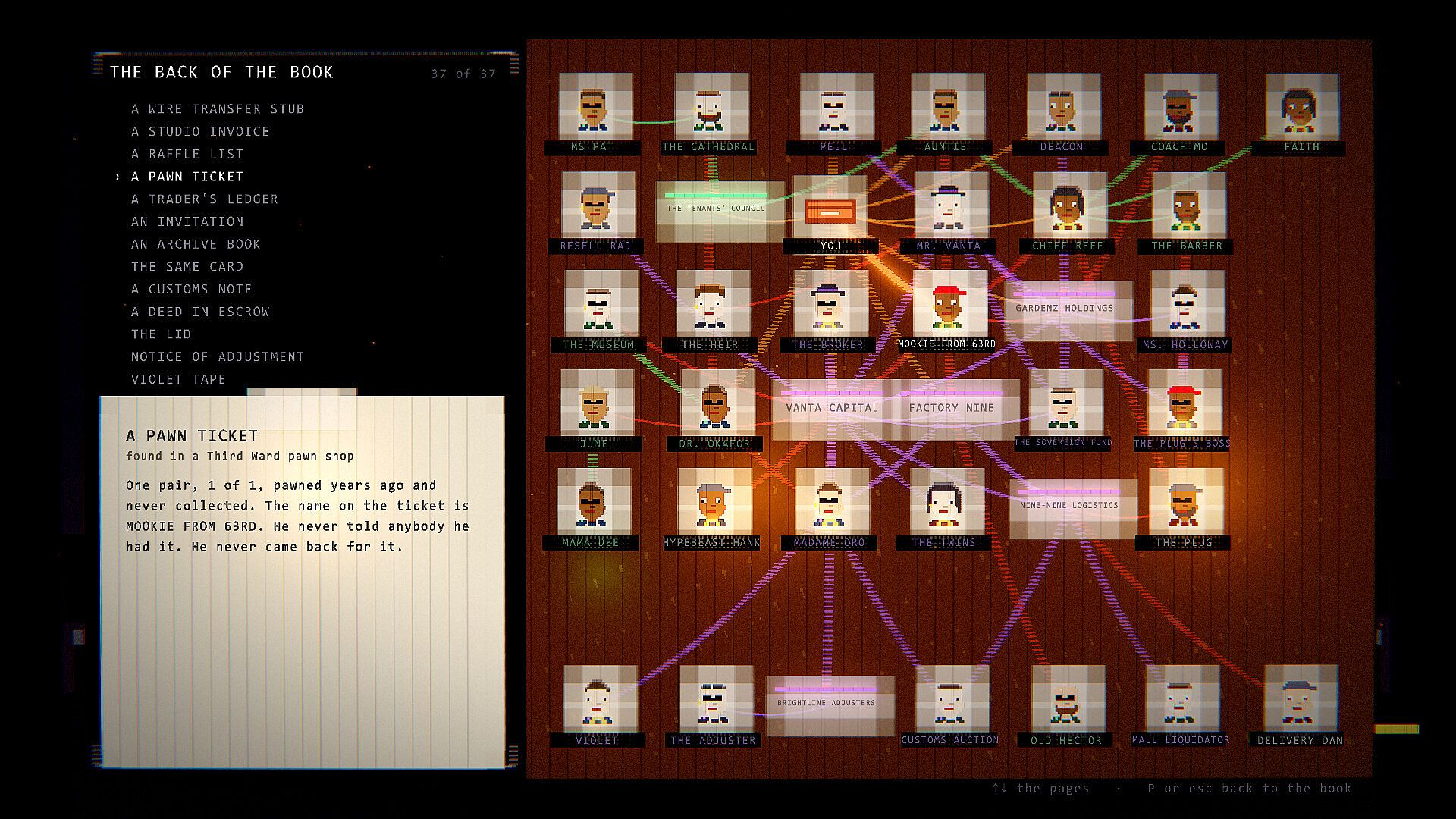
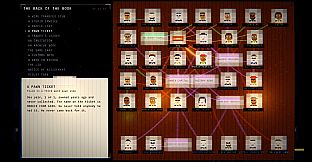
Hidden narrative elements appear through environmental clues. Twenty-seven pages of documents and a corkboard with connecting strings reveal connections among characters without direct exposition. Players piece together the story by noticing jacket pins, overheard remarks, sealed boxes, and scattered notes.
Progression and Systems
Reaching the billion-dollar mark shifts focus to a ranked list of tycoons across industries. The player starts at the bottom and must climb to number one while defending the position through continued expansion. Five rivals compete directly for the initial billion, after which twenty established figures enter the picture.
Advanced finance tools support later stages. A revolving credit facility carries covenants that can trigger suddenly. Credit ratings and watch lists influence borrowing costs. Chapter 11 bankruptcy serves as a last resort if leverage spirals out of control. Shorting opportunities arise against vulnerable institutions, complete with credit default swaps, research reports, and coordinated deposit withdrawals that can force market reactions or regulatory attention.
Visual and audio presentation uses pixel art constructed from glowing particles alongside original 8-bit drill music generated live during play. Ninety-one achievements track mastery, with some requiring rare combinations of angles and outcomes.
Is It Worth Playing?
O'BLOCK suits players who enjoy deep negotiation mechanics, layered economic systems, and long-term empire building without relying on combat or exploration. The single-player focus rewards careful observation and repeated attempts at the same scenarios across different modes and heat levels. Those drawn to simulation titles that blend trading, corporate finance, and hidden information will find consistent depth in the angle drafting and boss encounters. The parody tone and detailed financial modeling provide replay value through the daily seed and origin choices. Availability on PC makes it accessible for sessions that range from quick daily runs to extended climbs toward the top of the tycoon list.











