




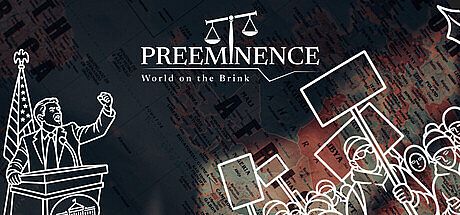


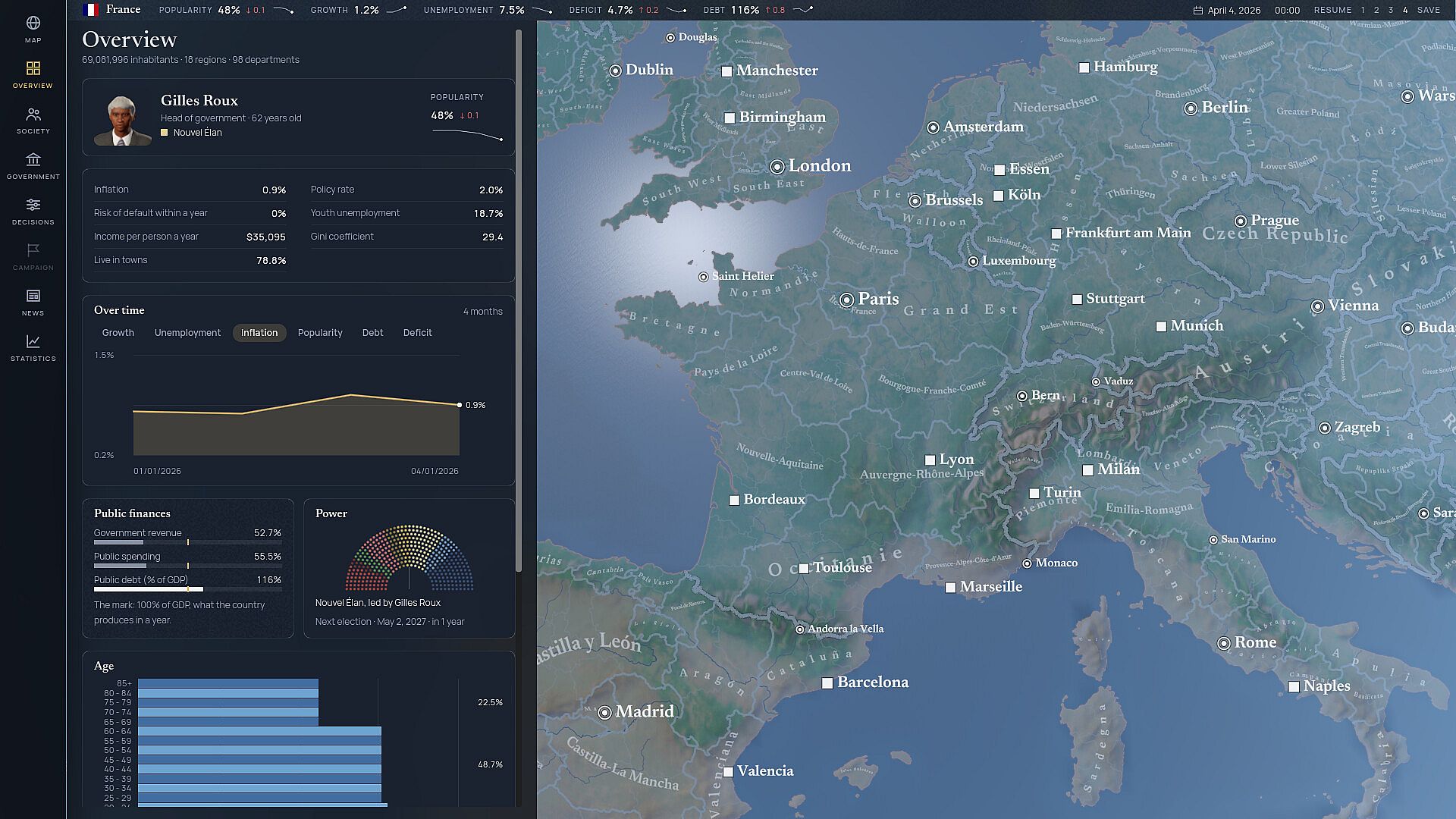
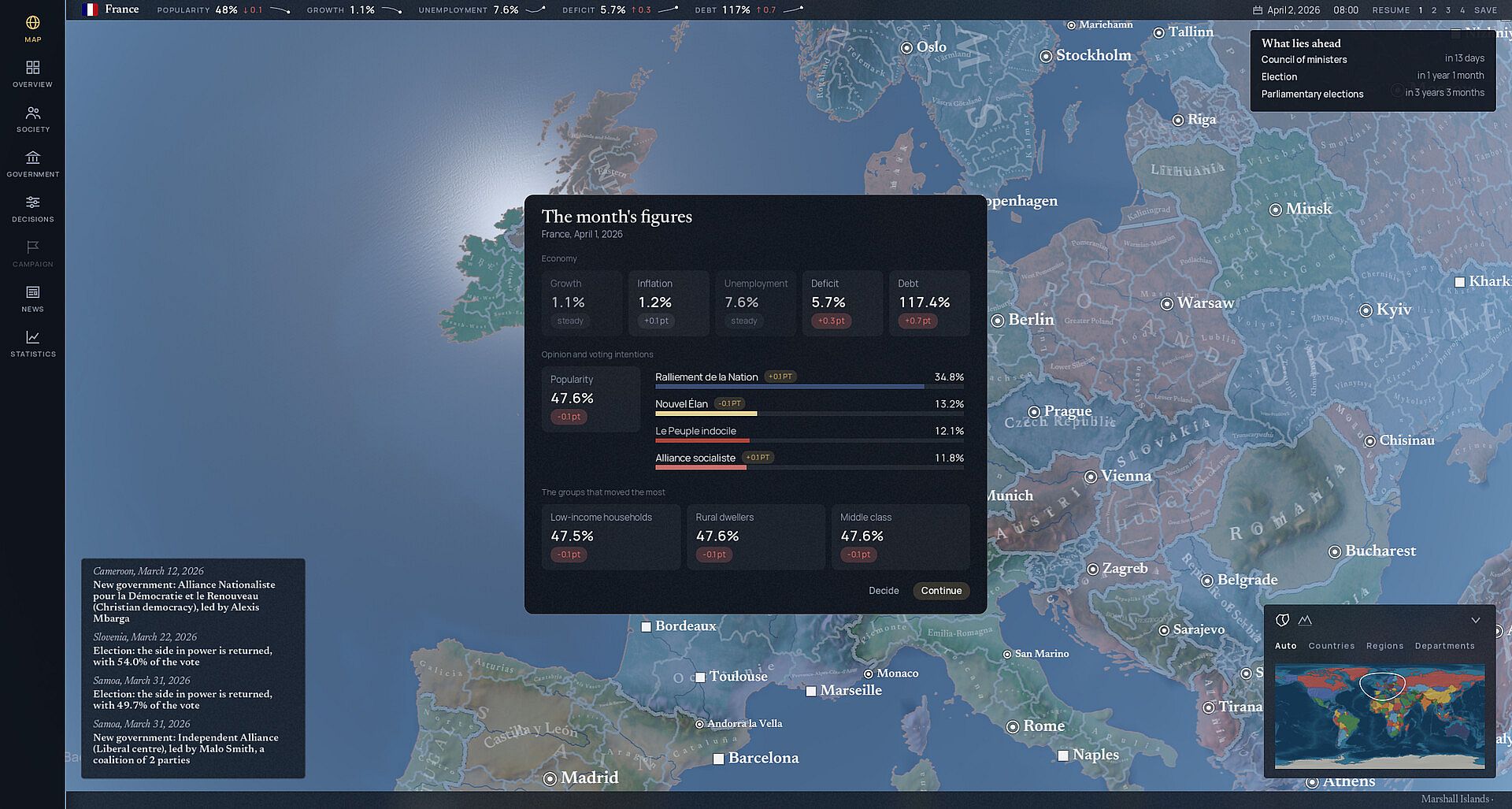
PREEMINENCE: World on the Brink is a strategy and simulation game set in the real world as it stands on 1 January 2026. Players select one of more than 200 countries and manage its day-to-day affairs under mounting debt pressure that already exceeds 110 percent of GDP. The experience centers on economic policy, coalition building, legislative battles, and responses to social unrest, with time advancing in daily increments that pause for decisions and advance automatically when the clock runs.
Gameplay
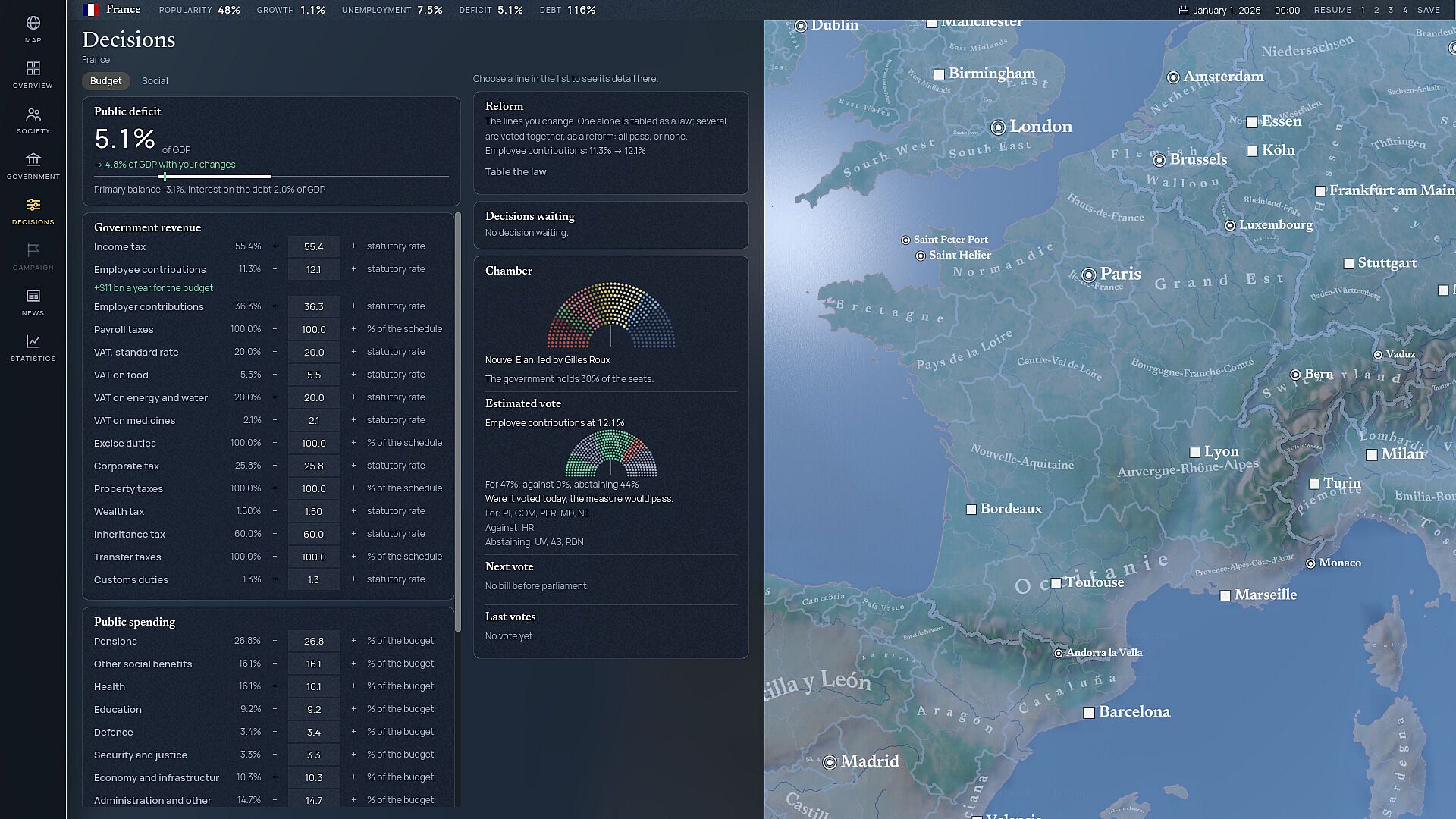
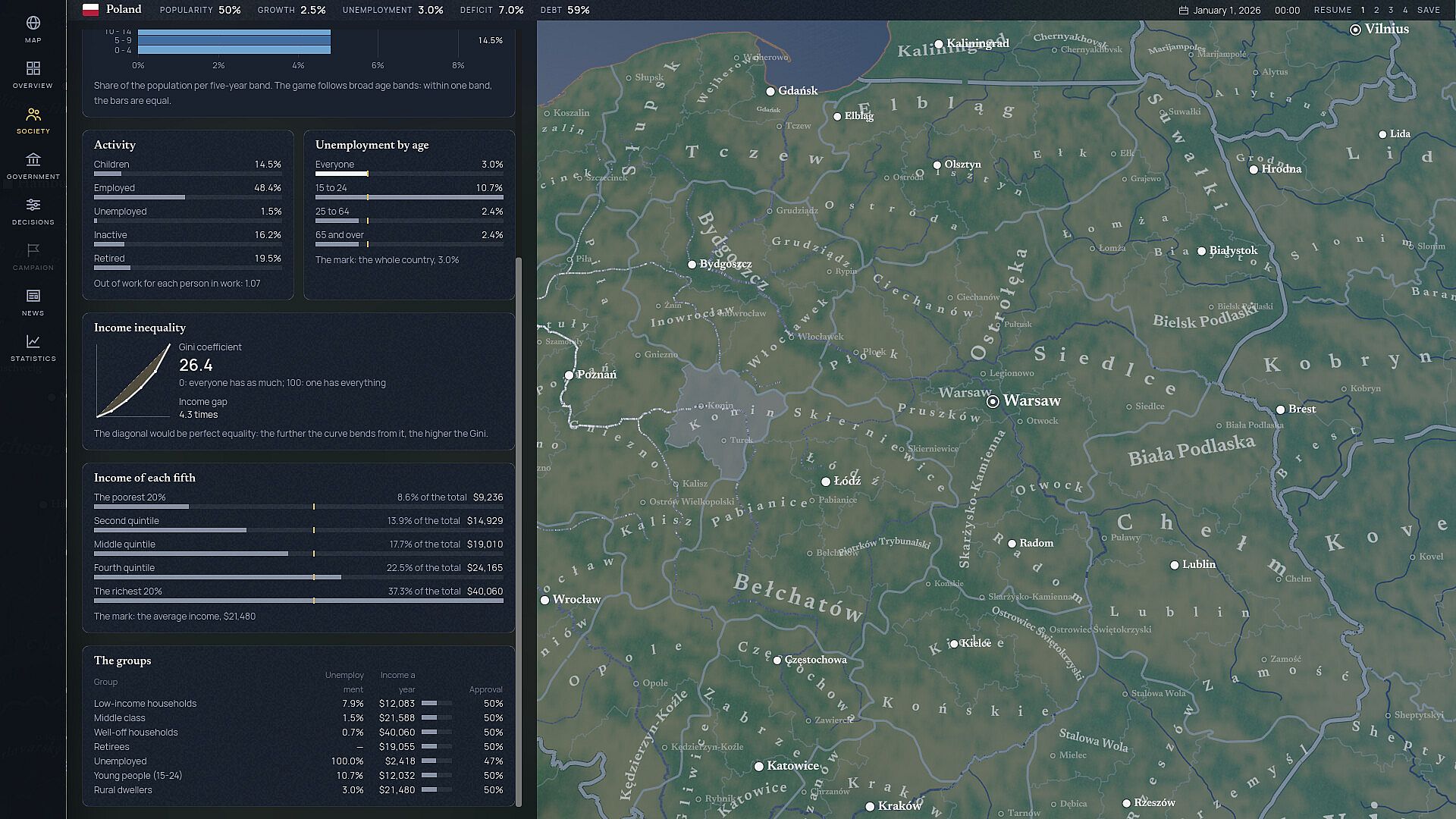
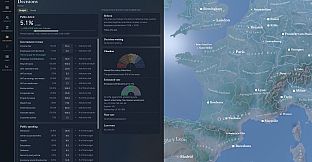
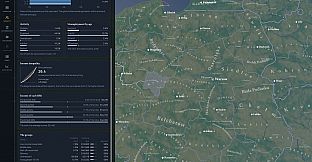
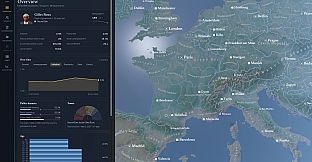
The core loop involves setting central bank rates, drafting budgets line by line, and adjusting fifteen different tax rates that affect income brackets, social benefits, unemployment insurance, and separate VAT categories for food, energy, and medicines. Growth, inflation, and unemployment figures update monthly, while excessive borrowing can trigger market refusals to lend. Population aging occurs each January, increasing retirees and shrinking the workforce, which forces long-term choices on retirement age, pension indexing, and immigration policy whose effects unfold over decades.
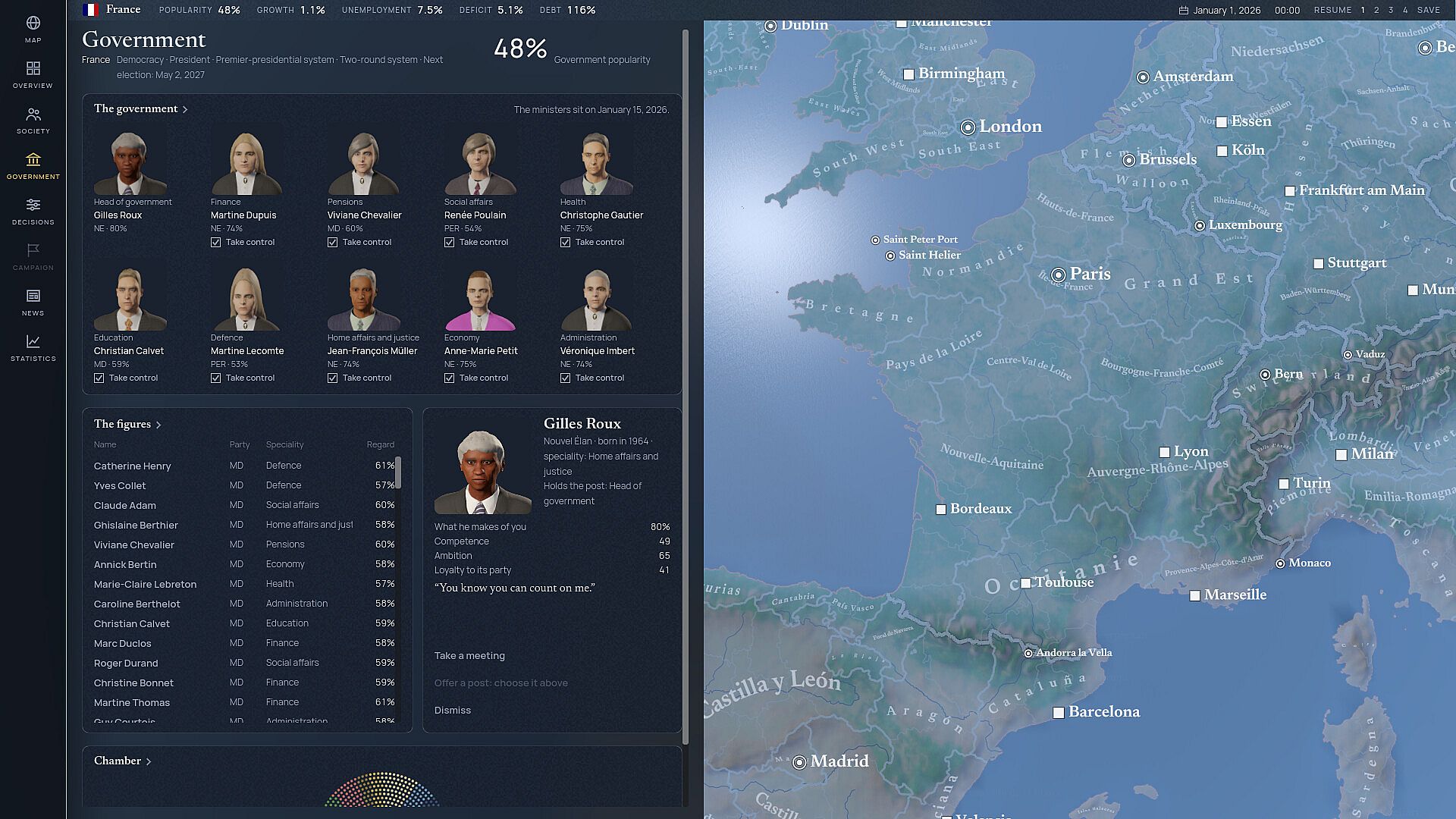
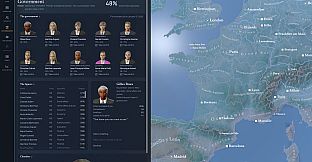
Government formation requires filling ten ministerial posts from political figures who each carry specialties and personal opinions of the player. Meetings allow direct persuasion, pressure, or promises of positions, and ministers may push their own budget demands in cabinet. An empty post for too long incurs monthly costs. Parliament votes on reforms according to party convictions rather than player directives, so coalitions must be maintained or parliament dissolved. Unhappy ministers can resign, partners can exit coalitions, and no-confidence motions or scandals can topple the government with only a month of warning.
Street protests erupt the same day a cut targets a specific group such as pensioners or rural voters, and sustained anger can escalate to riots. Election campaigns involve debates and promises that voters remember, with results tallied on screen on election night. Trade links create a connected global economy where one country's recession immediately affects another's exports and imports. External shocks such as pandemics, natural disasters, or food price spikes arrive with a month to respond through lockdowns, reconstruction, or aid. Wars require raising and funding armies, with conquest expanding territory but increasing defense spending and public fatigue over time.
Game Modes
Single-player mode lets a user govern any of the more than 200 real countries while the rest of the world operates autonomously according to the same economic and political rules. Multiplayer mode places each participant in control of a different country inside one shared simulation, with a single clock that anyone can pause. Cooperation or competition emerges naturally through trade effects, debt transmission, and military actions, while the remaining nations continue to reform, borrow, or default on their own.
Key Systems and Features
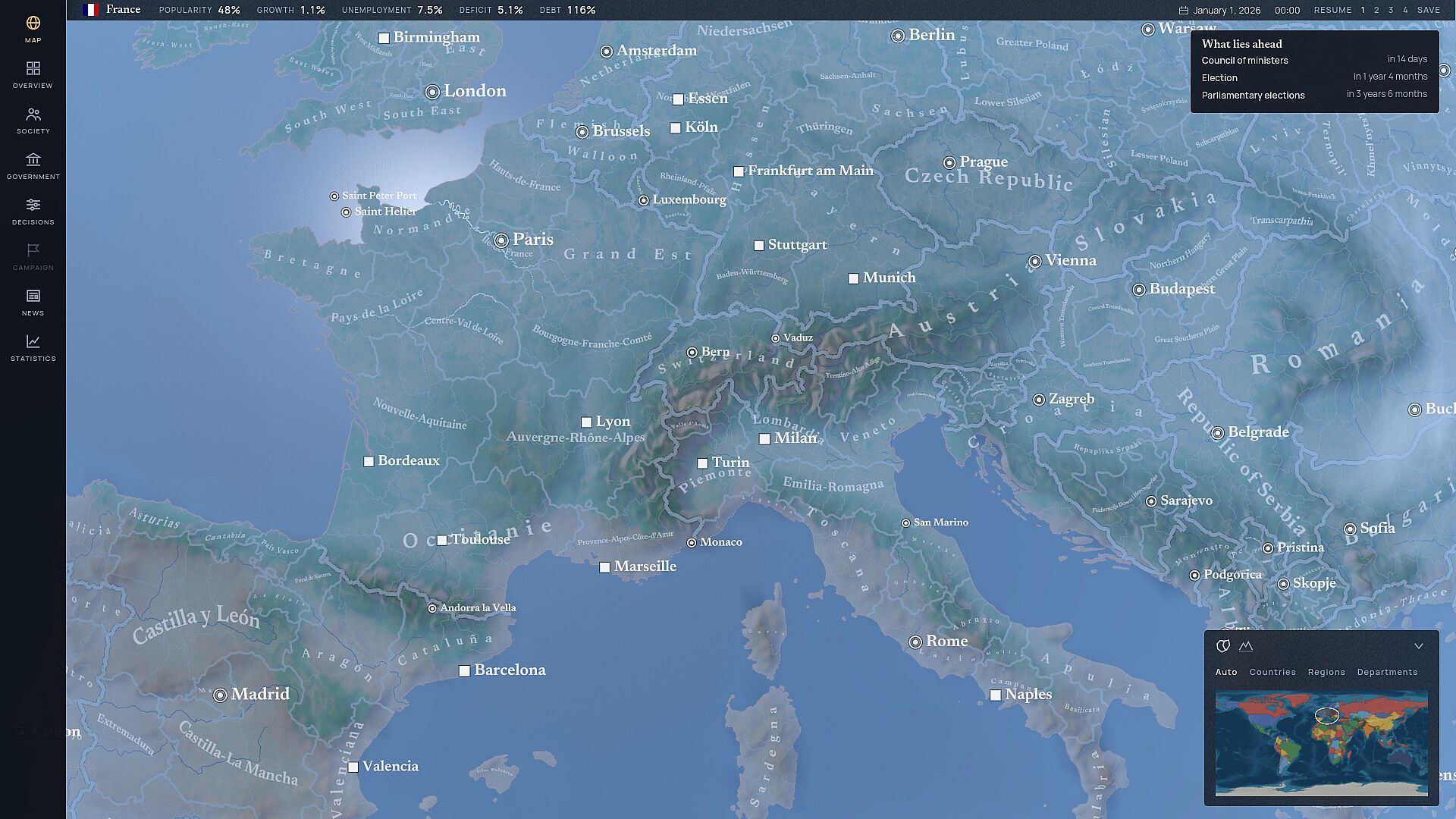
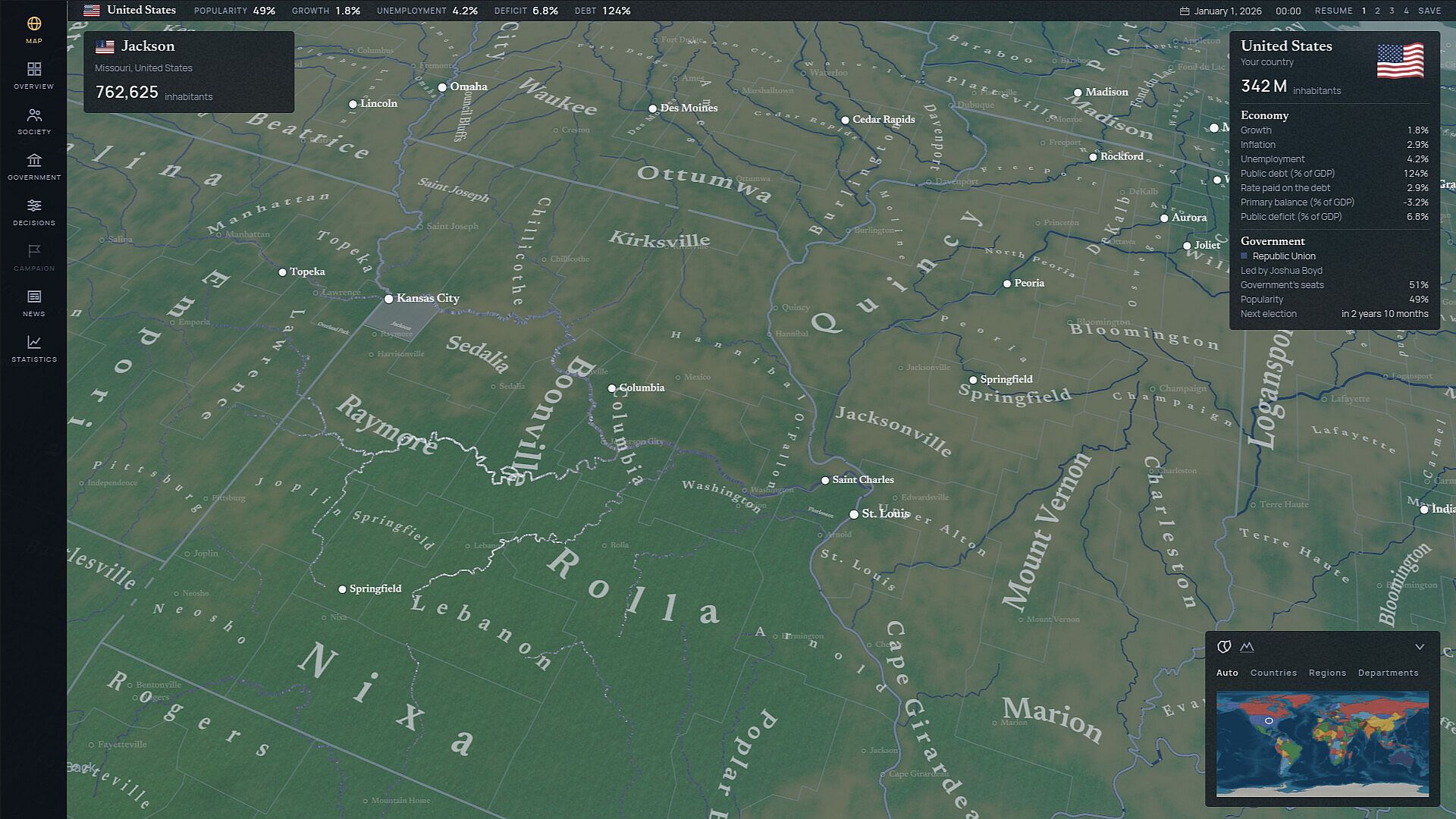
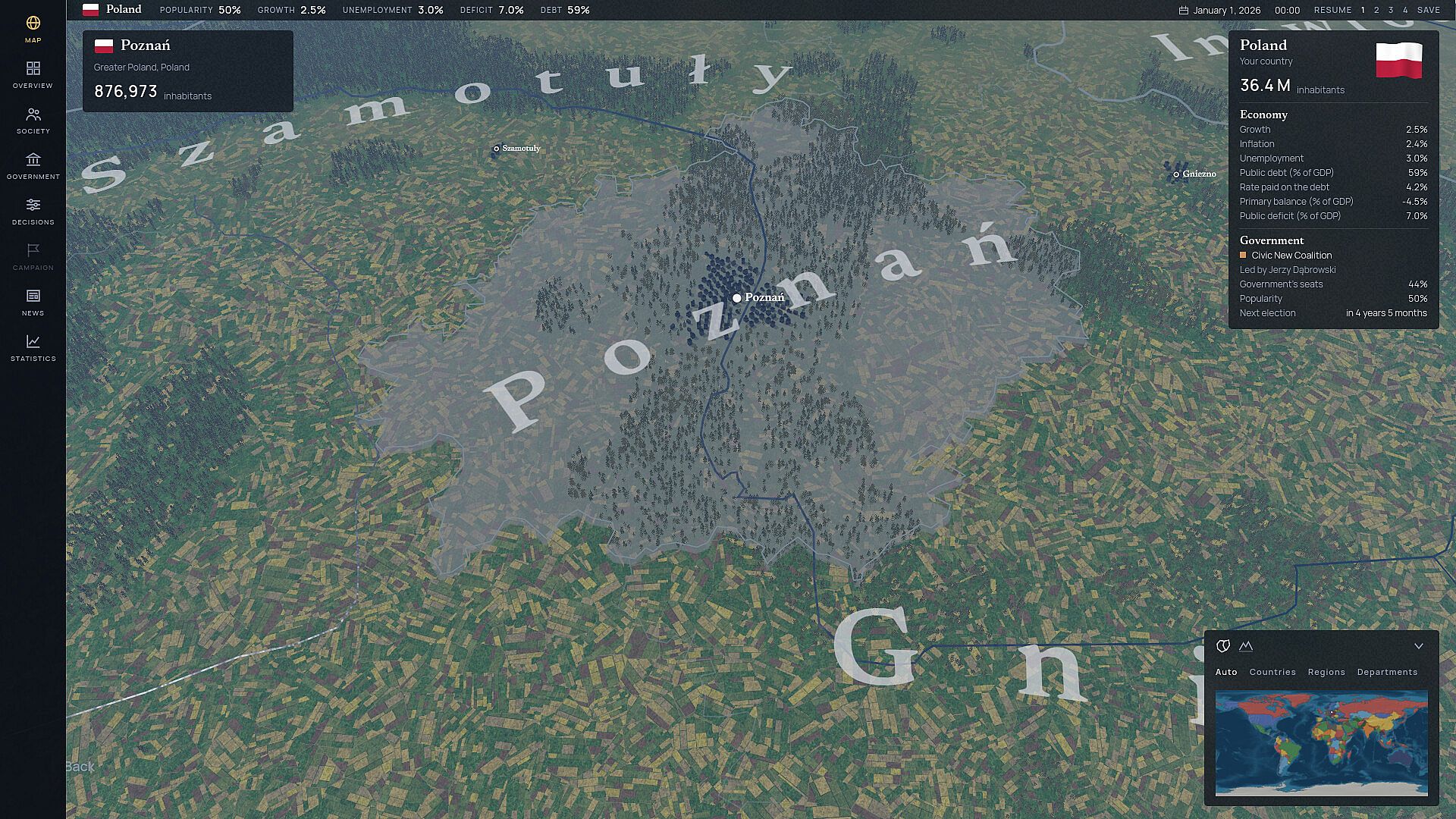
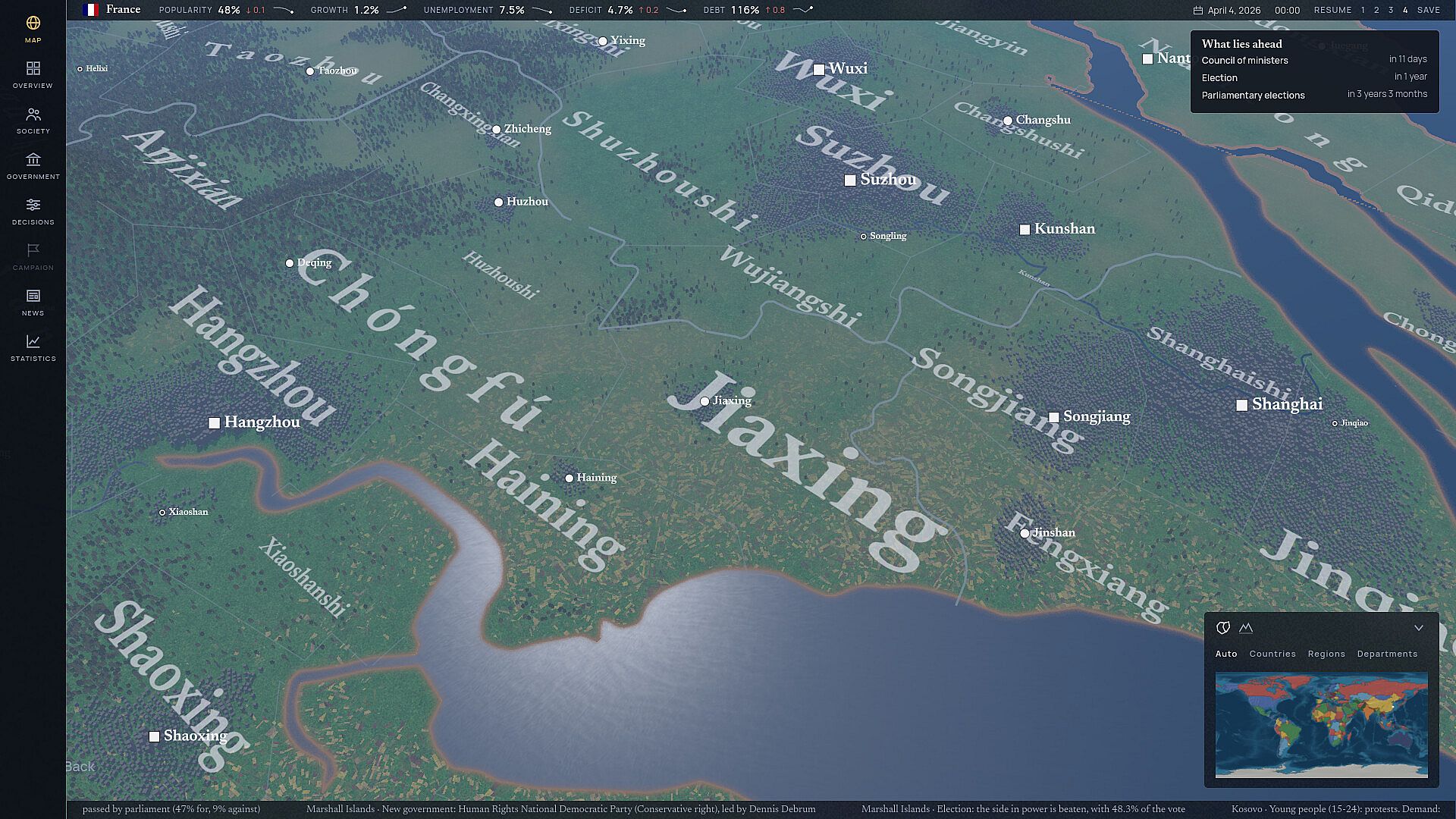
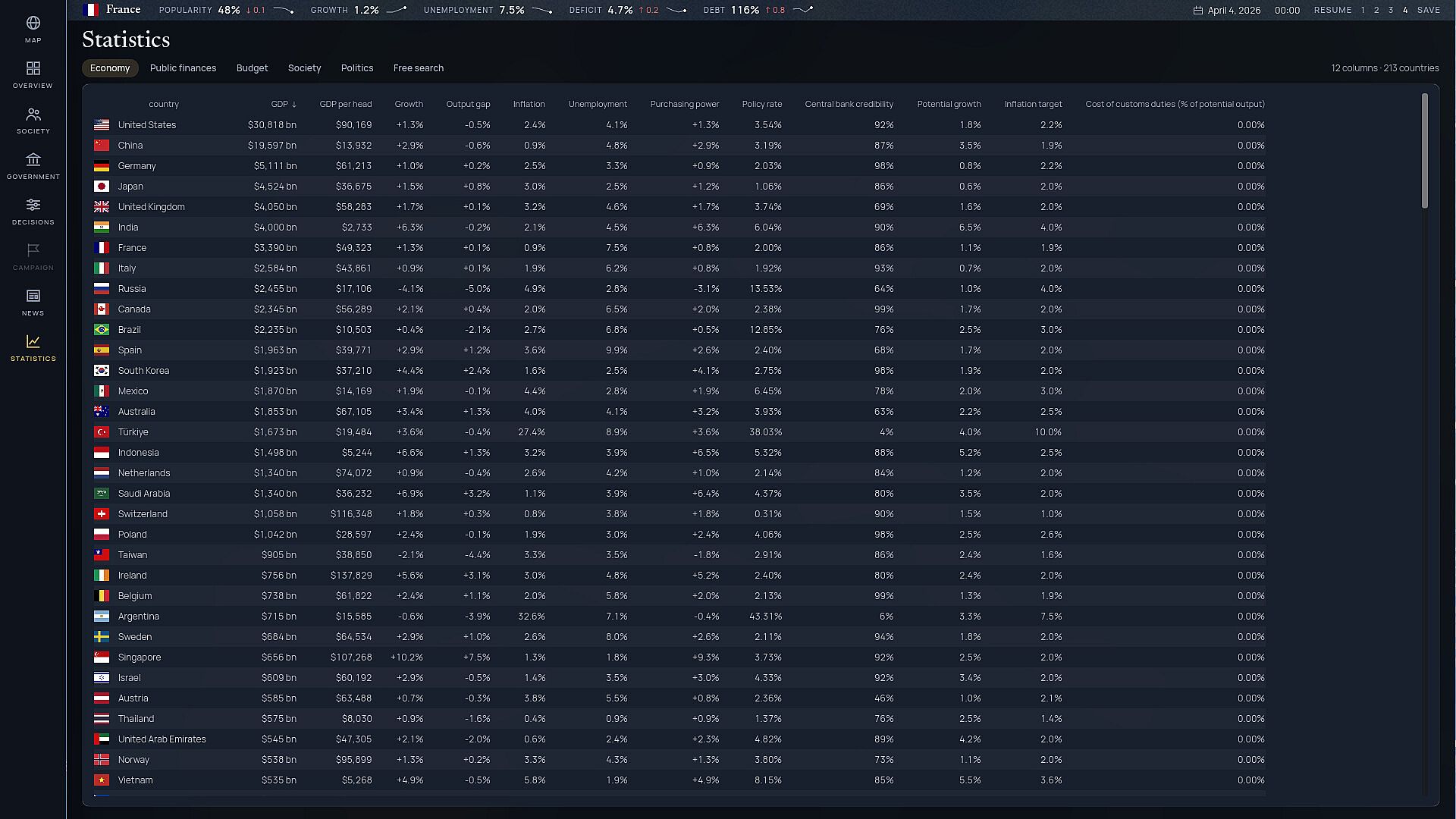
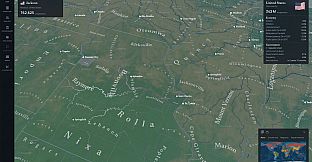
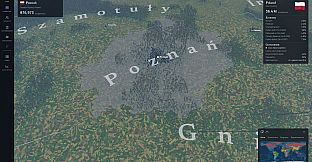
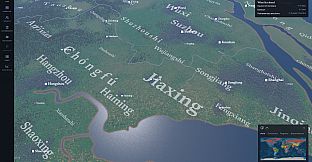
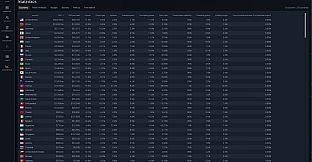
Every economic equation in the model remains transparent, with parameters, sources, and simplifications listed for inspection. A relief map displays countries down to regions and districts, and monthly statistics allow side-by-side comparison of the entire world. Fictional parties and leaders interact with real country data and real economic numbers. Migration flows appear on dedicated maps, and long-term productivity growth depends on investment, workforce size, and policy choices.
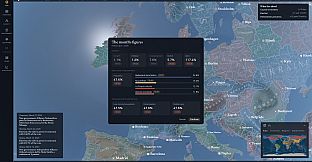
The simulation runs continuously once started, with statistics published on the first of each month. Players must balance short-term political survival against measures whose benefits or costs appear only years later, such as pension reforms or immigration adjustments.
Is It Worth Playing?
PREEMINENCE: World on the Brink suits players who enjoy detailed political and economic strategy simulations that reward careful budgeting, coalition management, and anticipation of delayed consequences. The Early Access version already contains the full set of core mechanics described above, including multiplayer on a shared world and transparent modeling. Those seeking fast-paced action or abstract board-game abstractions will find the pace deliberate and the systems intricate. The combination of real-world data, aging demographics, global trade linkages, and the constant risk of government collapse creates a distinctive long-term challenge that rewards repeated play across different countries and coalition arrangements.











