






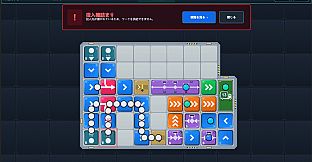
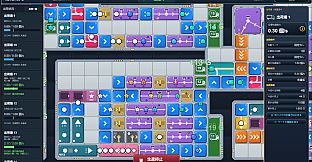
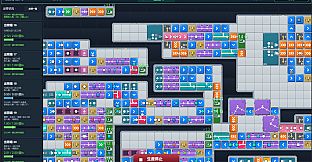
PUZFLO: Run the Line is a 2D factory puzzle game in the strategy, indie, and simulation genres available on PC. Players design and refine production lines by placing equipment on a grid to move workpieces through processing steps while meeting output targets in constrained spaces.
Gameplay
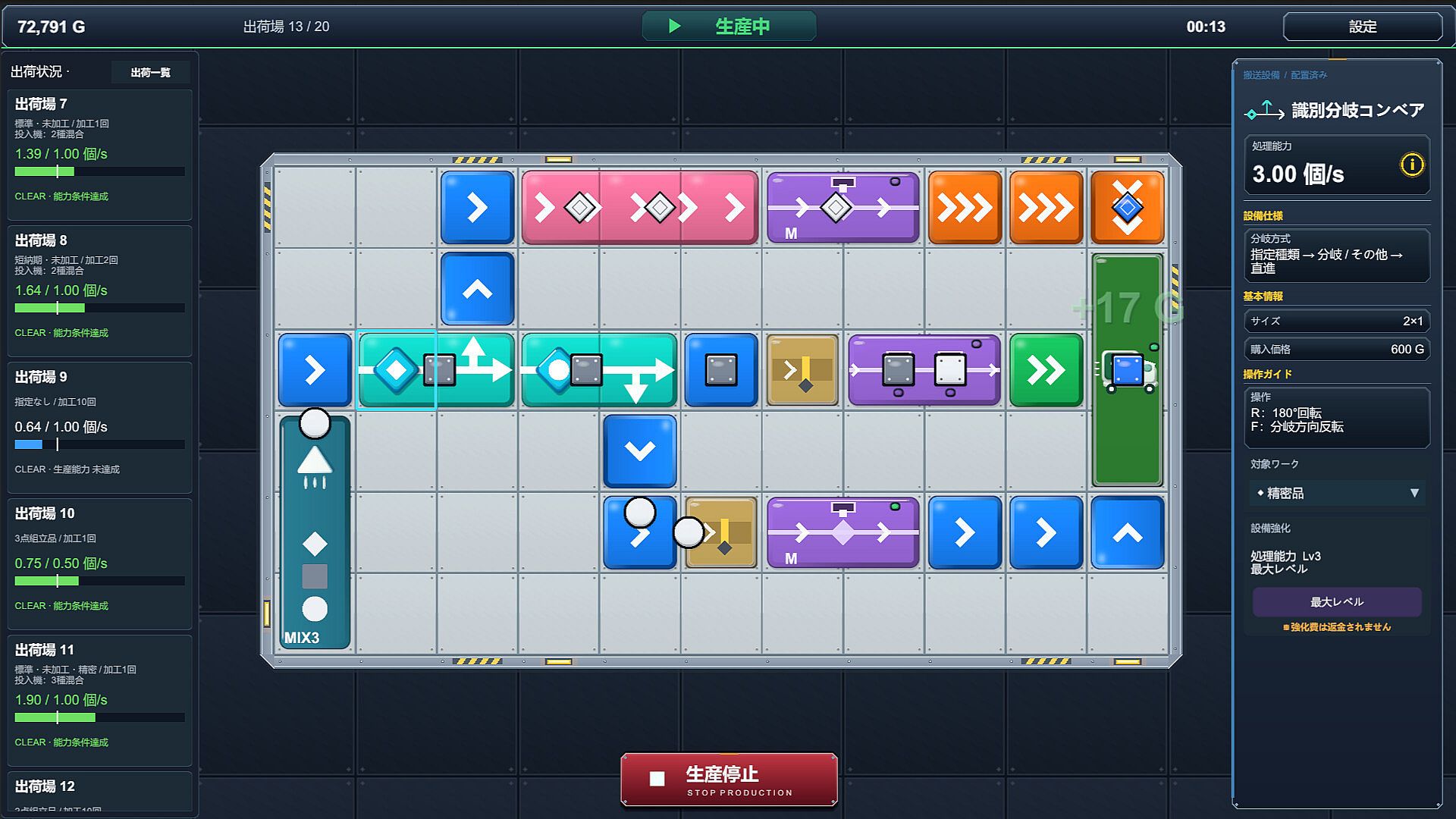
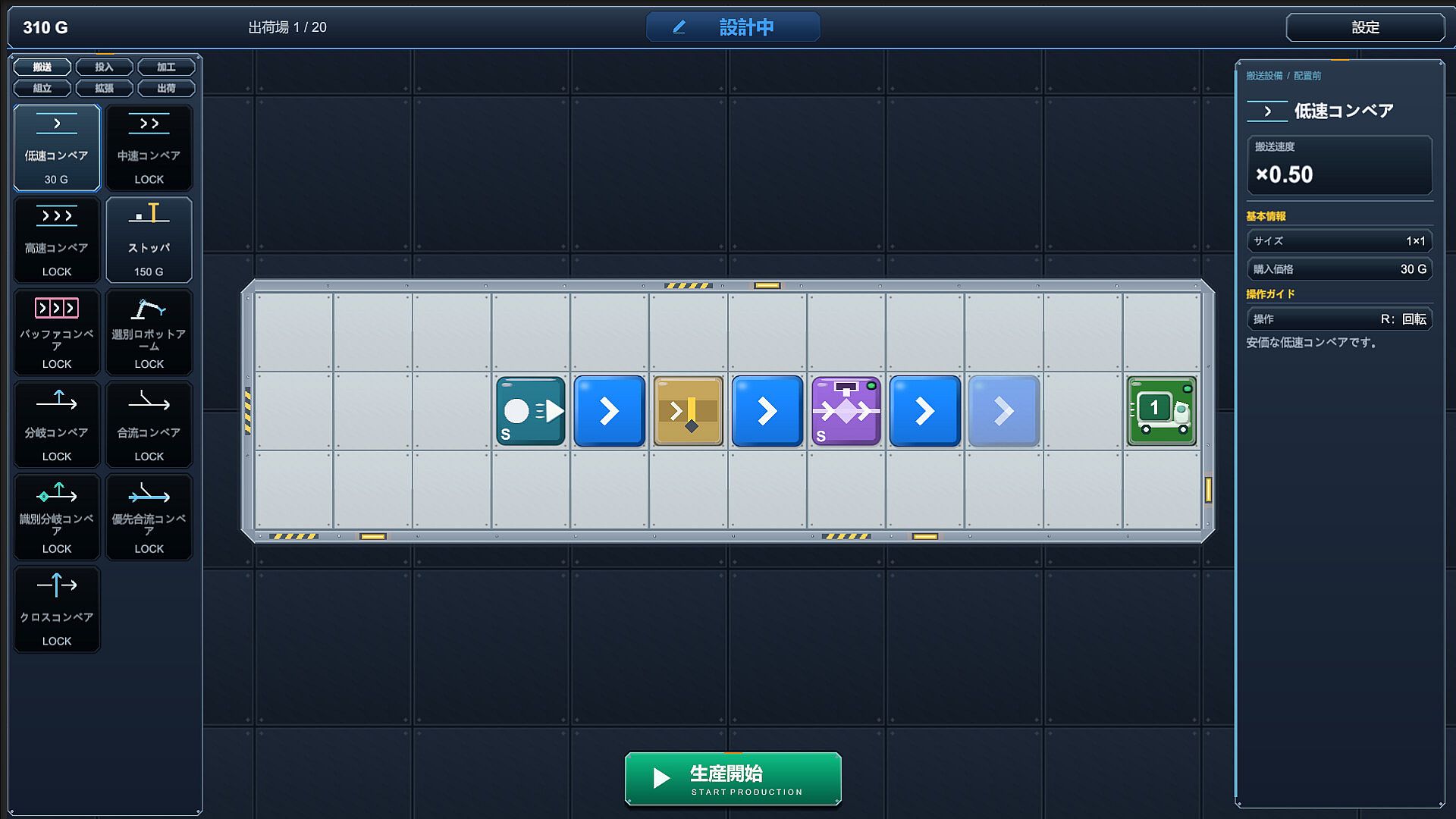
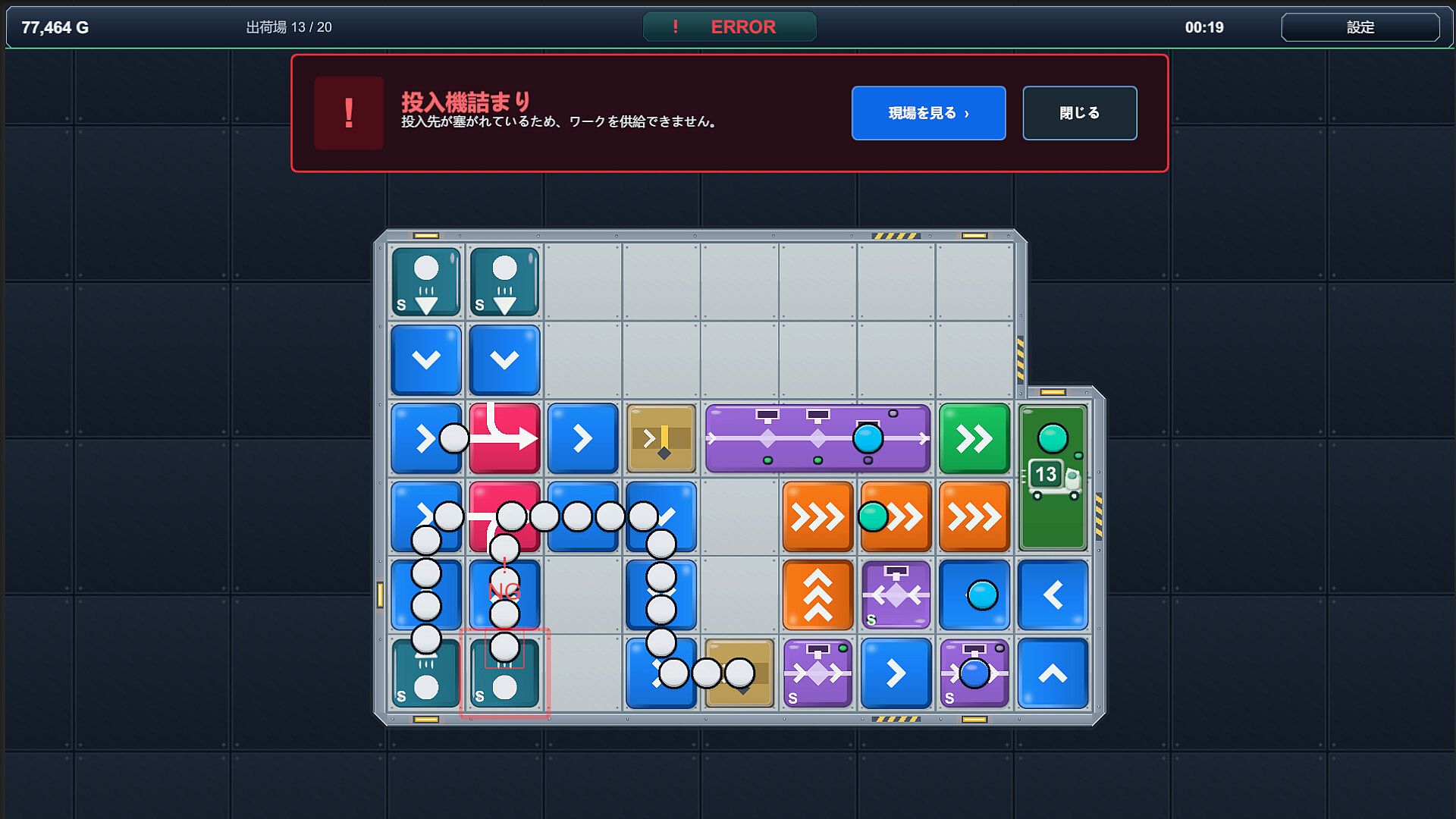
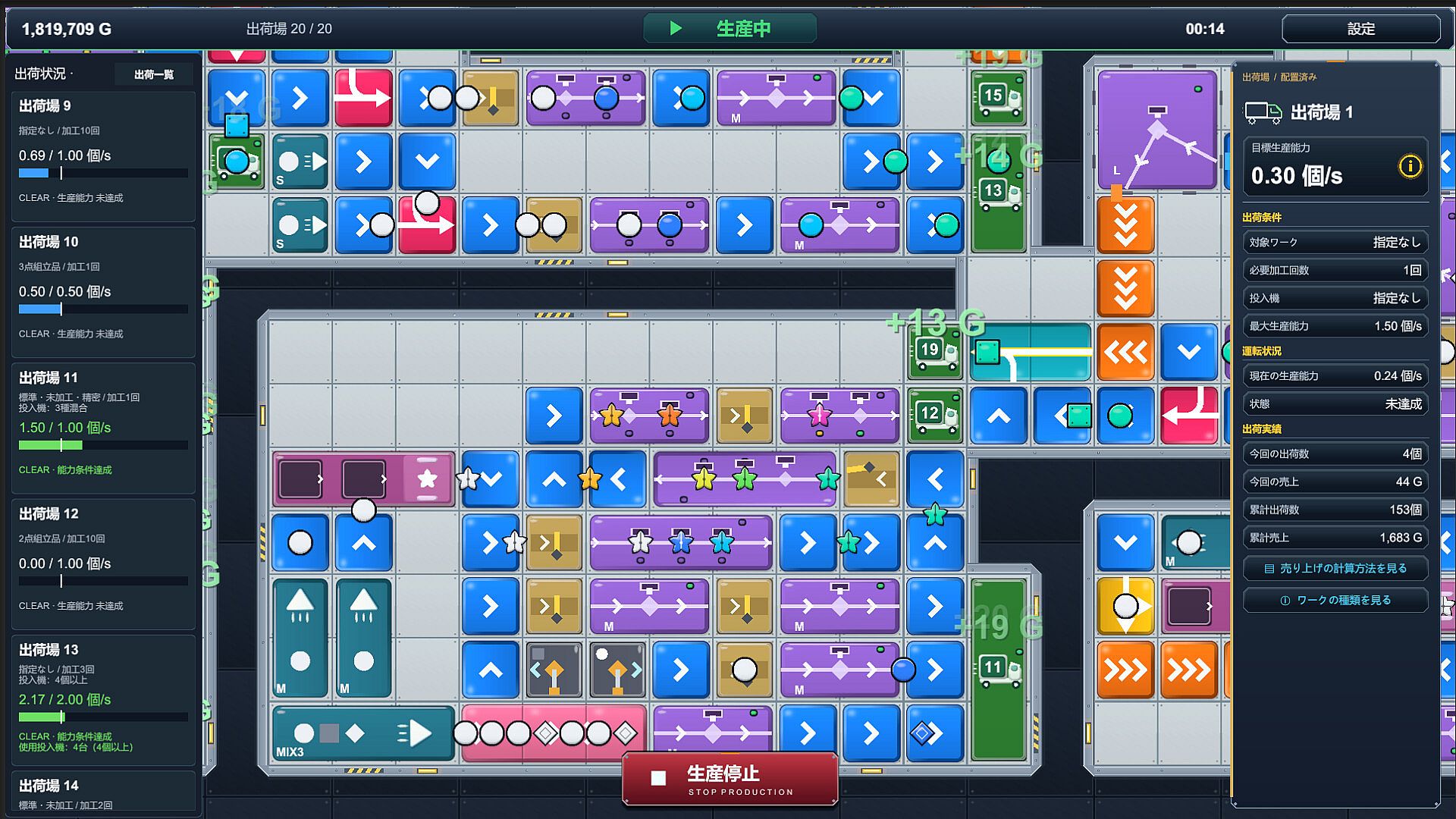
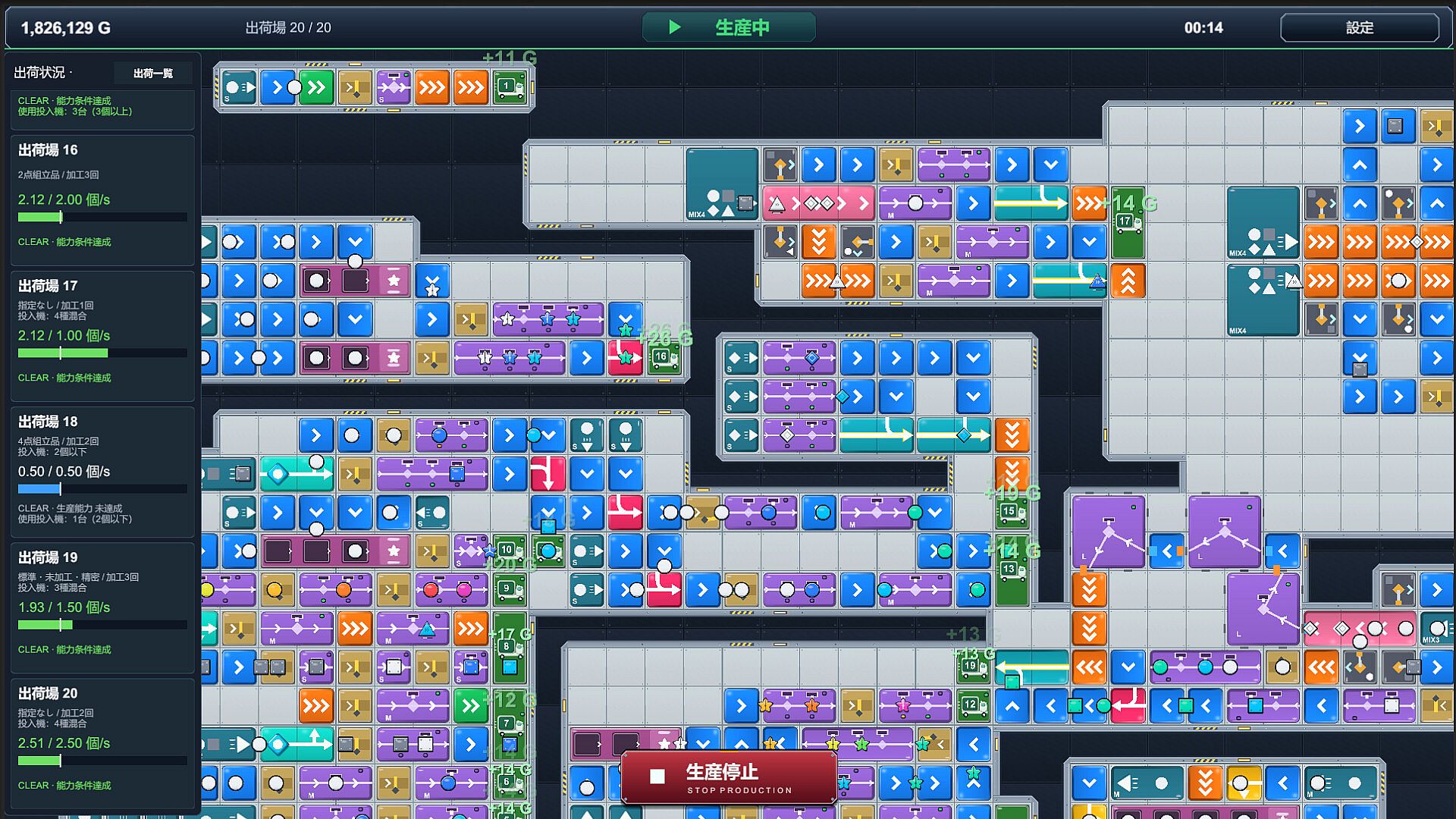
The core loop centers on construction followed by testing. Equipment such as conveyors, processing machines, and stoppers goes onto a grid layout. Once placed, production starts and workpieces travel along the path in real time. Observation reveals issues like jams at narrow points, machines running below capacity, or routes that waste space and resources. Adjustments follow immediately, with options to add units, reroute paths, or strip back excess elements until the line sustains the required rate without interruption.
Balance plays a constant role. Stronger machines may handle higher throughput yet occupy more room or raise overall costs, so solutions often favor efficient combinations over raw power. The grid limits force careful planning, and repeated test runs highlight where flow breaks down. Simple placement controls keep focus on layout decisions rather than complex inputs, allowing attention to stay on production flow and incremental fixes.
Each attempt builds understanding of how individual choices affect the whole system. A single added conveyor might clear one bottleneck only to create another downstream, prompting further redesigns. The process repeats across multiple stages, each presenting fresh spatial and rate constraints that demand new arrangements.
Game Modes
PUZFLO: Run the Line operates as a single-player experience built around sequential puzzle stages. Each stage supplies a target production rate and limited grid space, leaving players to devise layouts that achieve stable output. Success requires hitting the goal consistently rather than in a single pass, which means verifying that the line continues without slowdowns or stoppages over time.
Stages encourage experimentation within the same ruleset. Players test variations such as adding parallel paths, inserting buffers for overflow, or adjusting machine placement to match workpiece types and processing needs. No separate competitive or cooperative modes exist; progress comes from completing and optimizing each stage in sequence through repeated build-and-run cycles.
Optimization and Design Choices
Effective lines emerge from trade-offs between throughput, footprint, and expense. Overbuilding with extra machines inflates costs without guaranteeing better results, while minimal setups risk capacity shortfalls when demand spikes. Real-time monitoring during runs shows exactly where capacity falls short or where paths cross inefficiently, guiding targeted changes instead of wholesale rebuilds.
Multiple valid solutions often exist for the same stage. One approach might rely on a compact linear flow with precise stopper timing, while another spreads equipment across the grid for smoother merging of different workpiece streams. The absence of a single correct answer rewards observation and iteration over trial-and-error guessing.
Is It Worth Playing?
The game remains in development with a planned release in December 2026 and no user reviews available yet. Its appeal lies in the focused loop of layout creation, live testing, and refinement that suits players who enjoy methodical puzzle solving and efficiency challenges. Those drawn to simulation titles centered on production systems will find the emphasis on spotting and resolving bottlenecks through direct observation a natural fit.
Because the experience stays single-player and centers on grid-based construction without additional layers such as resource management outside the line itself, it targets a specific audience interested in iterative design rather than broad progression systems. Early access to the Steam page allows interested players to follow updates as stages and balance adjustments continue through the remaining development period.











