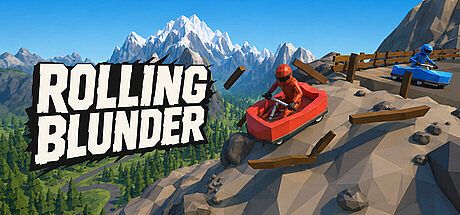


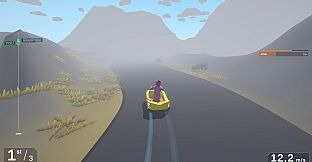
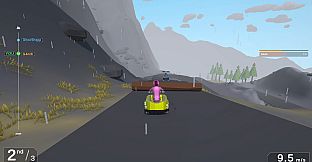
Rolling Blunder is an indie racing game built around downhill kart physics on PC. Players control karts without engines on steep tracks where gravity provides all the speed, and the challenge comes from managing momentum through corners and obstacles. The experience centers on multiplayer sessions for up to eight participants, with online PvP support and options for single-player practice against the physics alone.
Gameplay
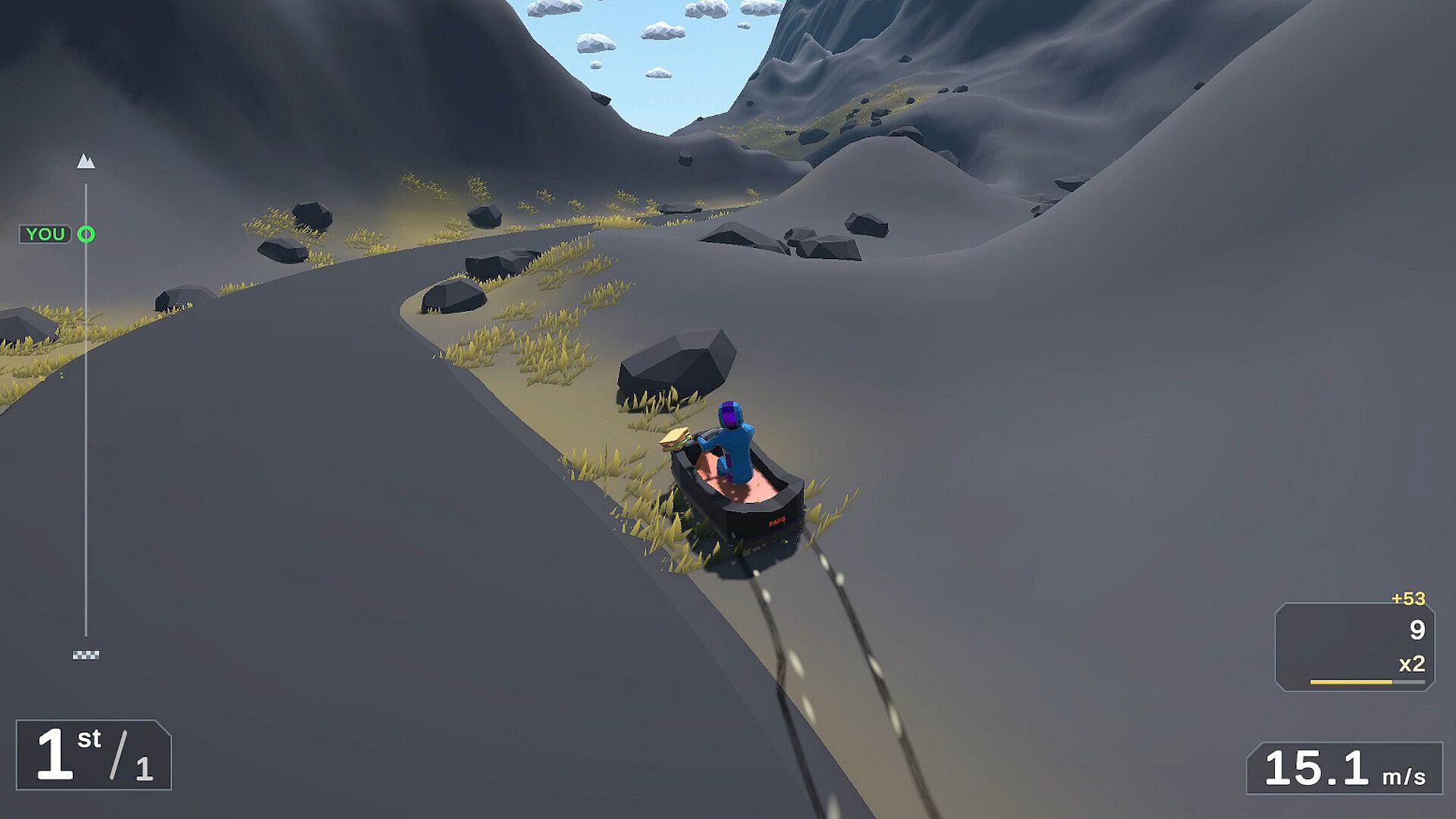
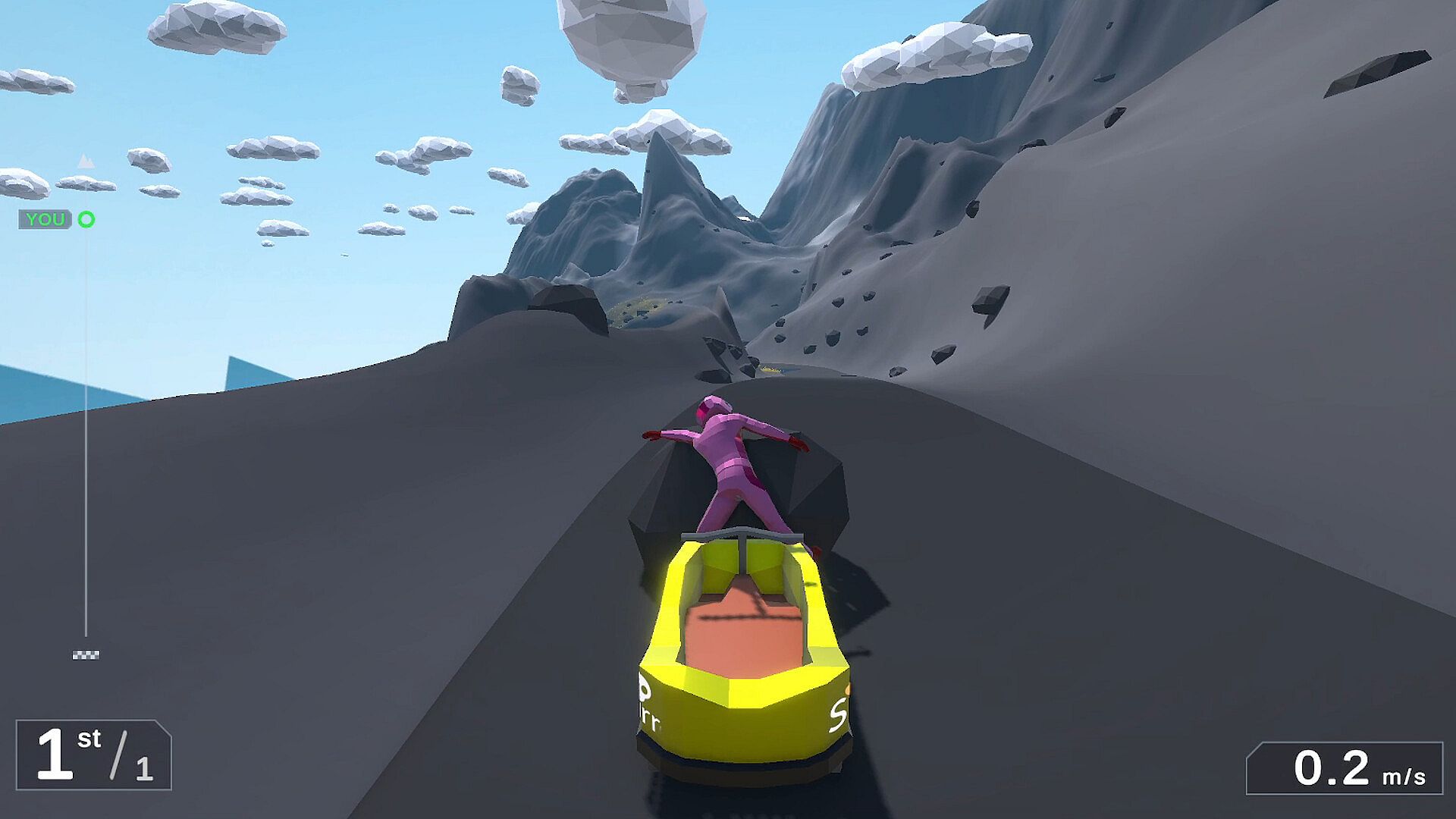
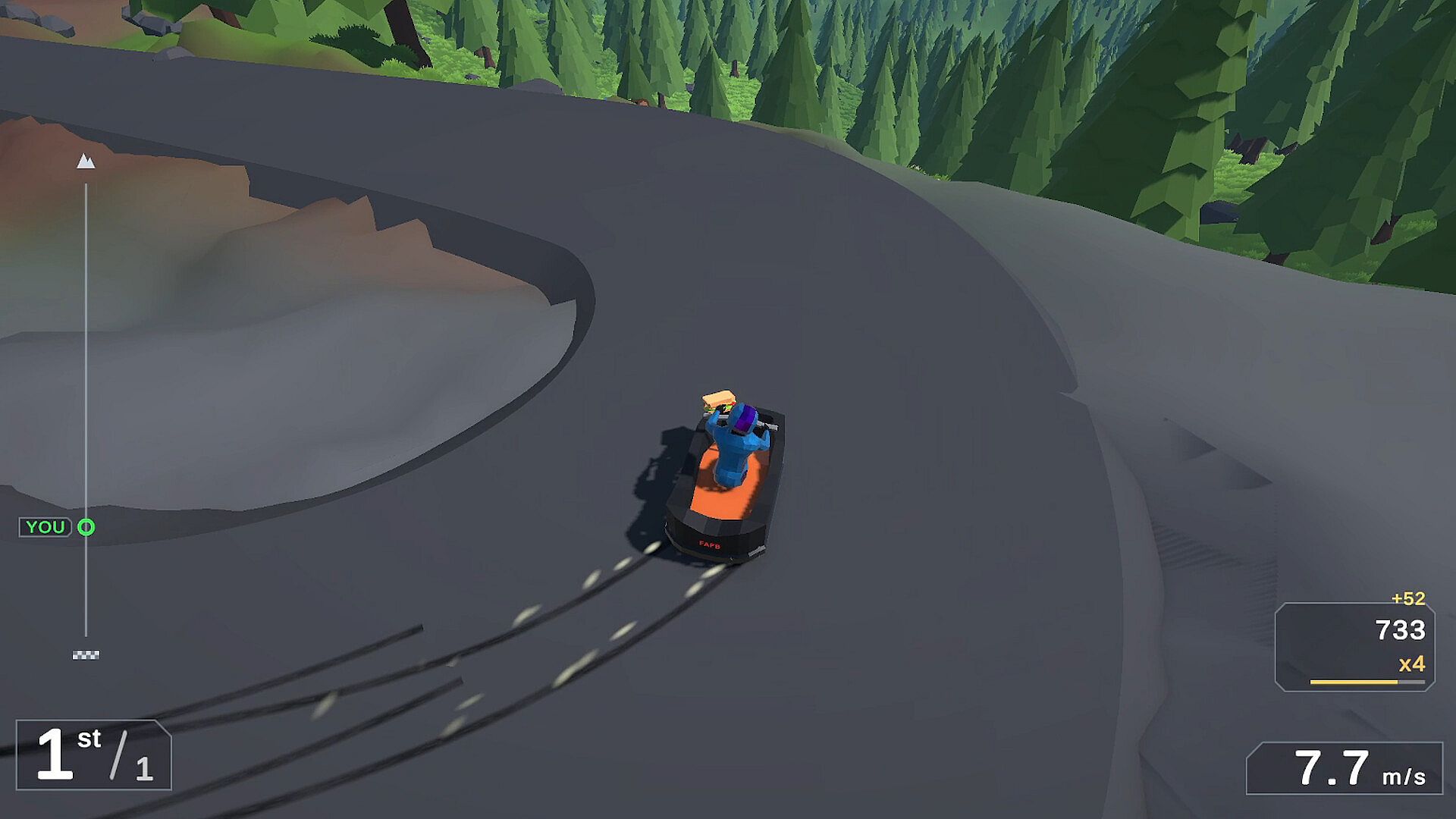
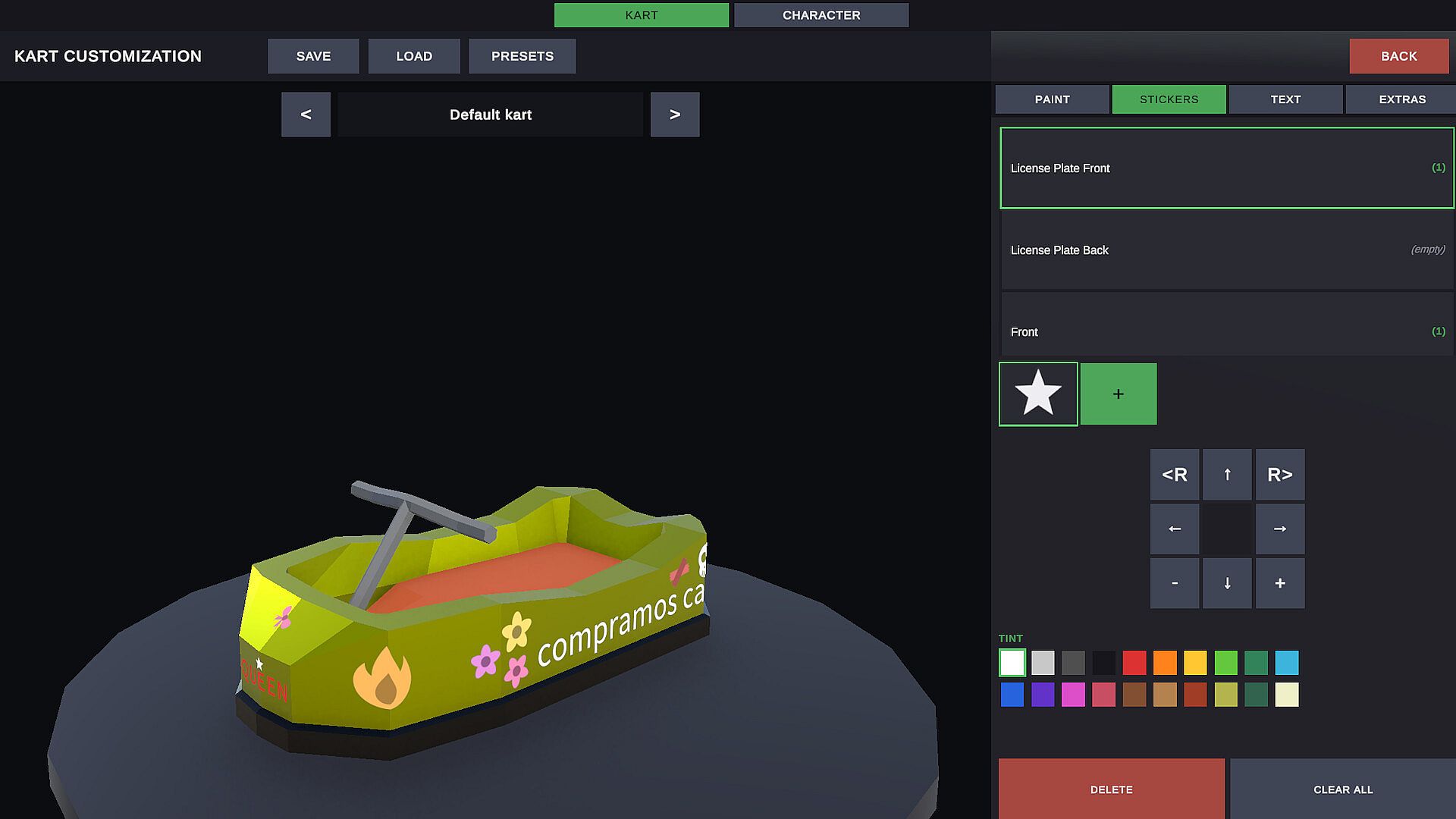
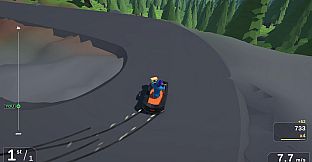
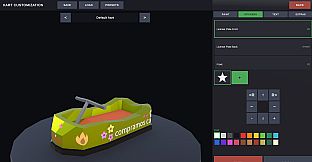
The core loop relies on precise control of drifting and recovery. Karts accelerate naturally down hills, but sharp turns often cause the rear to step out, leading to spins or complete ejection of the driver. Ejections do not end the run. Players simply stand up, walk back to the kart, and re-enter to continue. This forgiving mechanic keeps races flowing even after major mistakes. Collision between karts adds another layer, as impacts can knock opponents off course or send them tumbling. Customization plays a direct role in identity during matches, with panel-by-panel painting, sticker placement, and accessory attachments on both the kart and driver. These visual choices make it easy to recognize who caused a particular crash or overtake.
Game Modes
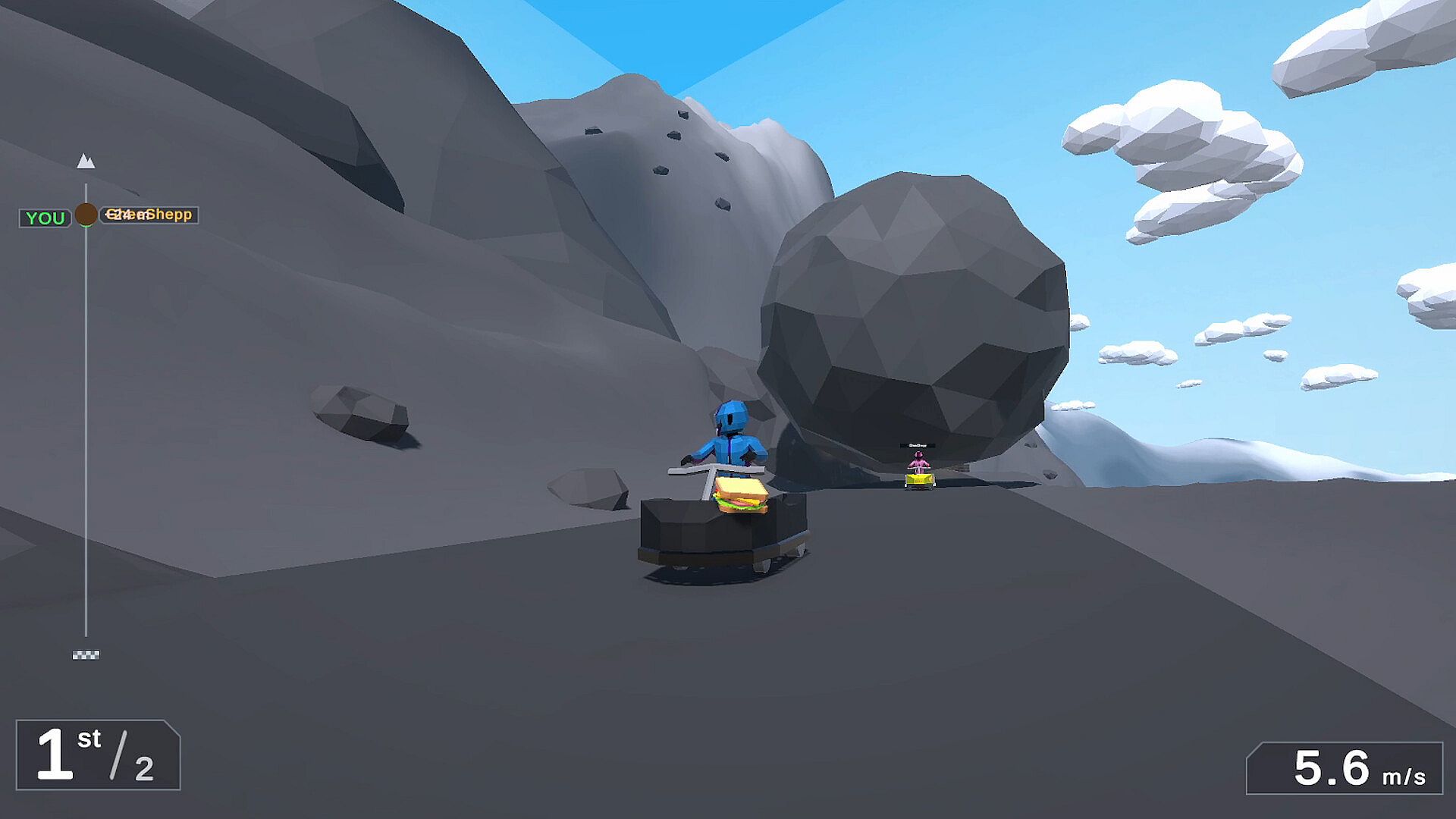
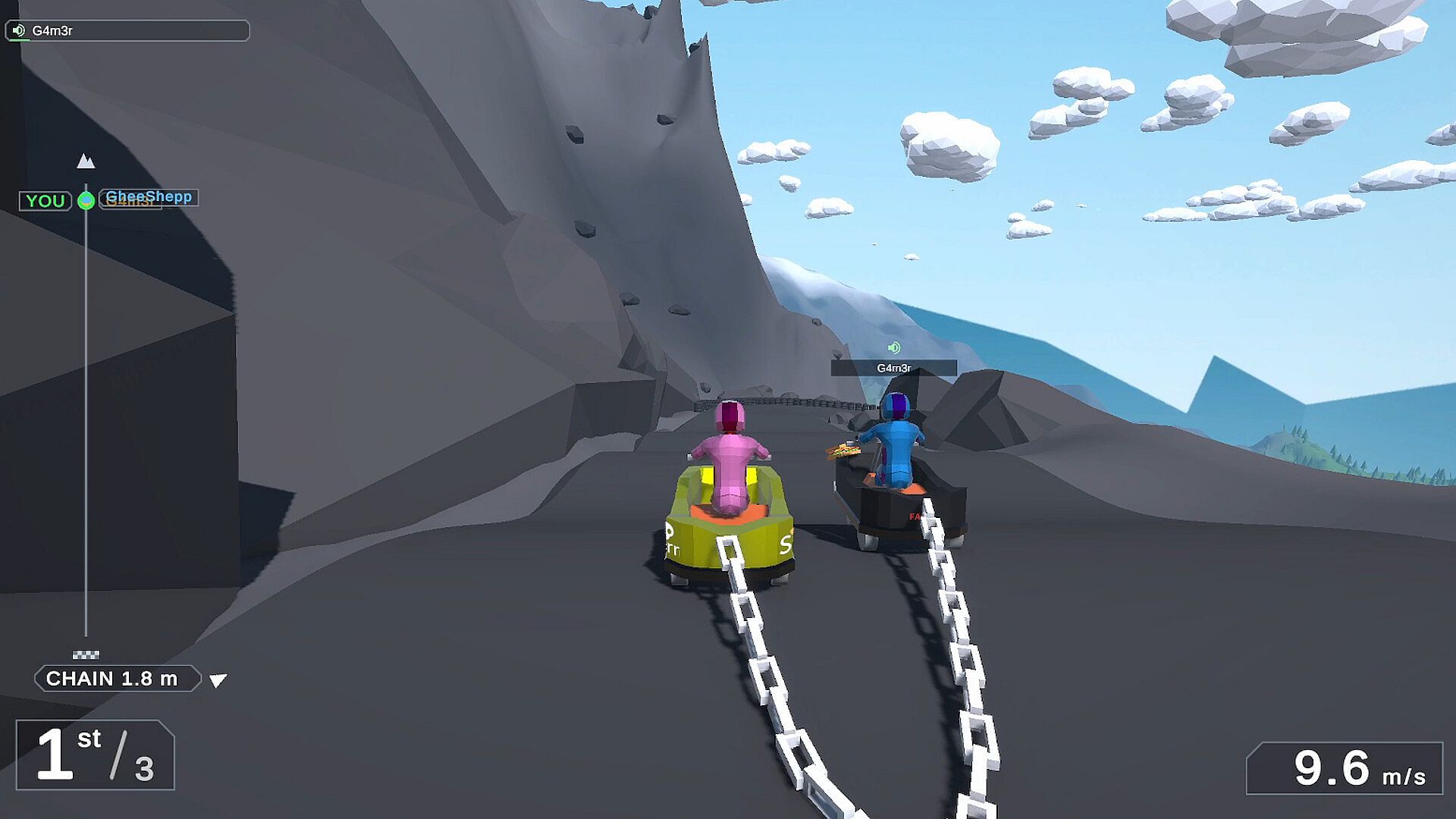
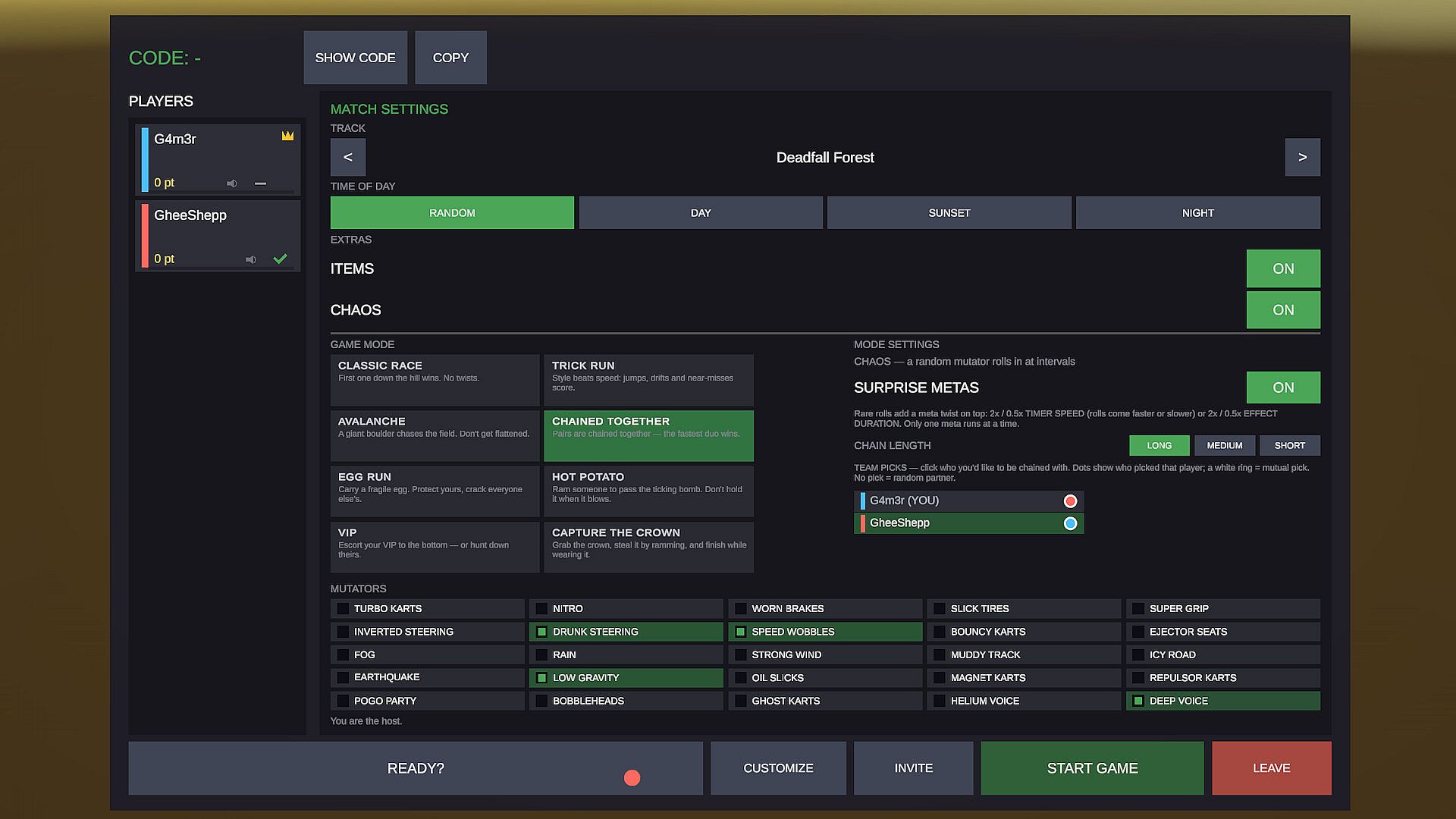
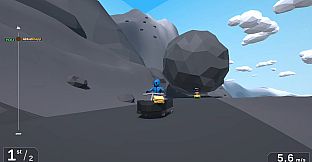
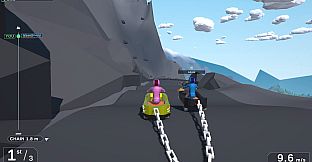
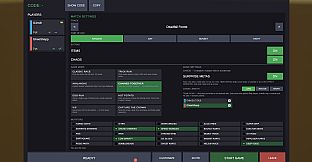
Eight distinct modes expand beyond standard point-to-point racing. A normal race serves as the baseline. Avalanche introduces a massive boulder that rolls down the track behind the pack without regard for corners, forcing constant forward pressure. Trick Run shifts focus to scoring through drifts, jumps, and stylish maneuvers rather than finishing position. Chained Together links two players physically, so one person's error immediately affects the partner. Additional modes exist within the set of eight, and the developers have confirmed more will arrive during development. Items can be toggled on to disrupt fair play, including oil slicks that reduce traction, flour sacks that obscure vision, dropped walls that block paths, and even a live goat that creates unpredictable interference.
Mutators and Chaos
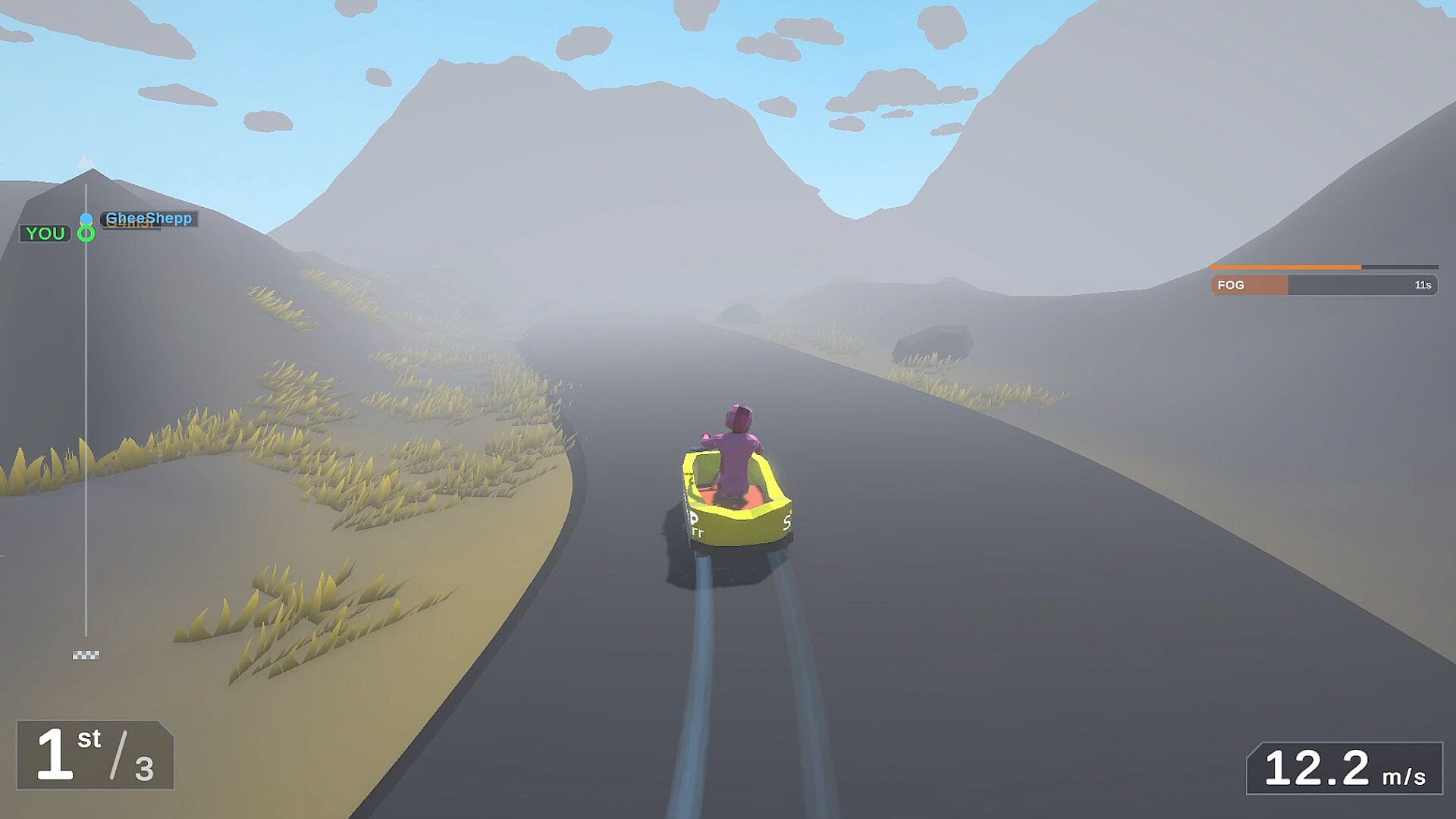
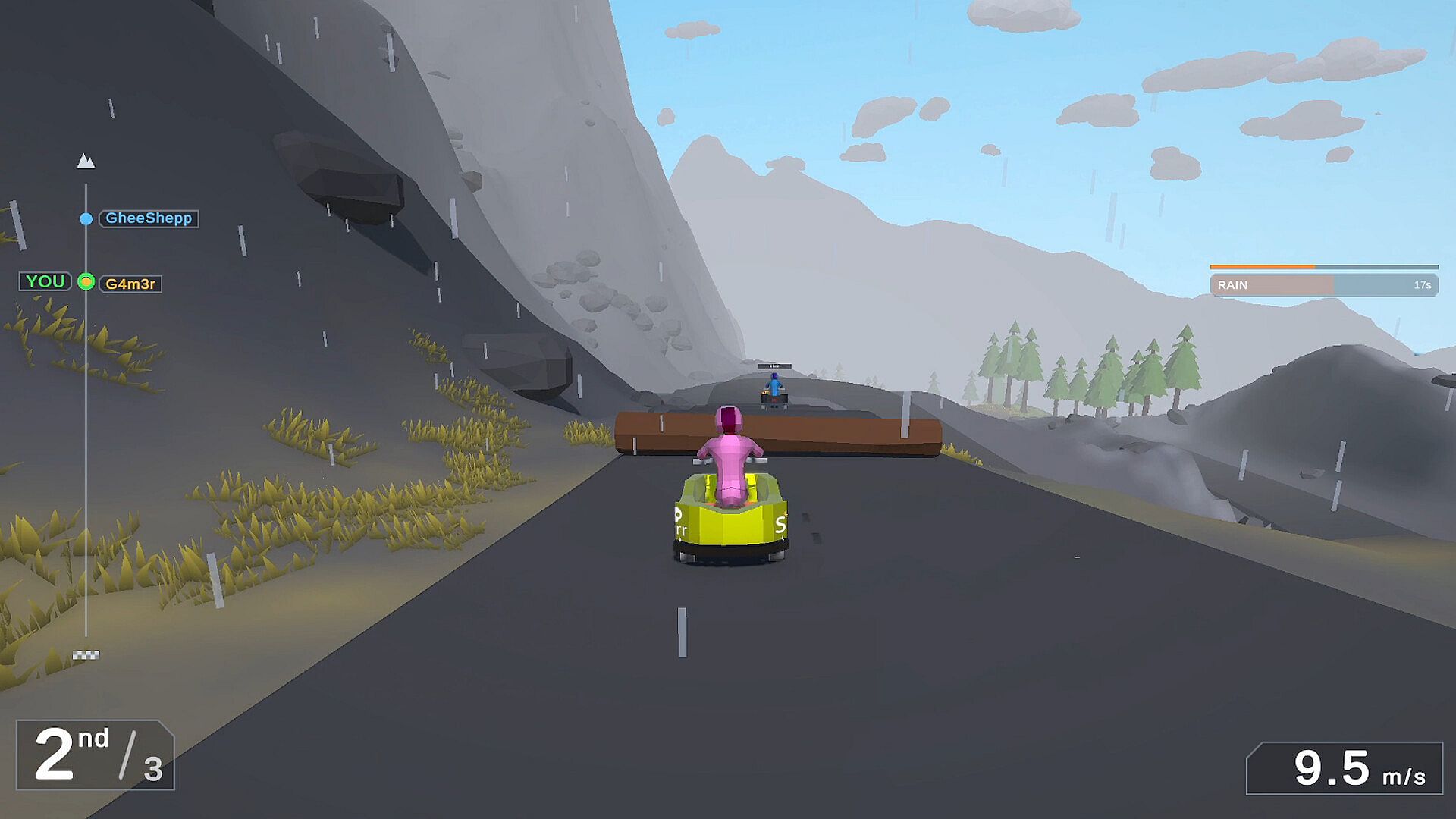
Twenty-five mutators allow pre-race rule changes that alter handling and environment. Examples include low gravity that extends air time, inverted steering that reverses inputs, bouncy karts that rebound on impact, and helium voices that distort audio. Chaos mode activates these effects randomly every thirty seconds, layering new variables onto an ongoing race until the session becomes unpredictable. These systems encourage repeated sessions as each combination produces fresh outcomes.
Is It Worth Playing?
Rolling Blunder targets players who enjoy chaotic, physics-driven multiplayer racing where crashes and recoveries form part of the entertainment. The combination of drifting mechanics, ejection recovery, item disruption, and mutator variety creates sessions that reward experimentation over perfect lines. With the game entering Early Access soon and additional modes planned, the current build already delivers the full set of eight modes, item support, and customization tools. Those seeking straightforward competitive racing may find the frequent spills and rule changes frustrating, while fans of light-hearted, high-interaction kart games will likely appreciate the constant surprises and social focus. The absence of an engine and reliance on hill momentum keeps every run distinct based on player choices and collisions.