

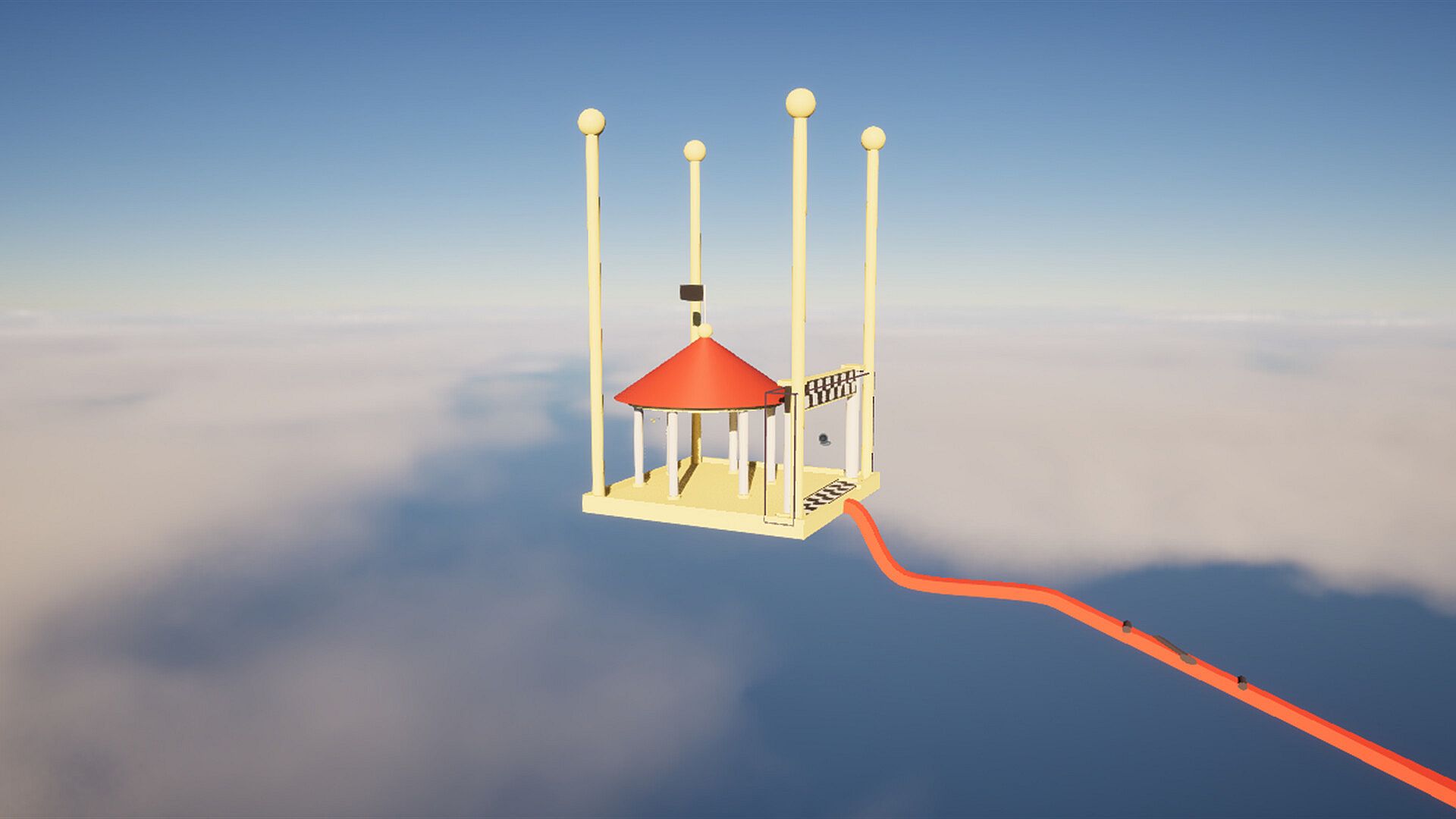
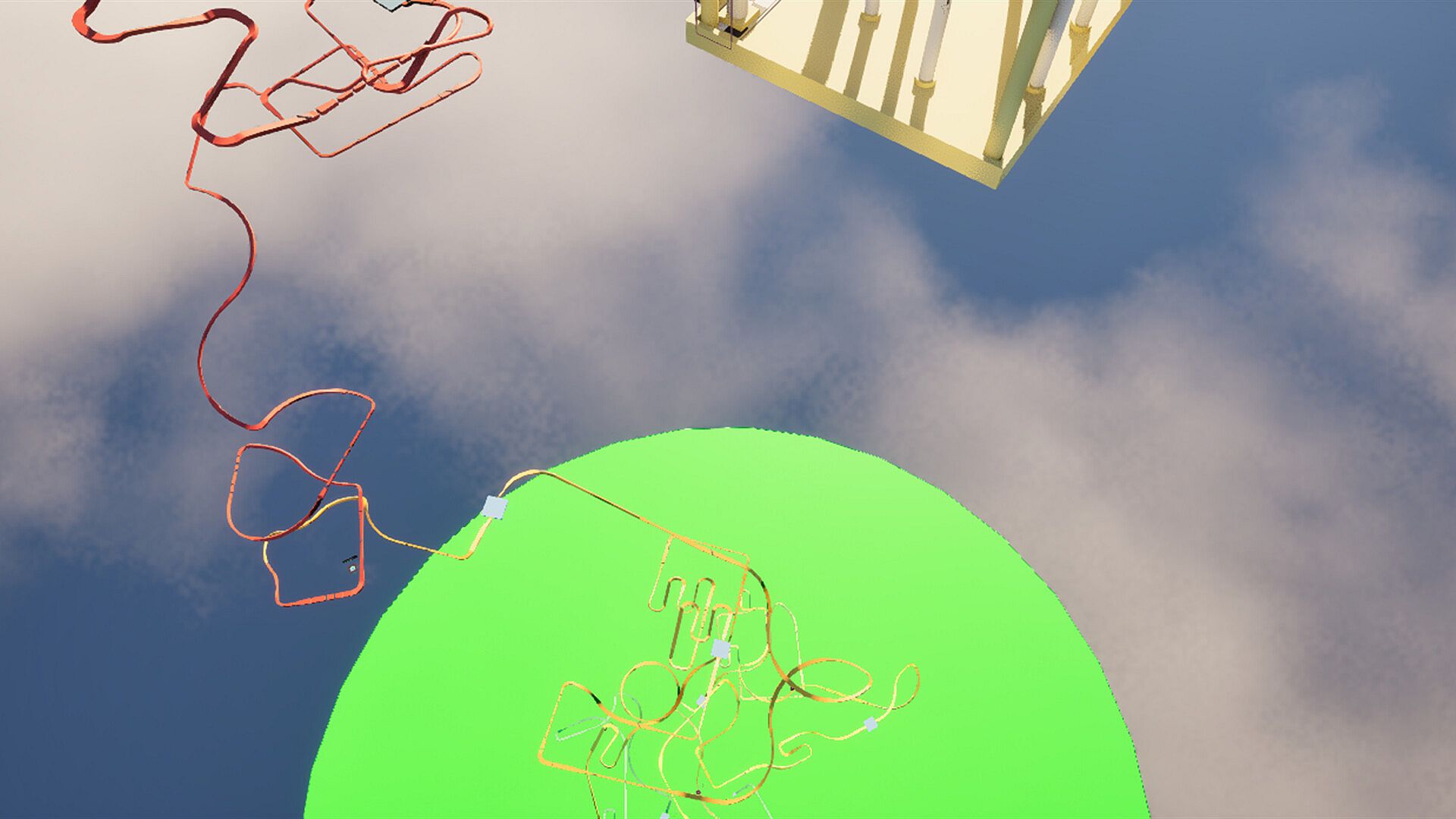


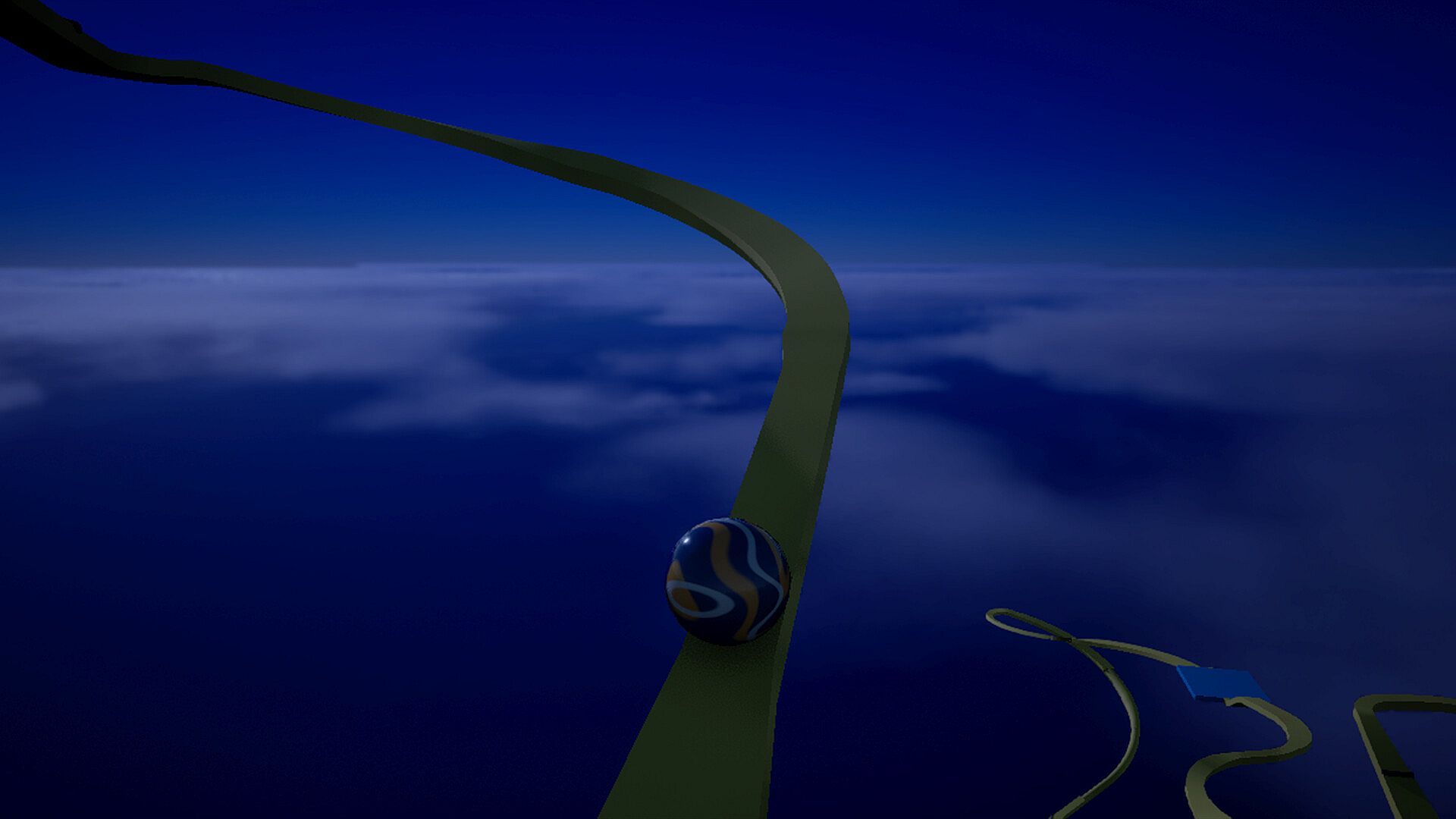


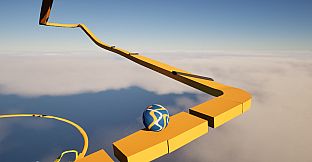




Rolling Heights is an action indie casual game developed for PC that challenges players to guide a marble along an ascending track suspended high above the clouds. The core experience revolves around precise steering, momentum management, and recovery from slips on a single handcrafted course divided into five progressively difficult colored zones.
Gameplay
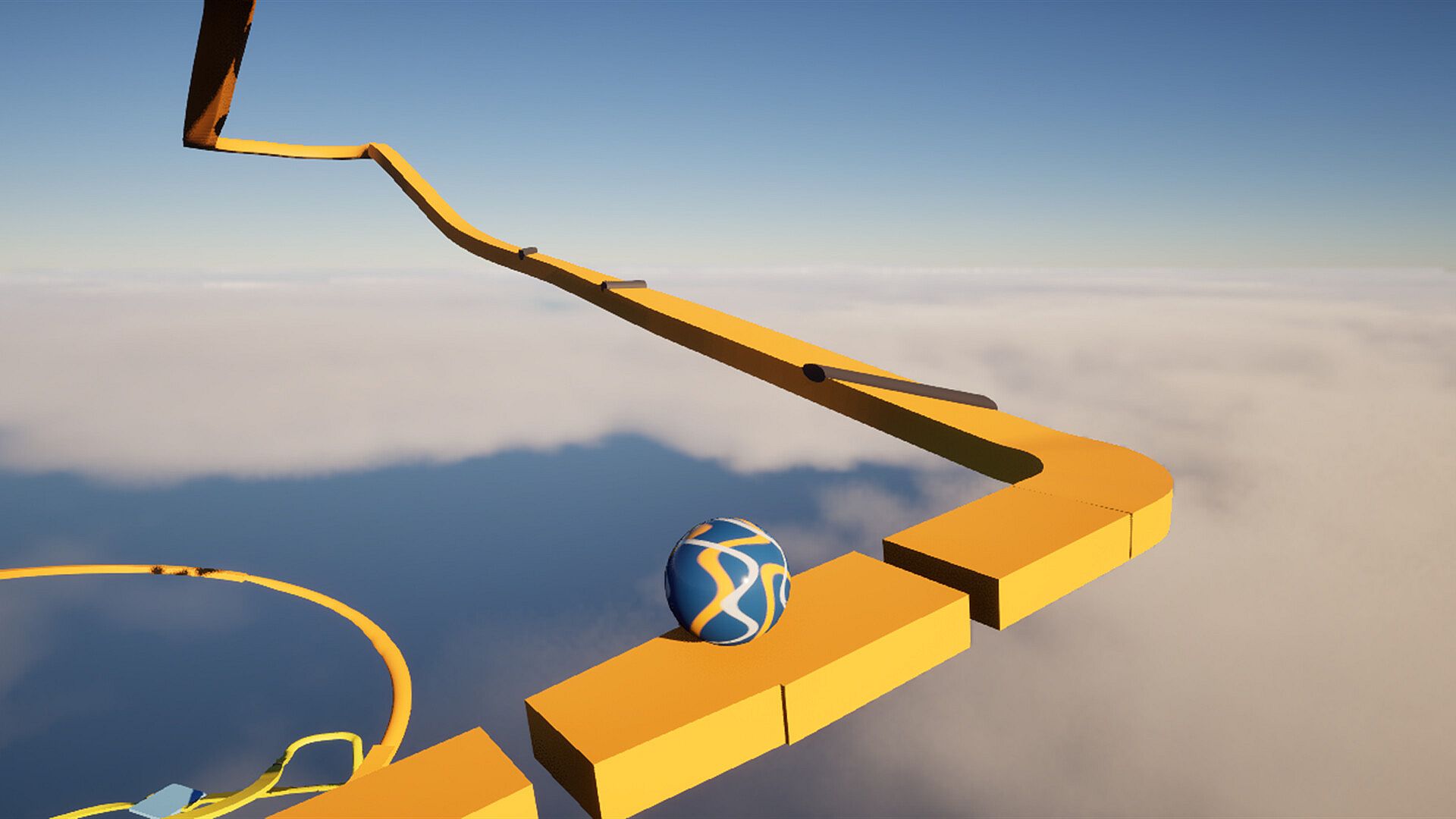
The central loop involves steering the marble across narrow beams, sharp hairpins, and steep ramps while accounting for real ball physics. Speed builds naturally from momentum, yet excessive velocity sends the marble flying off edges, while insufficient pace causes it to roll backward. Bounce pads provide opportunities to launch upward into new sections, rewarding calculated risk over reckless speed. The absence of checkpoints means any mistake can erase substantial progress, forcing players to restart from lower points and rebuild momentum carefully. Day and night cycles alter visibility and atmosphere across the climb, adding subtle environmental variety without changing core mechanics. Controller support allows either keyboard and mouse or gamepad input, with the physics system responding consistently to either method.
Ball skins offer cosmetic variety, letting players roll as a standard marble, beach ball, chrome sphere, or neon variant. These options do not affect physics but provide personalization during repeated attempts. The handcrafted track emphasizes balance and nerve, with each zone introducing tighter tolerances and more demanding sequences that test grip and trajectory control.
Game Modes
Rolling Heights centers on a single-player ascent through the full course. Players aim to reach the finish pavilion at the top of the sky, with success measured by completion time posted to a global leaderboard. Competition focuses on top ten placements rather than direct multiplayer interaction. Steam Achievements serve as optional challenges within this mode, including finishing without any falls, completing the entire course in one continuous attempt, or reaching the summit in under twenty minutes. These goals encourage mastery of the physics without introducing separate game modes or branching paths.
No additional modes such as time trials, endless climbs, or multiplayer variants appear in the available details. The experience remains focused on one long climb, with day and night settings available as environmental toggles during play.
Key Mechanics and Features
Physics simulation forms the foundation, where grip, velocity, and trajectory determine success on every segment. Bounce pads act as deliberate launch points that can shortcut difficult sections when timed correctly. The five-zone structure builds difficulty steadily, with later areas featuring denser obstacles and narrower margins for error. Leaderboard integration lets players compare finish times worldwide, turning personal runs into ongoing competition. Achievements reward specific feats of consistency and speed, providing clear benchmarks for improvement.
System requirements list modest hardware needs, with Windows 10 or 11 support and DirectX 12 compatibility. An internet connection enables leaderboard functionality, while offline play remains possible for practice runs.
Is It Worth Playing?
Rolling Heights targets players who enjoy precise, physics-driven platforming and the satisfaction of mastering a single demanding course through repeated attempts. The no-checkpoint design creates high tension and meaningful progress, appealing to those comfortable with trial-and-error learning curves. Leaderboard competition adds replay value for competitive climbers seeking faster times, while achievements provide structured goals without overwhelming the core loop.
As an upcoming title with no user reviews available yet, reception remains to be seen. The described systems emphasize skill over luck, with controller support broadening accessibility. Players drawn to indie action experiences that reward patience and mechanical understanding will likely find the climb engaging, particularly if they appreciate clean physics interactions and a focused single-player challenge rather than expansive content or multiplayer features.