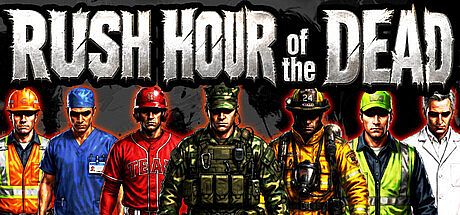


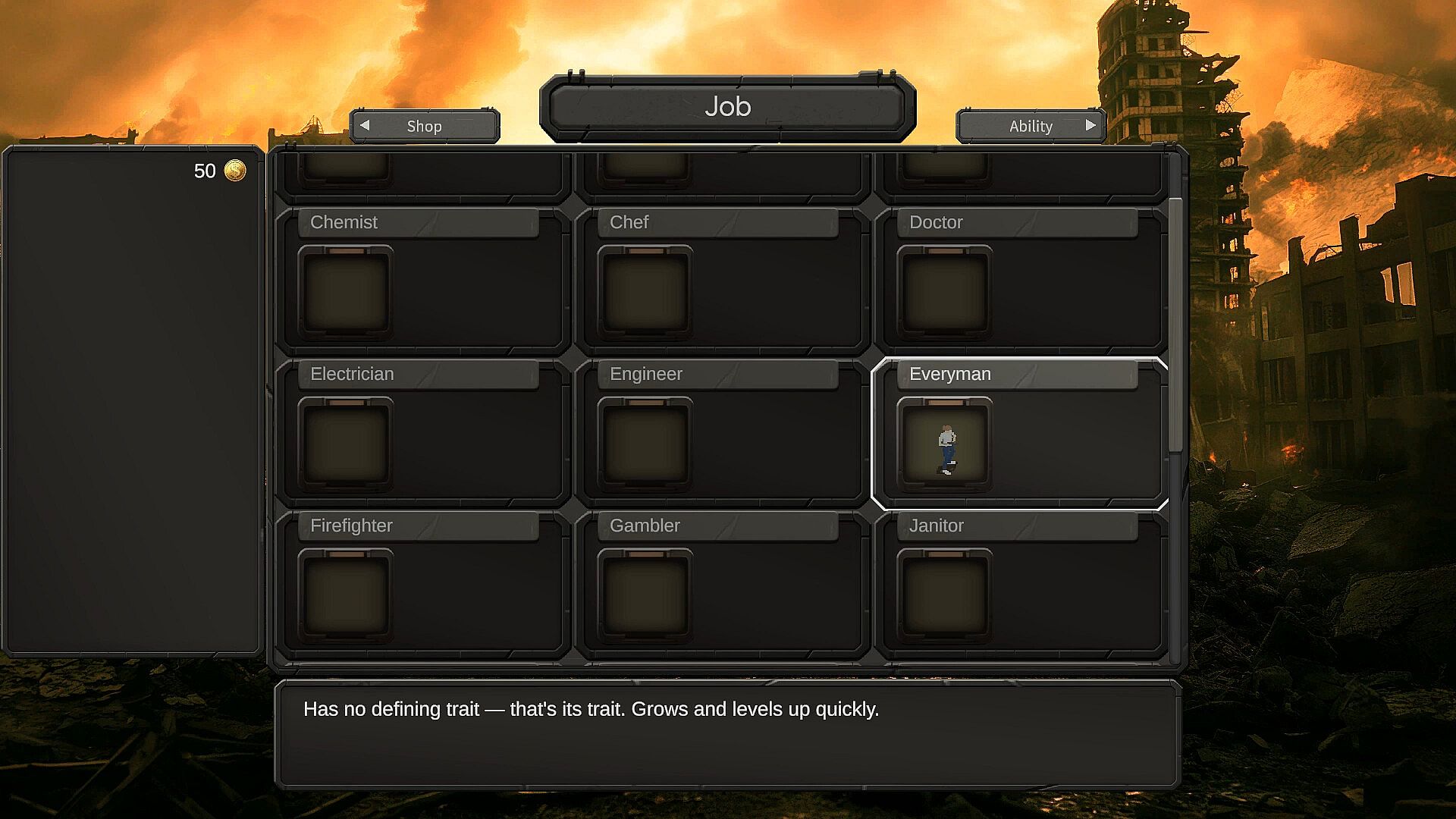
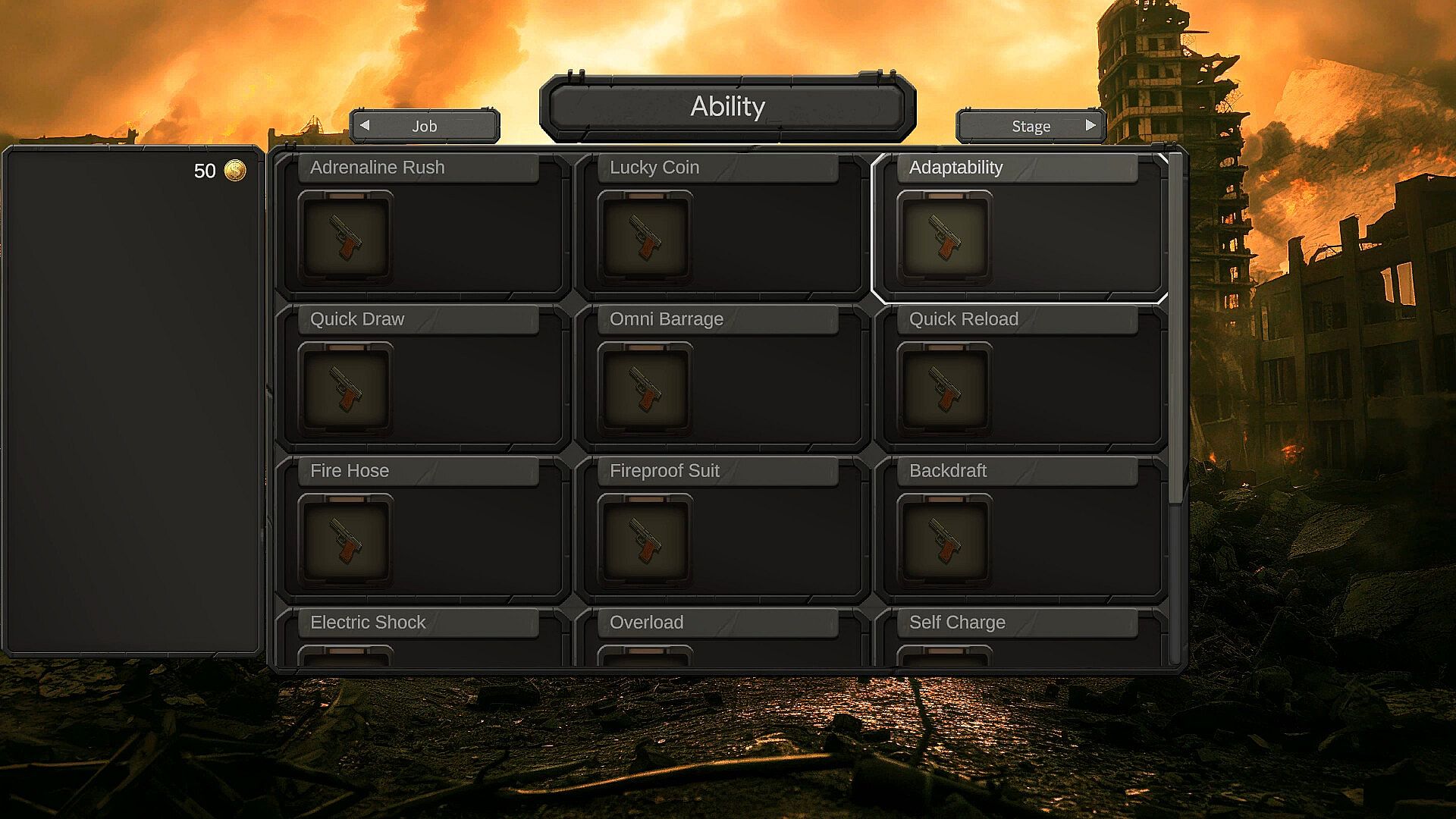
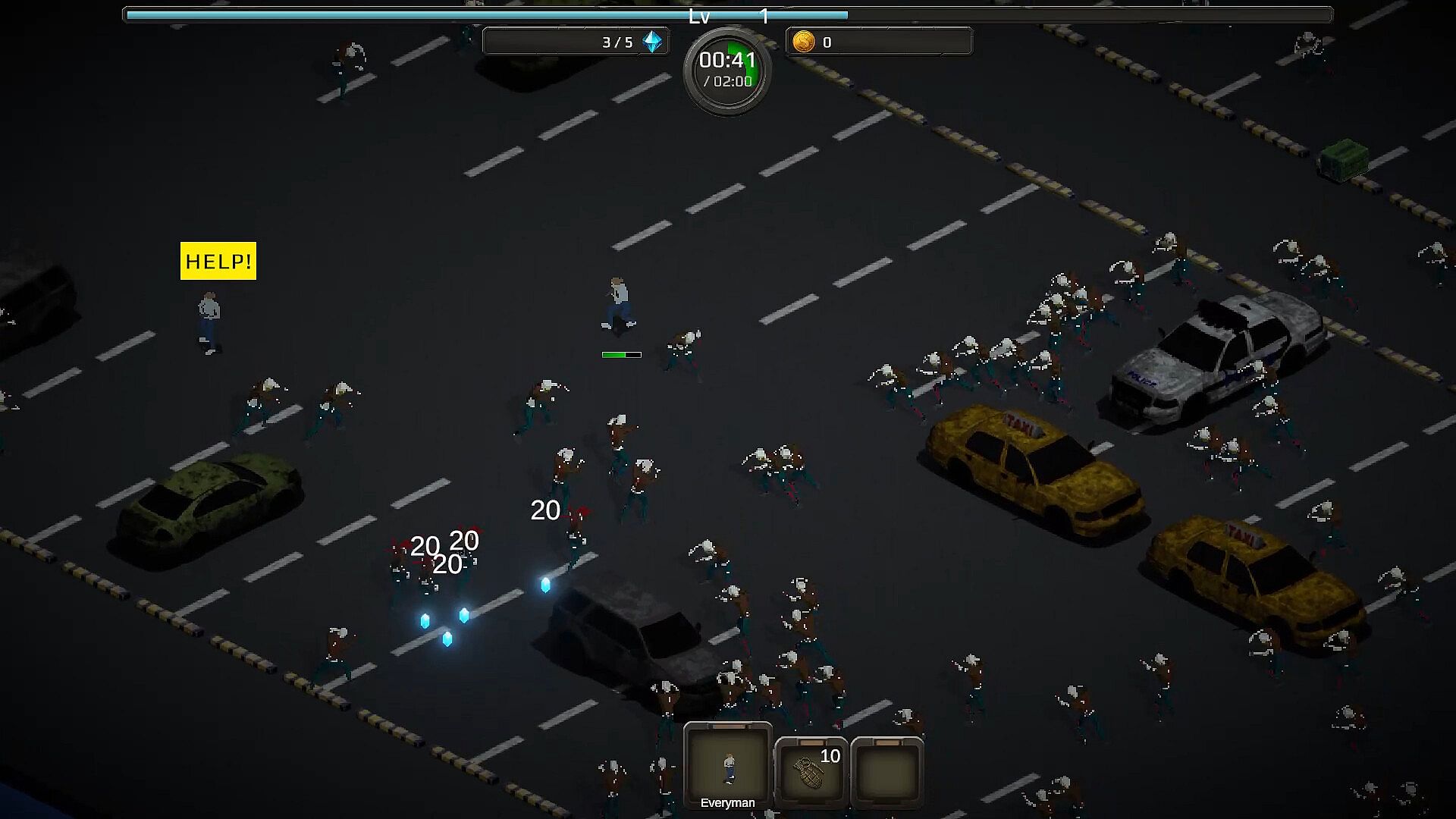
Rush Hour of the Dead is a single-player roguelite action game set on PC. Ordinary workers such as firefighters, electricians, and bank tellers scavenge weapons and use their professional skills to hold off endless zombie waves. The core loop centers on short runs where players select a job, pair it with abilities, navigate weather effects, and decide whether to pursue optional rescues while the horde intensifies.
Gameplay
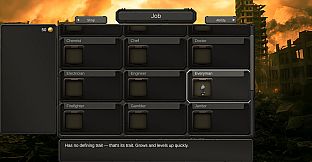
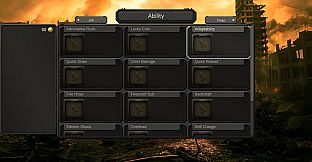
Each run begins with a choice among more than twenty jobs and over sixty abilities. A firefighter might deploy a high-pressure hose to clear clusters of enemies, while an electrician channels arcs of current to stun groups at range. These combinations create distinct playstyles that shift based on the random weather conditions present in every attempt. Rain can extend the reach of electrical effects, fog can limit visibility and force closer engagement, and storms introduce further variables that reward adaptation over repetition.
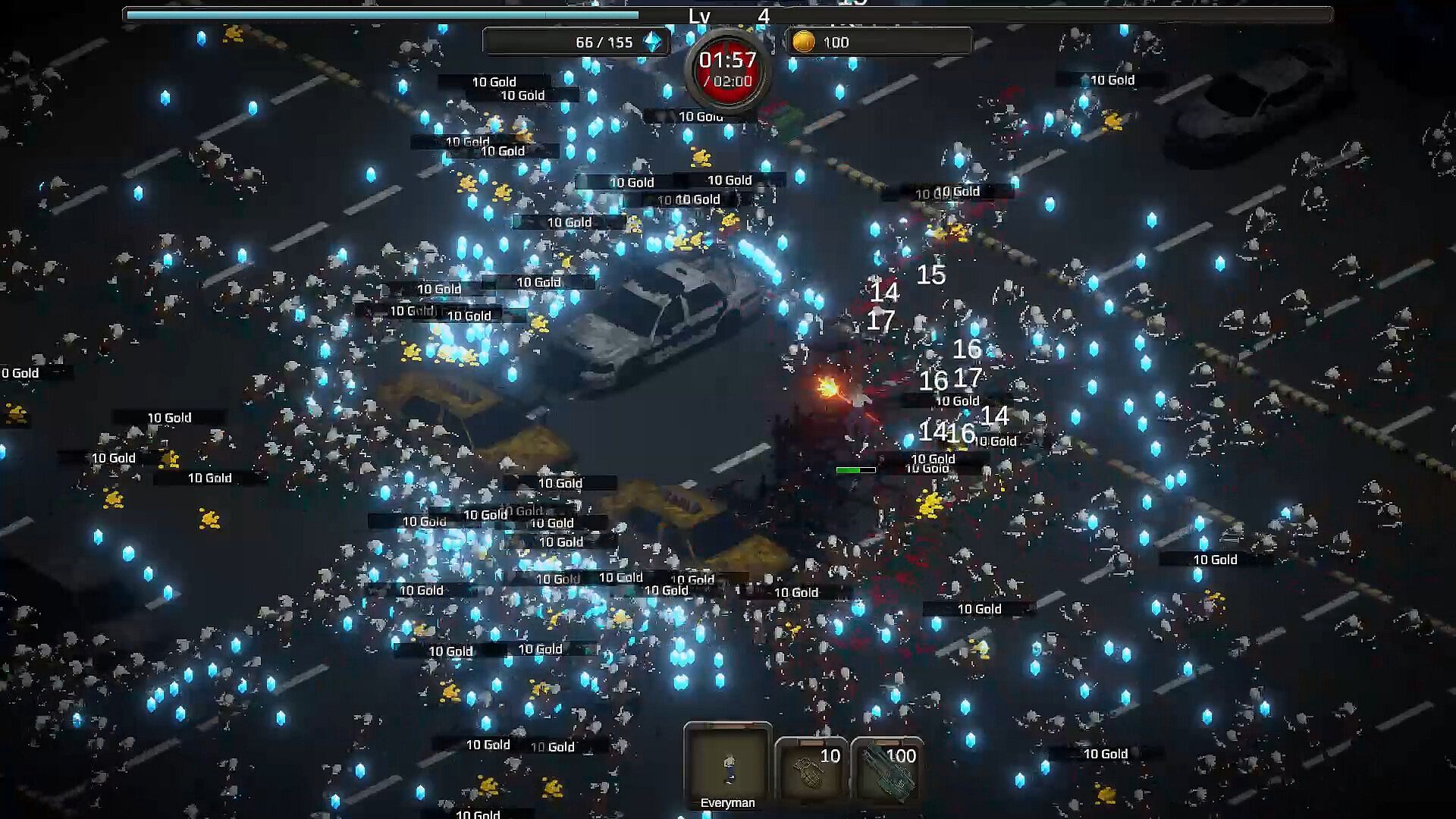
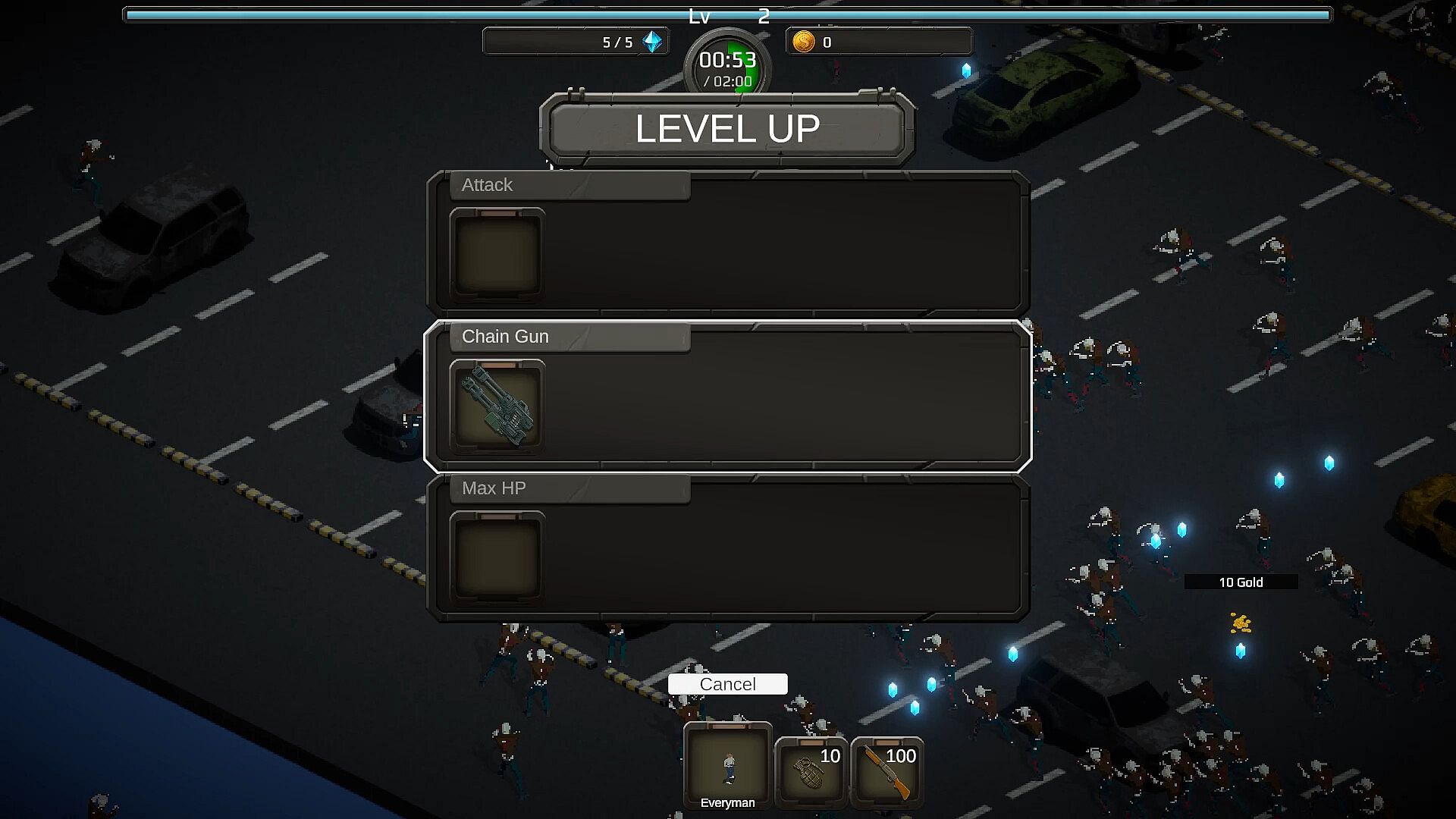
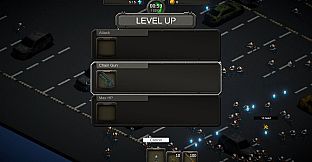
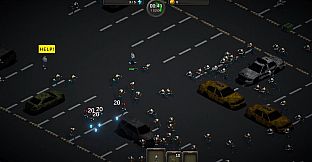
Combat emphasizes situational decisions rather than fixed loadouts. Players locate weapons by defeating mid-bosses or searching hidden caches scattered across the map. Experience from defeated zombies allows on-the-spot upgrades, and switching between collected firearms becomes necessary as enemy density rises. The same job and ability pair can demand entirely different tactics once weather changes or the horde thickens, encouraging repeated runs to test new synergies.
Rescue events appear alongside the main objective. Stranded civilians offer powerful temporary bonuses when saved, yet each extraction draws additional zombies and increases personal risk. Random incidents scattered through the map function similarly, providing high-value rewards that can stabilize a run or enable aggressive pushes into denser enemy areas.
Game Modes
The game operates as a single-player roguelite experience built around successive runs. Each attempt features procedurally influenced weather, enemy placement, and event locations, so no two outings follow identical patterns. Players progress by surviving longer, collecting stronger weapons, and refining job-ability pairings while managing the growing threat of the zombie horde.
Progression stays confined to individual runs. There are no persistent campaign structures or separate multiplayer lobbies. The focus remains on learning weather interactions, experimenting with the twenty-plus jobs, and deciding when to risk rescue missions for the bonuses they grant. This structure supports repeated short sessions where the goal is to extend survival time and discover effective combinations under shifting conditions.
Key Systems and Progression
Weapon acquisition ties directly into combat flow. Mid-boss encounters and map caches serve as the primary sources, rewarding players who clear space or explore under pressure. Leveling happens continuously through zombie kills, allowing immediate adjustments to damage output or ability cooldowns without leaving the current run.
Weather acts as a persistent modifier rather than background flavor. Electrical abilities gain range in rain, certain jobs may lose effectiveness in fog, and storms can create new opportunities or hazards. These changes force players to reassess the same build across multiple attempts, adding replay depth without requiring new content unlocks.
Is It Worth Playing?
Rush Hour of the Dead targets players who enjoy roguelite structure combined with ability crafting and environmental adaptation. The single-player format suits those who prefer focused sessions over extended campaigns or competitive matchmaking. With a planned release in 2027 and no user reviews available yet, interest depends on how well the described job-ability-weather interactions hold up in practice. Fans of build experimentation in short, high-stakes runs will find the core loop most appealing once the game launches.