








Strive Card is a strategy indie casual deckbuilding roguelike for PC that centers on building powerful poker hands from Niu Niu rules. Players construct decks around converting five-card selections into high-value hands that generate chips and multipliers for massive damage output.
Gameplay
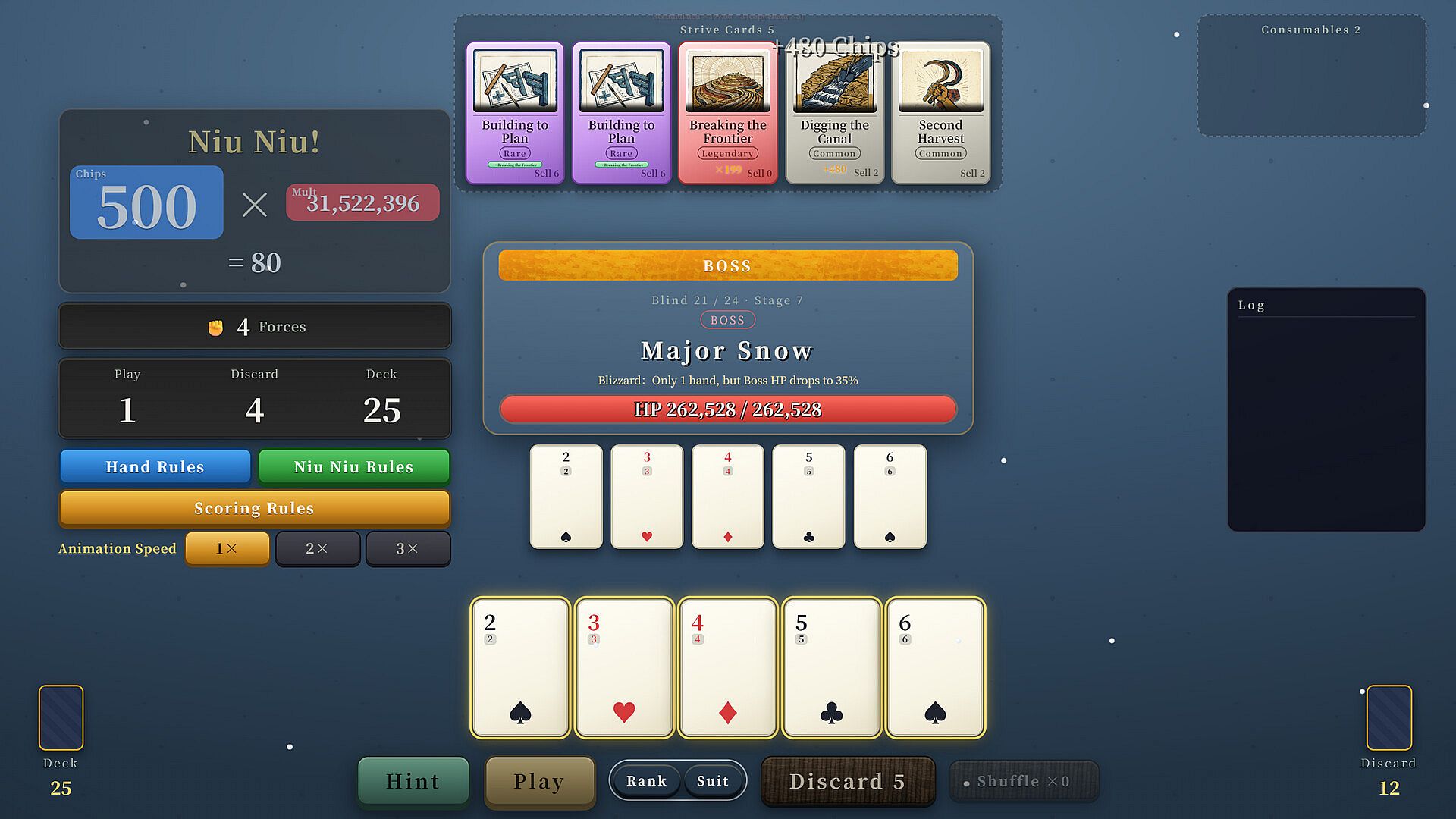
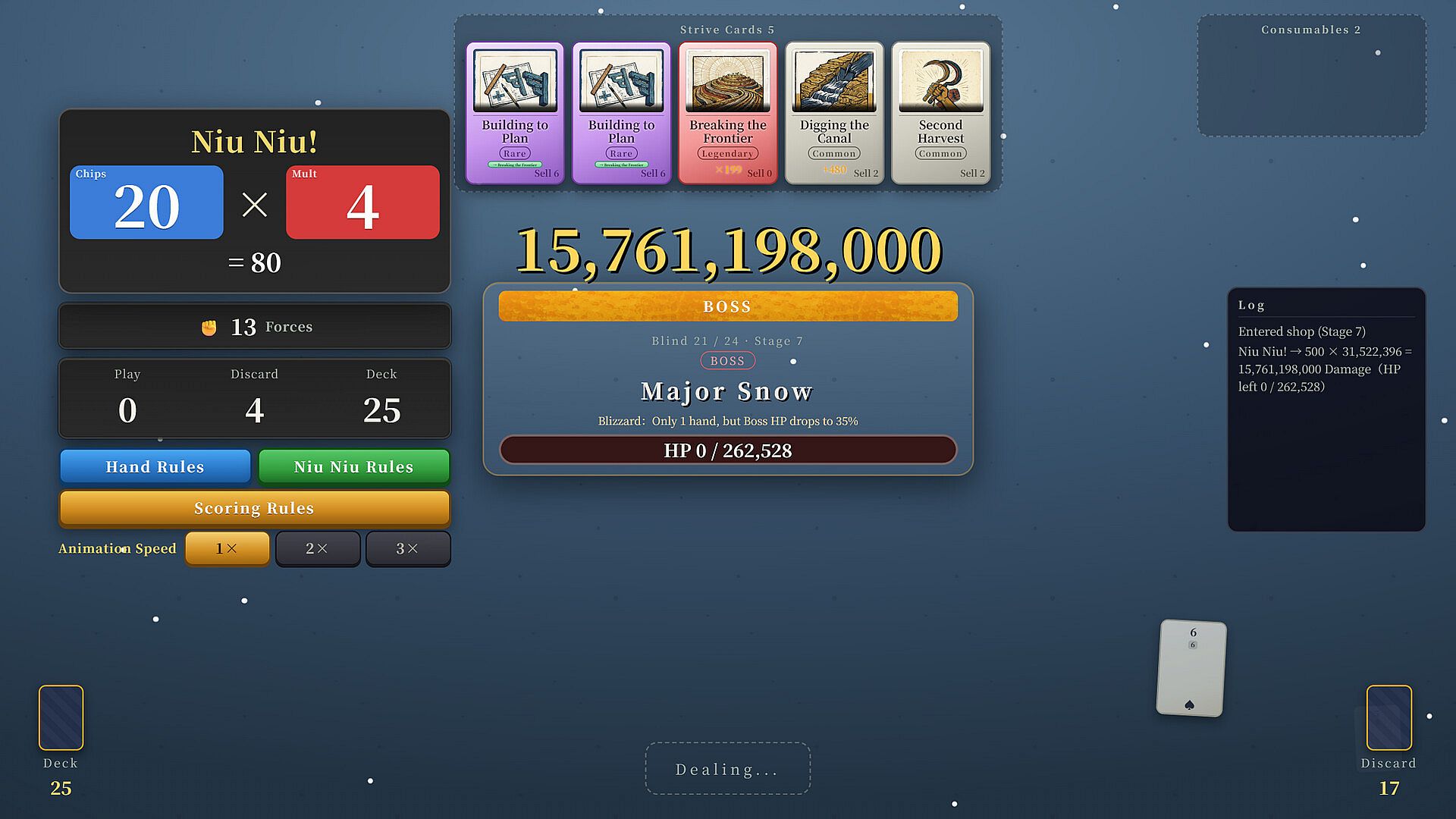
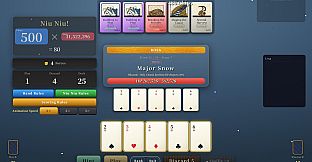
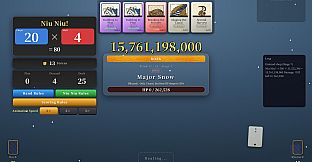
The core loop revolves around selecting five cards each turn to form a Niu Niu or Five Flower hand. These hands convert directly into chips and a multiplier, with damage calculated as chips multiplied by the mult. Strive Cards then apply their effects to scale the total further, often pushing results into the billions.
Order matters significantly in every calculation. Additive cards sit on the left while multipliers go on the right. Strive Cards resolve sequentially from left to right, and each multiplier recalculates the current mult before applying to cards further along the chain. Reordering through drag-and-drop changes the final value dramatically, turning the same base hand into several times more damage.
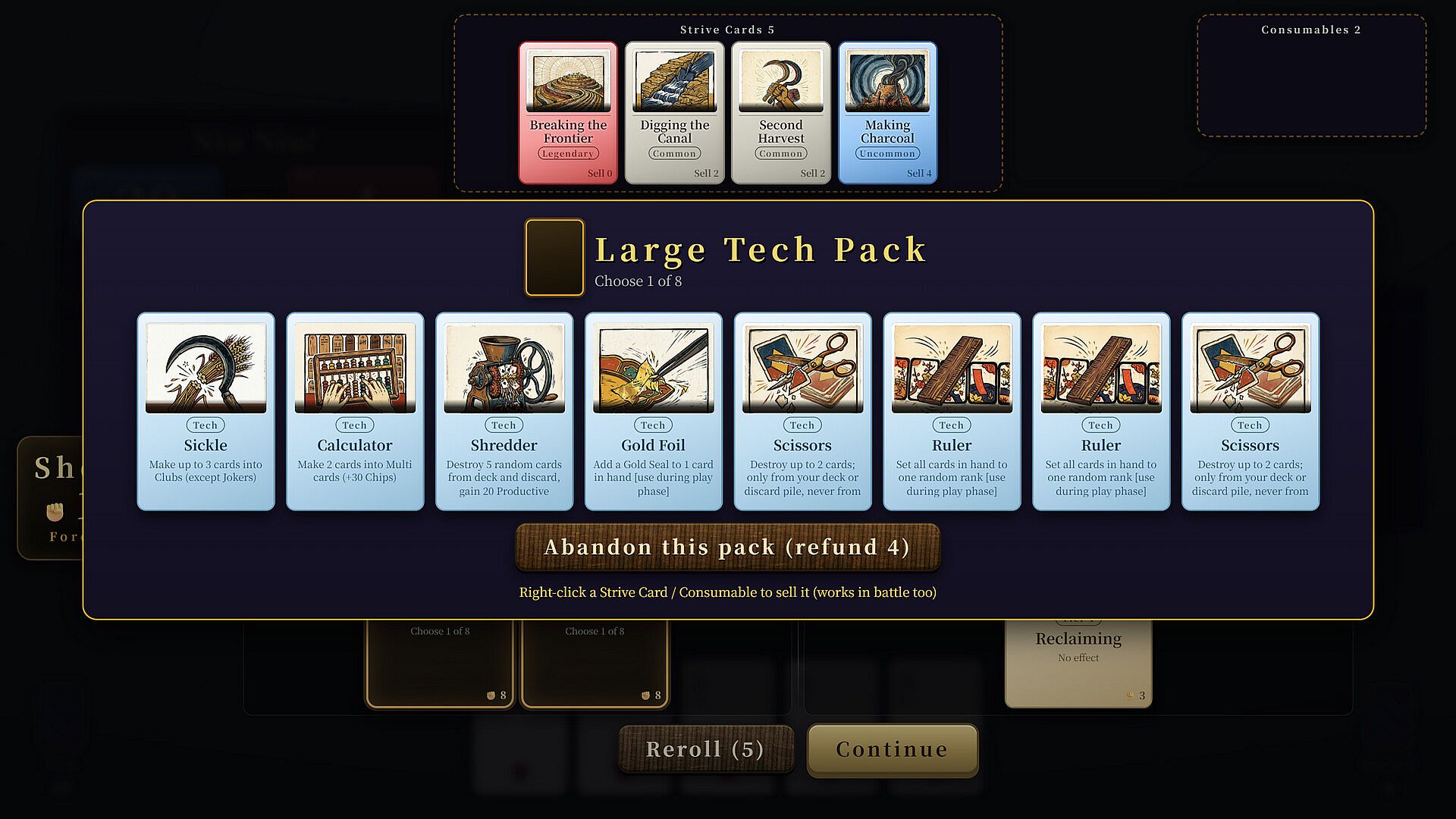
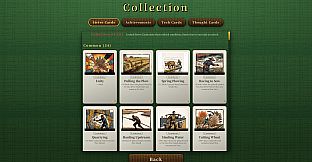
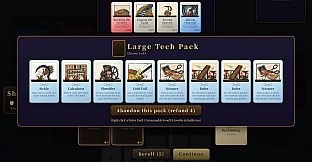
Three distinct card types support different build paths. Strive Cards provide persistent abilities that form the foundation of any run and range from common to legendary rarity. Tech Cards serve as one-time tools for copying cards, rewriting ranks and suits, or adding editions. Thought Cards upgrade hand types themselves so that Niu Niu hands deal more damage on their own. Achievements function as permanent passives that alter shop size, card slots, and interest earnings across runs.
Game Modes
A full run progresses through 24 solar-term blinds arranged in eight stages. Each stage concludes with a boss encounter that introduces a specific disaster effect, such as haze that conceals Strive Cards, tornadoes that disable one card per turn, or wildfire that burns hand levels.
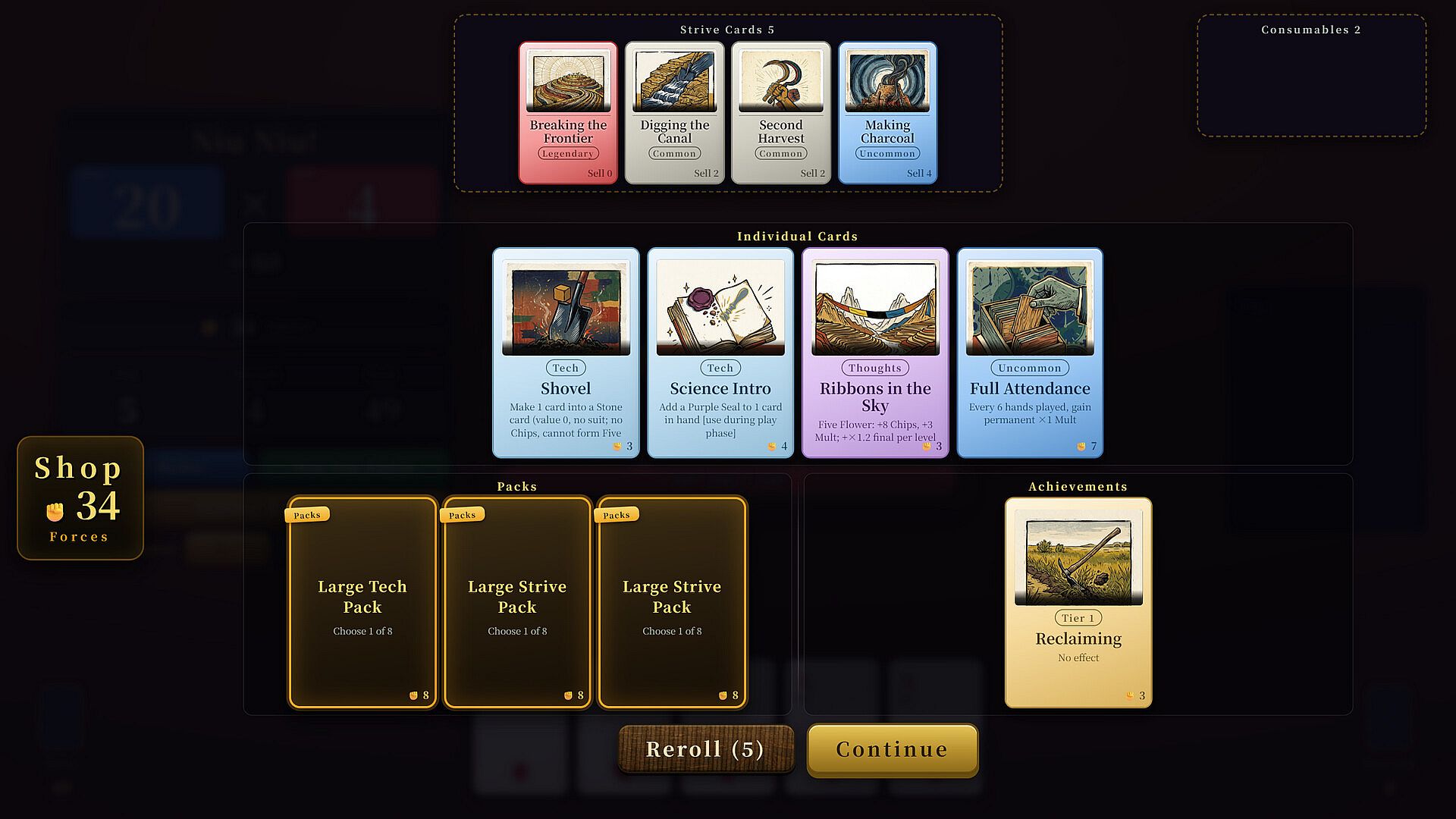
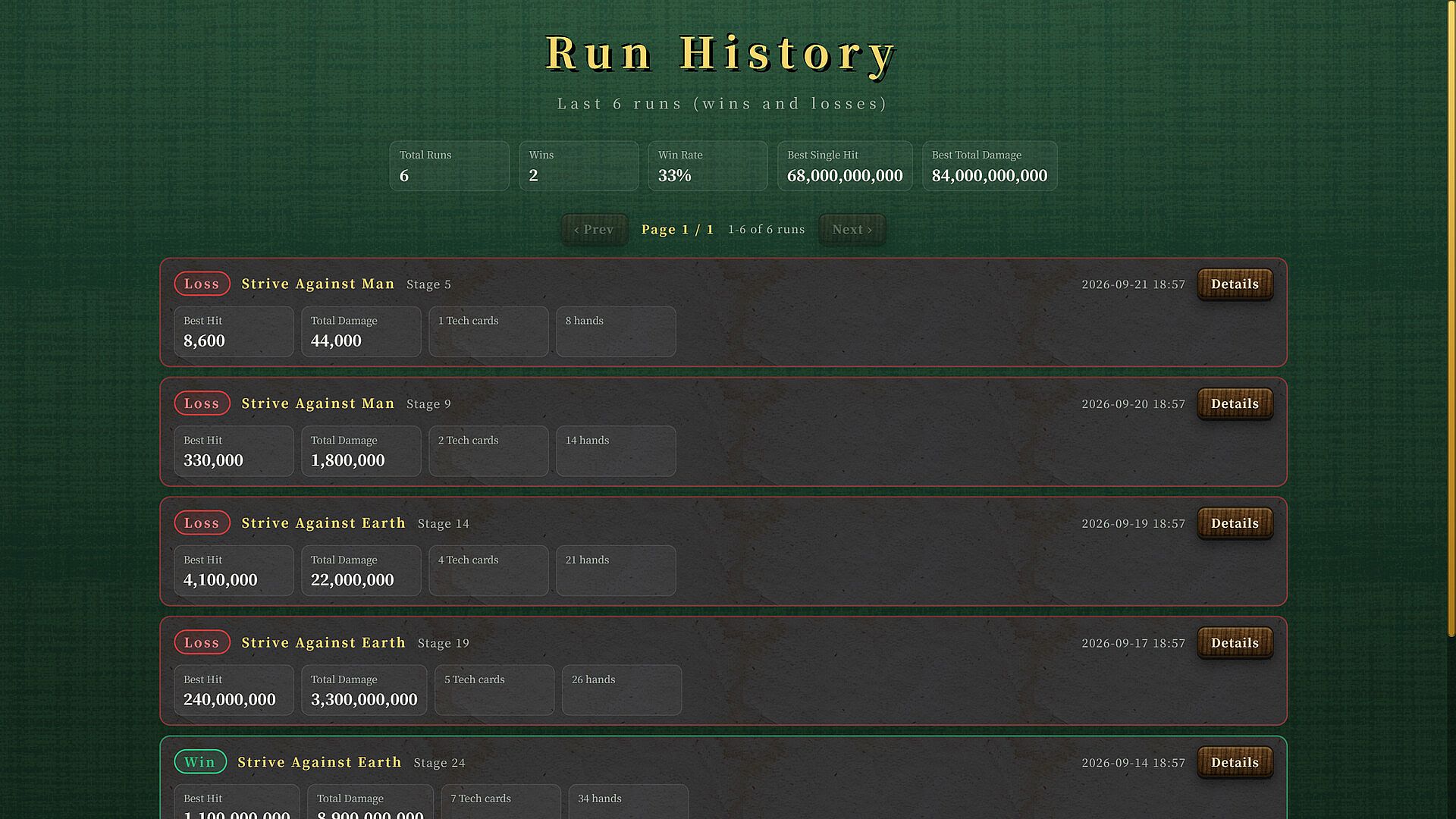
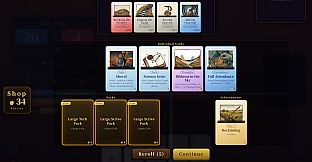
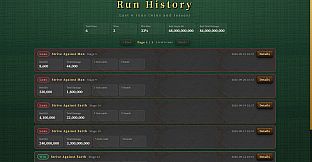
Three difficulty settings adjust the experience. Strive Against Man offers a baseline health curve and shop rules. Strive Against Earth and Strive Against Heaven increase the challenge with steeper health scaling and modified shop conditions. Between blinds, players visit the shop to purchase cards, open packs, reroll stock, and earn interest on unspent currency.
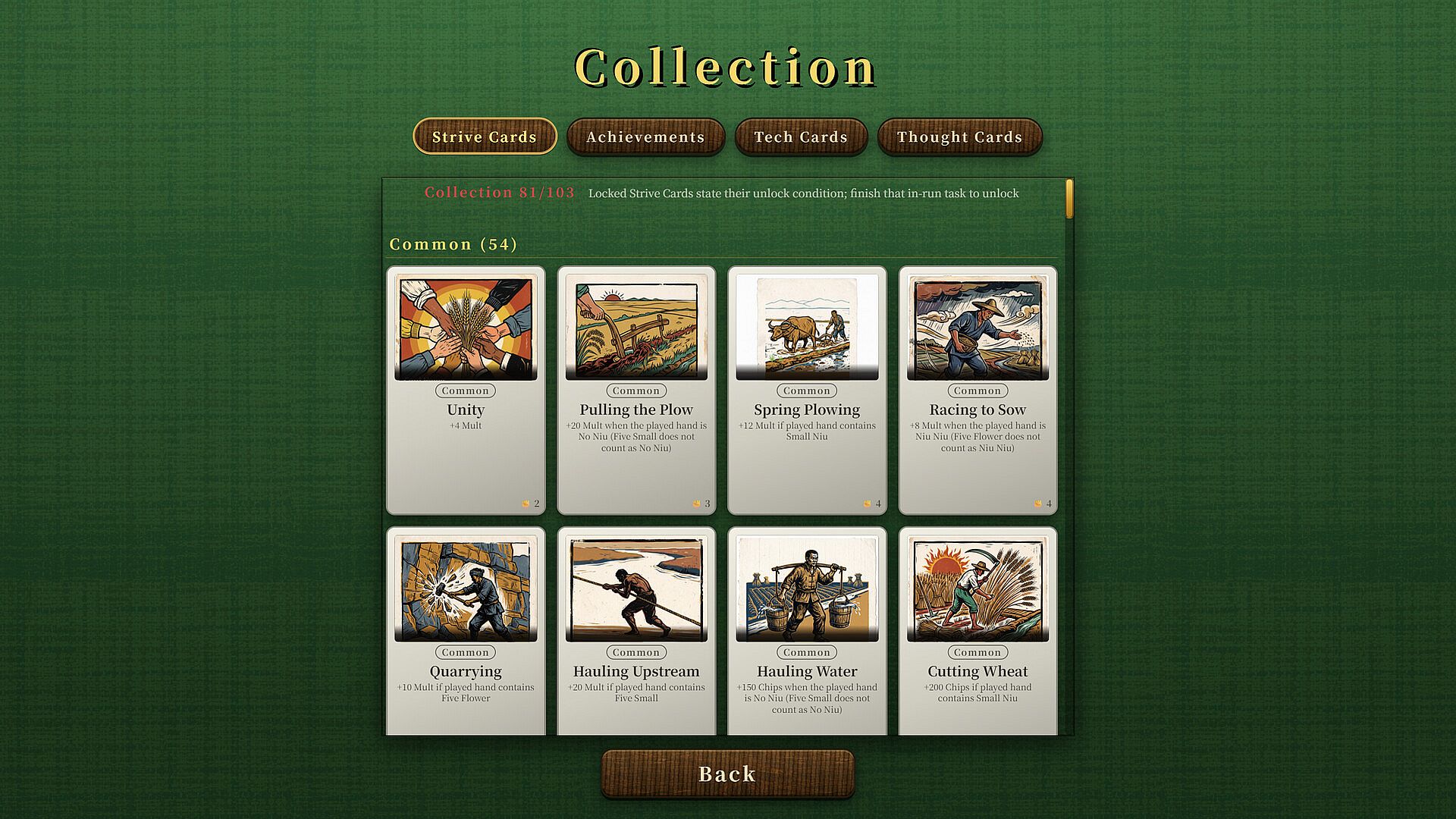
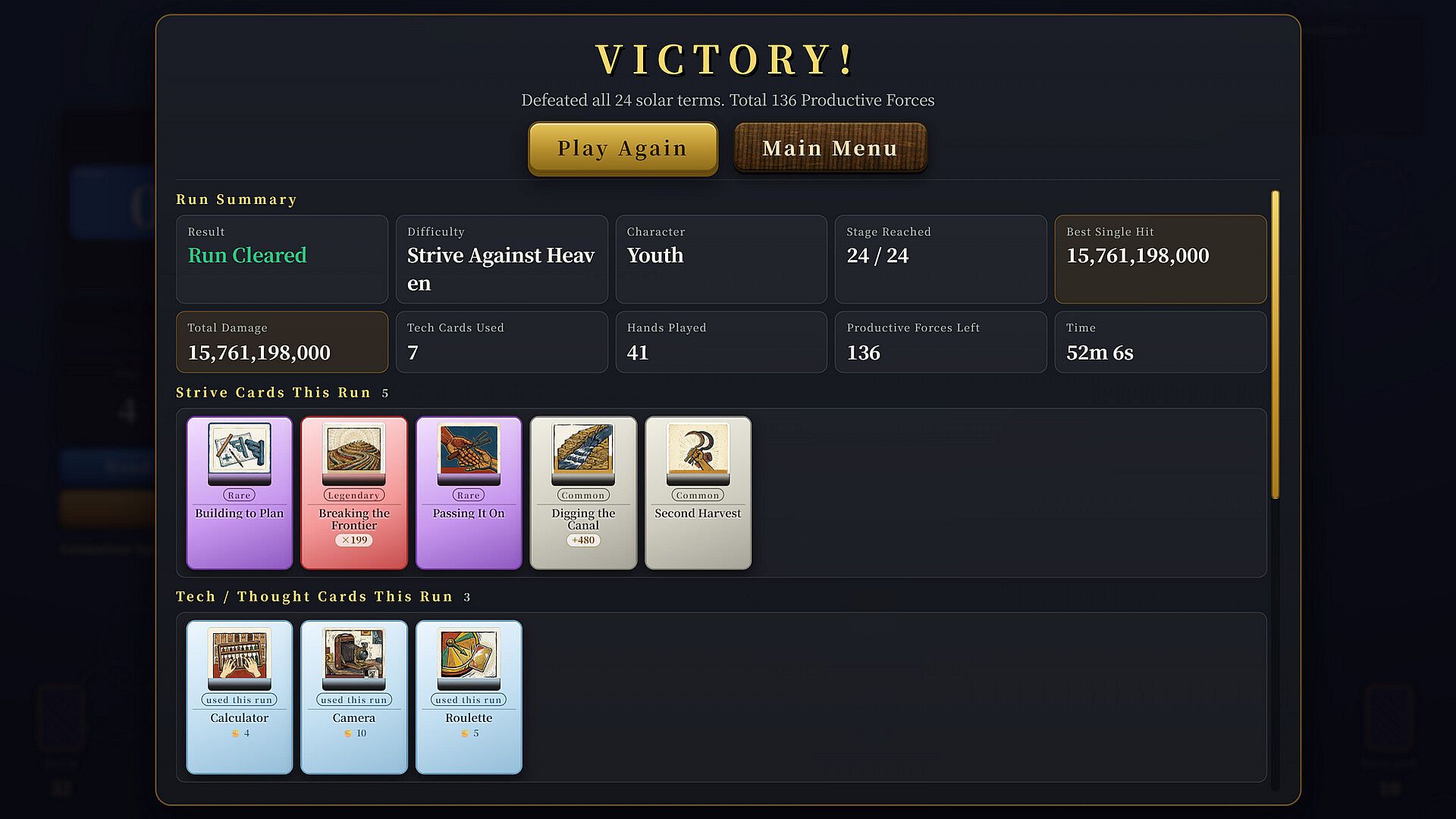
In-run tasks unlock new Strive Cards and characters permanently. The Collection and Run History track every build attempted and the highest damage achieved, encouraging repeated playthroughs with different combinations.
Deck Building and Progression
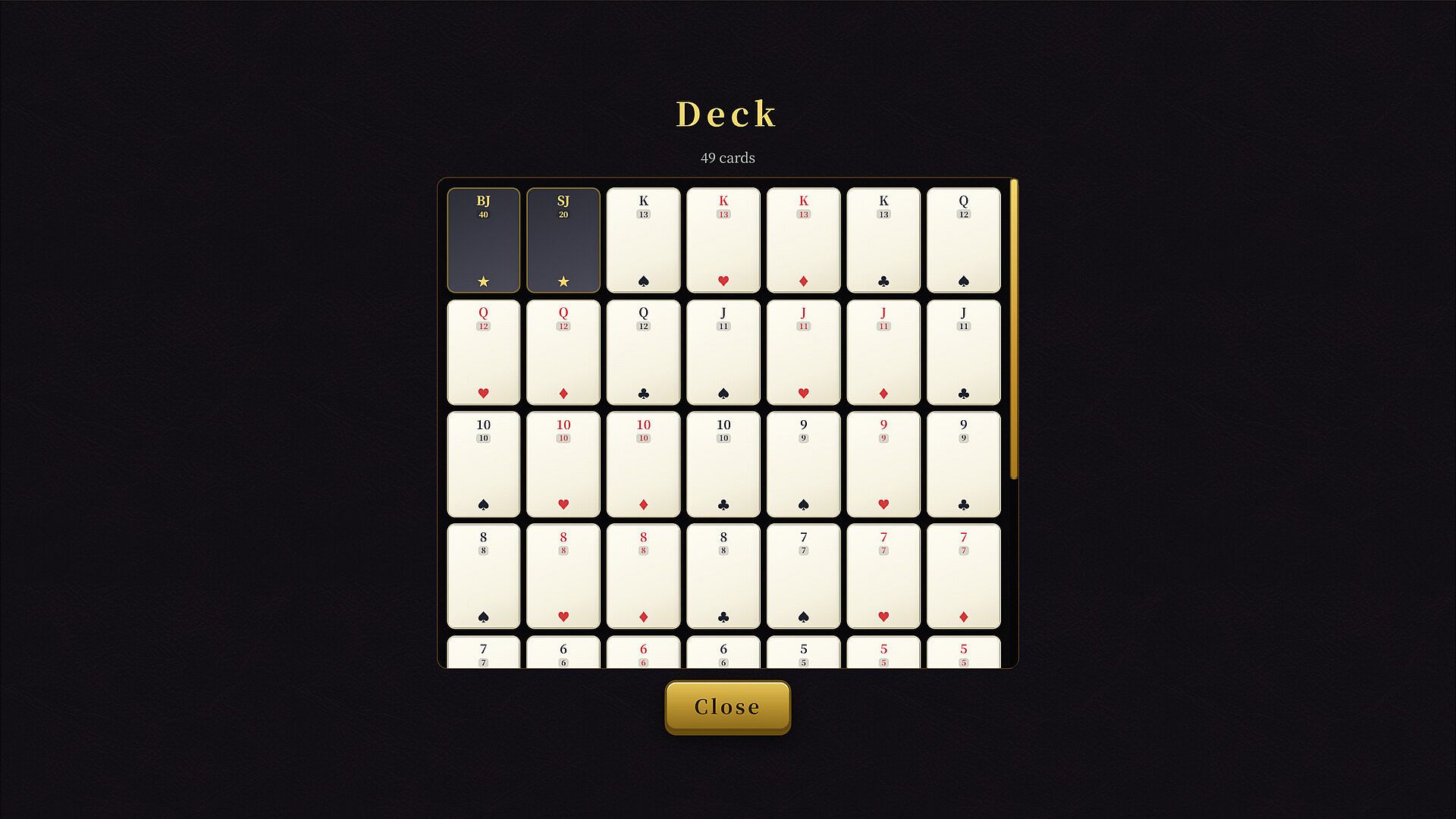
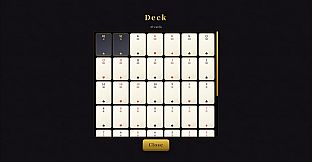
Each run begins with a fresh deck that escalates through acquisitions in the shop. Players balance immediate power from Tech Cards against long-term scaling from Strive Cards and hand upgrades from Thought Cards. Reordering chains and stacking copy effects from Building to Plan create exponential growth opportunities.
The shop serves as the central hub for customization. Interest mechanics reward saving currency while pack openings introduce new synergies. Permanent unlocks from completed tasks expand available options for future runs without altering the roguelike structure of each attempt.
Visual Style and Target Audience
The presentation uses a multi-color woodblock-print aesthetic across cards and interface elements. Artwork depicts worker, peasant, soldier, and scholar figures gathered around a card table, reinforcing the thematic focus on traditional hand-building.
Strive Card appeals to players who enjoy precise number manipulation and chain reactions similar to other calculation-driven roguelikes. The emphasis on reordering effects and mult recalculations rewards careful planning over random chance.
Is It Worth Playing?
Strive Card delivers a focused single-player experience built around escalating hand values and strategic reordering. The combination of Niu Niu poker mechanics with persistent Strive Cards and one-shot Tech Cards creates varied run outcomes across the 24 solar-term structure and three difficulty levels.
Players who appreciate deep mechanical interactions and the satisfaction of watching multipliers compound will find consistent engagement. The woodblock art style and shop progression add texture without complicating the central loop of hand formation and damage scaling. Those seeking a fresh take on deckbuilding roguelikes centered on poker variants have a clear option here.











