




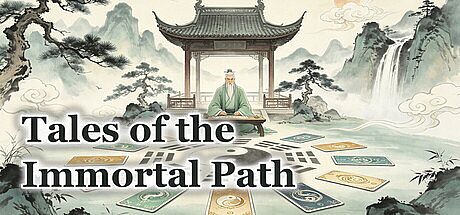


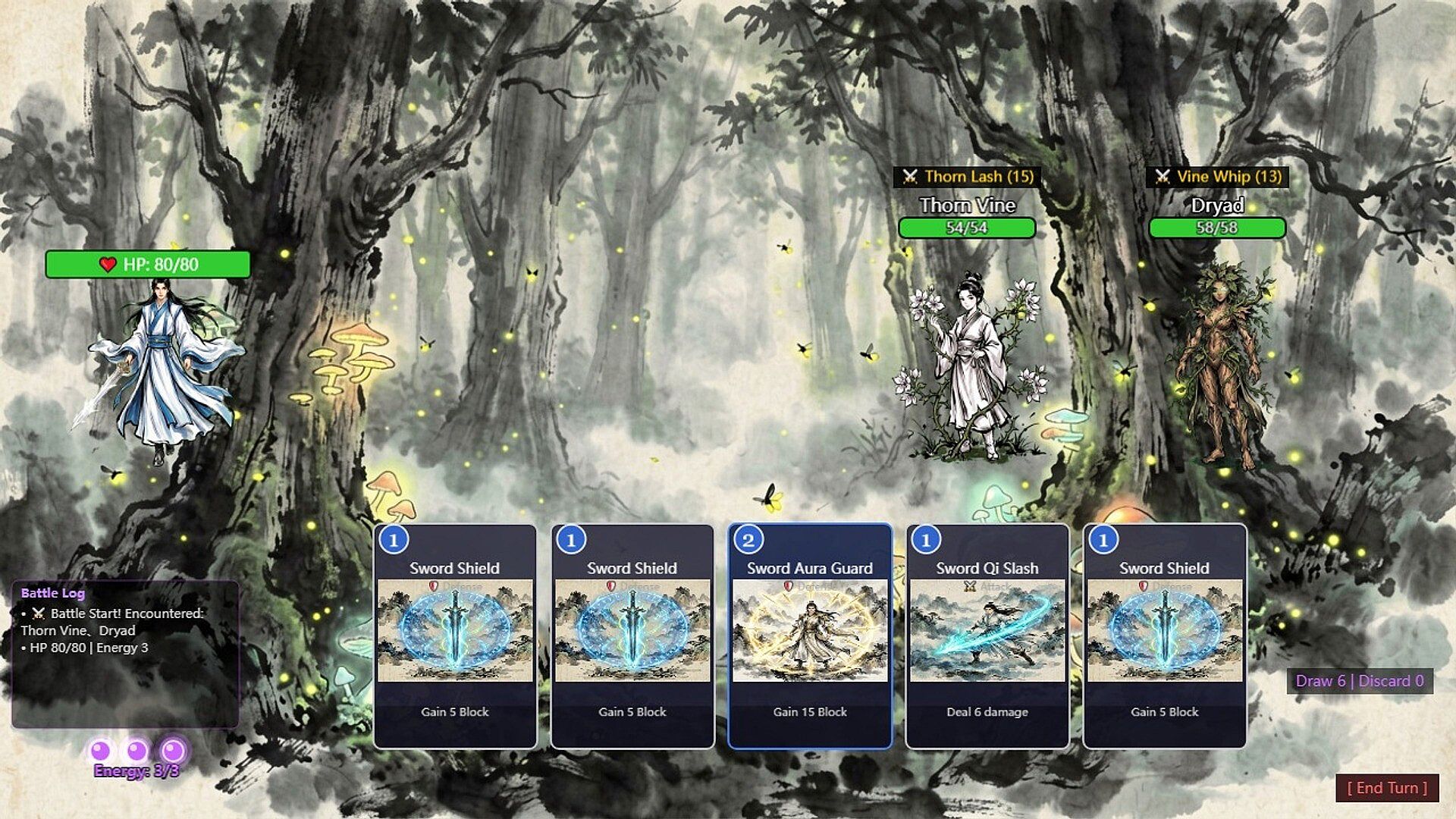
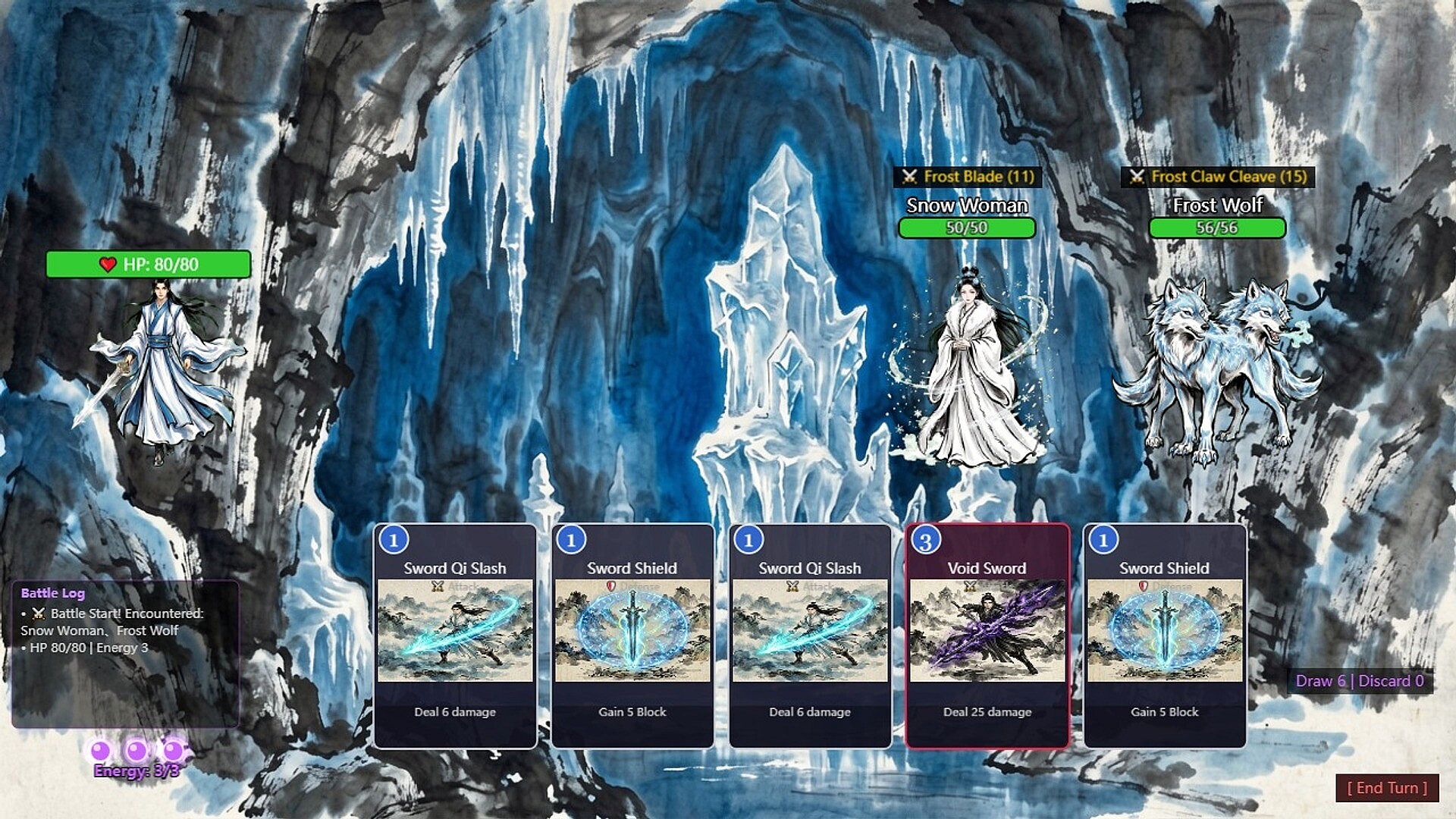
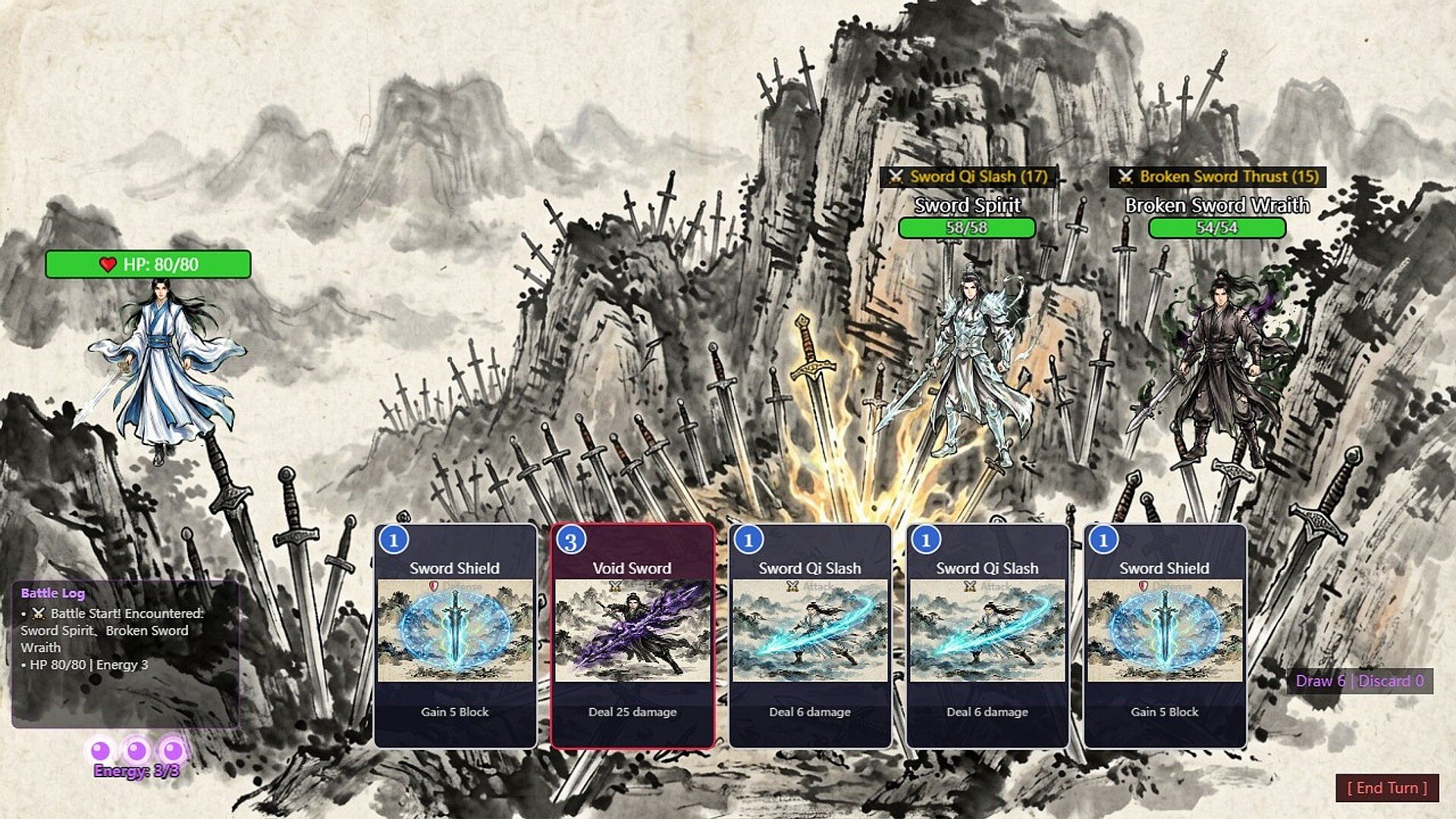
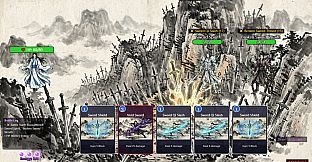
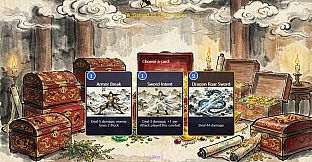
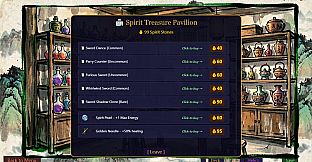
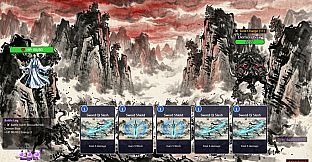
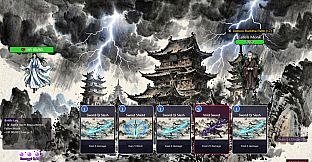
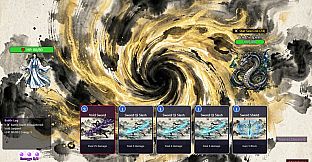
Tales of the Immortal Path is a strategy indie game on PC that combines card-based roguelike mechanics with themes drawn from cultivation stories. Players take on the role of a cultivator navigating procedurally generated paths through a fantasy realm rendered in traditional ink-wash painting style. The core loop centers on ascending through twenty-one distinct acts, each featuring unique perilous environments such as dark caves, sandy deserts, icy abysses, blood seas, sword tombs, and dragon palaces, culminating in a final confrontation amid primordial chaos.
Gameplay
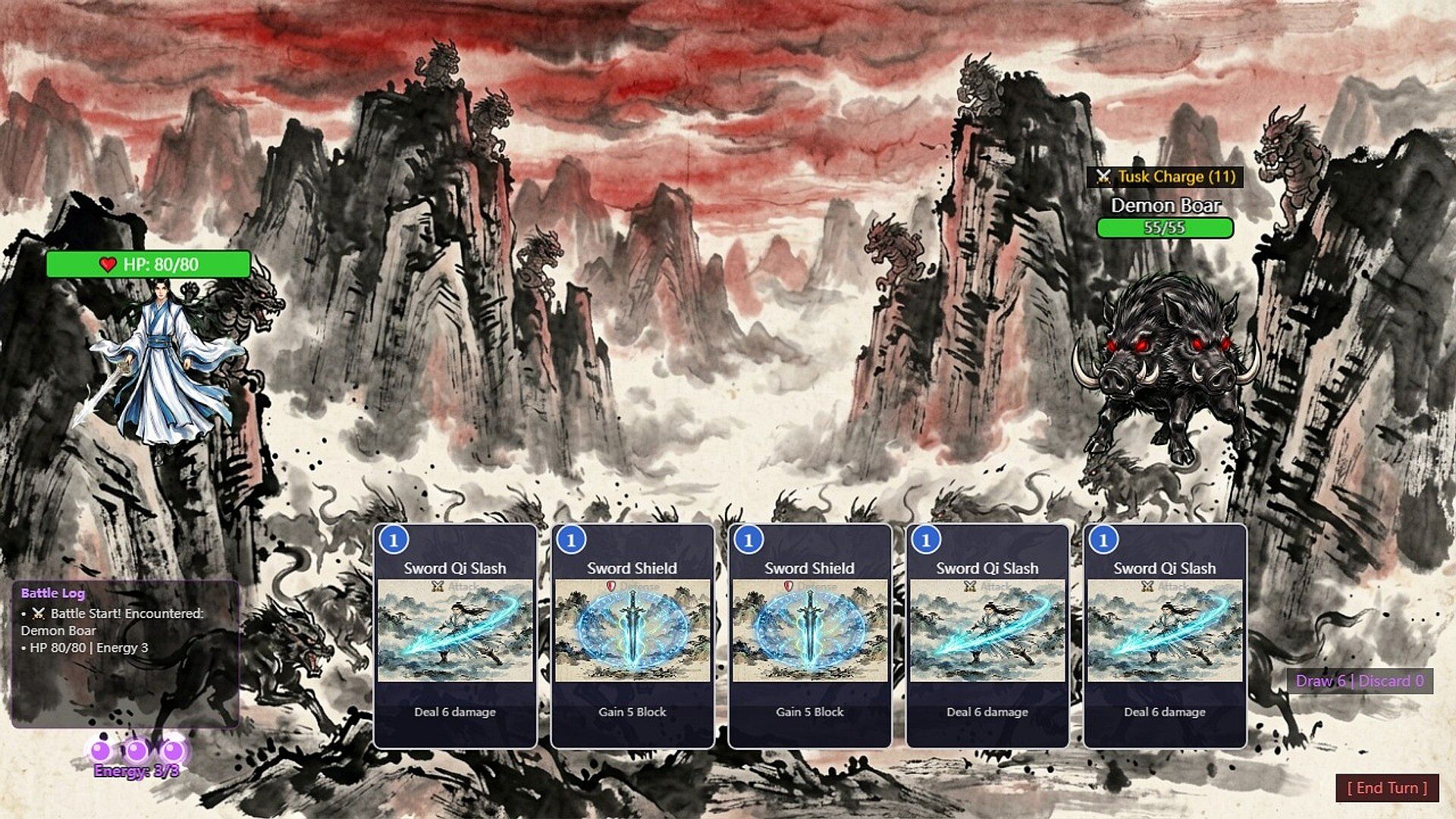
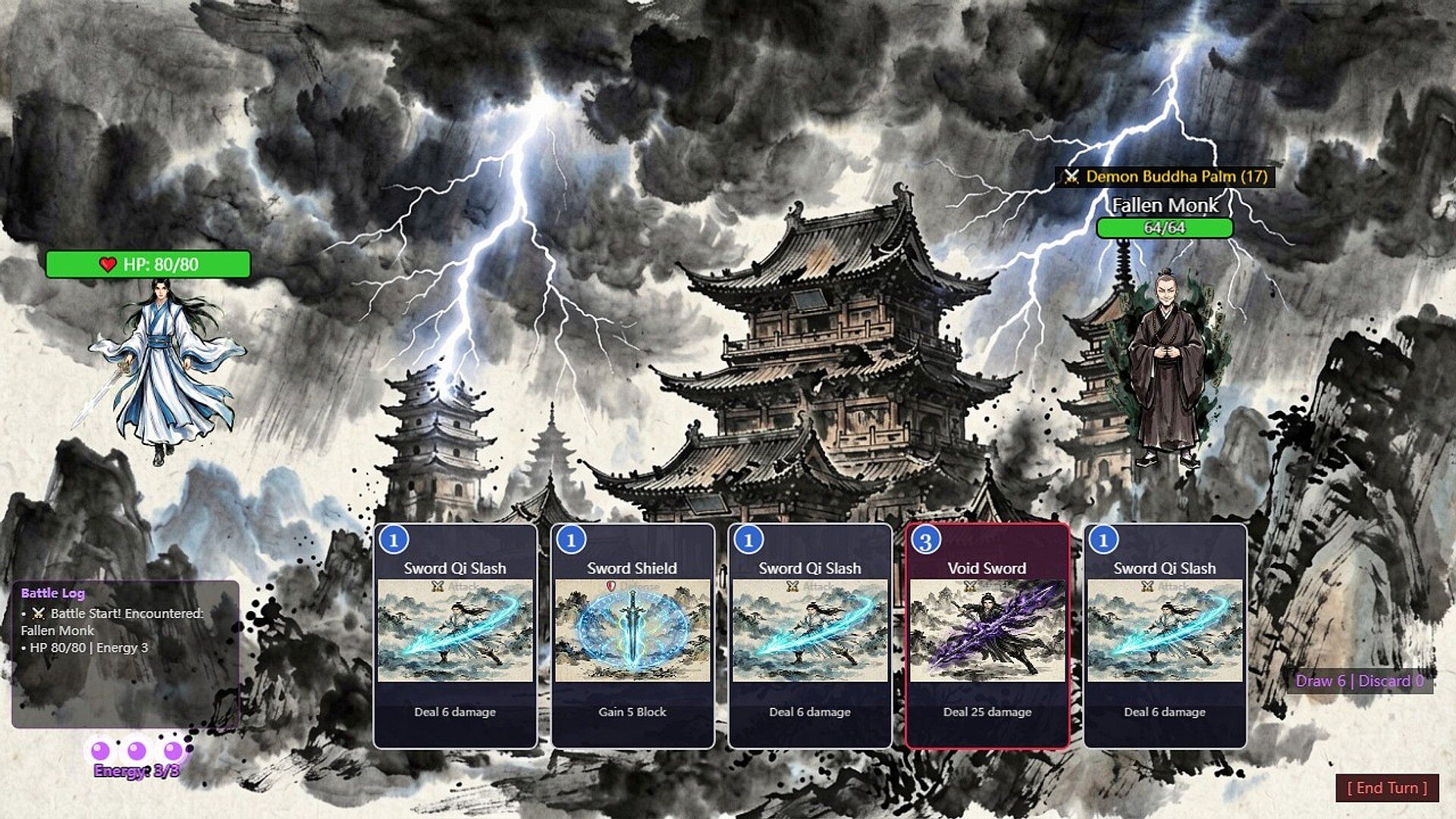
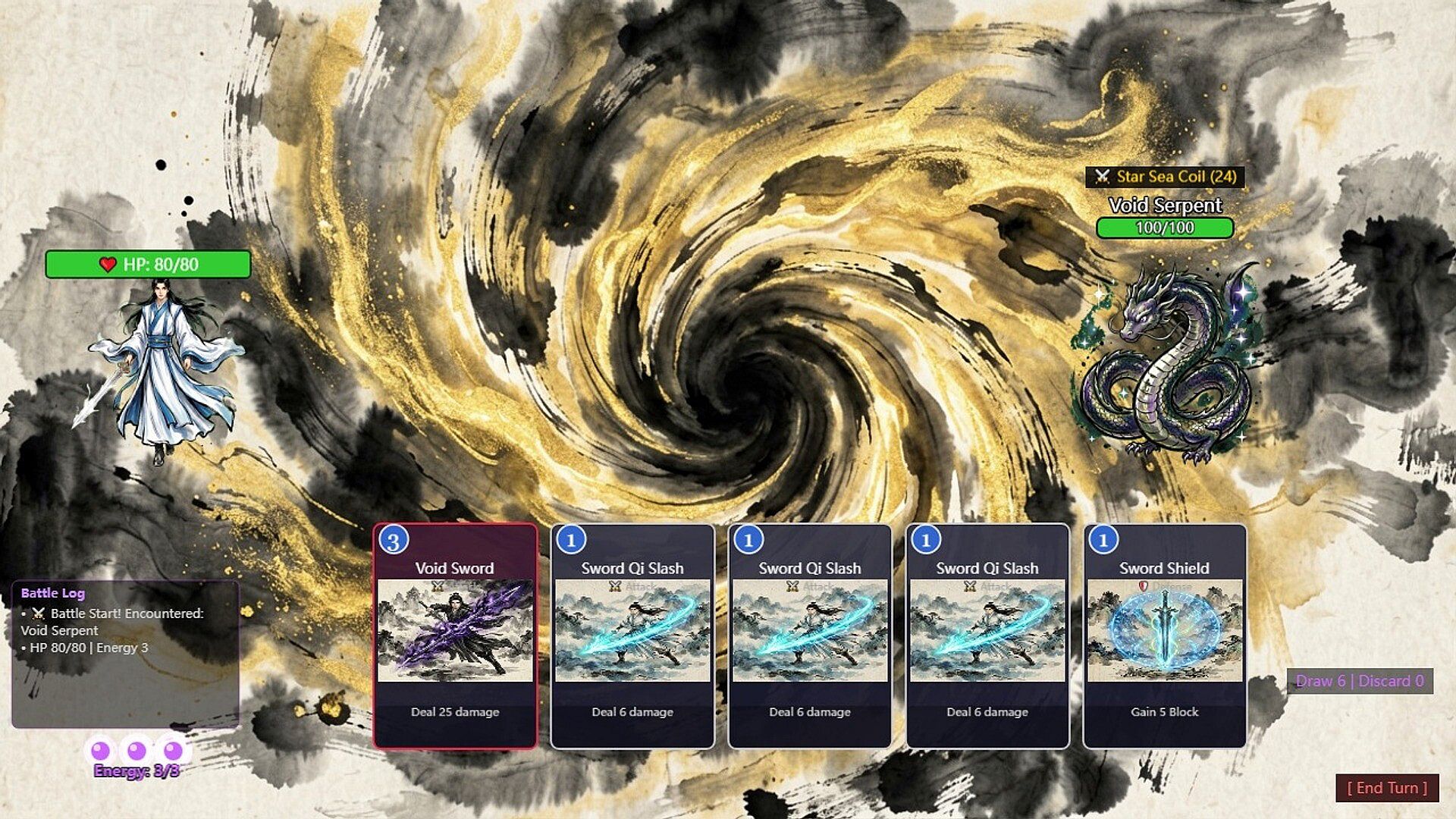
Combat revolves around managing Qi resources each turn to play cards that blend offense and defense. Players chain combos to build momentum while upgrading cards to enhance effects like sword intent or alchemical fire. Three distinct classes shape progression and card pools. The Sword Cultivator focuses on melee physical attacks and sword intent combinations. The Dharma Cultivator emphasizes ranged spells that cycle through five elements with mutual restraints. The Alchemy Cultivator handles support and healing through poison and pill mechanics for sustained vitality.
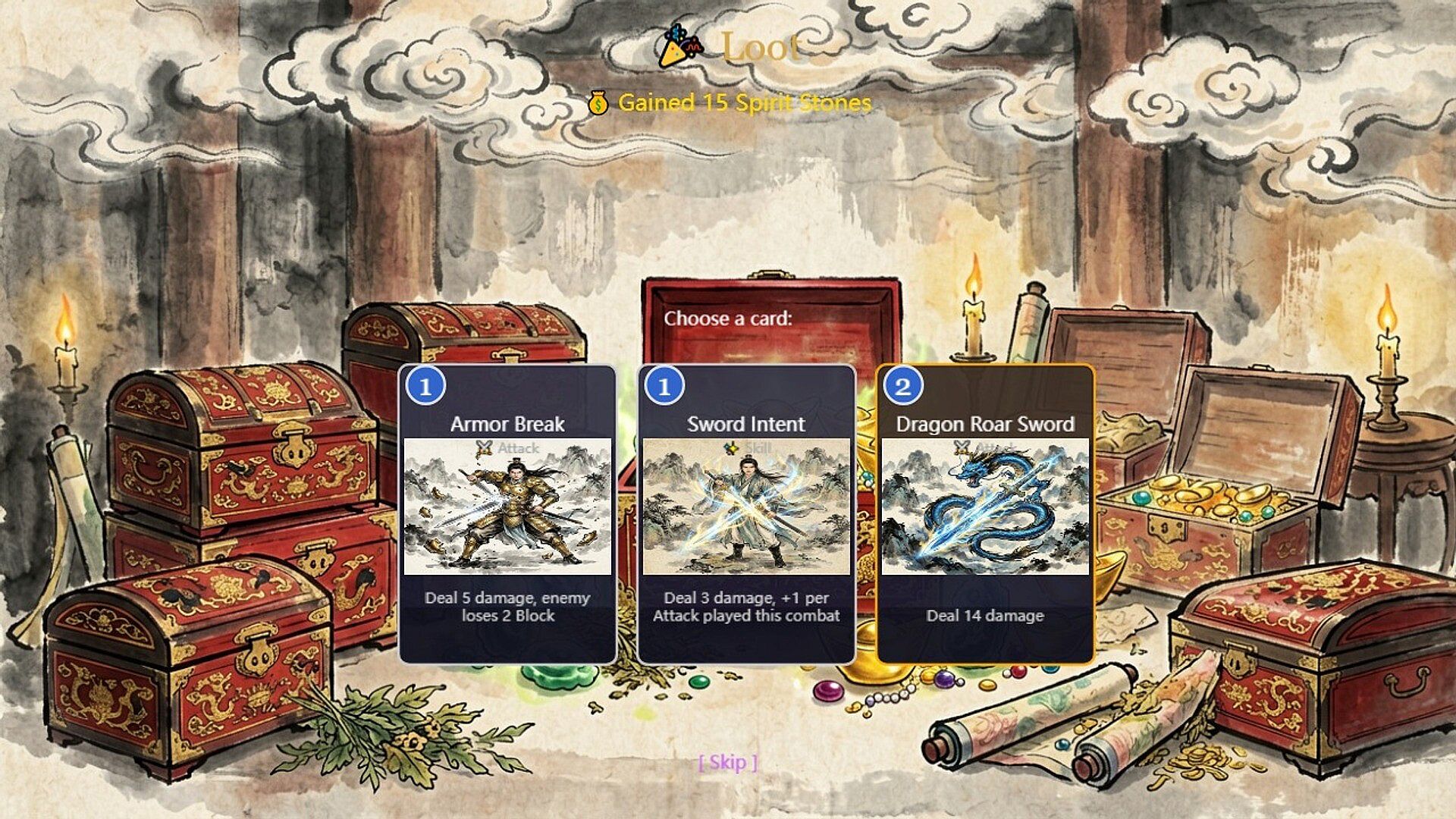
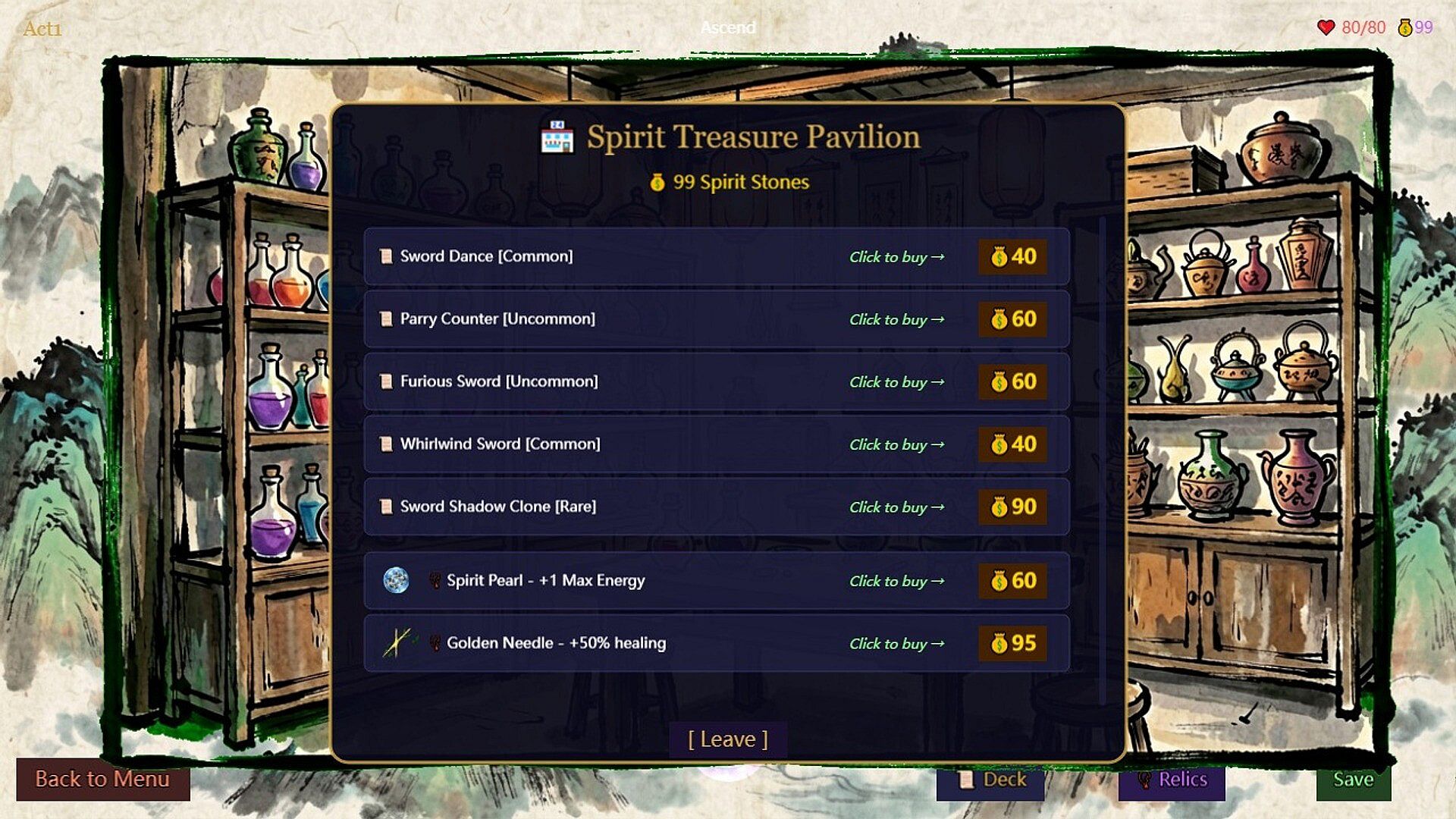
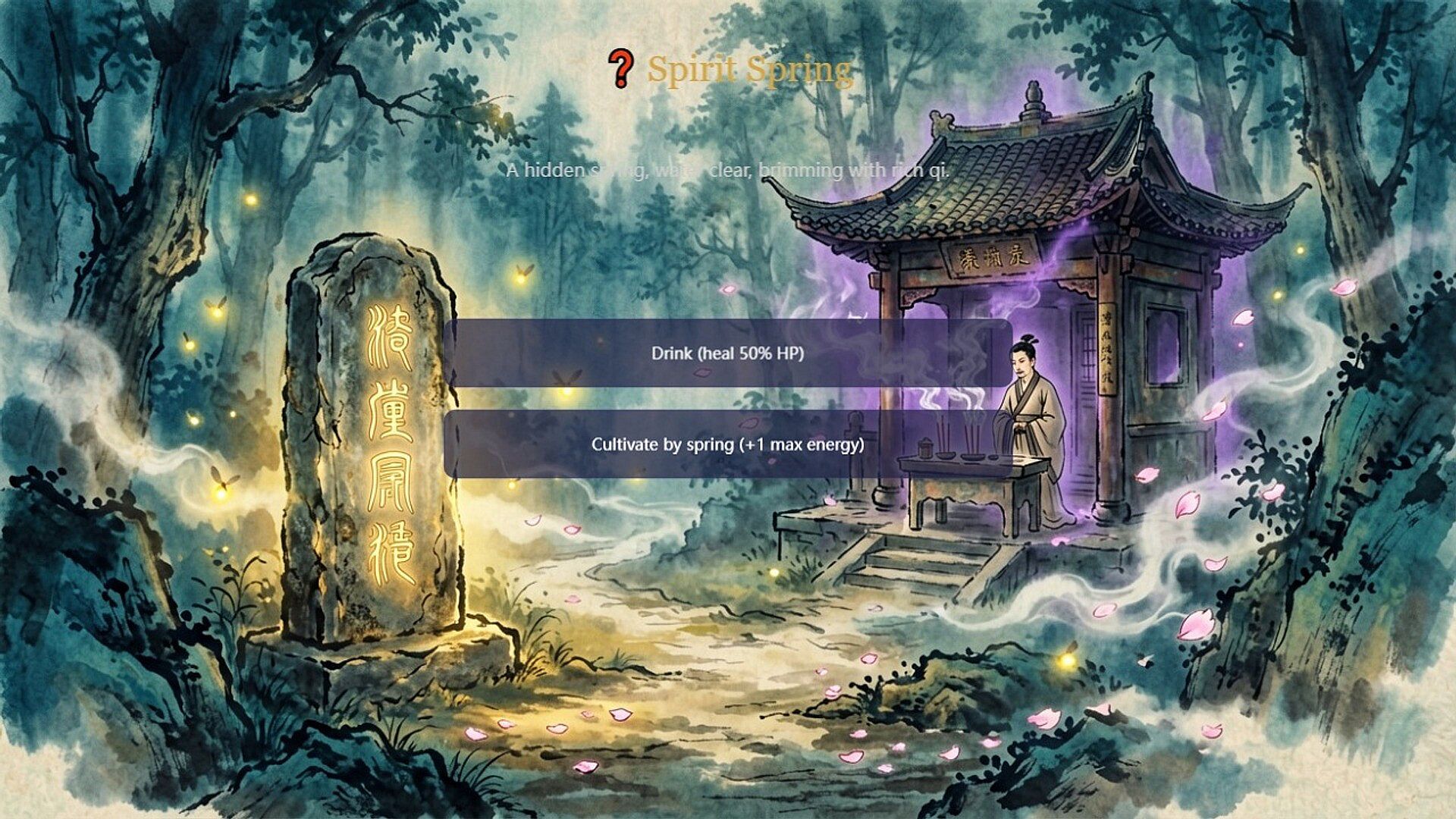
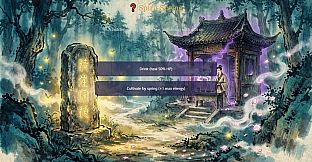
Artifacts collected during runs permanently alter combat dynamics. Examples include the Ancient Immortal-Slaying Sword for increased damage output, the Jade Ring for expanded lifespan, and the String of Coins for doubled loot gains. Dozens of such items interact with cards to create varied builds. Players visit Treasure shops to trade with spirit stones, Rest springs for recovery and meditation, and Box secret stashes for additional rewards. Map nodes present choices between Battle encounters with common demons, Peril zones with elite enemies, Demon act bosses, Treasure shops, Rest points, Box stashes, and Fate random encounters that can yield fortune or risk.
Game Modes
The game operates as a singleplayer experience centered on individual runs. Each attempt generates fresh map layouts, encounters, and rewards, ensuring no two paths repeat. A single-run save system allows pausing and resuming at any point. Difficulty escalates across the twenty-one acts as players defeat act bosses to advance realms. The structure emphasizes strategic deckbuilding and resource management without additional separate modes.
Art and Presentation
Visuals draw directly from ink-wash painting traditions to depict cloud seas, floating immortal mountains, and character designs. This style supports an Eastern fantasy atmosphere across all acts and encounters. The game includes support for multiple languages including Chinese, English, Japanese, Korean, French, German, Russian, Spanish, and Portuguese for broad accessibility.
Is It Worth Playing?
This title suits players who enjoy strategic card roguelikes with layered progression systems and procedural variety. The three classes offer clear mechanical differences that encourage repeated runs to explore synergies between cards and artifacts. The twenty-one-act structure provides a clear sense of advancement through escalating challenges, while the single-run save feature accommodates shorter sessions. Those drawn to cultivation-inspired themes and deliberate buildcrafting will find consistent depth in deck construction and node decisions. Availability on PC makes it straightforward to try for anyone interested in the genre combination of strategy and roguelike elements.











