













Television Dynasty Manager is a strategy and simulation game in which players manage a television network from the ground up. Set in America starting in 1950, the title places you in charge of the smallest station in the country, with limited broadcast hours and reach. Success requires careful programming decisions, financial management, and long-term planning to outpace three rival networks and build a lasting television dynasty.
Gameplay
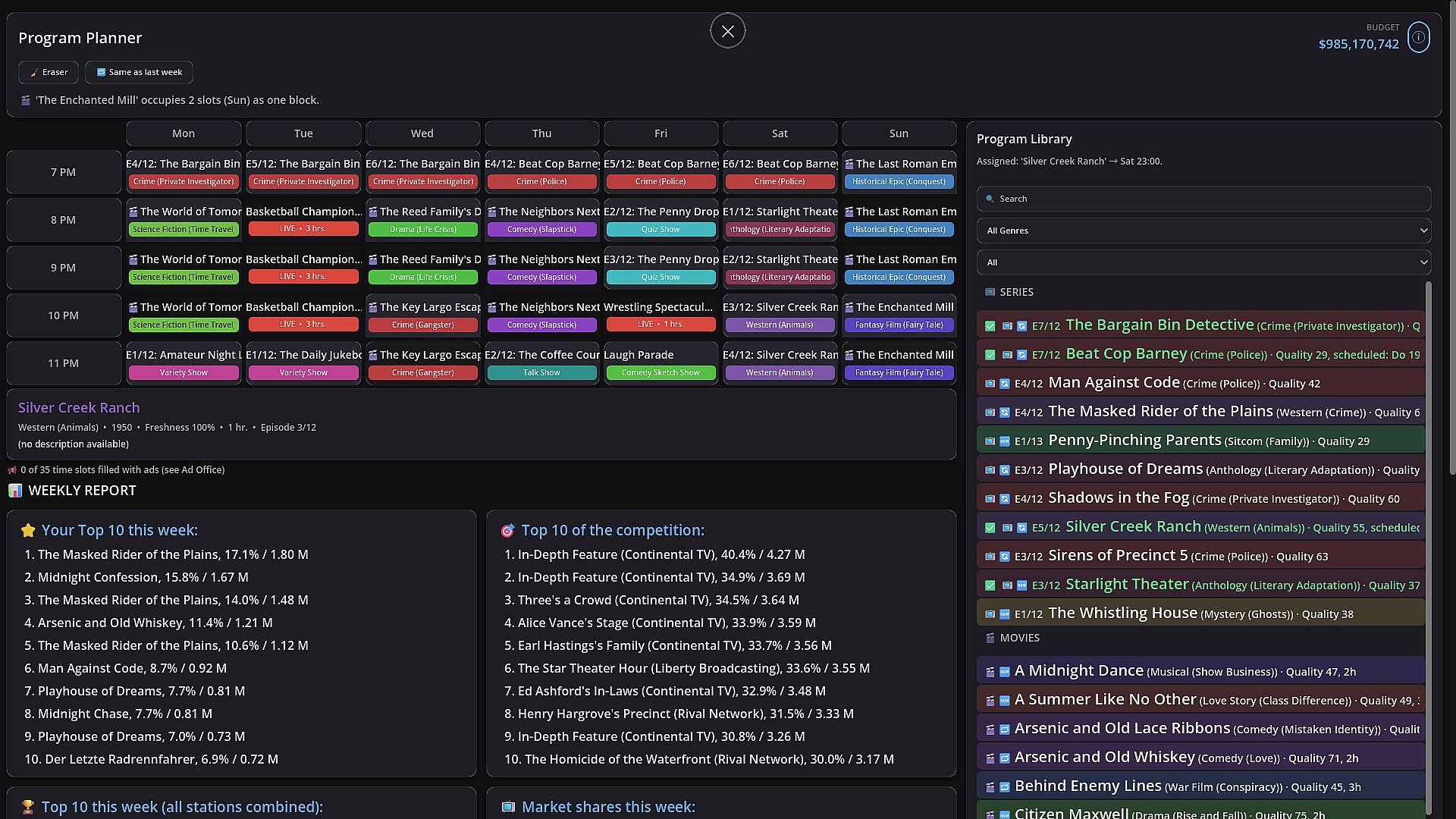
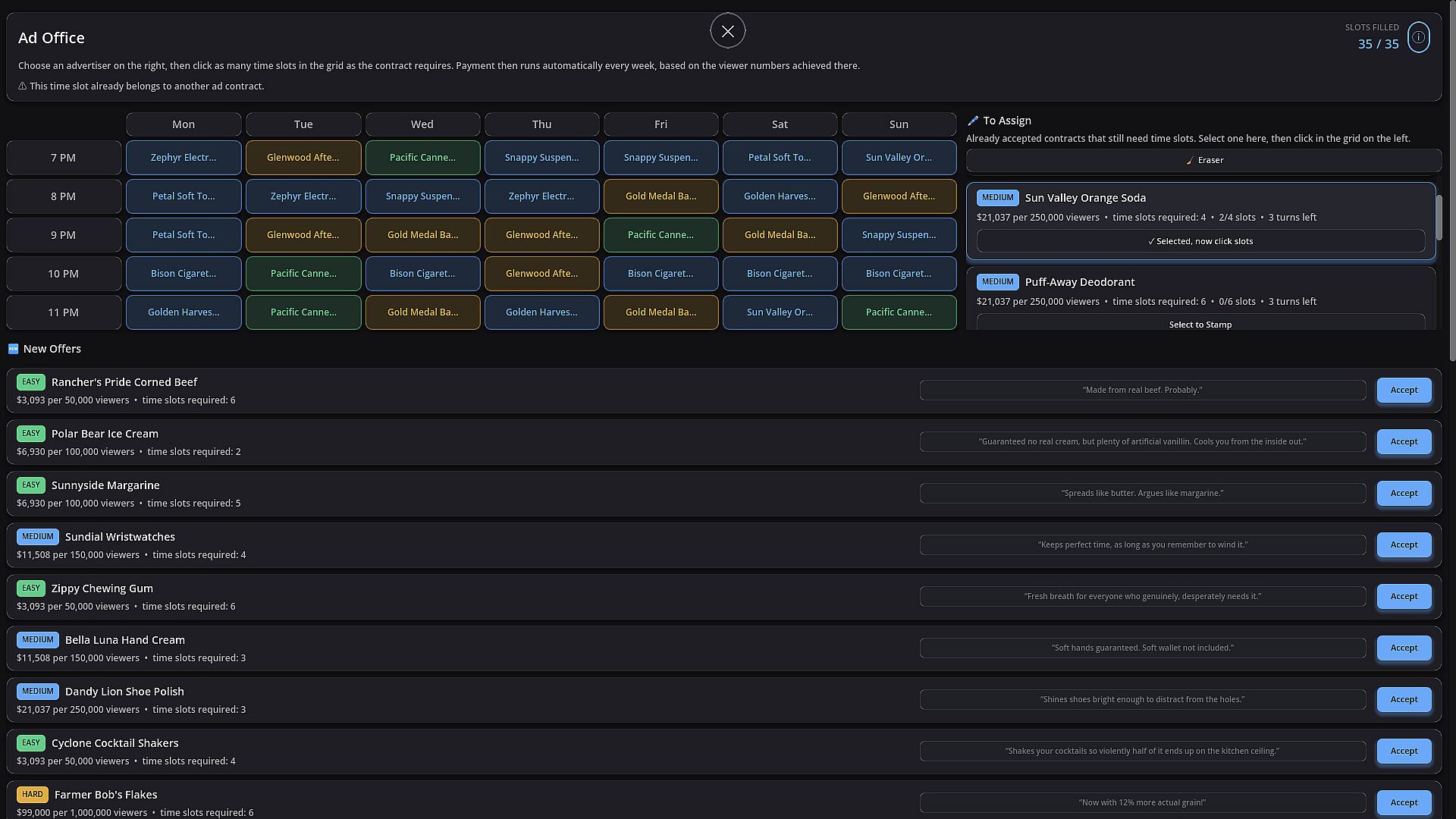
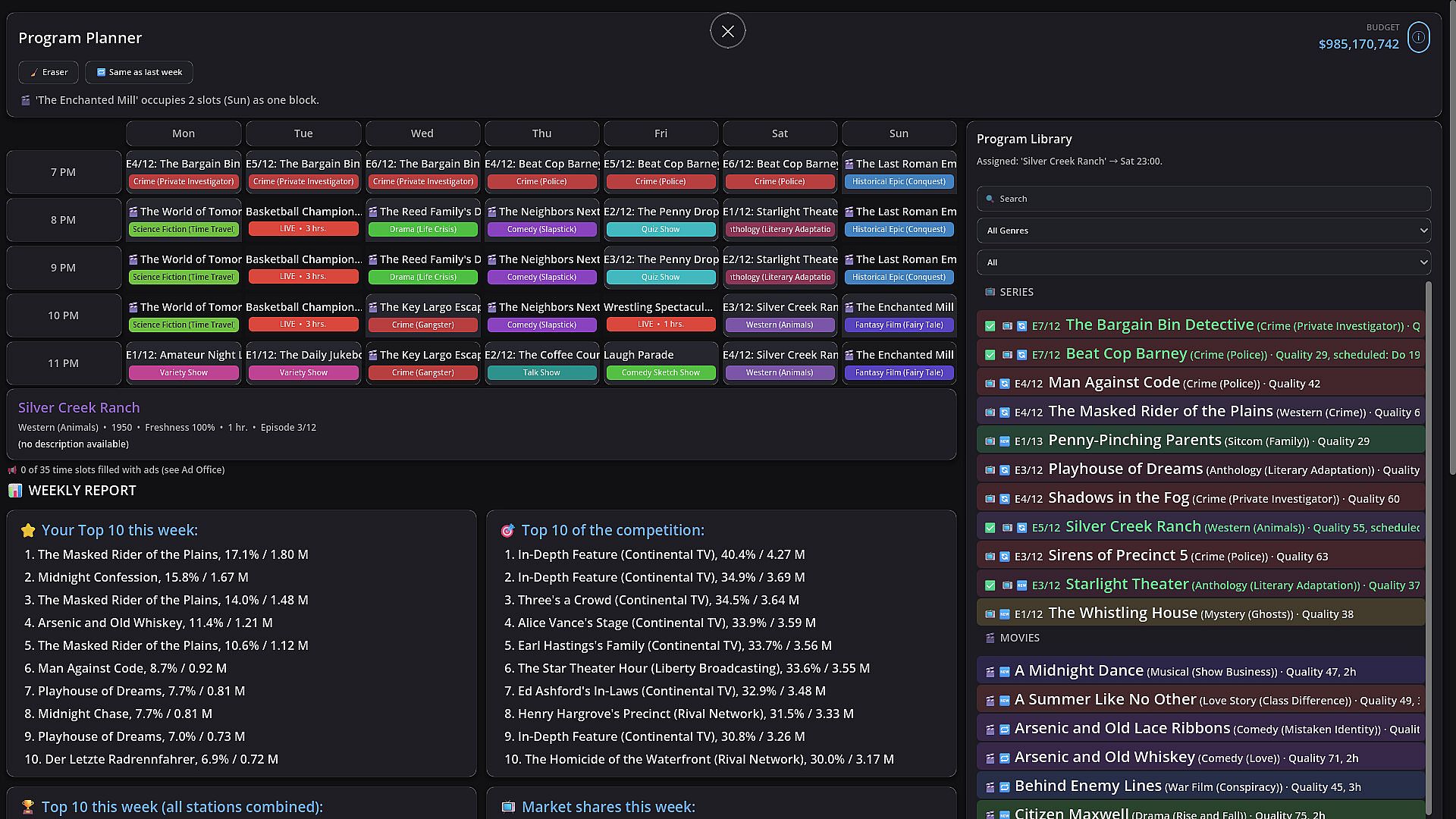
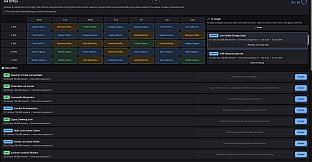
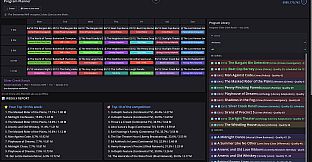
The core loop centers on nightly scheduling from Monday through Sunday. Players select from more than 4,700 available films, series, and shows to fill time slots, balancing viewer appeal across different hours and days. Advertising deals generate revenue based on audience size, which funds further growth and acquisitions.
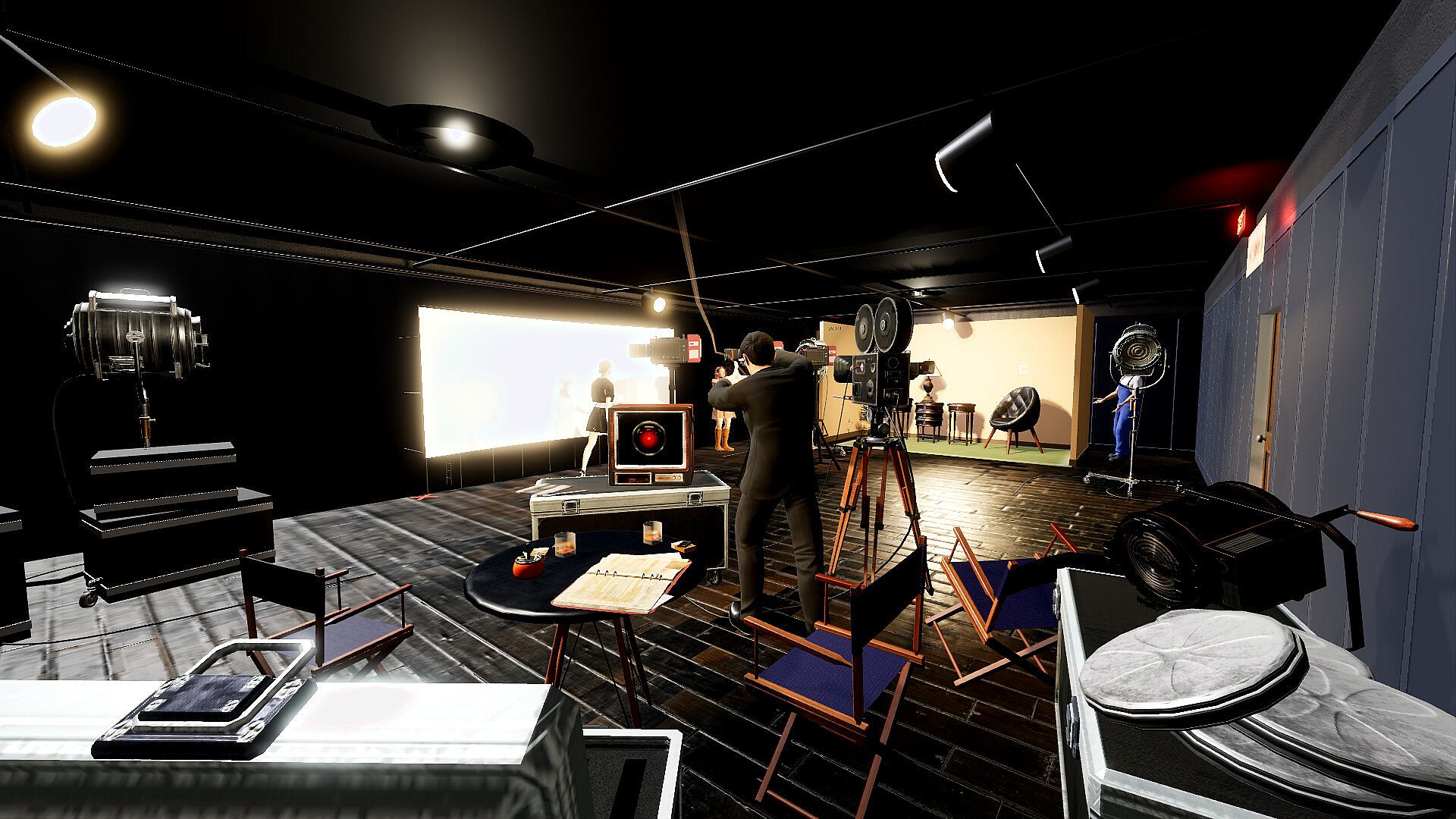
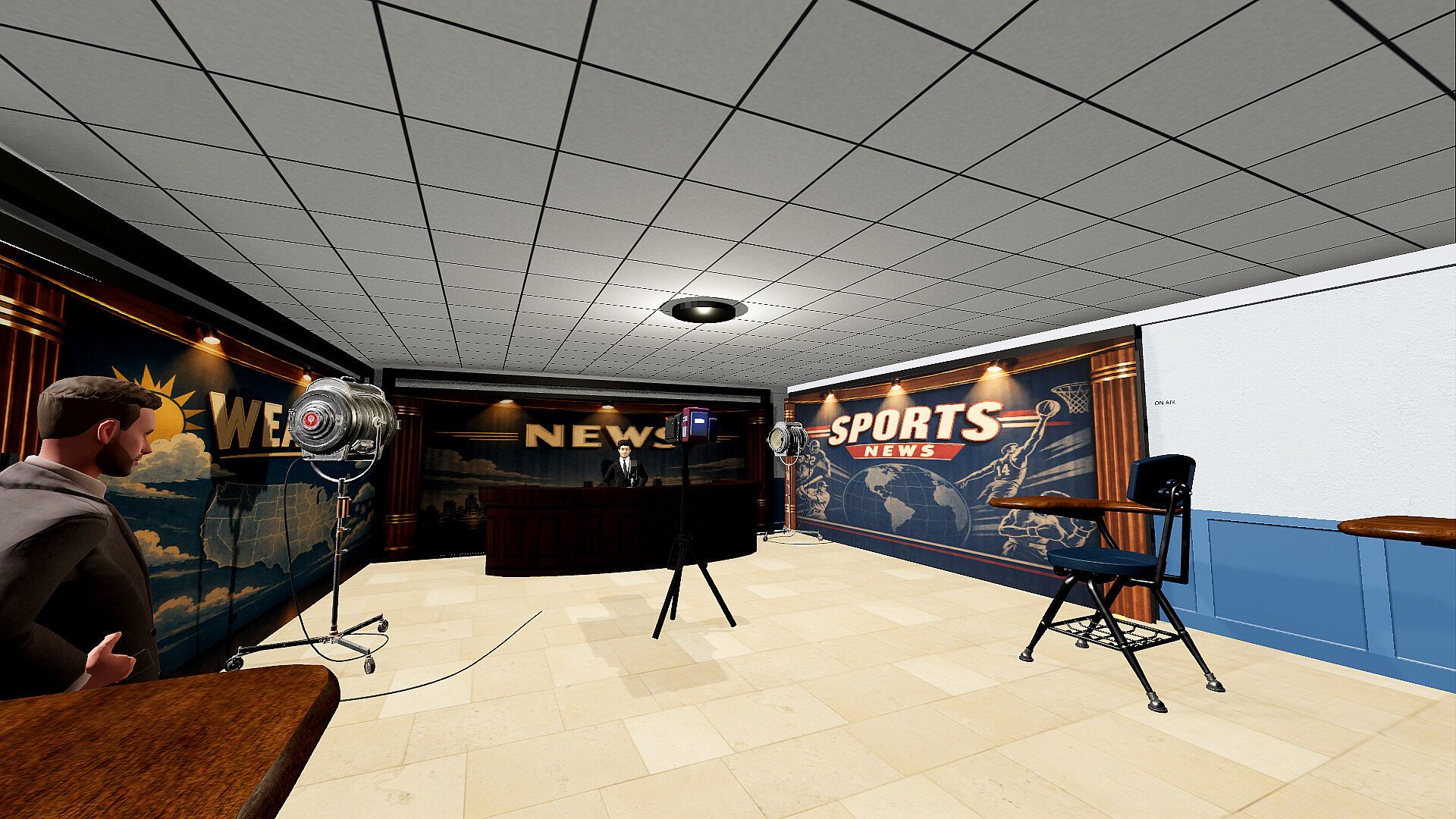
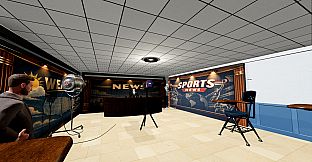
Program trading forms another key system. Stations buy promising content and sell underperforming titles to optimize ratings. Network expansion involves constructing studios for in-house productions and a dedicated newsroom, while extending broadcast coverage and increasing airtime to reach larger audiences.
Original content creation adds depth through a production system. Genre and subgenre choices combine with writers, directors, actors, and co-stars to generate thousands of possible outcomes. Hiring decisions directly influence the quality and popularity of new shows. Historical progression tracks real television milestones, with events such as major live broadcasts arriving on schedule. A newspaper feature highlights influential programs and emerging genres, requiring adaptive responses to competitor successes.
Additional mechanics include bidding on rights for major live events like the Olympics or the Moon landing. Audience analysis tools provide detailed statistics on genre performance by time, day, and preceding show, allowing patterns such as dedicated sitcom nights to develop over years. Rival networks compete directly on the yearly ratings chart, with the Benny Awards serving as the ultimate recognition for top performance.
Game Modes
The game operates as a single-player business simulation focused on long-term network management. Players guide one station through successive decades, starting with the 1950s and 1960s at launch. Progression emphasizes building from limited evening broadcasts to a dominant position through consistent scheduling, production, and expansion choices.
Decade-by-decade advancement forms the central structure, with each period introducing era-specific content and challenges. Future updates will extend the timeline further while preserving the core management loop of scheduling, trading, producing, and competing. This format supports extended play sessions centered on refining audience habits and responding to historical television developments.
Development and Future Plans
Television Dynasty Manager launched in Early Access with the 1950s and 1960s fully playable. The developer plans ongoing additions that reflect evolving television technology and formats, including color broadcasting, cable options, home video competition, high-definition standards, internet integration, and streaming services. International trade features, syndication of older hits, and expanded production tools are also scheduled.
Community input through forums influences priorities, with the title positioned for multi-year support. The experience remains fully playable in multiple languages from the start, including English, German, French, and others.
Is It Worth Playing?
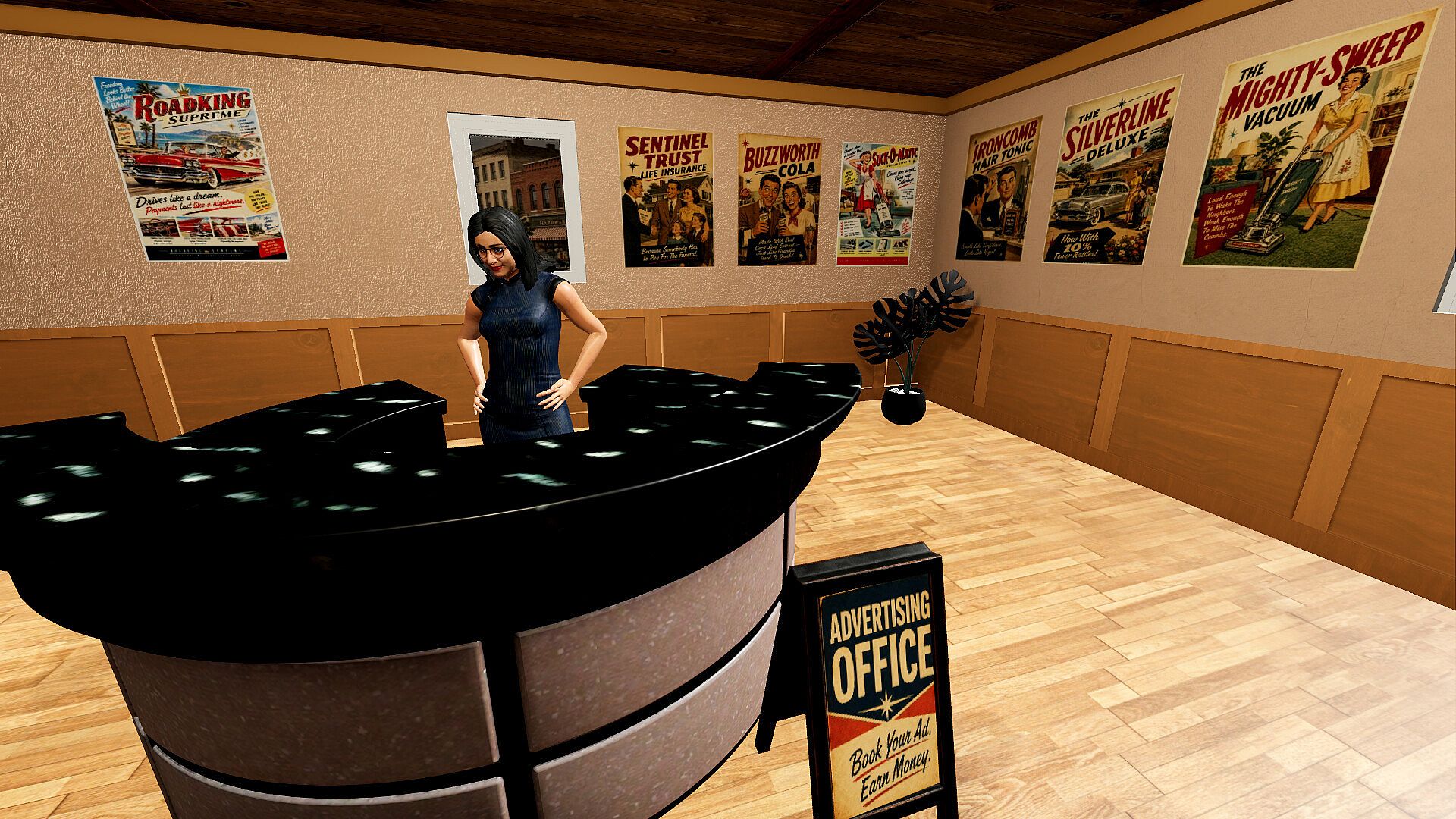
This title suits players who enjoy detailed management simulations with historical themes and incremental empire building. The first-person 3D perspective and focus on television programming create a distinctive niche within the strategy and simulation genres. Those drawn to long-term progression, audience data analysis, and competitive elements against AI rivals will find substantial depth in the scheduling and production systems.
Early Access status means the available decades deliver a complete starting experience, with planned updates extending the scope over time. The game rewards careful observation of viewer trends and strategic responses to rival moves. It appeals particularly to fans of television history who appreciate the blend of business decisions and creative control over content. If the core loop of building schedules, managing finances, and producing hits aligns with your interests in simulation games, the current version offers meaningful playtime with clear paths for continued development.











