




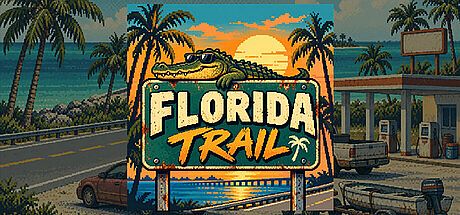



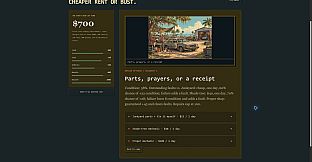
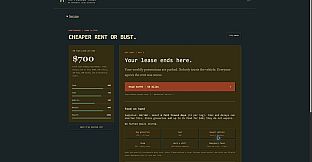
The Florida Trail is an indie adventure game with survival and comedy elements set in a choice-driven road trip from Key West toward Georgia. Players manage limited resources while navigating unreliable vehicles and unpredictable Florida encounters on the way north.
Gameplay
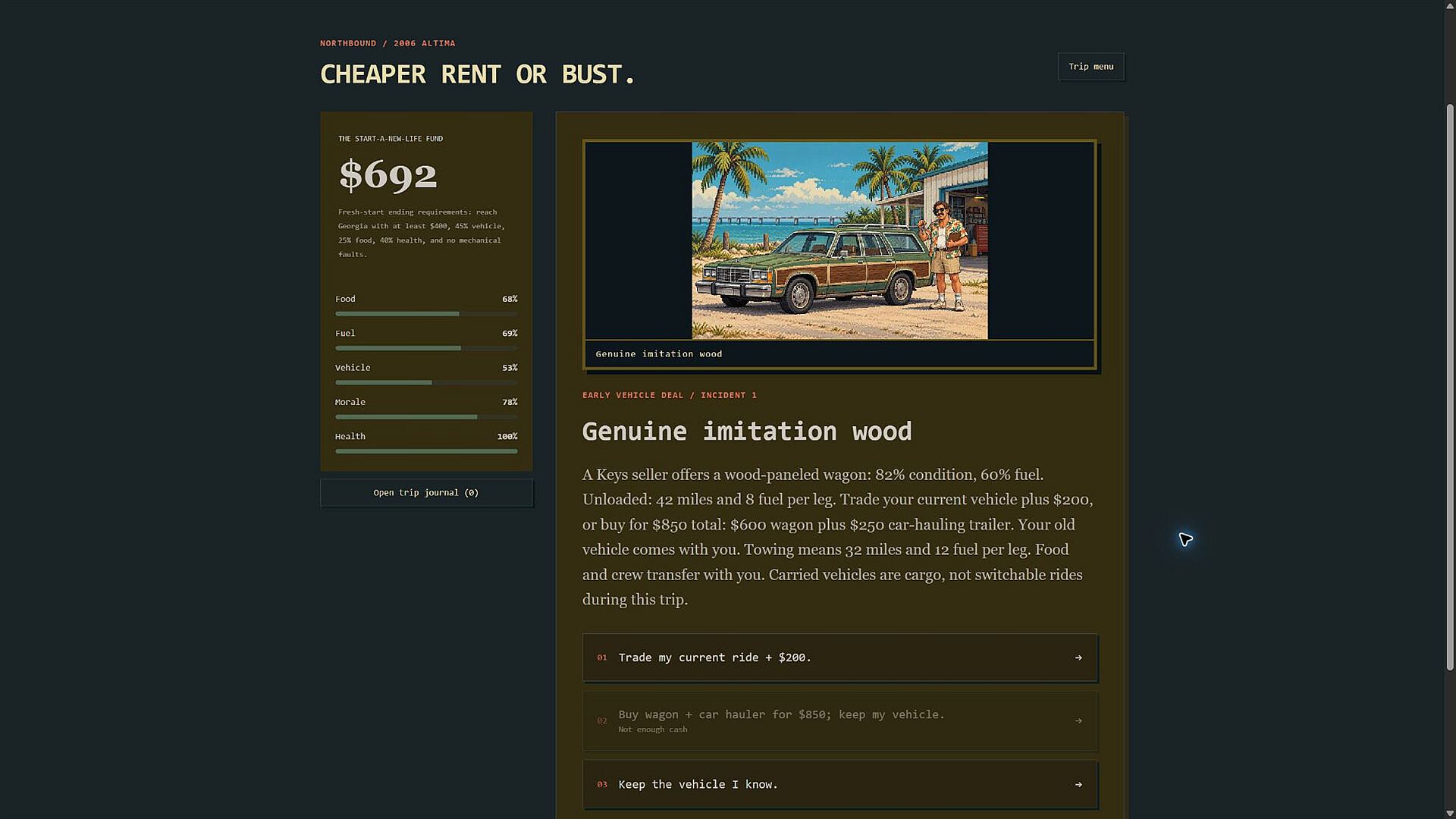
Core play revolves around selecting one of four starting vehicles, each with distinct budgets, fuel consumption rates, and mechanical issues that shape the journey. An aging sedan offers basic reliability but limited space, while a rusted pool truck provides more cargo at the cost of higher fuel use and frequent breakdowns. A bargain bicycle keeps expenses low but exposes the player to weather and fatigue, and a four-wheeler towing a boat adds towing complications alongside potential water-based shortcuts or problems.
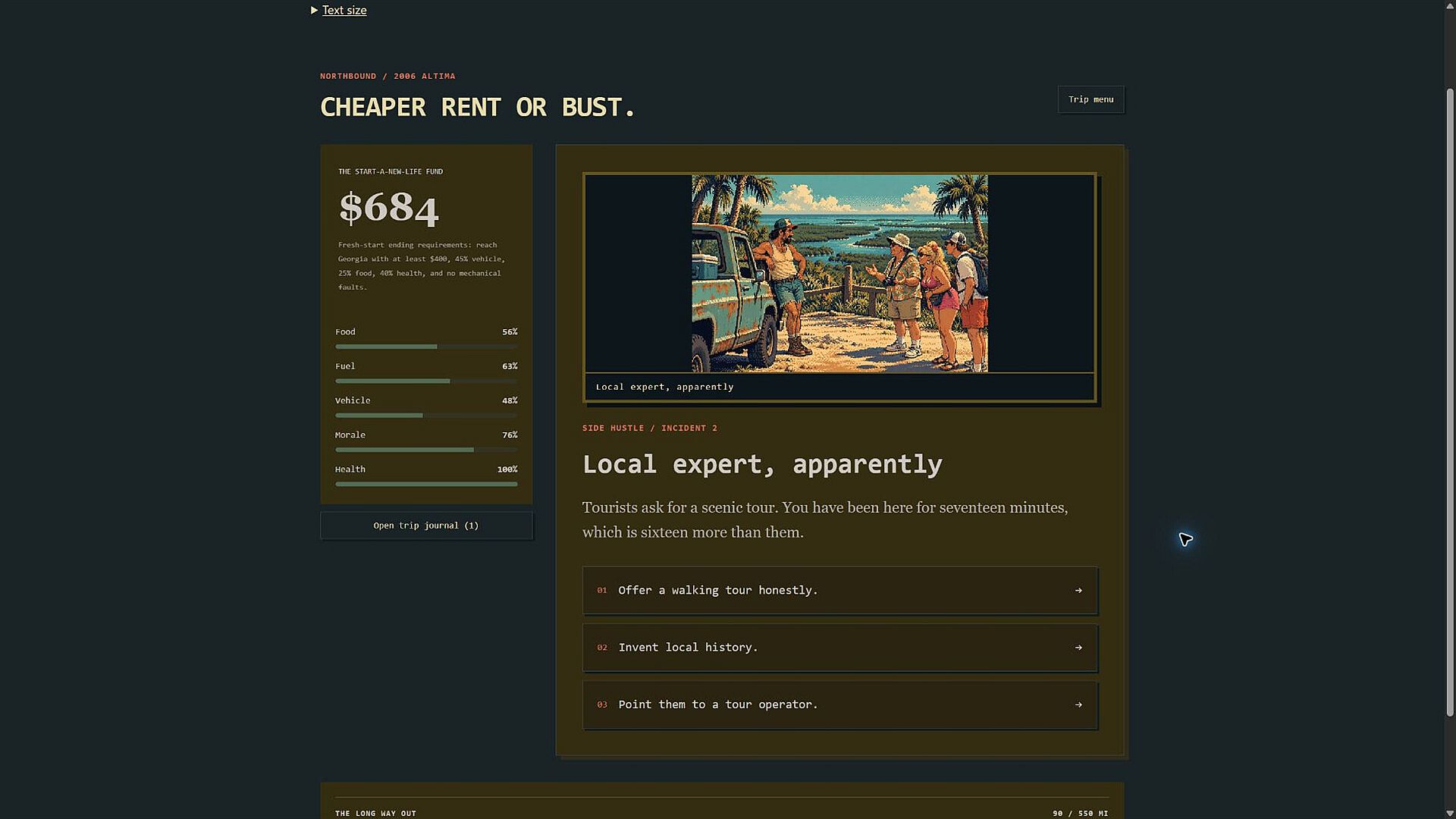
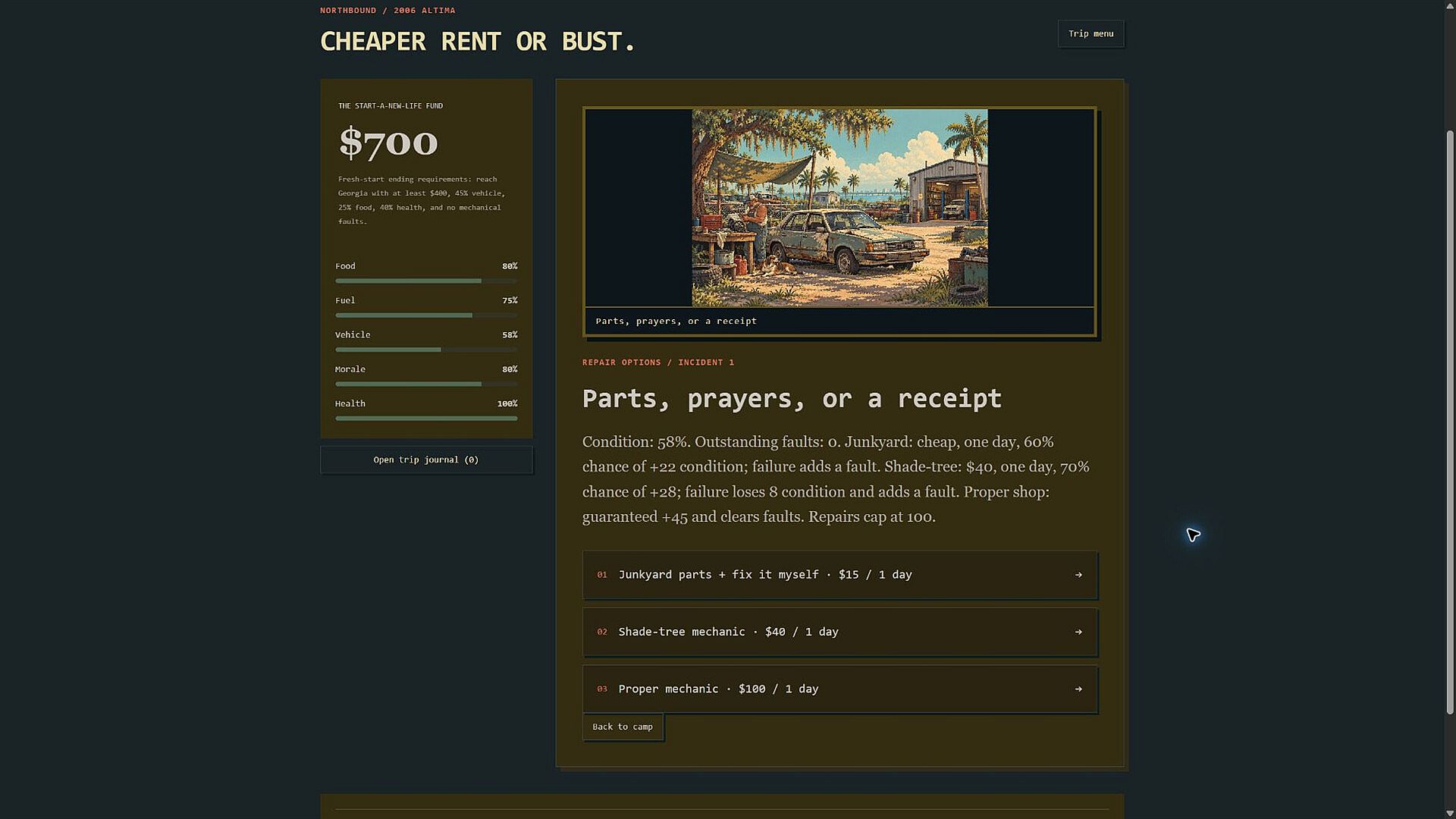
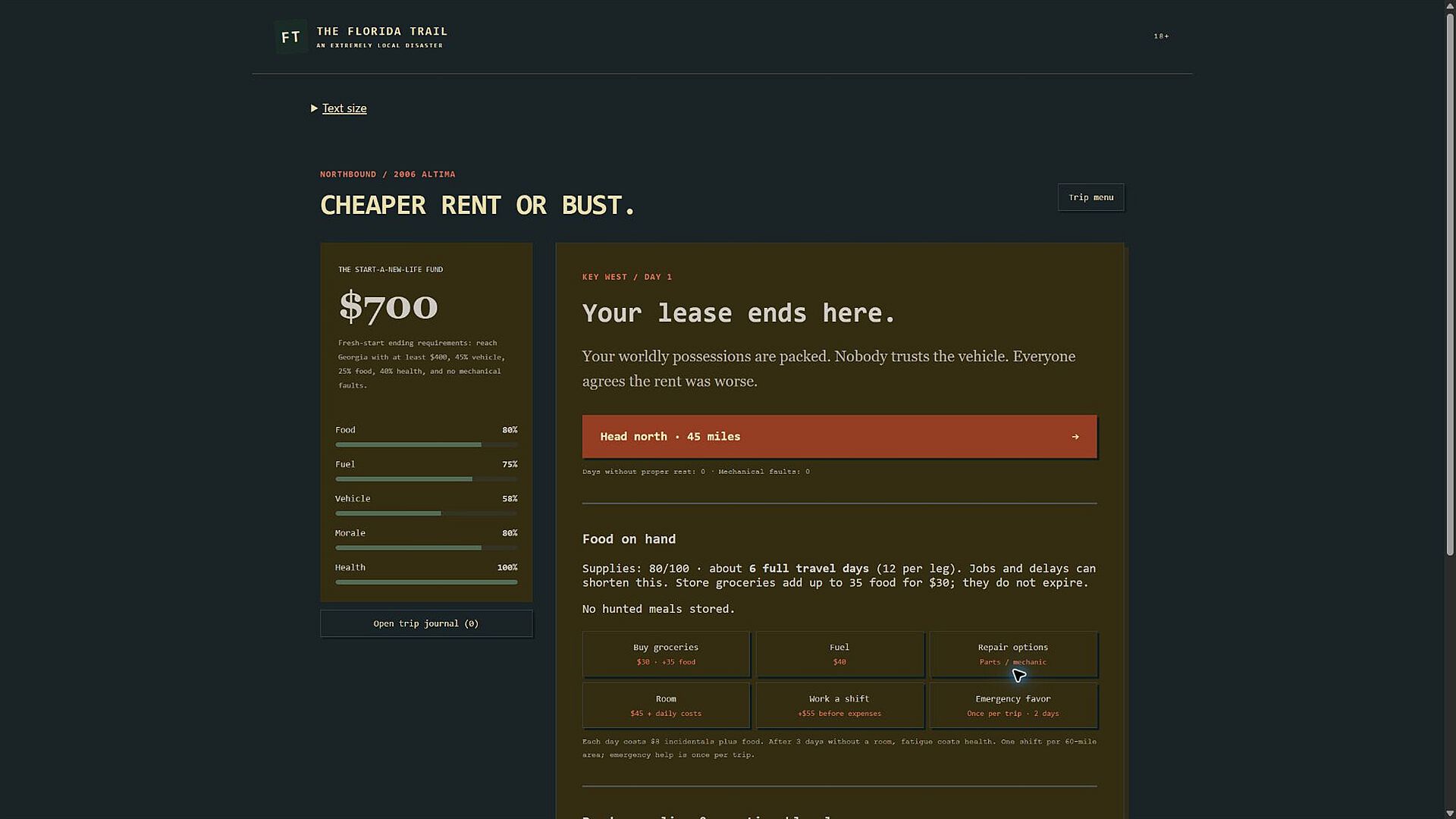
Resource management forms the daily loop. Players track food that can spoil, fuel that must be purchased or conserved, cash earned through side jobs or trades, personal health, morale, and overall vehicle condition. Decisions include whether to buy fresh groceries, pay for professional repairs, or risk a shade-tree mechanic in a junkyard. Ignoring minor faults often escalates into major expenses or stranding events.
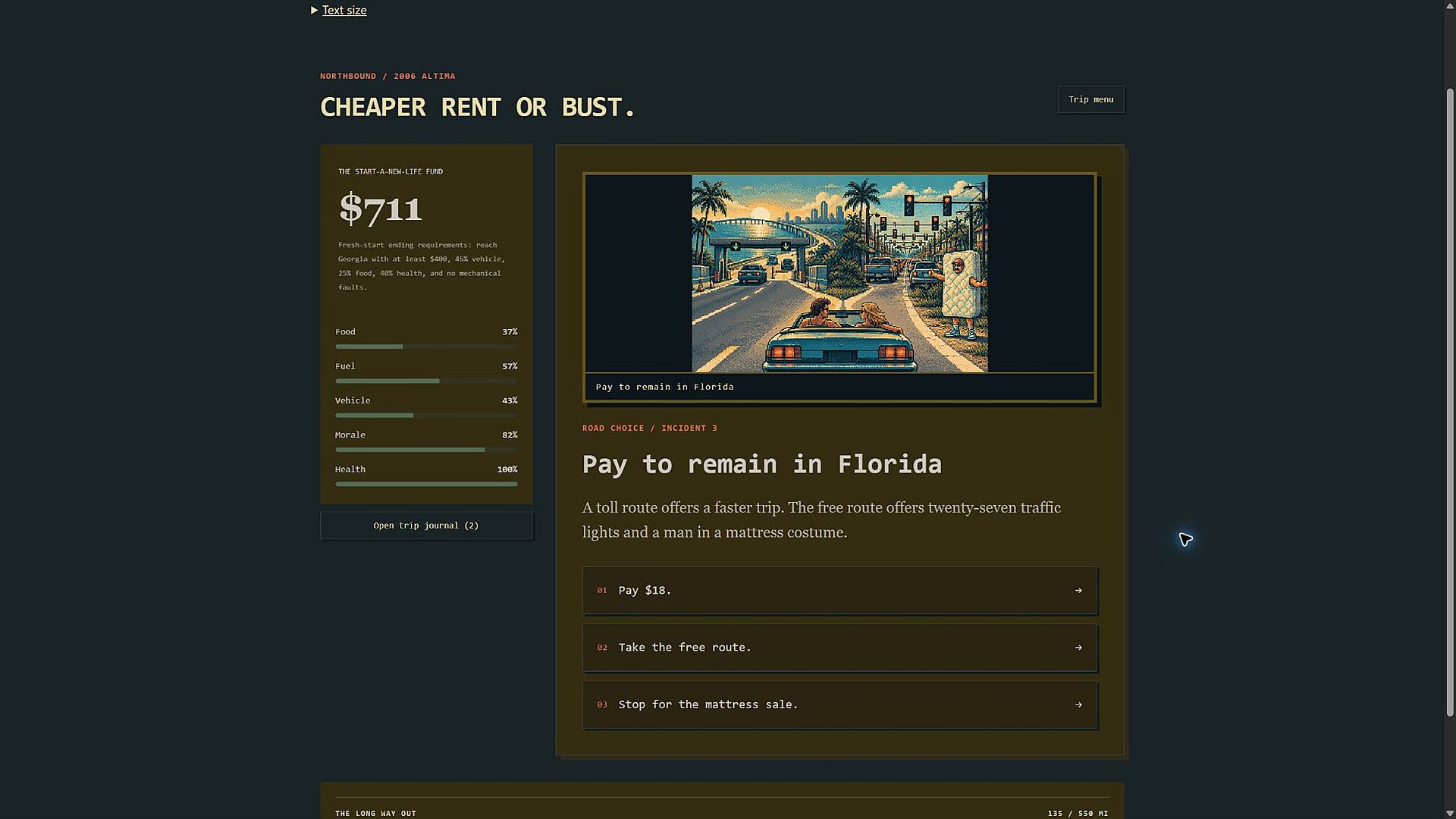
Route selection adds variety and risk. Travelers follow US-1 for scenic but slower progress, shift to faster interstate segments when the vehicle can handle it, or attempt rough backwoods roads that promise shortcuts yet increase mechanical stress and encounter chances. On-screen choices handle interactions with diner strangers, roadside bargains, storm shelters, and wildlife that disrupts plans without warning. Retro pixel-art scenes accompany these moments with dark, distinctly Florida-flavored humor.
A trip journal records key events and decisions for reference across playthroughs. Progress saves locally, and text size adjusts for readability during longer sessions.
Game Modes
The game operates as a single-player experience focused on narrative choice and resource survival. No separate multiplayer or competitive modes exist. Instead, replay value comes from selecting different starting vehicles, altering route priorities, and responding to random encounters that change each run. One playthrough might emphasize careful budgeting and professional repairs for a stable arrival, while another tests riskier trades and backroads for quicker but more chaotic results. These variations create distinct outcomes without requiring additional modes.
Key Mechanics and Features
Vehicle-specific opportunities appear throughout the trip, such as trading for new rides or performing on-the-spot fixes that suit the current transport. Roadside trades and side jobs provide income streams that must balance against rising costs for fuel, food, and maintenance. Health and morale decline from poor decisions or harsh conditions, forcing players to weigh short-term comforts like a real bed against long-term relocation funds.
Events remain fictional and serve the comedy and survival tone rather than real-world guidance. Strong language, drug references, and depictions of fictional criminal situations appear alongside wildlife interactions that can injure characters or damage equipment.
Is It Worth Playing?
The Florida Trail suits players who enjoy management-focused adventures built around repeated decision-making and resource trade-offs. Its single-player structure rewards experimentation with vehicles and routes, producing fresh challenges on subsequent attempts. Early Access status means the experience continues to evolve, though the core loop of vehicle upkeep, cash flow, and route navigation already delivers consistent tension and humor. Those seeking light-hearted yet demanding survival narratives with strong Florida personality will find the systems engaging, while players preferring action or multiplayer competition may look elsewhere.











