







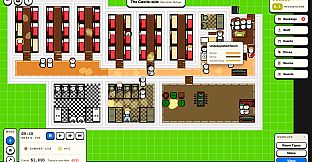
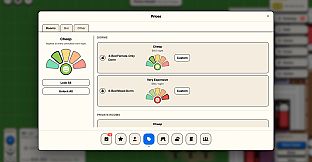
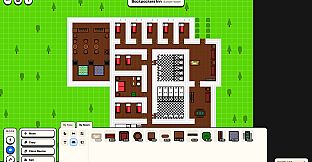
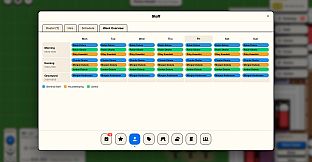
The Hostel Project est un jeu de simulation stratégique centré sur la gestion d'un auberge de jeunesse. Les joueurs gèrent les réservations, l'attribution des chambres, les améliorations du bâtiment, la planification du personnel et l'organisation d'événements dans différents lieux, tout en conciliant les attentes variées des voyageurs pour conserver une note élevée.
Gameplay
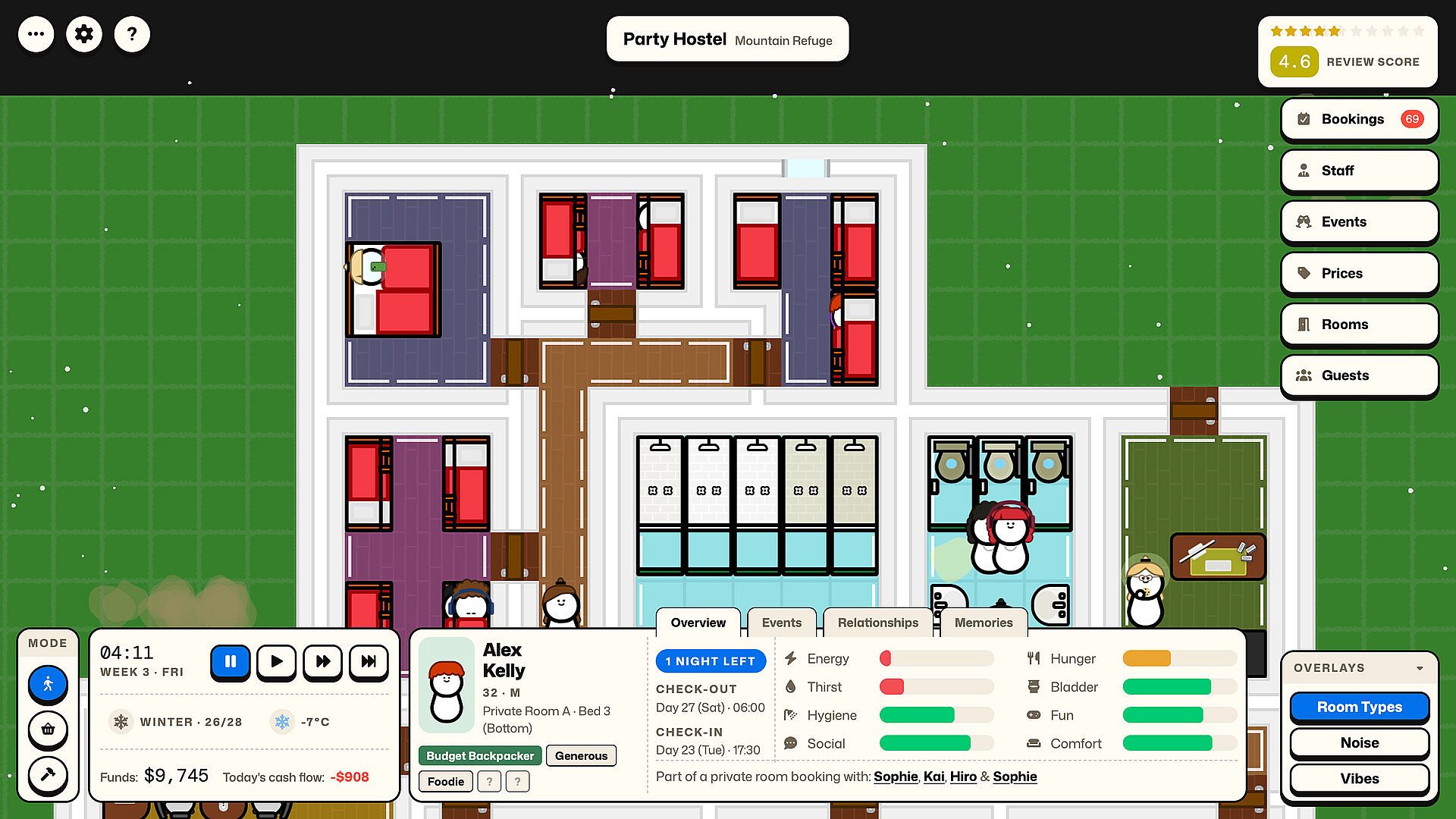
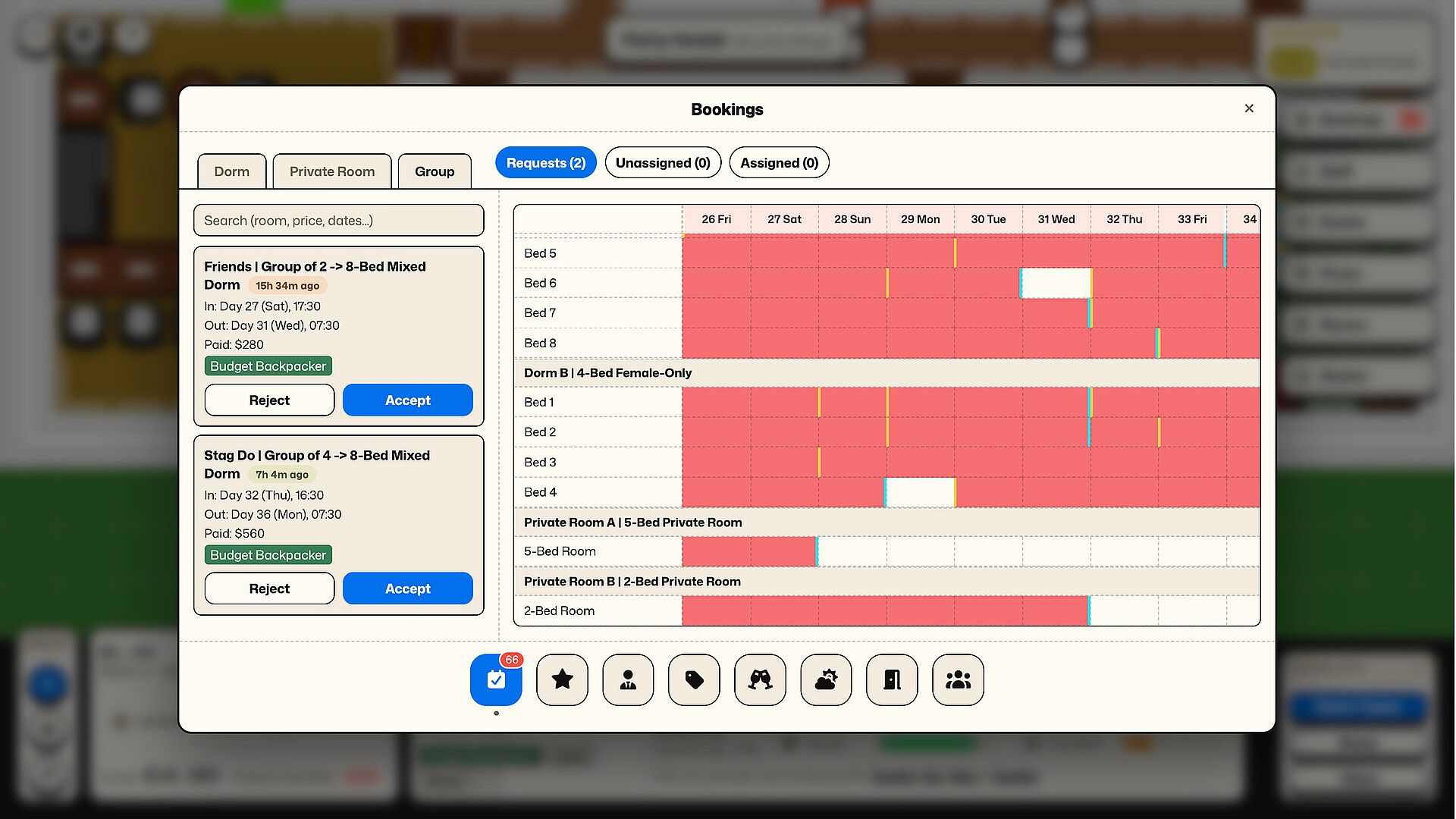
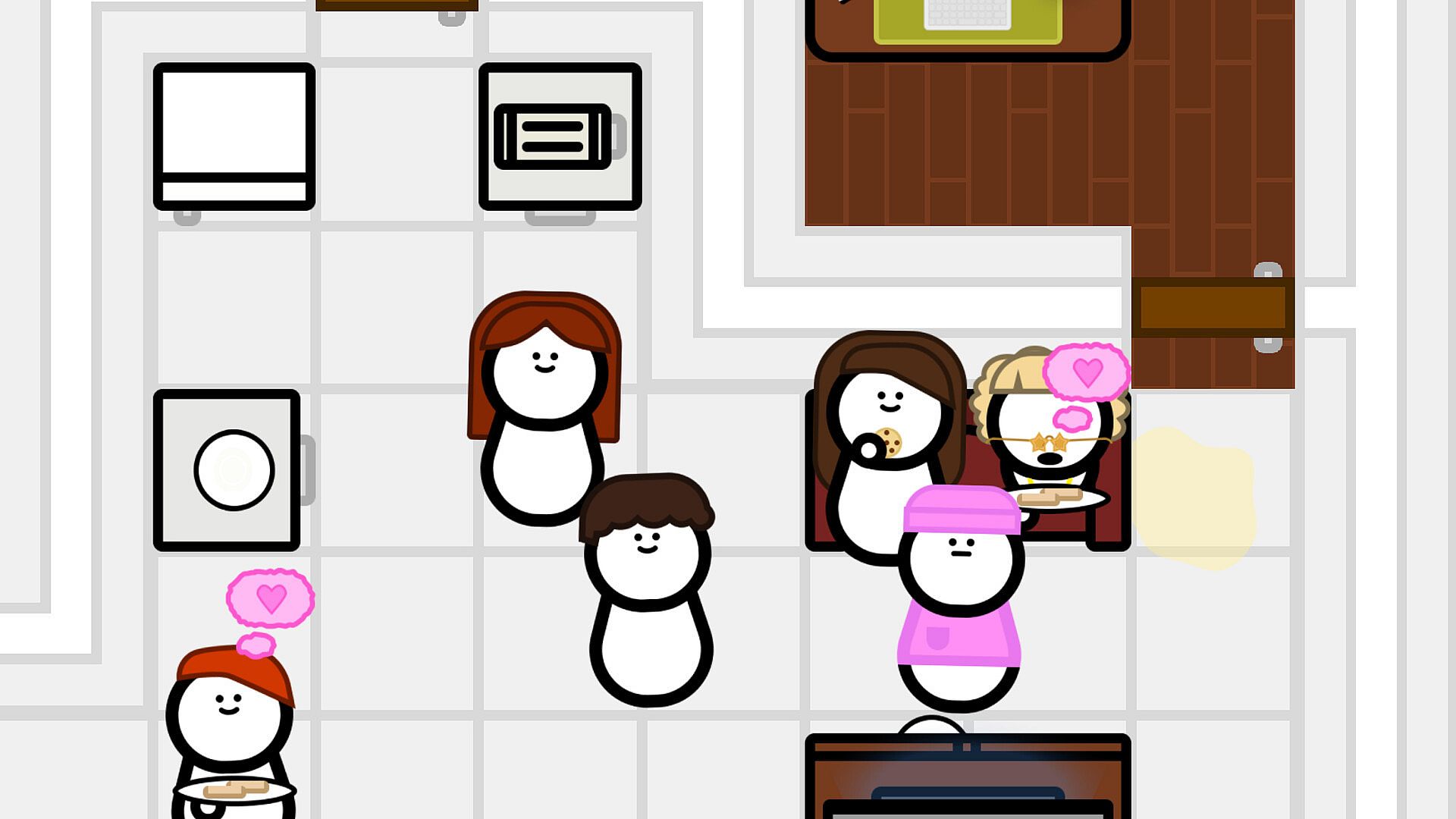
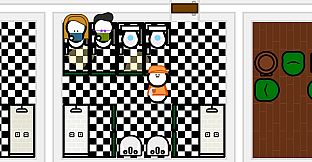
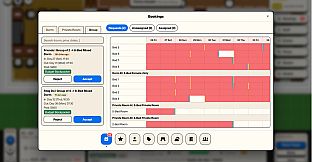
Le cœur du jeu repose sur le choix des demandes de réservation parmi différents profils de voyageurs, chacun doté d'archétypes et de traits qui influencent leur comportement et leurs interactions. Les clients colériques peuvent se plaindre des ronfleurs la nuit, les accros au téléphone préfèrent scroller plutôt que participer aux activités, et les voyageurs économes râleront sur les prix des distributeurs. Ces traits s'associent de façon imprévisible et créent des situations qui affectent directement la note globale.
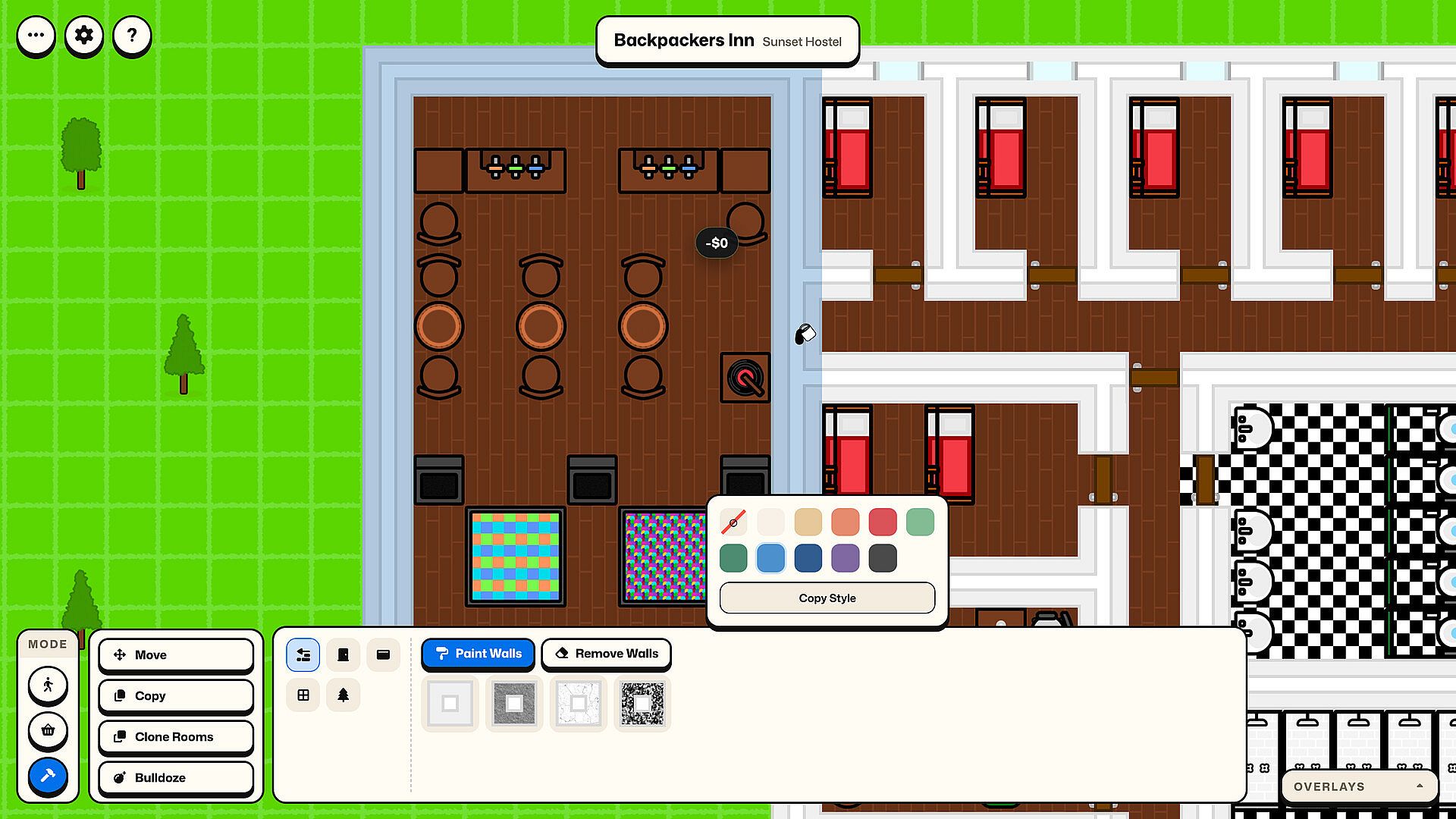
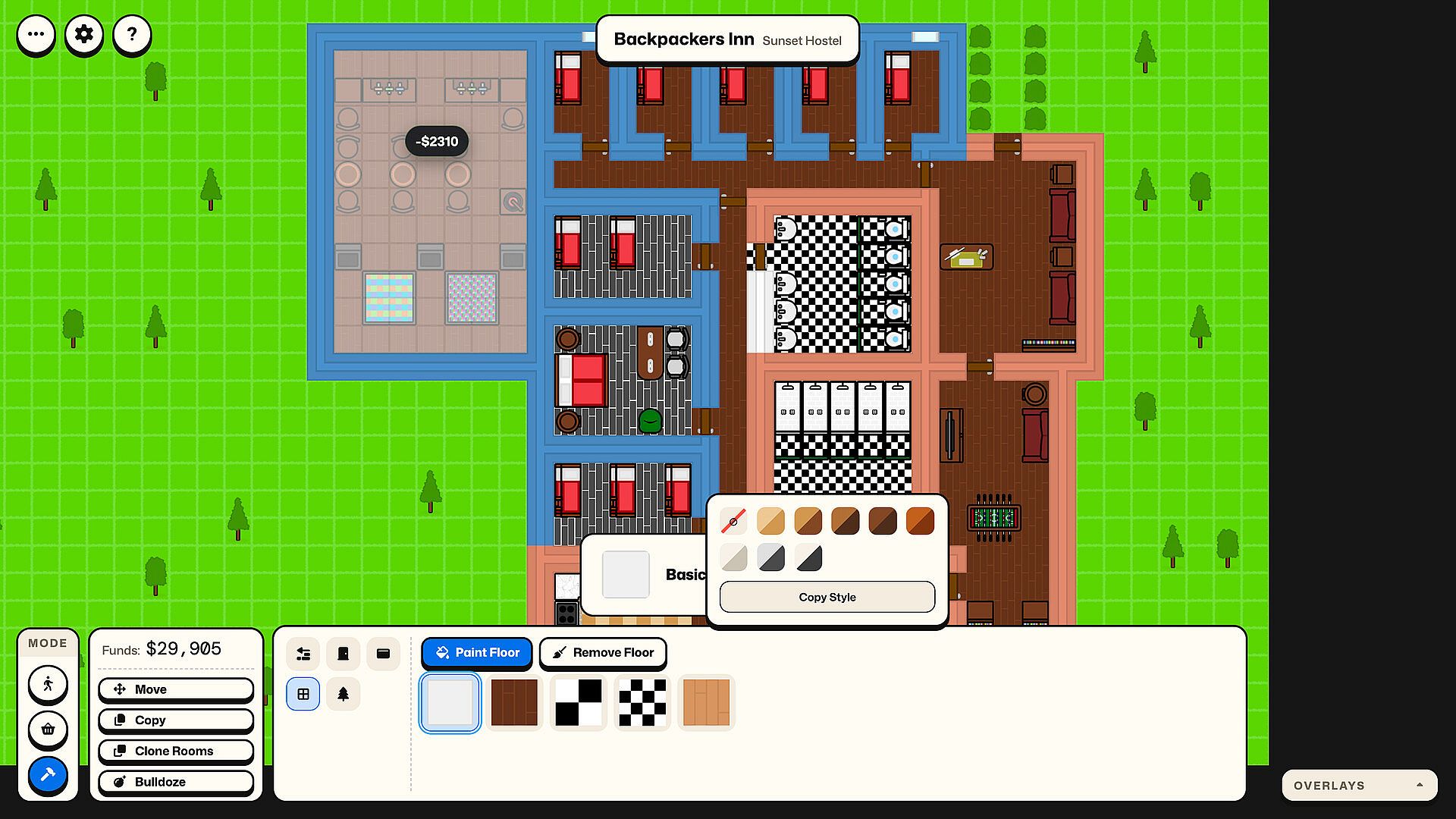
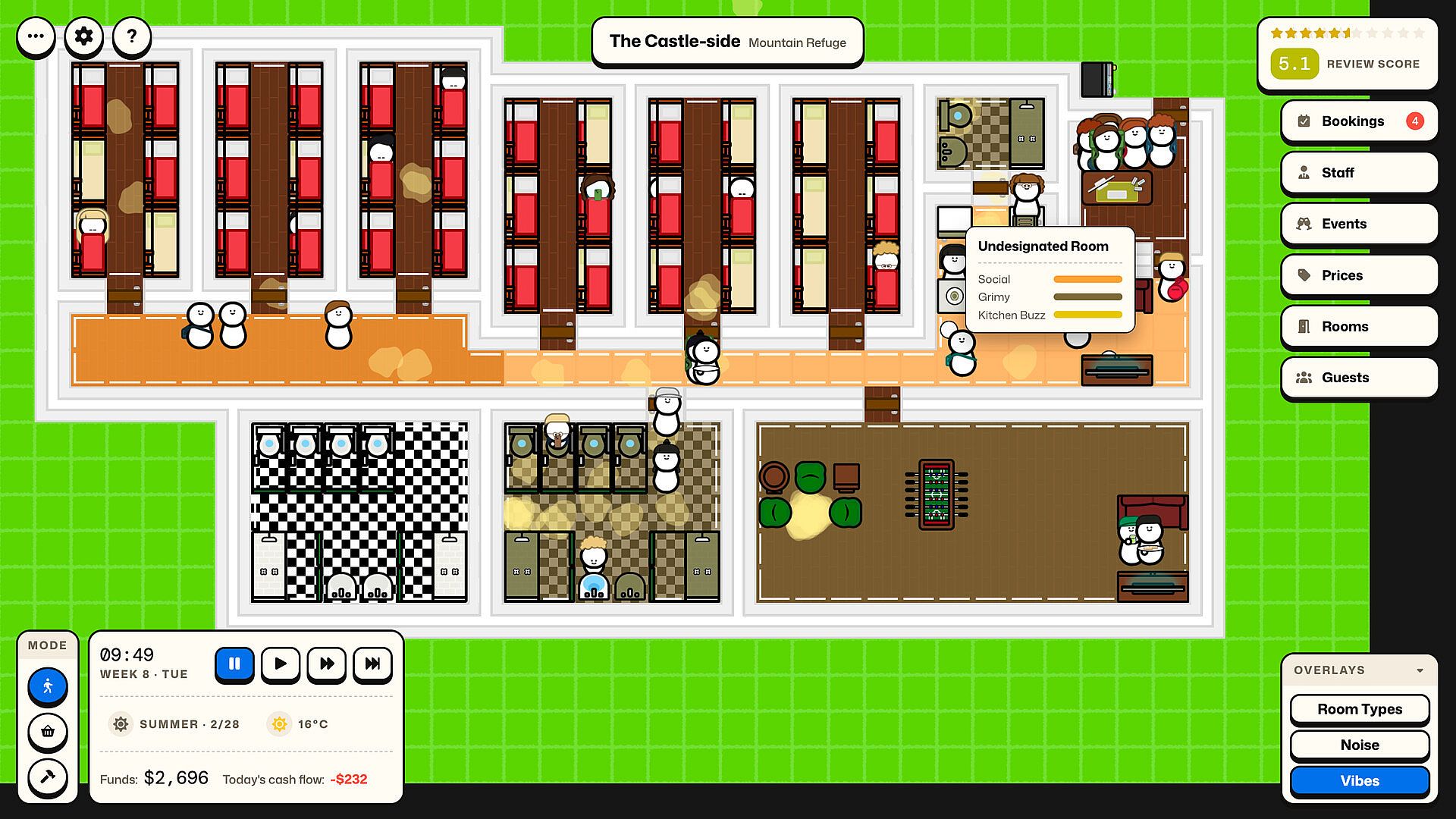
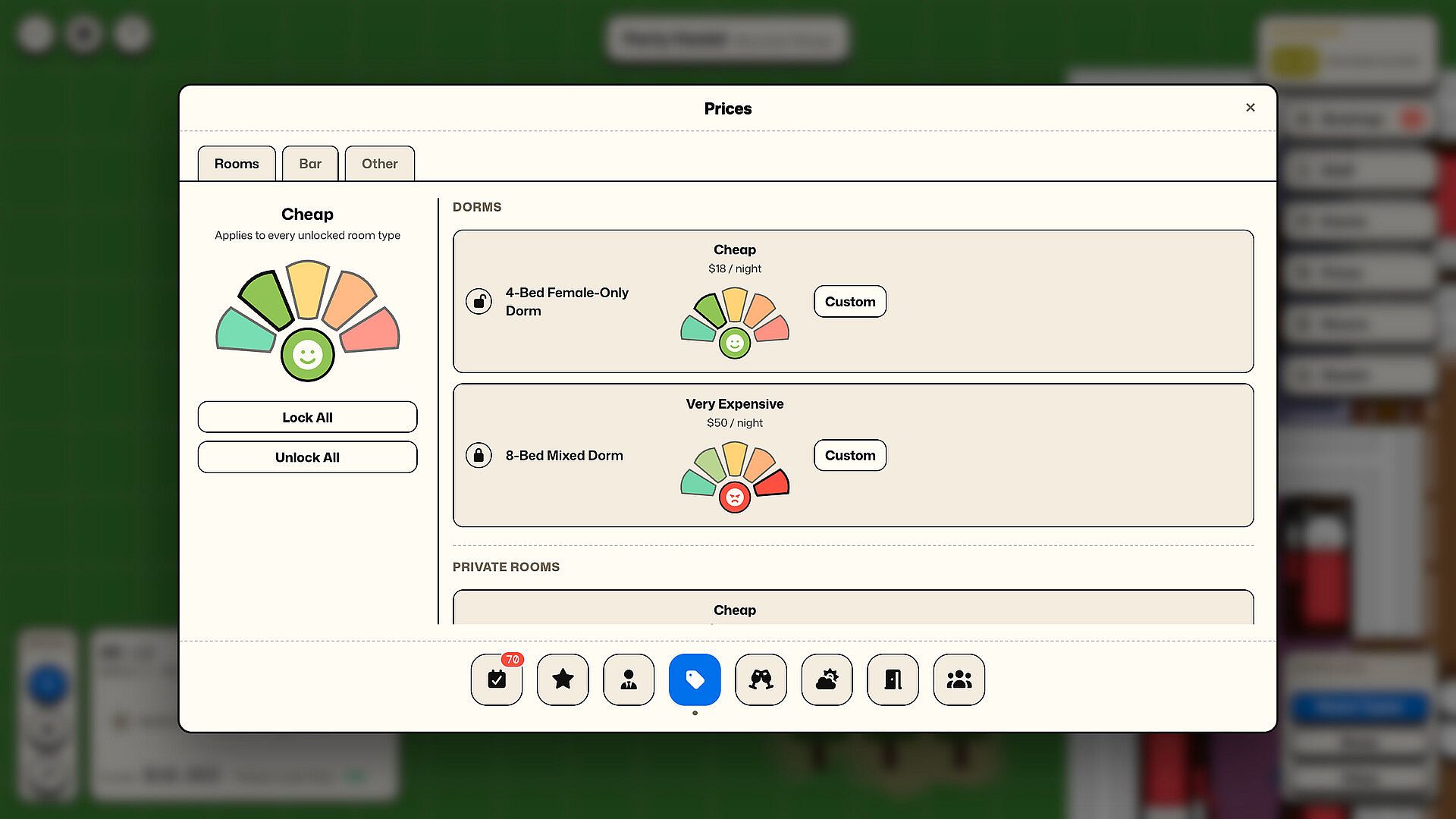
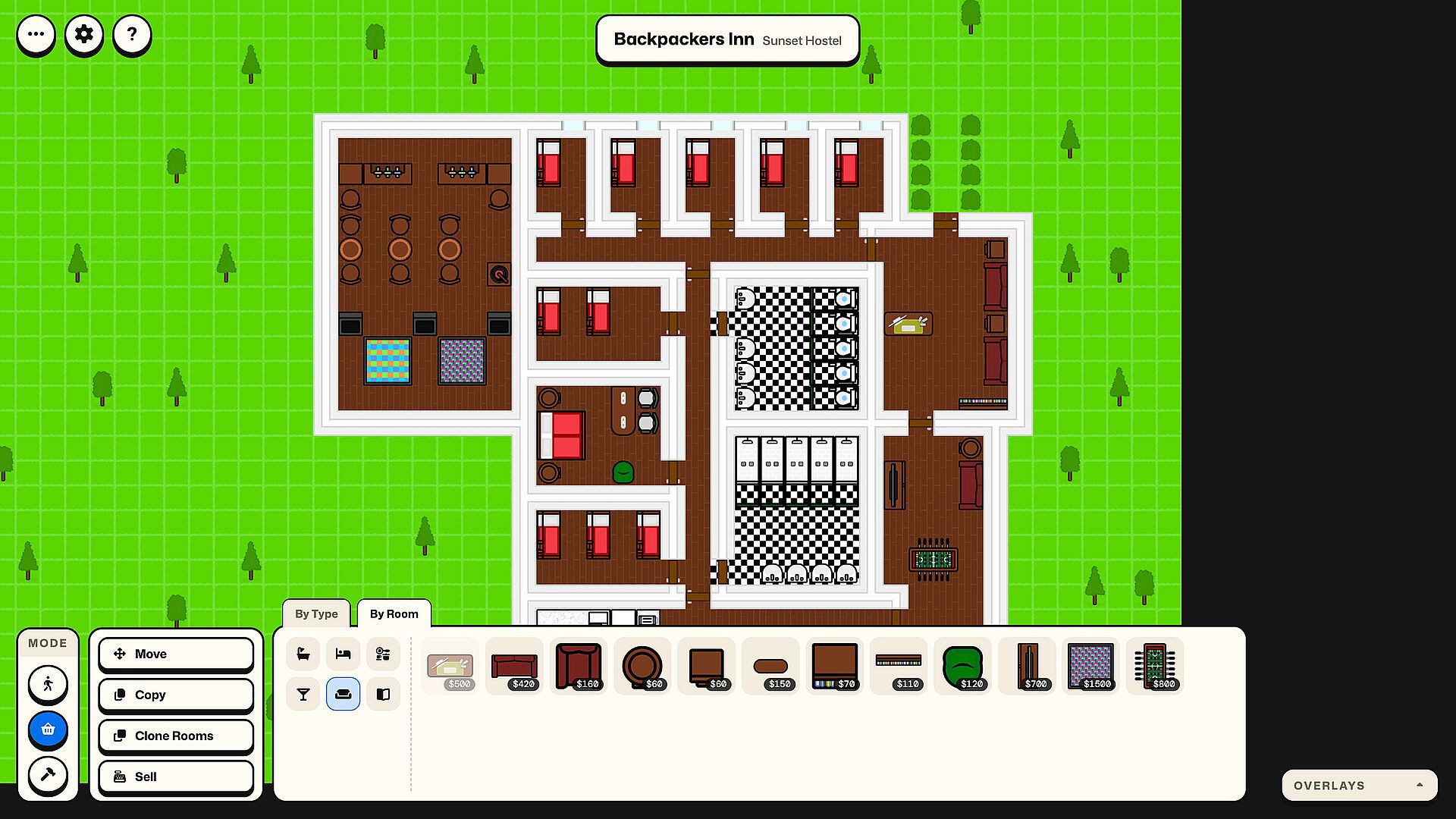
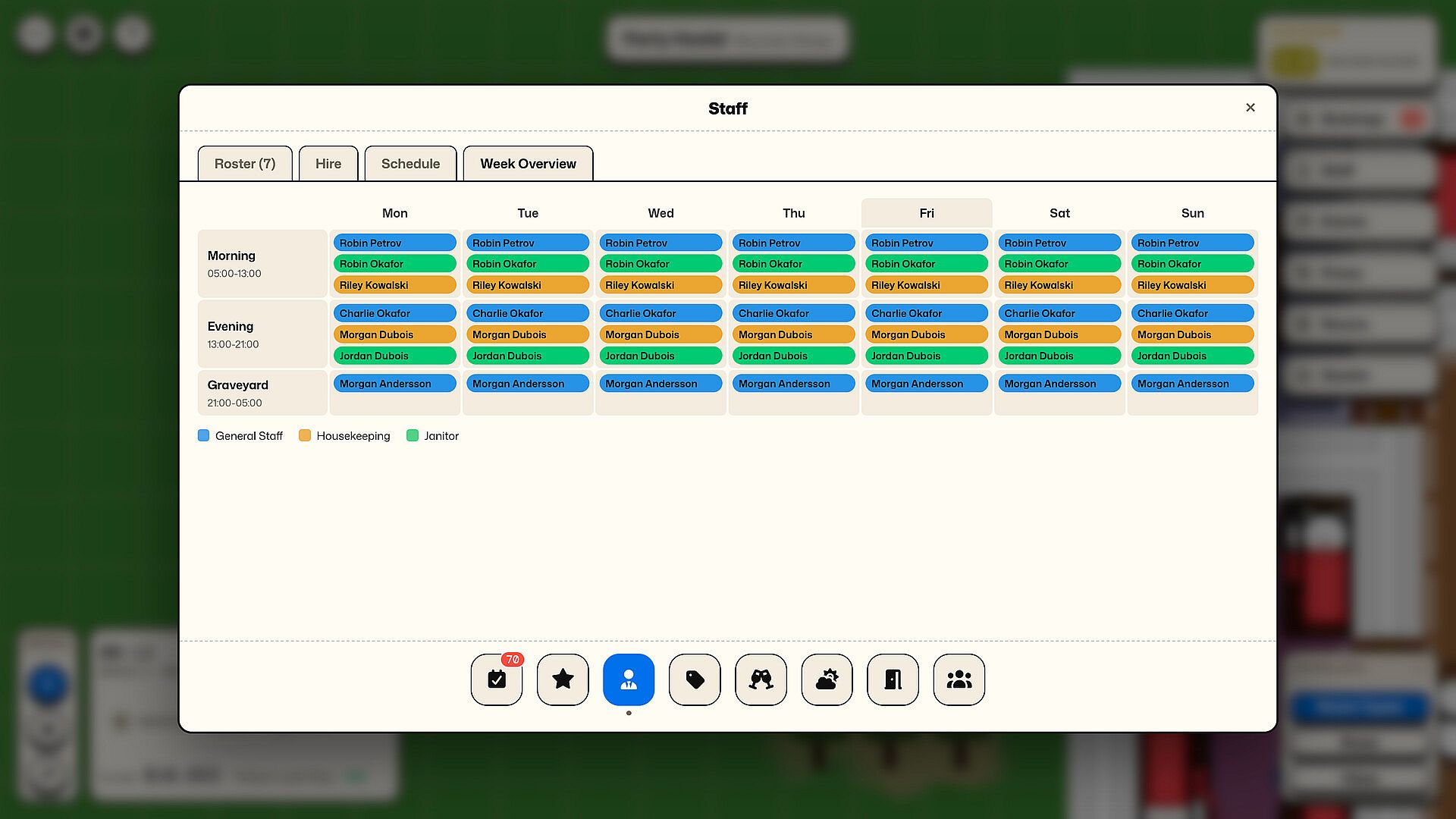
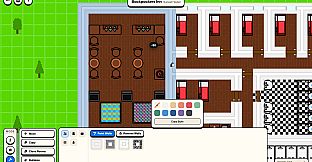
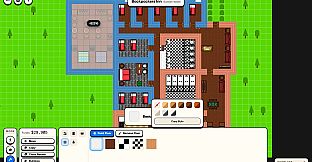
La gestion des chambres constitue une boucle essentielle. Les joueurs attribuent les voyageurs aux lits en dortoir ou dans des espaces améliorés, puis personnalisent les pièces par clonage, peinture, changement de sol ou démolition. La construction s'effectue sans file d'attente, ce qui permet d'intervenir même en présence d'occupants ou en mode pause pour des ajustements rapides. L'embauche et la gestion des équipes assurent le bon fonctionnement de l'établissement, mais un comptoir d'accueil vide entraîne de longues files d'attente et une baisse de la note. Refaire les lits évite que les clients ne campent dehors.
Les événements enrichissent la gestion quotidienne. Les joueurs choisissent les espaces et les horaires pour des activités comme des soirées jeux de société ou des sessions de networking, puis affectent le personnel pour les promouvoir. Les pub crawls peuvent laisser les lieux en désordre, le speed dating peut créer des rencontres, et les soirées retransmission attirent du public pour les événements sportifs ou télévisés. Chaque lieu apporte ses propres défis, qu'il s'agisse de digital nomads en quête d'une connexion fiable dans une station balnéaire ou de festivaliers à Édimbourg confrontés à une météo changeante.
Game Modes
Le jeu propose une expérience de gestion solo avec des approches variables selon les lieux choisis. Les sites en bord de mer attirent des digital nomads en long séjour, sensibles aux infrastructures de travail, tandis que les zones urbaines festivalières accueillent des voyageurs de passage orientés fête. D'autres destinations accueillent des clients qui attendent un service hôtelier dans un cadre auberge, obligeant à une sélection rigoureuse pour éviter les mauvaises notes.
Le jeu met l'accent sur la personnalisation et la réactivité. Les gestionnaires décident des réservations à accepter, de la répartition des voyageurs dans les dortoirs pour limiter les conflits ou favoriser la compatibilité, et du moment d'investir dans des améliorations ou de se contenter de l'entretien courant. La supervision du personnel et le timing des événements ajoutent d'autres variables, les résultats découlant des interactions entre traits plutôt que de scripts figés.
Building and Operations
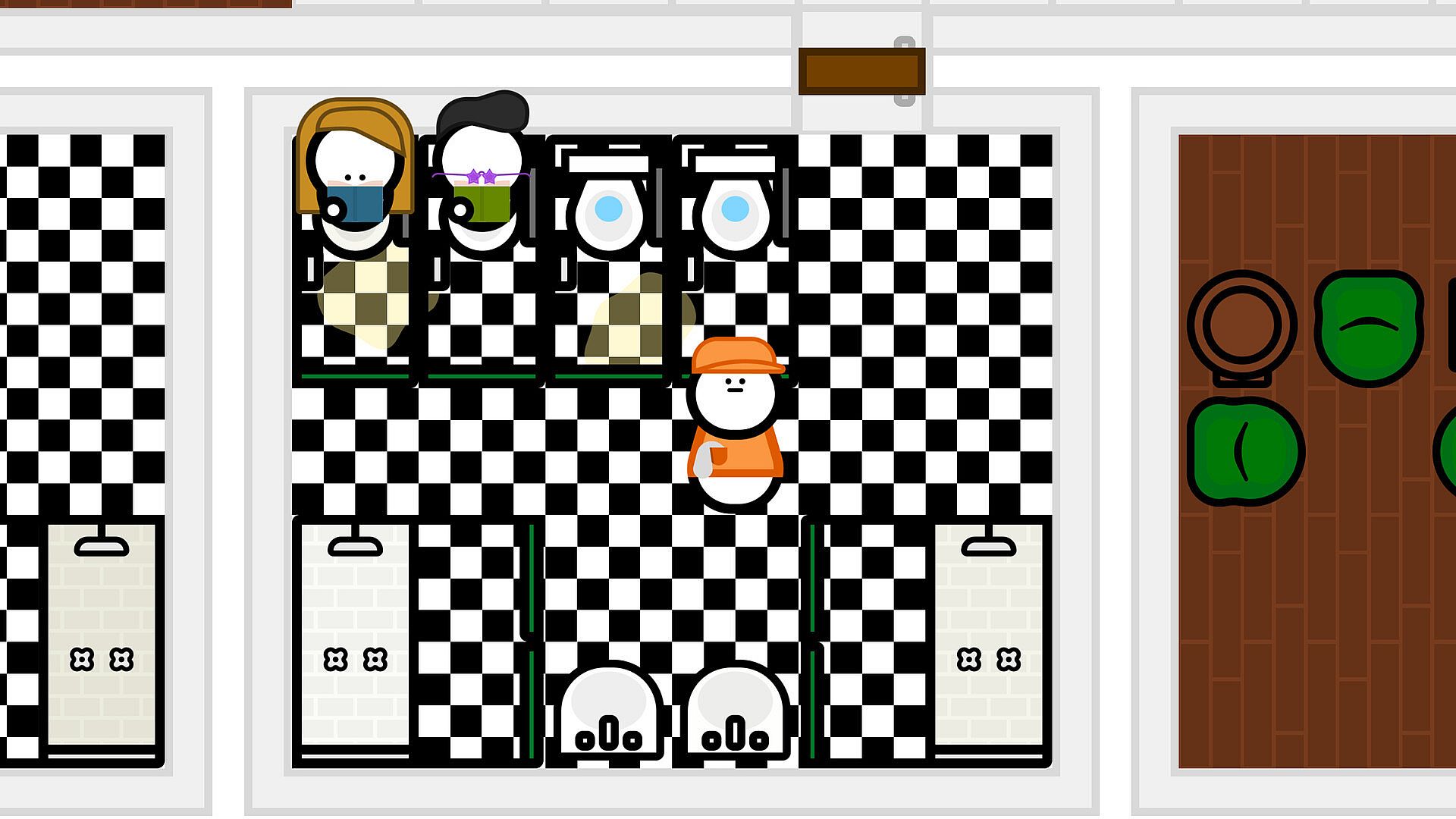
Les outils de construction permettent une itération rapide. Les joueurs clonent des agencements de chambre, modifient les couleurs des murs et les teintes de sol, ou suppriment des sections entières pour réaménager autour des occupants actuels. Cette liberté s'étend jusqu'à des expériences extrêmes, comme retirer tous les toilettes pendant une pause avant de reprendre pour observer les effets immédiats.
Les détails opérationnels sont déterminants pour la réussite à long terme. Une présence constante à l'accueil évite l'accumulation de files, tandis que le changement régulier des draps maintient la satisfaction des clients. Les distributeurs et autres équipements influencent les voyageurs économes, et la note globale reflète la capacité à répondre aux attentes des backpackers au budget serré, des aventuriers et des voyageurs en quête de confort.
Is It Worth Playing?
The Hostel Project s'adresse aux joueurs qui apprécient les jeux de simulation axés sur l'allocation de ressources, la psychologie des clients et le storytelling émergent issu de l'empilement de traits et de réactions. Sa structure solo récompense une planification minutieuse des réservations, des affectations et de l'organisation des événements, chaque lieu offrant des profils de voyageurs et des facteurs environnementaux différents.
La sortie est prévue pour novembre 2026 sur PC, sans avis utilisateur disponible pour l'instant. Ceux qui sont attirés par les jeux de stratégie casual impliquant la gestion d'une auberge, du personnel et d'événements dynamiques trouveront des systèmes en adéquation avec les mécaniques décrites. L'accent mis sur les modifications immédiates du bâtiment et les interactions liées aux traits assure une activité constante sans temps mort.











