


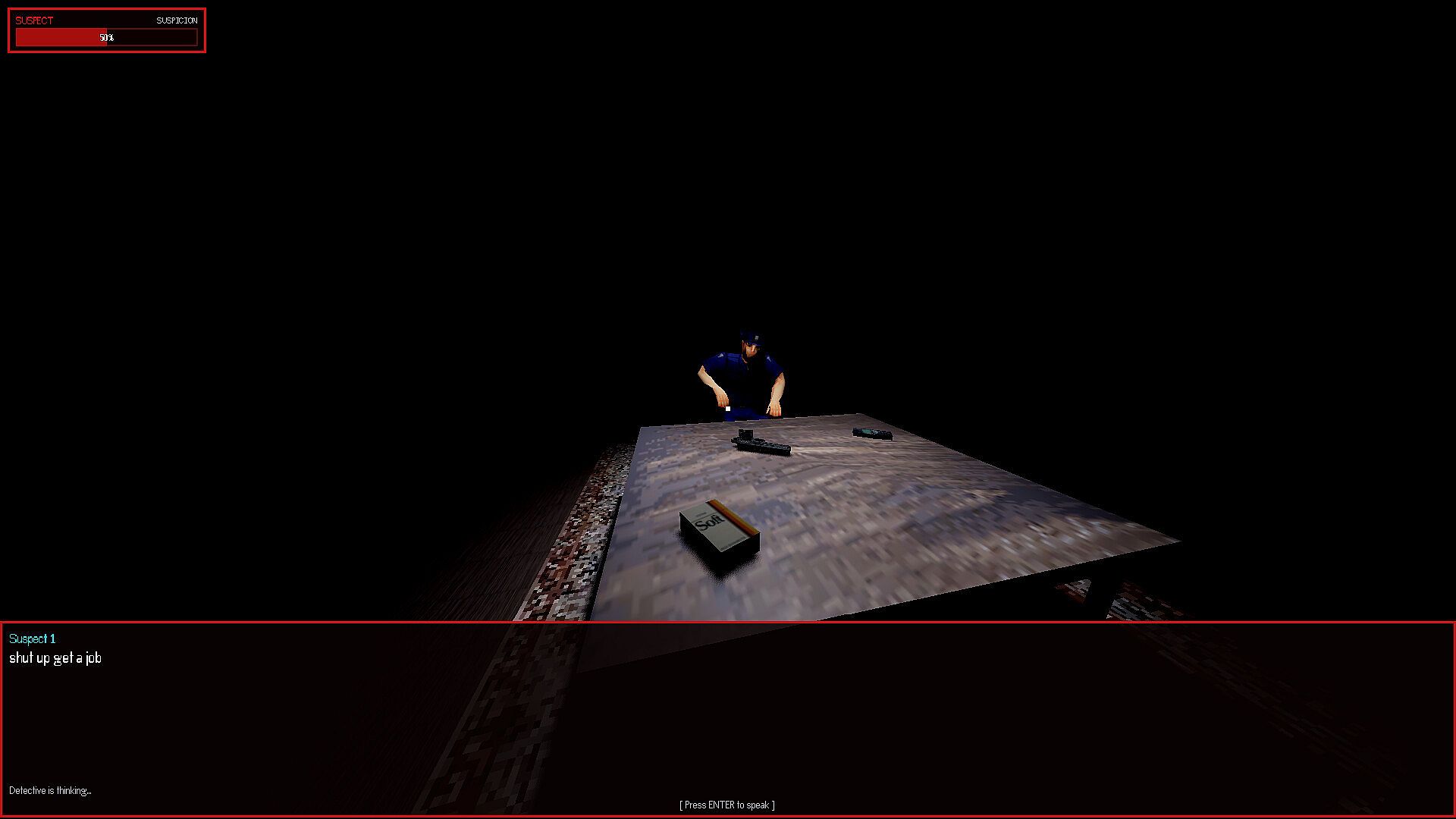
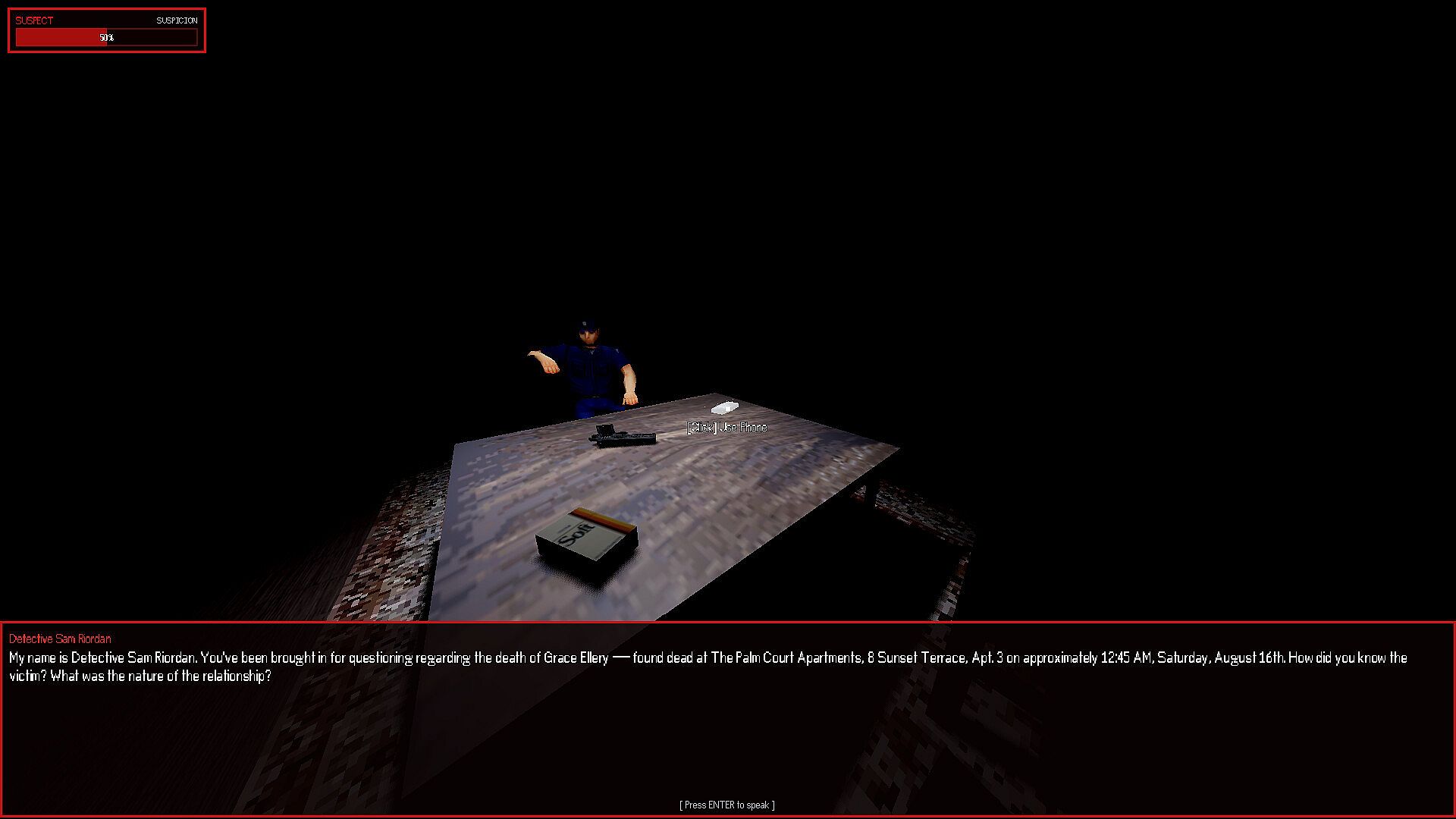
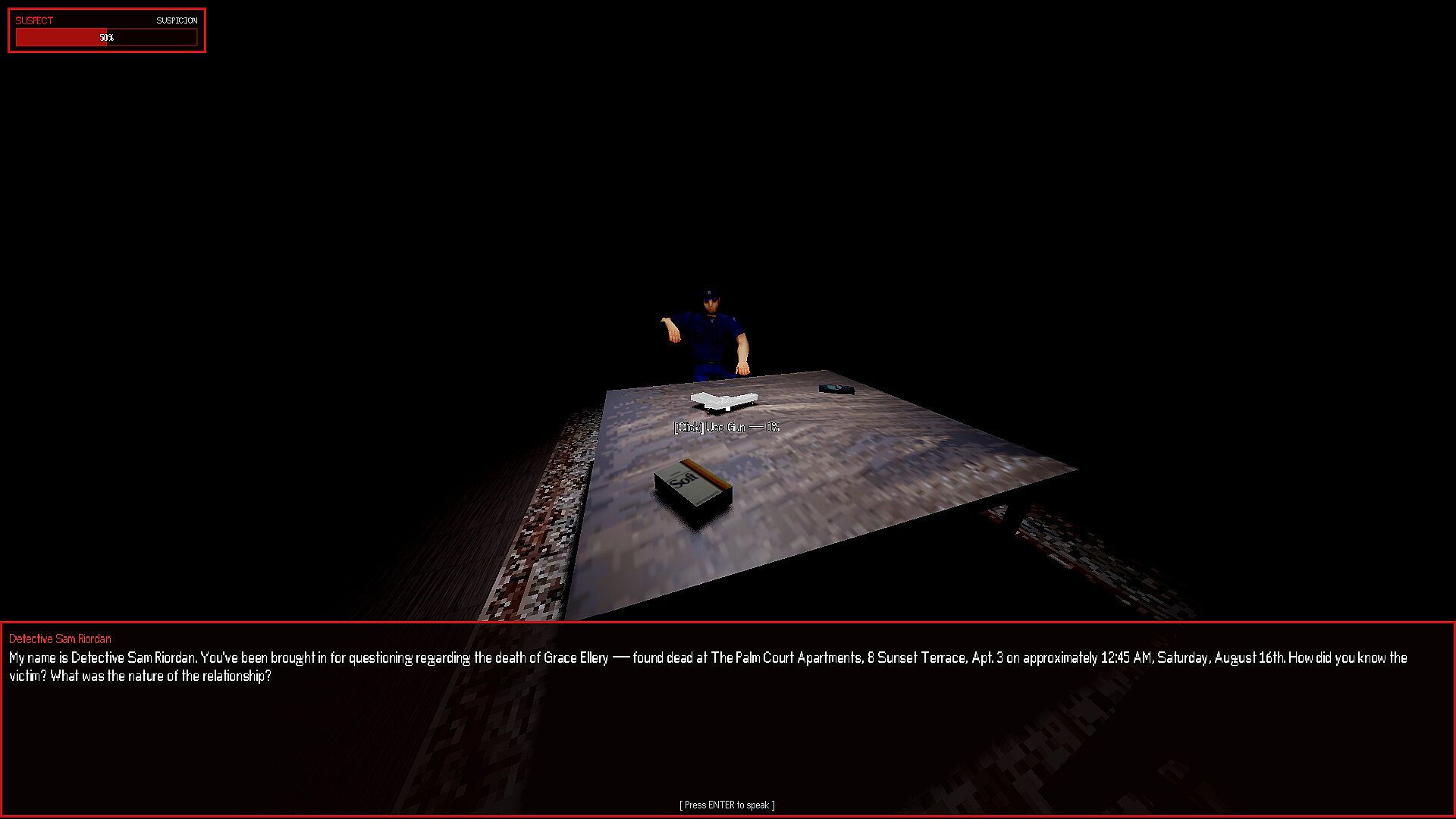
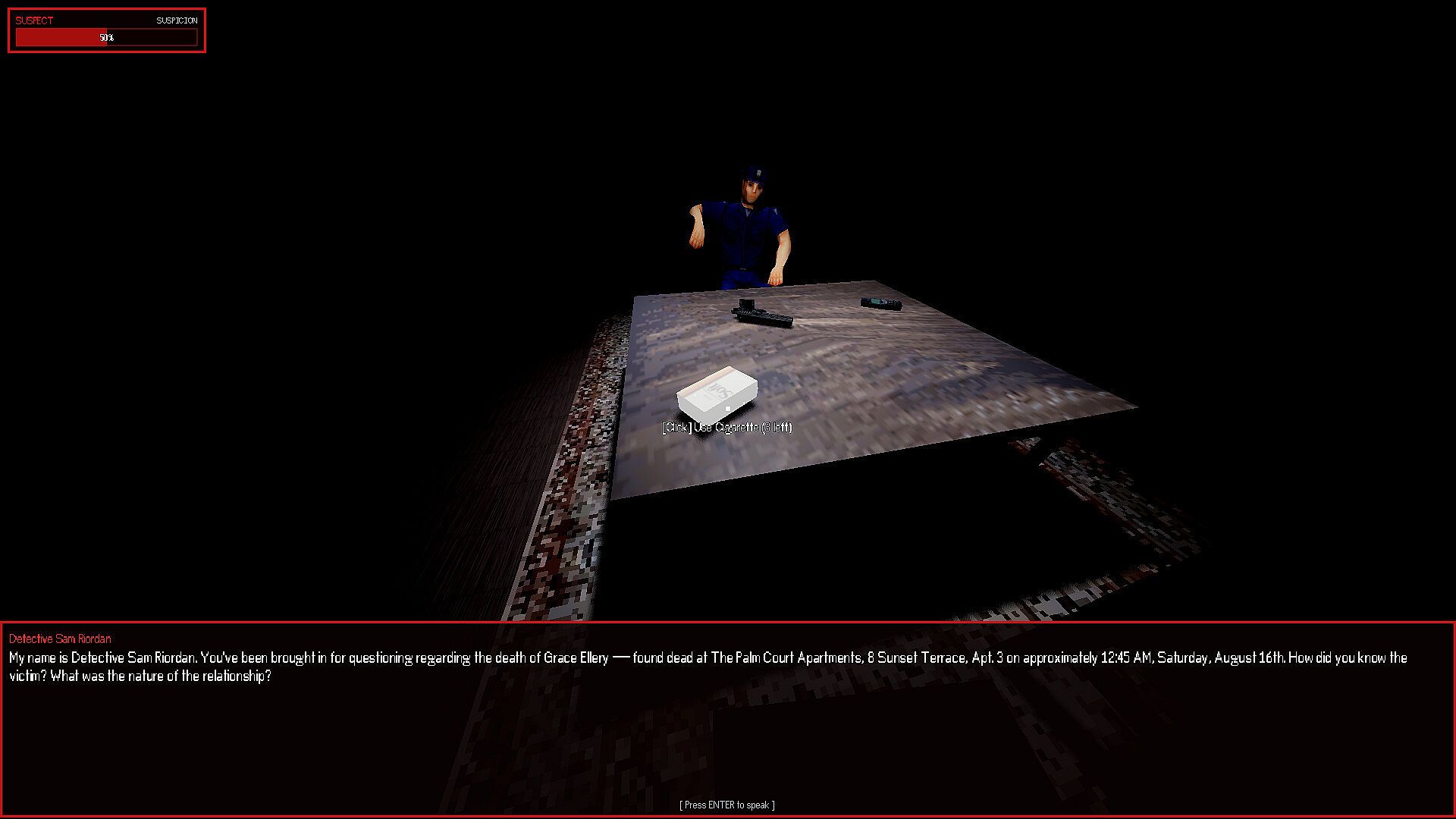






Verdict is a strategy and adventure game built around a single high-pressure scenario on PC. Players step into the role of a suspect held in an interrogation room, where an AI detective presses for a confession to murder. The experience centers on crafting responses, maintaining consistency, and spotting opportunities to challenge the interrogator's assumptions without relying on external clues or exploration.
Gameplay
The core loop revolves around real-time dialogue evaluation. Every statement is analyzed for contradictions, and the AI adjusts its approach based on prior answers. Players must build a coherent narrative while managing tone and detail to avoid escalating suspicion. Standard denials or vague replies often fail, pushing participants toward precise wording and logical counterarguments that expose flaws in the detective's line of questioning.
Psychological tension builds through the confined setting and adaptive pressure. The system tracks the full conversation history, forcing ongoing adjustments to earlier claims. This creates a defensive strategy where composure matters as much as the content of each reply, with the goal of emerging free rather than convicted by one's own words.
Game Modes
Verdict operates as a single-player experience focused on one continuous interrogation session. No separate modes or multiplayer options appear in the available details. Each playthrough varies because the AI detective modifies its tactics and questions according to the responses given, which encourages repeated attempts with different defensive approaches.
Replay value stems from the unpredictability of the interrogator's strategy. Players experiment with narrative choices, timing of revelations, and levels of detail to test how the system reacts, leading to distinct outcomes without fixed scenarios or branching paths named in advance.
Key Mechanics
Central to the design is the dynamic AI that remembers every detail and actively seeks inconsistencies. Players formulate defenses by managing composure and identifying logical openings in the detective's arguments. This setup rewards careful planning over improvisation, as lies without supporting structure tend to unravel quickly under sustained scrutiny.
The absence of traditional adventure elements like item collection or map navigation keeps attention on verbal strategy. Success depends on constructing a believable account that withstands repeated challenges, turning the interrogation into a test of logical consistency and adaptive thinking.
Is It Worth Playing?
Verdict suits players who enjoy strategy games centered on dialogue and deduction rather than action or broad exploration. Its indie focus on psychological pressure and adaptive AI creates a niche experience for those interested in narrative defense mechanics. The single-room format delivers concentrated tension without additional systems or content layers.
Those drawn to games that emphasize real-time decision making under constraint will find the core loop engaging through its emphasis on consistency and counterargument. Availability on PC makes it accessible for short sessions or extended experimentation with different response styles. The title stands as a specialized option within the strategy and adventure genres for audiences seeking this particular type of interactive challenge.