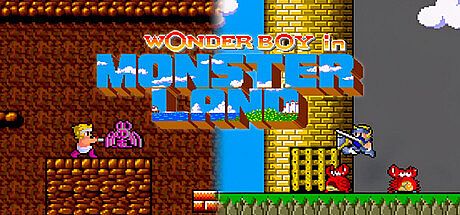



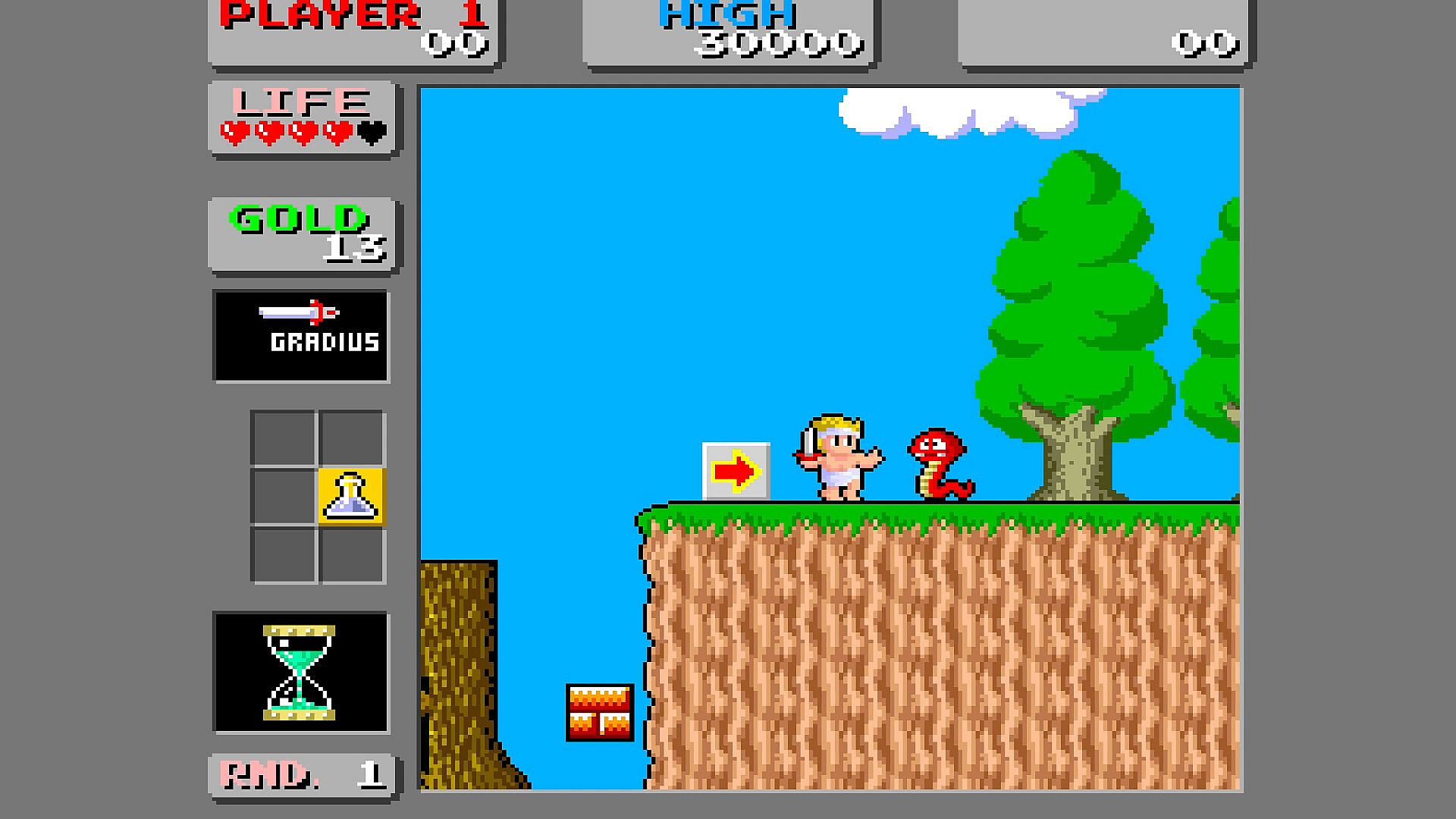
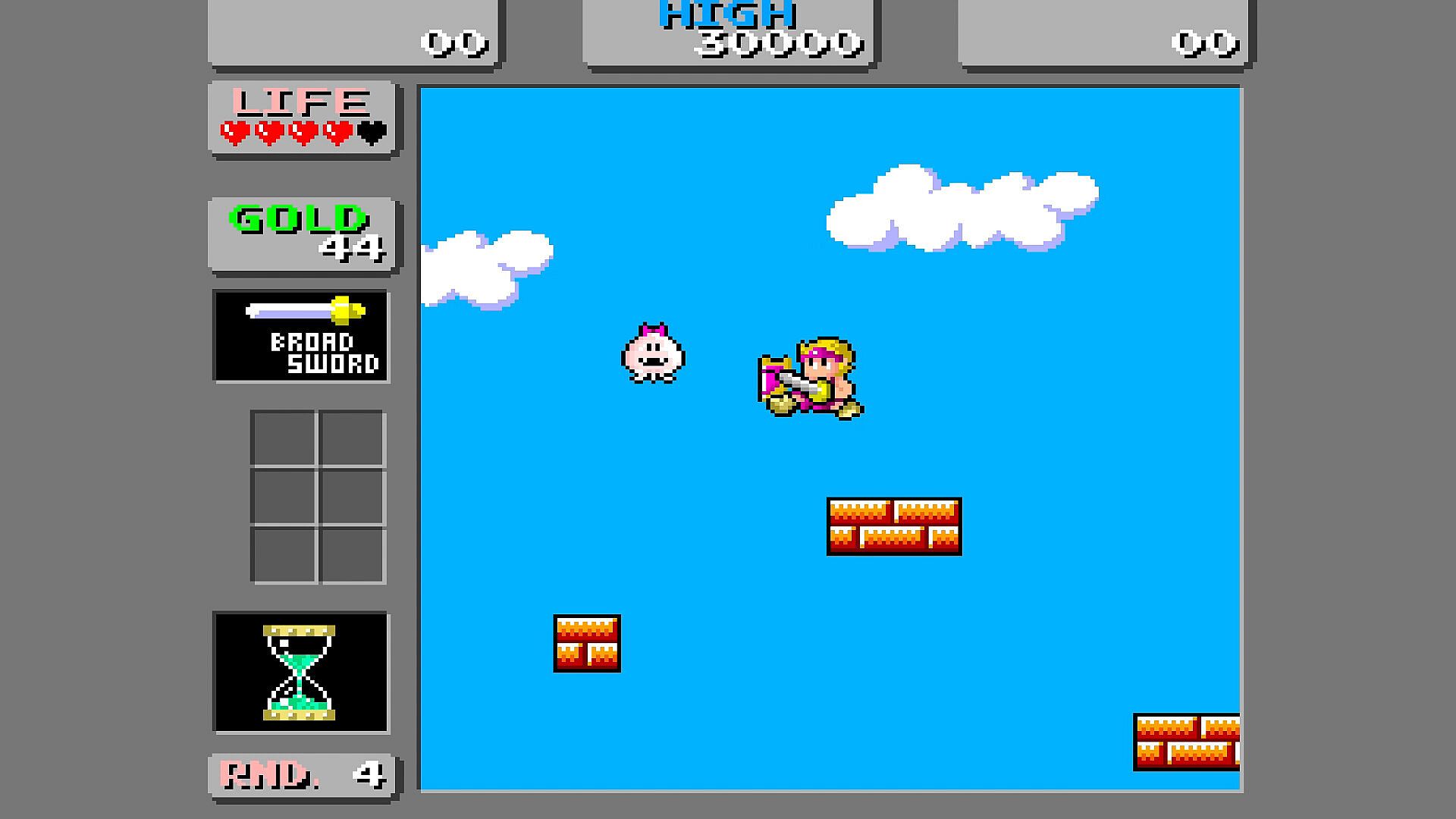
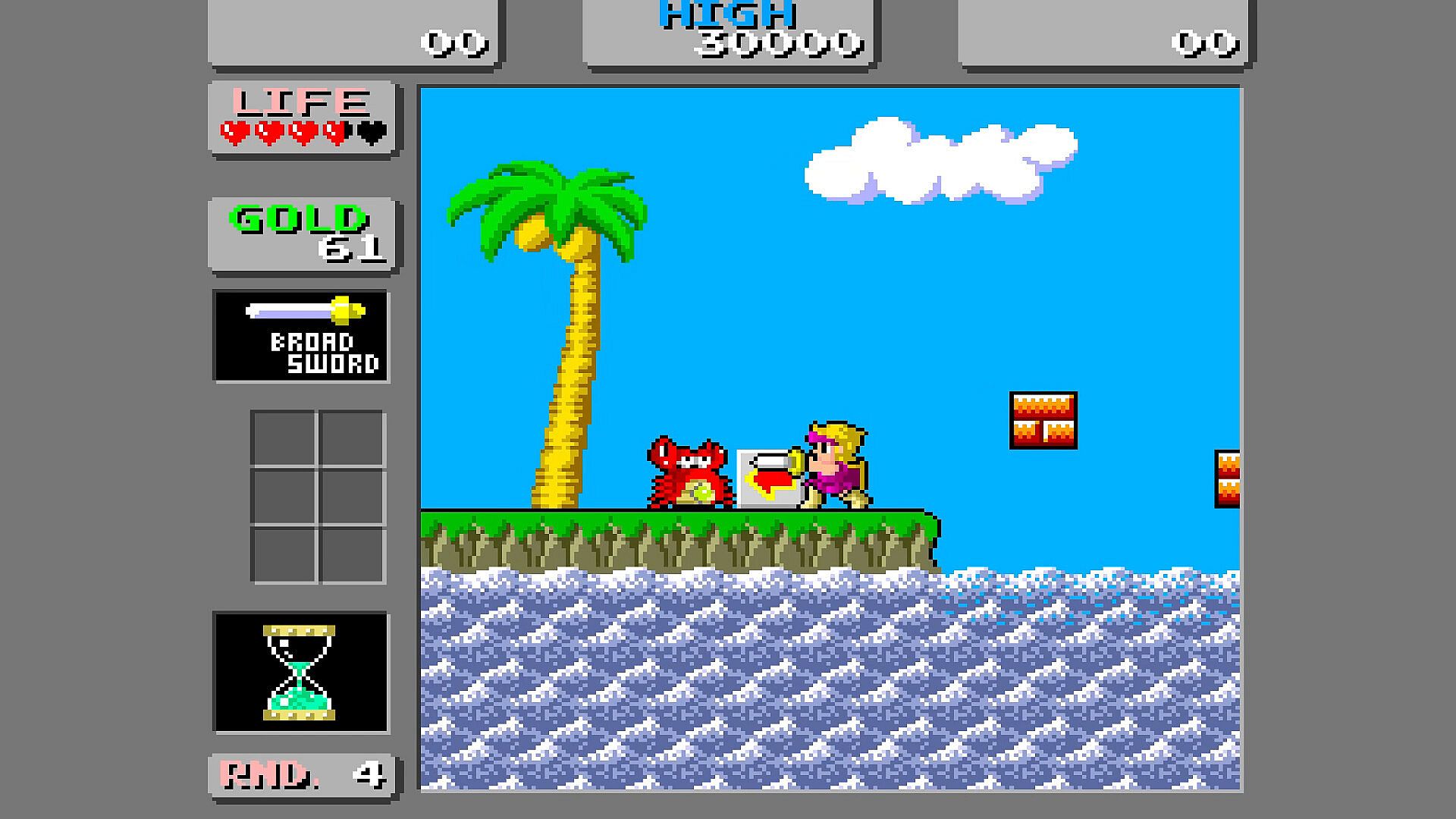
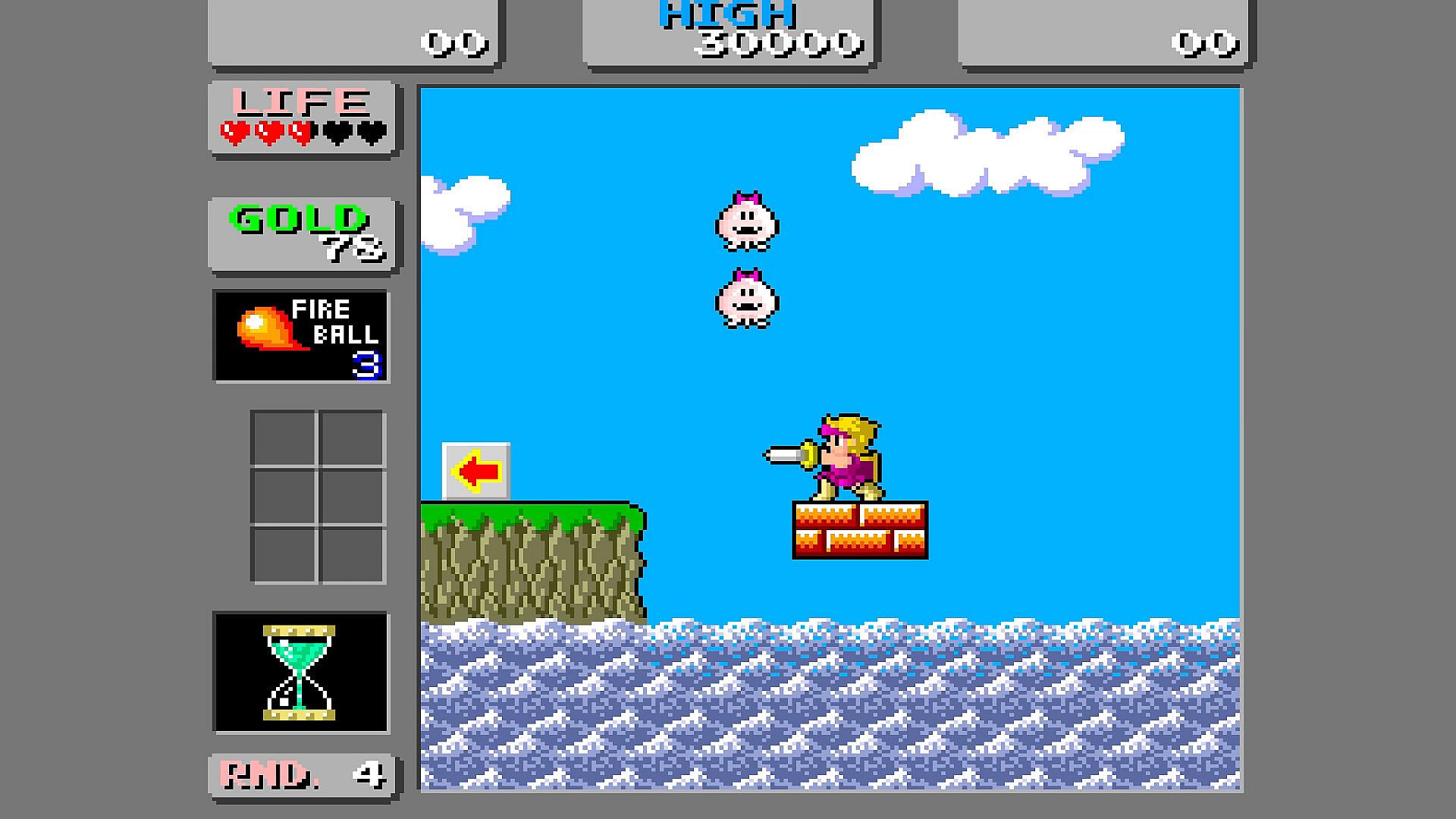
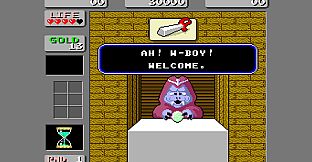
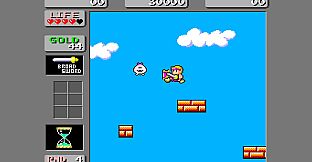
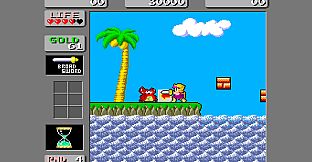
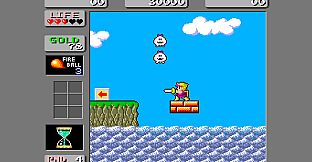
Wonder Boy in Monster Land is a side-scrolling action platformer with adventure elements that places players in control of a lone hero clearing a land overrun by monsters. The game unfolds across linear stages filled with enemies, platforms, and shops where collected gold funds permanent upgrades. Combat centers on sword strikes while movement relies on precise jumps and runs, all under the pressure of a constantly draining hourglass timer that reduces health if ignored.
Gameplay
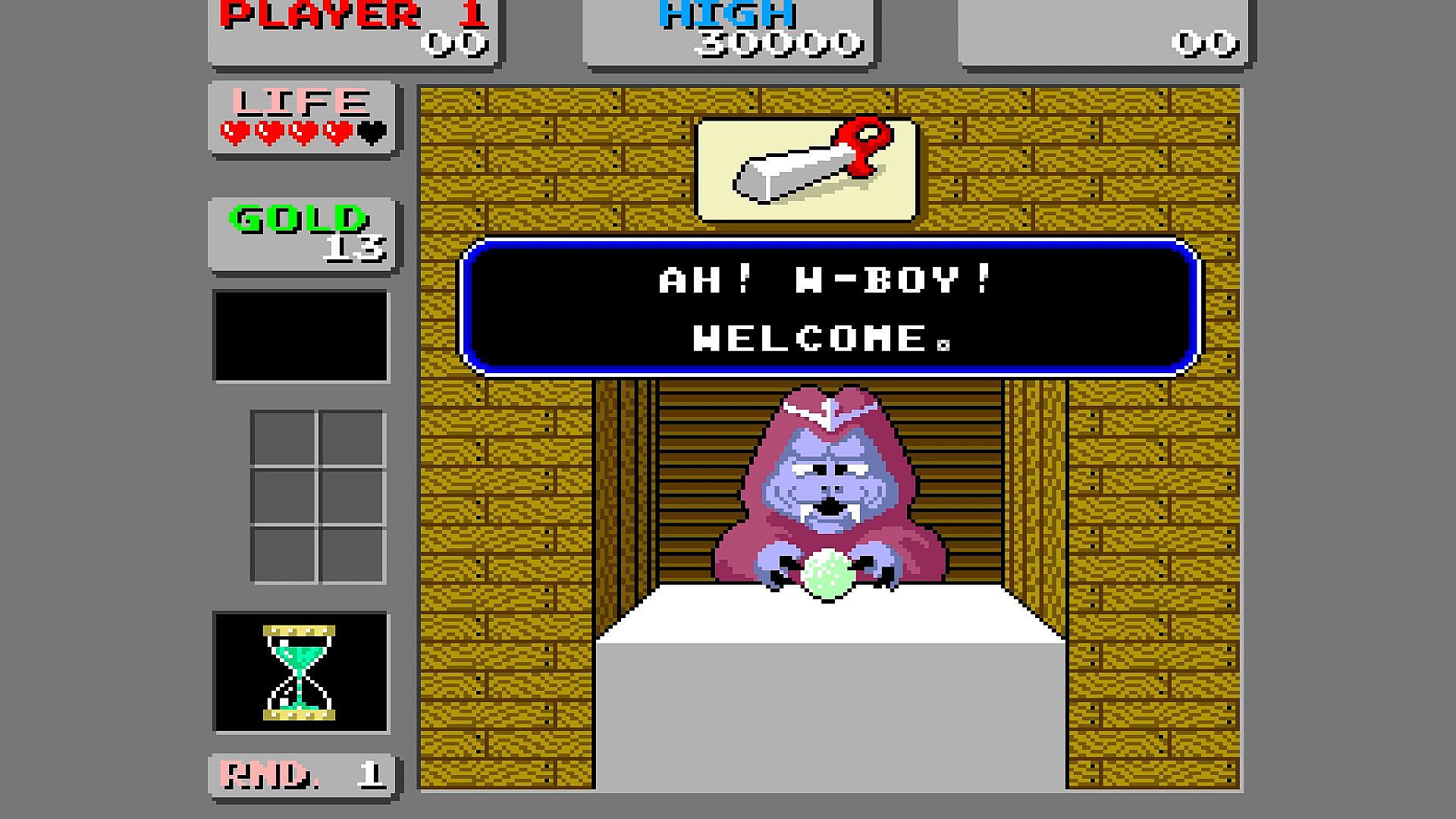
The core loop rewards steady forward progress through each screen. Players defeat foes such as slimes, spiders, and armored knights to earn coins, then spend that currency on improved swords, faster boots, protective armor, and shields that block projectiles. Stronger swords often come from defeating optional or mandatory bosses encountered along the way. Magic spells provide limited-use ranged options like fireballs or whirlwinds, activated by directional input.
Hidden doors scattered throughout stages lead to secret areas containing extra gold, health items, or useful equipment. The hourglass timer forces constant movement or item collection to avoid health loss, creating tension even during exploration. Shops and taverns appear regularly, offering not only gear but also health restoration through drinks. Death ends the run unless a revival potion is available, though the structure encourages repeated attempts to optimize paths and purchases.
Progression feels tangible because each upgrade directly alters speed, defense, or damage output. Finding the right balance between spending gold early and saving for later stages adds strategic depth to what remains a straightforward action experience.
Game Modes
Arcade Mode serves as the main single-player campaign, guiding players through the full sequence of stages toward the final dragon encounter. This mode preserves the original arcade structure with its timer, limited continues, and emphasis on learning enemy patterns and shop locations.
Money Hungry Mode shifts focus to maximizing coin collection in a speed-oriented run, complete with online leaderboards for competitive play. Challenge Mode offers two timed variants: one that starts players with top-tier gear for quick boss clears and another that emphasizes high scores with unlimited spells but strict one-hit failure conditions.
A Power Up New Game option carries equipment forward across attempts, allowing players to retain upgrades from previous runs and reduce early-stage grinding. These variations extend replay value without altering the fundamental side-scrolling action.
Controls and Accessibility
Input options include arrow keys or WASD for movement, dedicated buttons for attack and jump, plus menu access via start or escape. Full controller support lets players plug in a gamepad and map every action to preferred buttons, with one-click restoration of defaults. Remapping works across keyboard and controller alike.
Automatic saving occurs whenever the game is quit, preserving exact progress without manual intervention. Cloud synchronization keeps that progress available across different computers. These features keep the focus on the action rather than technical hurdles.
Is It Worth Playing?
The game suits players who appreciate deliberate, challenging platformers that reward observation and incremental improvement through equipment. Its blend of real-time combat and light progression creates a distinct rhythm compared to pure run-and-jump titles. Modern conveniences such as autosaves and controller customization remove common barriers that older arcade ports often present.
Reception among those familiar with the original highlights strong replayability from secret hunting and upgrade experimentation, though the timer and precise combat demand patience. For anyone drawn to retro action adventures that mix exploration with steady character growth, the package delivers focused, repeatable sessions without unnecessary complexity.