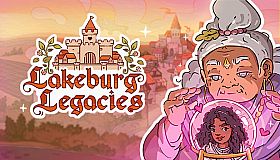










Lakeburg Legacies is a single-player simulation game centered on building and sustaining a medieval village through careful resource management and strategic matchmaking among its inhabitants.
Gameplay
Players oversee the daily operations of Lakeburg, a settlement where villagers arrive with randomly generated traits, personalities, and skill preferences. Assigning individuals to suitable jobs boosts production efficiency in areas such as farming, crafting, and resource gathering while maintaining overall happiness. Buildings follow predetermined development tracks that unlock progressively, covering primary resources, transformed goods, and specialized structures that support trade, health, and community needs.
Relationship management forms a core loop alongside economic balance. A local mystic assists in pairing compatible villagers for dates and marriages, with successful unions generating love points. These points help draw in additional residents or strengthen existing bonds. Housing assignments prove critical, as children reach adulthood at 18 and require separate homes, while family changes can lead to temporary displacement if space runs short. The simulation tracks multiple generations, with lineages influencing long-term village stability through inherited skills and social ties.
Resource systems demand ongoing attention to prevent shortages in food, materials, and prestige items. Players balance workforce allocation across expanding facilities without direct control over building placement or layout. Procedural elements ensure each run features unique villager combinations, encouraging repeated playthroughs focused on optimization.
Game Modes
The game structures play around campaigns of fixed duration. Options include sessions spanning 30, 75, or 100 in-game years, each culminating in an evaluation of village performance. Success metrics center on population growth, happiness levels, economic output, and dynasty strength, which determine unlockable rewards such as artwork galleries.
Procedural generation of villagers and events creates variation across runs, while core systems for matchmaking and resource allocation remain consistent. No separate competitive or cooperative modes exist beyond these single-player scenarios.
Core Mechanics and Progression
Villager portraits age visibly over time, and skill overlaps allow flexible staffing, such as shared proficiencies between certain roles. Love serves as a renewable resource that supports immigration when used effectively, complementing direct recruitment methods. Players monitor health, morale, and production chains across 18 distinct resources by the later stages, introduced gradually to avoid overwhelming complexity.
Progression emphasizes generational continuity. Marriages produce children who contribute to the workforce once housed properly, and strong family units can enhance specific production lines. Failures in balancing these elements risk unrest or population decline, prompting adjustments to pairings and job assignments.
Is It Worth Playing?
Lakeburg Legacies appeals to those interested in management simulations that incorporate social and relationship layers rather than pure city-building scale. The matchmaking system adds a distinct focus on personality matching and long-term family outcomes, setting it apart from standard resource games. Single-player campaigns deliver contained experiences lasting several hours, with replay value derived from different year lengths and procedural villager traits.
Player feedback highlights enjoyment of the cozy medieval setting and the interplay between love mechanics and practical management. Critics note competent execution of core systems but point to repetitive elements in pairing and limited depth in certain social interactions. The title remains available on PC with no indications of discontinued support since its 2023 release. Those seeking a focused village sim with emphasis on interpersonal dynamics and generational play will find the most alignment here, while players preferring expansive building freedom or multiplayer elements may look elsewhere.