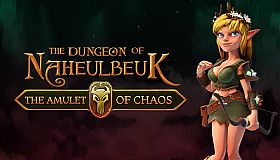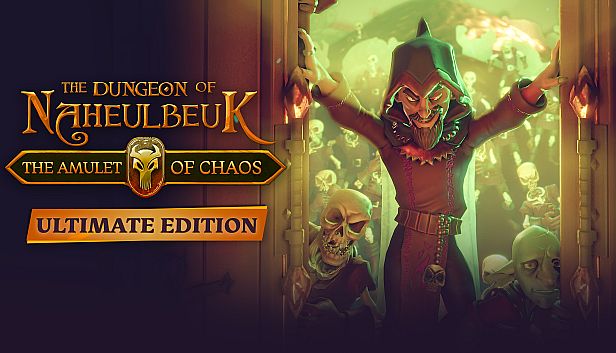












The Dungeon of Naheulbeuk : The Amulet of Chaos - Ultimate Edition est un RPG tactique au tour par tour en solo qui mêle stratégie, exploration et humour dans un univers fantasy. Le joueur dirige une équipe d'aventuriers hétéroclites à travers un donjon multi-niveaux rempli d'ennemis, de pièges et de butin, tout en gérant les combats et la progression des personnages sur PC.
Gameplay
L'exploration se déroule en vue isométrique : le groupe se déplace librement dans les salles grâce à des commandes point-and-click ou clavier. Il est possible de fouiller les conteneurs, d'interagir avec l'environnement, de résoudre des énigmes simples et de désamorcer ou d'éviter les pièges avant tout affrontement. Des éléments destructibles, comme les portes, enrichissent la navigation à travers les sept étages principaux et les zones annexes.
Les combats se déroulent au tour par tour avec un système de points d'action à répartir entre déplacements et capacités. Chaque personnage peut attaquer, utiliser des compétences spéciales, adopter une posture défensive ou placer une surveillance. Des mécaniques d'entraide permettent aux alliés de se soutenir mutuellement par des actions combinées ou un positionnement judicieux. Les sept héros de base disposent chacun de rôles distincts et progressent via des arbres de compétences personnels qui débloquent des aptitudes actives, des bonus passifs et des améliorations d'équipement. Un huitième compagnon optionnel vient personnaliser davantage le groupe.
Les effets de statut et les faiblesses ennemies influencent le déroulement des combats, obligeant à des choix tactiques autour du positionnement, du contrôle de foule et de la gestion des ressources. Un compteur d'échec, alimenté par les échecs critiques ou les mauvais jets, peut être dépensé pour des actions supplémentaires, des soins ou des repositionnements. Le bestiaire compte plus d'une centaine de types d'ennemis, chacun nécessitant une approche différente au fil de l'aventure.
Modes de jeu
L'expérience principale repose sur une campagne solo qui alterne phases d'exploration et affrontements tactiques. Plusieurs niveaux de difficulté permettent d'ajuster la complexité des combats et le comportement des ennemis. Les modes orientés histoire simplifient les combats pour privilégier la narration et l'humour, tandis que les réglages plus exigeants, comme Epic Gest, renforcent le défi. Les modes Nightmare sanctionnent les moindres erreurs par des conséquences sévères, incitant à une planification rigoureuse et à une synergie optimale du groupe.
Ces modes font varier l'intensité globale sans modifier le cycle fondamental d'exploration et de combats au tour par tour. Il est possible de changer de difficulté en cours de partie pour adapter l'équilibre entre accessibilité et profondeur tactique.
Character Progression and Party Building
La progression repose sur des arbres de compétences individuels plutôt que sur un système partagé. Le Ranger, l'Elfe, le Nain, le Barbare, le Magicien, l'Ogre et le Voleur proposent chacun des voies spécifiques qui mettent l'accent sur des styles de combat et des rôles de soutien différents. Les améliorations d'équipement sont directement liées à ces arbres, permettant de se spécialiser dans les dégâts, le tanking, les soins ou l'utilitaire. Le choix d'un compagnon optionnel ajoute une couche de variété dès le début de l'aventure.
Les niveaux s'acquièrent régulièrement au fil des combats et de l'exploration, récompensant les builds réfléchis qui complètent les forces du groupe. Les interactions créatives entre personnages pendant les affrontements encouragent l'expérimentation de combinaisons exploitant les faiblesses ennemies ou enchaînant des effets de soutien.
Vaut-il le coup ?
Ce RPG tactique s'adresse aux joueurs qui apprécient la planification minutieuse des combats, la personnalisation de l'équipe et la parodie fantasy légère. L'humour naît naturellement des interactions entre personnages et des situations, sans éclipser les aspects stratégiques. L'exploration offre des récompenses régulières grâce au butin et aux secrets, tandis que les combats exigent une adaptation constante face à un large éventail d'adversaires.
Les retours mettent en avant la profondeur tactique et le ton divertissant, beaucoup soulignant la progression satisfaisante et le rejouabilité offerte par les différents niveaux de difficulté et les choix de builds. Le jeu bénéficie d'un suivi régulier via des mises à jour qui affinent les mécaniques et ajoutent du contenu. Ceux qui recherchent une expérience solo complète, avec des décisions significatives à chaque combat, y trouveront un réel intérêt, surtout s'ils apprécient les jeux qui récompensent la préparation plutôt que les réflexes. Il propose une campagne ciblée, sans éléments de service en ligne ni saisons récurrentes.